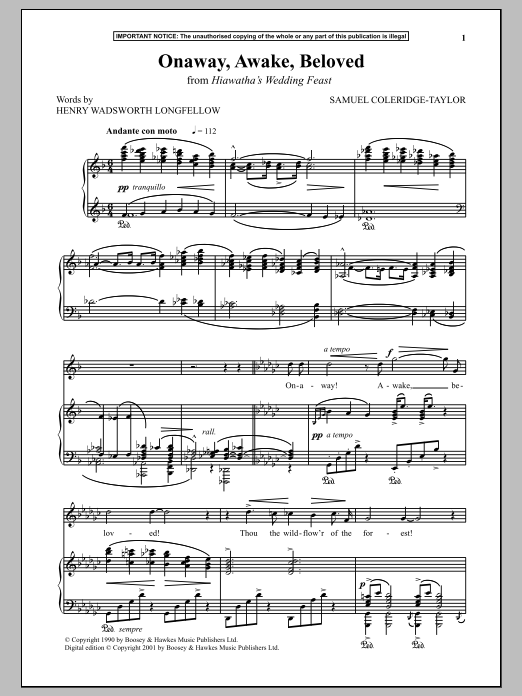
Onaway, Awake, Beloved (from Hiawatha's Wedding Feast) Sheet Music Preview

Onaway, Awake, Beloved (from Hiawatha's Wedding Feast): Piano Vocal

As performed by Samuel Coleridge-Taylor

Item: 35-DS00237817

Digital Download
$5.99
Description

Onaway, Awake, Beloved (from Hiawatha's Wedding Feast): Piano Vocal isn't in MakeMusic Cloud just yet...but it could be. Let us know you'd like to see it, and you'll help shape what comes next. In the meantime, start a free trial and dive into thousands of interactive titles your students can play along with today.

Sample Audio
No sample audio found.
Sample Video
Additional Details
Publisher: Hal Leonard
Page Count: 8
SKU: 35-DS00237817

More about this title

About the Artist: Samuel Coleridge-Taylor

Samuel Coleridge-Taylor (1875-1912) was a British composer of mixed English and Sierra Leonean heritage whose work bridged Victorian musical traditions with emerging modernist thinking. Though his career was cut short by illness at age 37, he left a substantial legacy including operas, orchestral works, and vocal music that earned him recognition as one of the most performed composers of his era.

Coleridge-Taylor's choral writing shaped early 20th-century British music education. His trilogies and narrative vocal works, including Hiawatha's Wedding Feast, became staples of amateur and professional choirs. His gift for memorable melody combined with sophisticated harmonic language made his music both accessible to singers and rewarding for audiences.

Why we love this

Coleridge-Taylor's setting of this Longfellow text displays the melodic generosity that made him such a beloved composer. The song sits naturally for singers while the piano part never feels accompanimental; instead, it carries independent musical weight that engages collaborative pianists and holds the harmonic architecture steady.

What to expect

The piece unfolds with unhurried affection, its vocal line drifting through the text like a serenade meant for someone who already knows the singer's voice. The piano creates an intimate space around the melody, warm and attentive rather than elaborate.

Who it's for

Vocalists at the intermediate level who want exposure to turn-of-the-century British art song repertoire will find this a rewarding addition to their folders. Teachers building programs around Romantic and early Modern song traditions, or programming around Longfellow texts, will appreciate Coleridge-Taylor's direct, lyrical approach.

How to get the most out of it

  • Shape the vocal line with generous breath support through the longer phrases; this music rewards singers who sustain tone without straining.
  • Balance the piano's inner voices with the vocal melody so the song feels conversational rather than soloistic.
  • Lean into the text's romantic language by allowing the melody to breathe at natural punctuation points, even if it means slightly easing tempo.

How to use it

Slot this into a recital program exploring 19th-century song traditions, or program it alongside other British vocal music from the same period. It also works beautifully in chamber concert settings where a single voice and piano can hold full attention without additional ensemble support.

Skills your students will build

  • Sustaining long phrases with vocal stamina and steady air support
  • Communicating character and emotion through text interpretation in English
  • Collaborating with an accompanist whose part requires independent musicality
  • Reading and executing the harmonic language of early 20th-century British song

You May Also Like