On Yonder Hill Cover Image

On Yonder Hill: 2-Part Choral Octavo

$2.05 USD
Sale price  $2.05 USD Regular price 
Skip to product information
On Yonder Hill Cover Image

On Yonder Hill: 2-Part Choral Octavo

Words by Edna St. Vincent Millay, music and additional words by Mary Donnelly and George L. O. Strid

Item: 00-43412

makemusic Cloud badge

Need it now?

Buy Digital Version
$2.05
Shipped

One moment…

Description
"I will be the gladdest thing under the sun!" This tuneful piece is appropriate for both 2-part choirs and developing women's groups, crafted with a text and music of equal depth and accessibility. A Picardy third at the end elevates the final moment.

Don't just read it, hear it, play along with it, and watch your students grow with it. In MakeMusic Cloud, On Yonder Hill: 2-Part Choral Octavo comes alive with professional accompaniment, adjustable tempo, and built-in practice tools that turn solo practice into real progress.

Sample Pages

Sample Audio
0:00
0:00
Sample Video
Additional Details
Series: Alfred Choral Designs
Publisher: Alfred Music
Page Count: 12
UPC: 038081489520
SKU: 00-43412

More about this title

About the Composer: Mary Donnelly
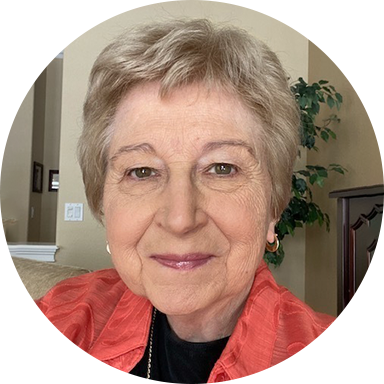
Mary Donnelly

Mary Donnelly grew up in Reno, Nevada, and studied English and French at the University of Nevada before discovering her passion for music education. While an undergraduate, she organized children's choruses, which inspired her to pursue formal music training. She earned a Master's Degree in Education from Lesley College in Cambridge, Massachusetts, where she focused on integrating arts across the curriculum. Donnelly spent thirty years teaching general music and choir in elementary and middle schools throughout the Washoe County School District.

In 1985, Donnelly began collaborating with George L. O. Strid when they were asked to write a musical for a Reading Week project in a sixth grade classroom. That partnership blossomed into a prolific creative alliance spanning decades. Together they have composed over two hundred songs and created twenty-five musicals, establishing themselves as skilled craftspeople of accessible, engaging choral and theatrical music. Donnelly is an active member of ACDA, NEA, and ASCAP.

Why we love this

Donnelly and Strid balance lyrical warmth with subtle harmonic sophistication. The Picardy third at the conclusion gives singers a moment to discover that a small harmonic gesture can transform a final cadence into something memorable, and the text pairs genuine sentiment with genuine singability across both parts.

What to expect

Tuneful and straightforward, yet infused with genuine character. The text radiates optimism and warmth, and Donnelly and Strid's music matches that spirit without sliding into saccharine territory. The harmonic surprise at the end ensures the piece stays with listeners.

Who it's for

Two-part choirs at any level benefit from this piece, whether you work with middle school treble voices, developing women's ensembles, or multi-age mixed groups learning to split into parts. The writing assumes no prior experience with advanced harmony while respecting singers' intelligence and musicality.

How to get the most out of it

  • Shape the phrase "I will be the gladdest thing under the sun" with genuine optimism; resist the urge to rush it, and let singers feel the width of that statement.
  • Approach the Picardy third as a moment of pleasant surprise rather than a jarring shift. The singers who know what's coming should not telegraph it; let it land naturally for your audience.
  • Balance the two parts so that neither dominates; this is dialogue, not solo-with-accompaniment work.

How to use it

This works beautifully as a spring or end-of-year concert opener that lifts the audience's mood and showcases your ensemble's ability to blend and balance. It pairs well in a set with other uplifting secular works, or it stands alone as a brief, memorable moment between longer pieces.

Skills your students will build

  • Singing sustained phrases with steady breath support
  • Blending two independent melodic lines
  • Recognizing and performing a raised third scale degree (the Picardy third)
  • Shaping text with natural inflection across a complete musical thought

You May Also Like
