On Wings of Eagles: B-flat Tenor Saxophone Sheet Music Preview

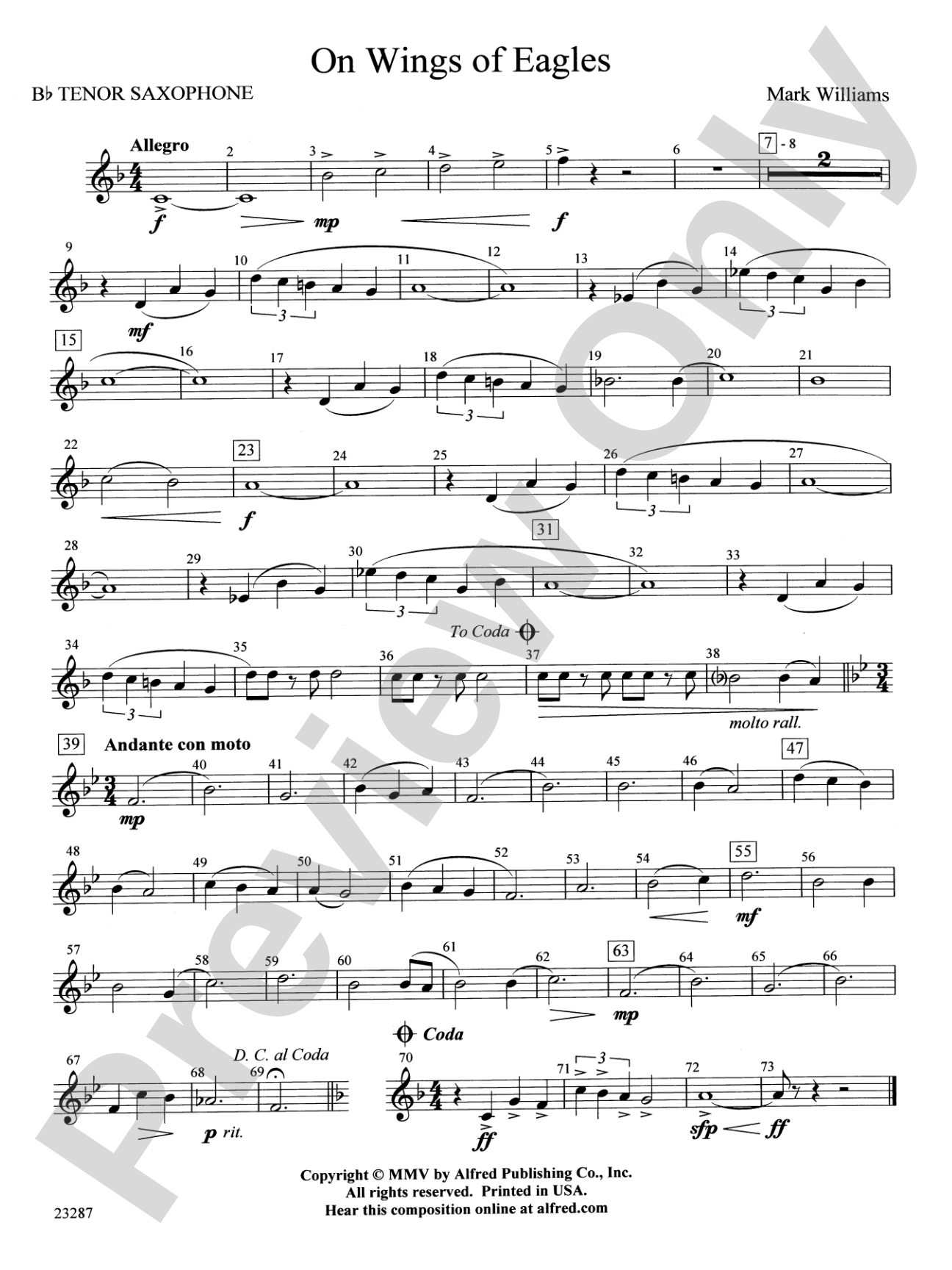
On Wings of Eagles: B-flat Tenor Saxophone

By Mark Williams

Grade: 2 (Medium Easy)

Item: 00-PC-0000637_TX1

Digital Download
$3.00
Description
This vibrant concert and contest overture can serve as an excellent introduction to the performance of quarter-note triplets. Driving syncopated rhythms and a rich, lyric section combine to produce a rewarding performance experience for developing bands. Highly recommended!

Don't just read it, hear it, play along with it, and watch your students grow with it. In MakeMusic Cloud, On Wings of Eagles: B-flat Tenor Saxophone comes alive with professional accompaniment, adjustable tempo, and built-in practice tools that turn solo practice into real progress.

Sample Audio
0:00
0:00
Sample Video
Additional Details
Series: Challenger Band Series
Publisher: Alfred Music
Page Count: 124
SKU: 00-PC-0000637_TX1

More about this title

About the Composer: Mark Williams

Mark Williams

Mark Williams built a prolific career as a composer and educator with more than 200 published works for school ensembles. His output spanned band, orchestra, and choral literature, earning him recognition through competitions like the Western International Band Clinic's Gralia Competition and multiple ASCAP Special Awards. Beyond the page, Williams was an active clinician and guest conductor who worked across 34 states, five Canadian provinces, and Australia, bringing his expertise directly to developing musicians.

A Chicago native who settled in Washington state, Williams spent years teaching elementary band while earning his Bachelor of Arts in Education and Master of Education from Eastern Washington University. He balanced his composing and conducting responsibilities with performing as a bassoon player and served as woodwind arranger for the 560th Air Force Band. His work as Conductor and Artistic Director for the Spokane British Brass Band rounded out a career centered on building strong musical foundations for young players.

Why we love this

Williams writes with an ear for what developing bands can accomplish without overwhelming them. The syncopated rhythms and quarter-note triplets here feel fresh and energizing rather than pedantic, giving students a genuine sense of musical accomplishment in a contest-ready package.

What to expect

Energetic and propulsive, with momentum driven by crisp syncopation and a steady rhythmic pulse. The lyric middle section offers space to breathe and express, creating contrast before the piece rebuilds its forward momentum.

Who it's for

Grade 2 bands ready to tackle rhythmic sophistication without advanced technical demands. This overture suits ensembles preparing for festival or contest play, as well as those seeking rewarding concert material that builds confidence through clear musical wins.

How to get the most out of it

  • Shape the driving syncopated rhythms with clear articulation in the low brass and woodwinds; lock this foundation before blending in the upper voices.
  • Isolate the quarter-note triplet sections in sectional rehearsals, tapping the pulse against the triplet figure until players feel the subdivision confidently.
  • Balance the lyric section carefully so the melody sings above the accompaniment without losing the rhythmic energy that defines the overture's character.
  • Use the full 124-page score to identify tutti moments and thin textures, marking these transitions clearly so the band understands the architecture of the piece.

How to use it

Program this as a concert opener to set an engaging tone, or use it as a festival selection where its approachable level and strong musical content make a solid impression. The balance of technical introduction and musical substance makes it equally at home in a spring concert or early fall showcase.

Skills your students will build

  • Reading and performing quarter-note triplets in a musical context
  • Articulating syncopated rhythmic patterns with precision
  • Balancing melody and accompaniment in a lyric section
  • Understanding form and transition in a concert overture structure

You May Also Like