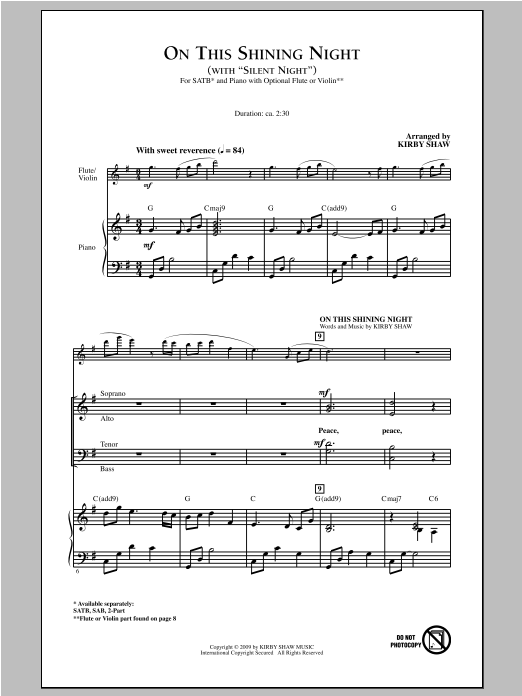
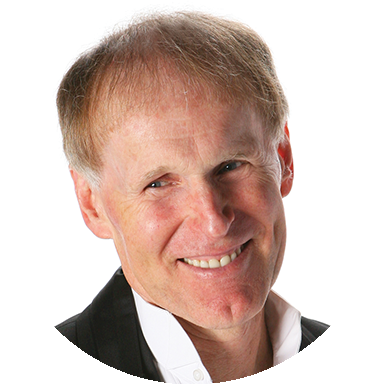
Kirby Shaw brings decades of choral expertise to every arrangement he writes. Trained in both music education and choral composition at San Jose State University, with a doctoral degree in choral conducting from the University of Washington, Shaw has conducted and taught across North America, Europe, and beyond. His work with vocal jazz ensembles at multiple universities (College of the Siskiyous, Colorado State, University of Missouri at Kansas City, and Southern Oregon University) shaped his distinctive approach to ensemble writing.
With over 2,500 choral arrangements in print and nearly 20 million copies sold worldwide, Shaw's prolific output has earned him multiple ASCAP awards and commissions from prestigious organizations including the Mormon Tabernacle Choir. His arrangements are sung on every continent, shaped by his philosophy that music education should engage students intellectually, emotionally, and with genuine joy.
Why we love this
Shaw's integration of two beloved Christmas melodies creates a sophisticated yet singable texture that feels both reverent and fresh. The voicing sits naturally for SATB ensembles without excessive range demands, making it accessible for good high school and college choirs while offering enough musical substance to satisfy more advanced singers. This is the kind of arrangement that builds genuine ensemble cohesion because every voice carries a compelling musical line.
What to expect
Tranquil and luminous. The combination of these two melodies creates a contemplative soundscape that feels both timeless and intimate, inviting singers and listeners into quiet reflection rather than celebration. There is genuine warmth here without sentimentality.
Who it's for
This octavo serves intermediate to advanced SATB choirs seeking meaningful Christmas repertoire that moves beyond standard carol arrangements. It works equally well for concert settings, holiday services, or festival programming where you want something that audiences recognize instantly yet experience as artfully reimagined.
How to get the most out of it
Balance the harmony so that Silent Night's familiar contour remains audible even as it weaves with On This Shining Night. Avoid letting fuller textures obscure the tune.
Shape the melodic phrases with natural breath points rather than mechanical phrasing; the text will guide you toward musical line.
Approach the harmonic transitions between the two melodies with clarity and patience during rehearsal. Mark any spots where upper and lower voices shift responsibility for the primary line.
How to use it
Consider placing this in the second half of a holiday concert, where it can serve as a graceful emotional pivot after more energetic seasonal fare. The piece also fits naturally into worship settings or candlelit service programs, particularly in contexts where you want to honor Christmas traditions while offering something slightly unexpected.
Skills your students will build
Balancing multiple melodic lines within a single harmonic texture
Sustaining lyrical phrasing across longer phrases
Listening to concurrent melodies and maintaining pitch awareness
Interpretation of familiar material through harmonic recontextualization
You May Also Like
Scan to Complete Your Purchase
Use your phone's camera to scan the code below
You'll log in on your phone and the order will be added to your account