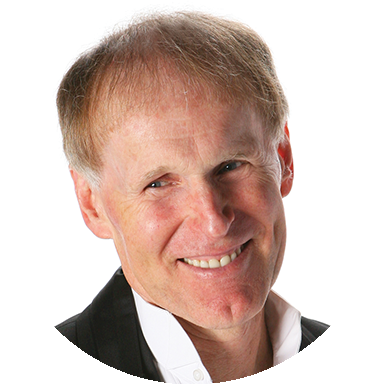
Kirby Shaw brings decades of choral expertise across multiple continents, having led workshops and presentations in 45 states and seven countries. He holds degrees in Music Education and Choral Composition from San Jose State University and a DMA in Choral Conducting from the University of Washington. His teaching style combines technical rigor with infectious humor and genuine musicianship.
As a prolific composer and arranger with over 2500 works in print, Shaw has built a global presence; his music circulates in choirs worldwide and has sold nearly 20 million copies. Beyond his work as an arranger, he has directed award-winning vocal jazz ensembles at multiple universities, overseen hundreds of educational recordings, and earned numerous ASCAP awards. He continues to direct the Jefferson State Choral Coalition at Southern Oregon University while collaborating with his wife Markita on original theatrical works.
Why we love this
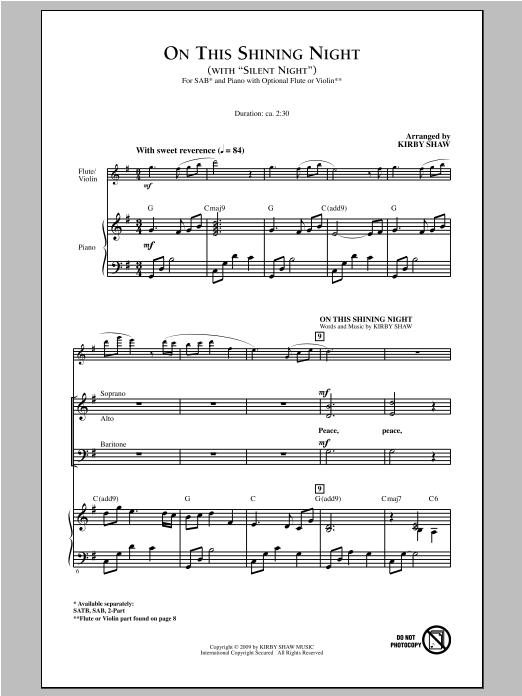
Shaw's arrangement honors the contemplative beauty of "On This Shining Night" while weaving "Silent Night" into the fabric of the piece, creating a sophisticated musical dialogue that feels inevitable rather than forced. The SAB voicing sits comfortably for mixed choirs without sacrificing harmonic richness, and the arrangement demonstrates Shaw's keen understanding of how to layer melodies so that each voice part carries genuine musical interest.
What to expect
Serene and introspective, with moments of gentle warmth. The pairing of these two beloved hymn texts creates a contemplative soundscape that feels both timeless and freshly arranged, inviting singers and listeners into a space of quiet reverence.
Who it's for
Mixed choirs seeking substantial Christmas repertoire that moves beyond novelty or overly simplistic arrangements. This piece rewards intermediate to advanced singers who can handle part independence and appreciate the craft of skillful orchestration within a choral setting.
How to get the most out of it
Balance the two melodies carefully; neither should dominate. The interplay between "On This Shining Night" and "Silent Night" creates the piece's emotional impact, so both deserve equal presence in the ensemble sound.
Shape the phrases with long lines rather than note-to-note emphasis. These hymn-based melodies benefit from a legato, flowing approach that lets the text breathe naturally.
Consider tempo flexibility during transitions between thematic material. A slight rubato when moving between the two melodies can highlight the shift in textural color without sounding disjointed.
Pay attention to vowel consistency on sustained notes. The reverent character demands unified vowel tone across all three parts to maintain clarity and blend.
How to use it
Position this as the centerpiece of a Christmas concert's reflective section, perhaps following more energetic seasonal offerings. Its intimate scale and thoughtful arrangement make it ideal for a candlelit concert or a moment of calm within a longer program that spans various holiday traditions.
Skills your students will build
Singing independent melodic lines while maintaining harmonic awareness
Reading and executing SAB voicing with clear part separation
Blending and balancing between simultaneous thematic material
Sustaining legato phrases across longer musical phrases
Understanding harmonic function in traditional hymn-based arrangements
You May Also Like
Scan to Complete Your Purchase
Use your phone's camera to scan the code below
You'll log in on your phone and the order will be added to your account