
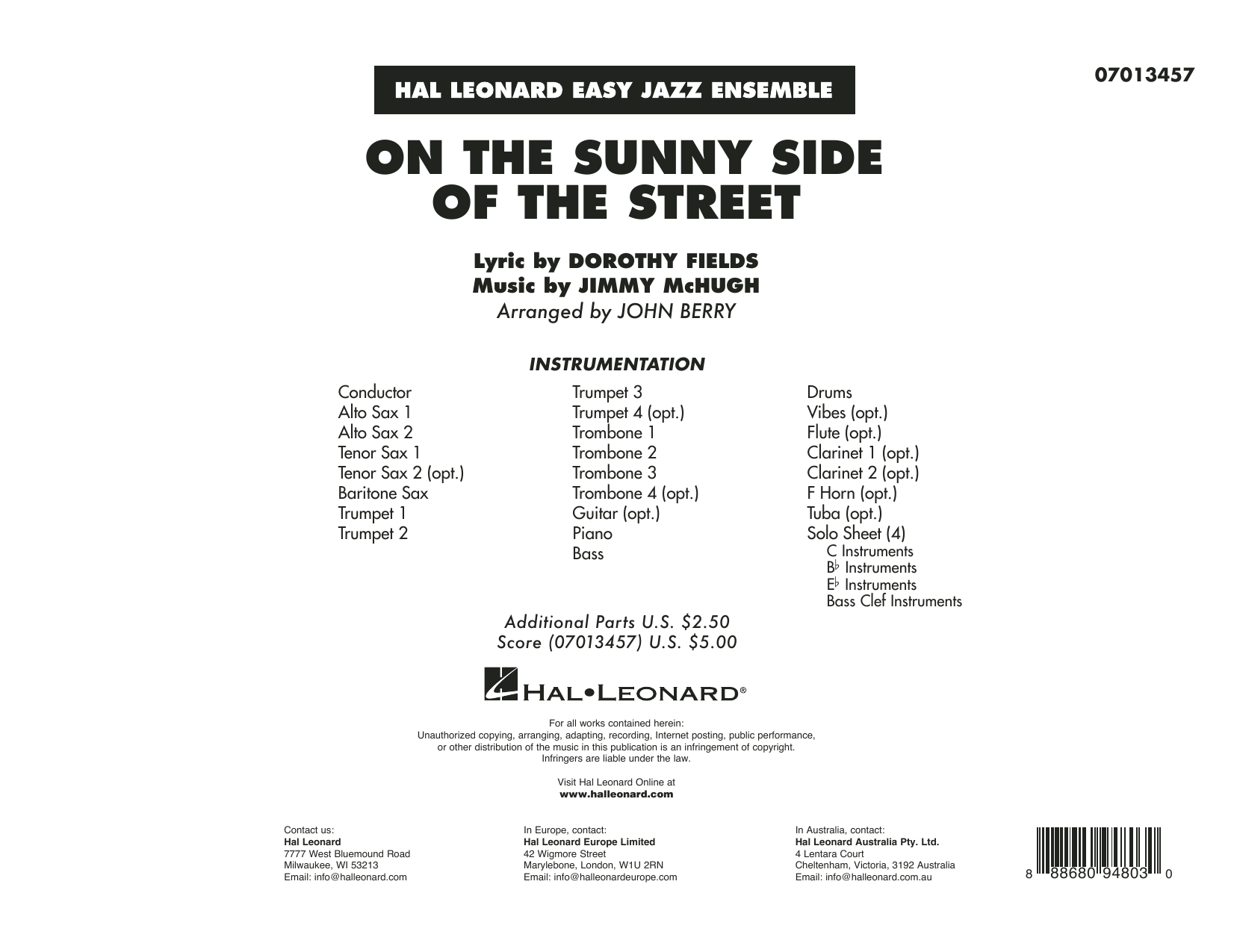

On the Sunny Side of the Street (arr. John Berry): Jazz Ensemble Conductor Score & Parts
As performed by Dorothy Fields / Arranged by John Berry
Grade: 2
Item: 35-PK00441578
$45.00
Pickup currently not available
Buy Extra Parts (Digital PDF Download)
Parts Added to Cart!
Description
Opening with a small group feature (alto, tenor, trumpet and trombone), this easy arrangement features plenty of scoring variety, and a nicely flowing moderate swing style. Also included is a brief sax soli and a written or ad lib. solo for trumpet.


On the Sunny Side of the Street (arr. John Berry): Jazz Ensemble Conductor Score & Parts isn't in MakeMusic Cloud just yet...but it could be. Let us know you'd like to see it, and you'll help shape what comes next. In the meantime, start a free trial and dive into thousands of interactive titles your students can play along with today.
Request This Title
Tell us you want it.
Start Your Free Trial
Explore everything that's ready to play right now.
Sample Audio
No sample audio found.
Sample Video
No sample videos found.
Additional Details
Publisher:
Hal Leonard
SKU:
35-PK00441578
More about this title
About the Artist: Dorothy Fields
Dorothy Fields stands as one of the most prolific lyricists in American popular song, with a catalog spanning from the 1920s through the 1970s. Her wit, sophistication, and emotional directness shaped standards that remain central to jazz and musical theater repertoire. For music educators, Fields represents the golden age of American songwriting, when melody and lyric were inseparable and the melody could carry genuine dramatic weight.
Why we love this
John Berry's arranging here strikes an ideal balance for developing ensembles: the small group opening gives featured players meaningful material without isolating them, while the scoring variety keeps the full ensemble engaged throughout. The moderate swing style sits perfectly in that sweet spot where students can feel the groove without losing clarity, and the option for both written and improvised trumpet solo means you can adapt the chart to your specific group's strengths.
What to expect
Optimistic and buoyant, with a timeless elegance that never feels stiff. The moderate swing carries an easy confidence; the small group voices suggest an intimate conversation before opening into the full ensemble's warmth.
Who it's for
Grade 2 jazz ensembles that need a dependable opener or mid-set feature with genuine musical substance. This works equally well for groups still building basic swing vocabulary and ensembles ready to explore the interplay between written and improvised material.
How to get the most out of it
- Establish the swing feel clearly in the opening small group feature by locking the ride cymbal and bass into a relaxed, walking foundation before the melody enters.
- Balance the featured alto and tenor saxes in the opening so both voices register without one overpowering the other; a quick sectional with both players helps set the dynamic relationship early.
- Let the trumpet soloist breathe naturally during either the written or ad lib passage; avoid rushing the accompaniment underneath, especially if a student is improvising.
- Shape the transitions between scoring sections with deliberate articulation changes; moving from the small group to full ensemble should feel organic, not abrupt.
How to use it
Pair this as an opening number on a jazz concert to set a welcoming, accessible tone, or slot it midset as a palette cleanser between more demanding charts. Its scoring variety also makes it valuable in a rehearsal context for teaching students how to listen and respond when the ensemble texture shifts.
Skills your students will build
- Swing feel and ride cymbal coordination
- Balancing featured soloists within a small group texture
- Responding to chord changes in a lead sheet context
- Transitioning between written melody and improvisation
- Voice leading in jazz voicings (alto, tenor, trumpet, trombone)