
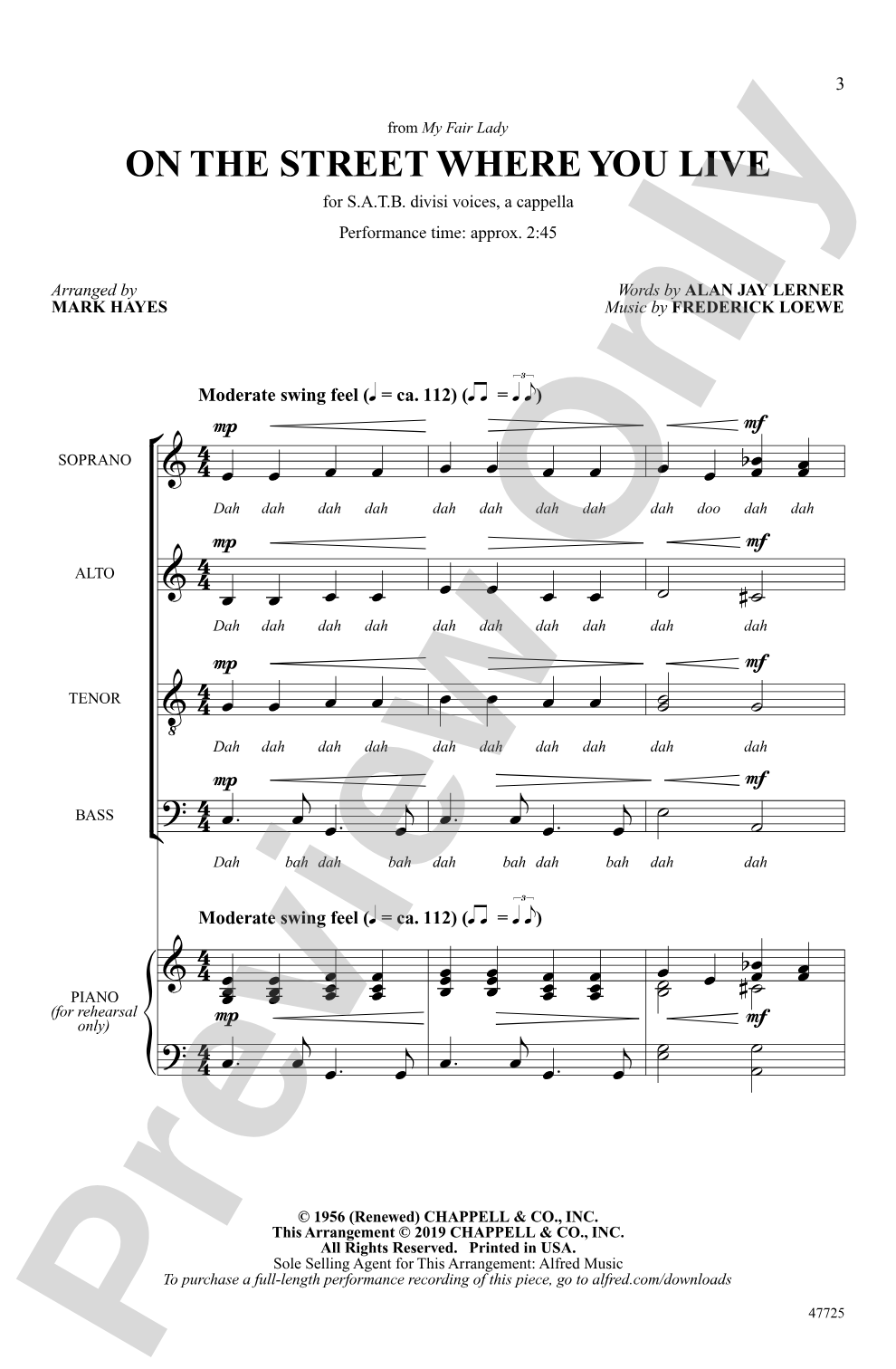
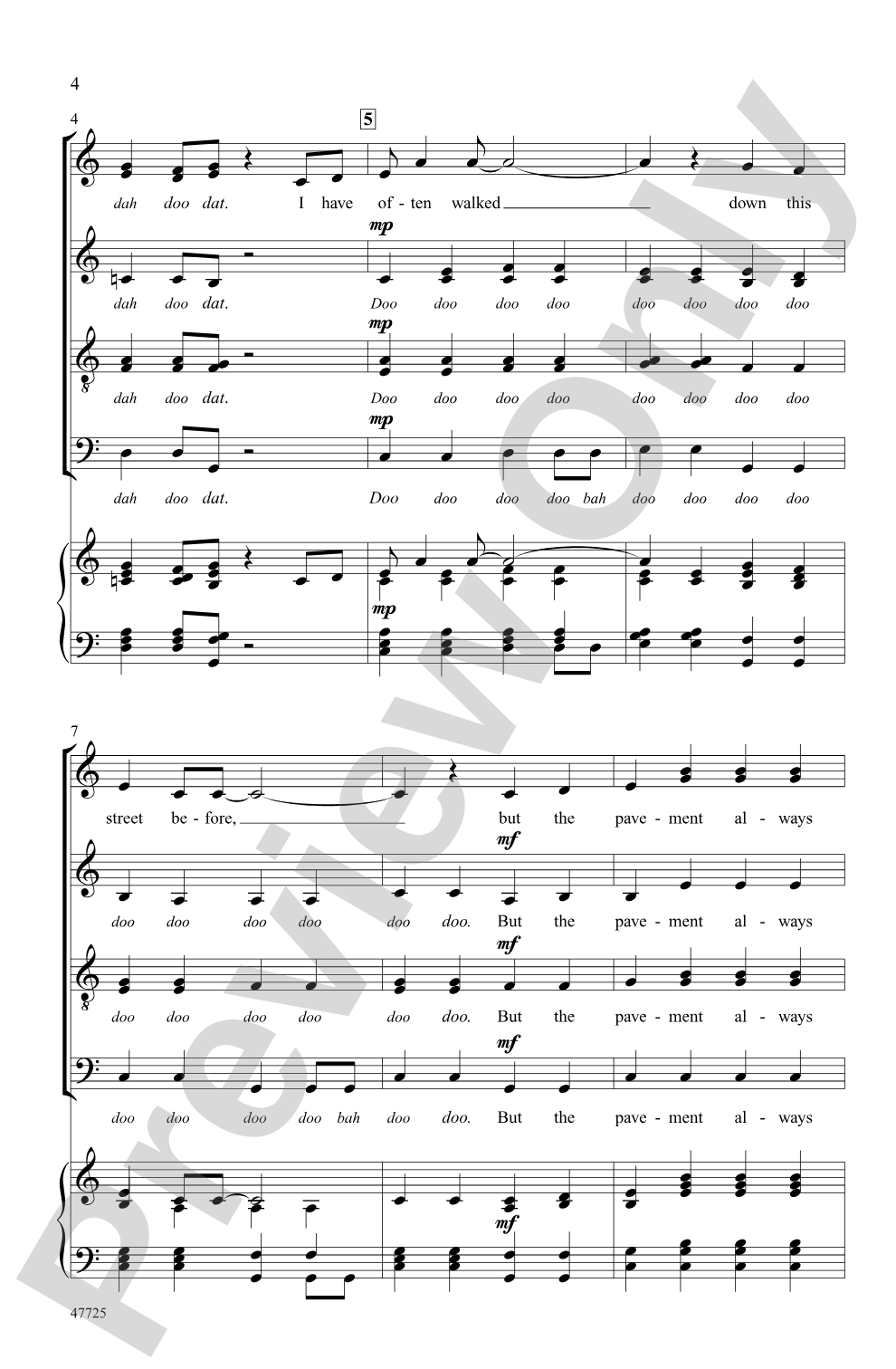
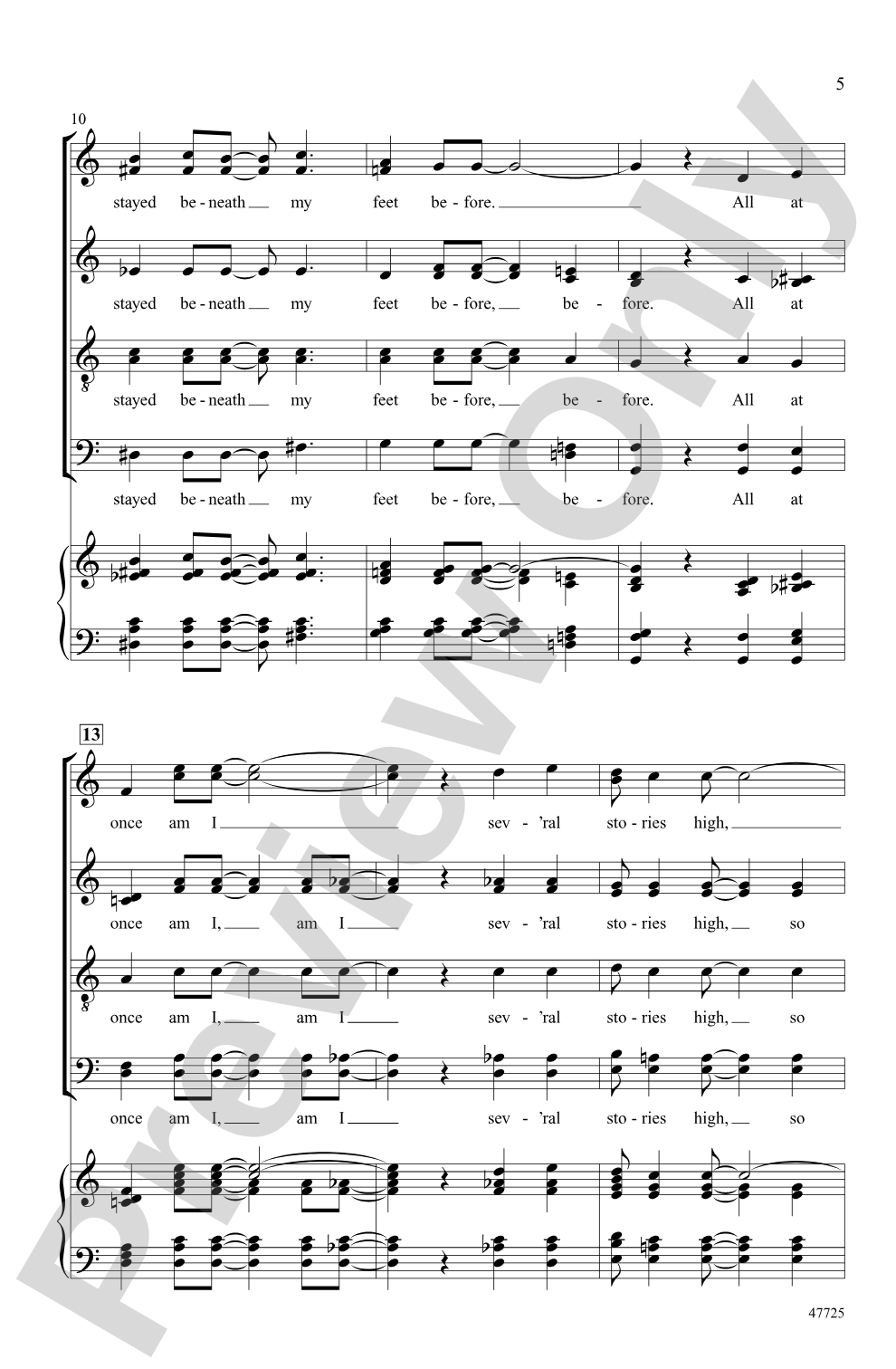

On the Street Where You Live: SATB divisi, a cappella Choral Octavo
from My Fair Lady
Words by Alan Jay Lerner, music by Frederick Loewe / arr. Mark Hayes
Item: 00-PO-0006091
$2.25
Minimum order quantity: 20 copies
One moment…
Related Items
On the Street Where You Live: SATB divisi, a cappella Choral Octavo |
$2.25
|
View |
Description
Bing Crosby, Doris Day, Nat King Cole, Peggy Lee, and Harry Connick Jr. are just a few of the artists who have recorded this showtune-turned-standard by American songwriting team Lerner and Loewe. Buoyant syncopations lightly swing through sweet jazz sonorities and arrive at a tender tempo-stretching final cadence. Mark Hayes' divisi a cappella arrangement is equally fitting for concert, show, and jazz choirs. A treasure from My Fair Lady.


On the Street Where You Live: SATB divisi, a cappella Choral Octavo isn't in MakeMusic Cloud just yet...but it could be. Let us know you'd like to see it, and you'll help shape what comes next. In the meantime, start a free trial and dive into thousands of interactive titles your students can play along with today.
Request This Title
Tell us you want it.
Start Your Free Trial
Explore everything that's ready to play right now.
Sample Audio
1
Audio File
--:--
0:00
0:00
Sample Video
Additional Details
Series:
Alfred Pop Choral Series
Publisher:
Alfred Music
Page Count:
16
SKU:
00-PO-0006091
More about this title
About the Composer: Frederick Loewe
Frederick Loewe was an Austrian-American composer whose theatrical works helped define the Golden Age of American musical theater. Collaborating with lyricist Alan Jay Lerner, he created some of the most enduring scores in the American songbook, including My Fair Lady, Gigi, and Camelot. His gift for melody combined with sophisticated harmonic language made his songs immediately accessible yet musically substantial, a quality that has sustained them through countless reinterpretations across decades and genres.
For music educators, Loewe's catalog offers a rare advantage: pieces that students recognize and enjoy while providing genuine musical substance to explore. His melodies reward careful phrase shaping, and his harmonies open doors to discussions about voice leading and jazz sonorities. Teaching with Loewe builds student engagement precisely because the material feels alive and relevant rather than locked in history.
Why we love this
Mark Hayes understands how to honor a standard without overcomplicating it. His divisi writing creates space for voices to bloom while the syncopations keep the piece grounded in the swing and lightness that made this tune famous. Directors reach for this arrangement when they need something sophisticated enough for concert programming but accessible enough that students actually enjoy learning it.
What to expect
Warm, optimistic, and gently swinging. The piece carries the romance of its original context without sentimentality, letting listeners hear why this melody captivated singers across generations. There's an underlying joy in the harmonic movement that feels both contemporary and timeless.
Who it's for
Concert choirs seeking repertoire that spans classical and popular traditions will find this arrangement ideal. Show choirs and jazz ensembles gain a piece with genuine theatrical charm and harmonic sophistication. The 16-page length and SATB divisi writing work well for intermediate to advanced groups.
How to get the most out of it
- Shape the syncopated lines to feel conversational rather than mechanical; the rhythm should land with ease, not precision.
- Treat the final cadence with real space and breath. Hayes indicates a tempo stretch here, and your singers need permission to let it breathe rather than rush back.
- Balance the divisi sections by having singers listen vertically to their harmonic neighbors. The sweet jazz sonorities collapse without attention to blend.
- Let the text drive phrasing. A showtune lives in natural speech rhythm even when syncopation complicates things; anchor singers in the lyric.
How to use it
Pair this with other Lerner and Loewe standards to build a concert around the Golden Age songbook, or nest it within a broader "standards and jazz" concert. It works equally well as a closer or centerpiece, depending on what surrounds it. The accessibility makes it an excellent selection for community concerts or shows where you want non-traditional audiences to hear what your choir can do.
Skills your students will build
- Reading and executing syncopated rhythms in an a cappella context
- Blending multiple vocal lines while maintaining individual phrase clarity in divisi writing
- Shaping jazz-influenced harmony and understanding sweet sonorities
- Balancing lyrical expression with rhythmic precision in swing-inflected phrasing