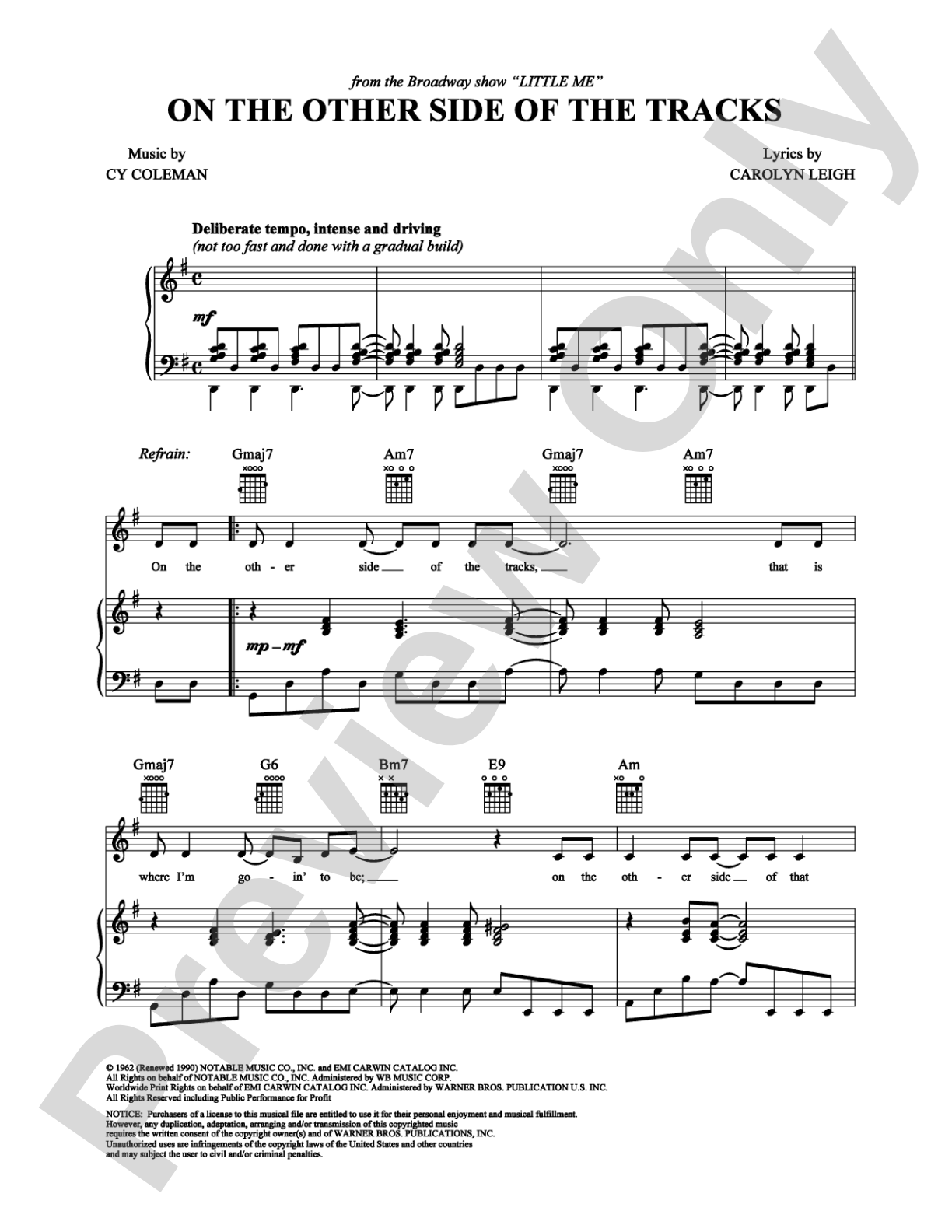
On the Other Side of the Tracks: Piano/Vocal/Chords Digital Sheet Music

On the Other Side of the Tracks: Piano/Vocal/Chords Digital Sheet Music

Cy Coleman

Item: 00-PS-0005818

Digital Download
$3.99
Description

On the Other Side of the Tracks: Piano/Vocal/Chords Digital Sheet Music isn't in MakeMusic Cloud just yet...but it could be. Let us know you'd like to see it, and you'll help shape what comes next. In the meantime, start a free trial and dive into thousands of interactive titles your students can play along with today.

Sample Audio
No sample audio found.
Sample Video
Additional Details
SKU: 00-PS-0005818

More about this title

Why we love this

This arrangement gives singers and pianists a practical, accessible way to work with a song that sits comfortably in a performance or studio setting. The chord notation makes it flexible enough for different accompaniment approaches, whether you're working from a traditional piano score or exploring other instrumental textures.

What to expect

This song carries the character of a narrative ballad, with a story-driven lyric that unfolds over a grounded harmonic foundation. The piano/vocal/chords format creates an intimate, conversational feel, as if the story is being shared directly between singer and accompanist.

Who it's for

Singers and pianists working in studio, recital, or informal performance contexts will find this arrangement straightforward and singable. It suits vocalists building a contemporary or popular music repertoire who want a flexible, readable score that doesn't require extensive arrangement work.

How to get the most out of it

  • Coordinate vocal phrasing with the pianist by marking breath points in both parts; unison phrasing between voice and piano creates cohesion in intimate settings.
  • Use the chord symbols as a springboard for accompaniment variation. Simple block chords work well for a straightforward reading, but arpeggiation or rhythmic comping can add character in performance.
  • Balance the vocal line so it sits naturally over the piano without drowning the harmonic foundation; this is especially important in smaller venues where projection matters more than volume.
  • Check the range and key against your vocalist's abilities before rehearsal; digital sheet music can be transposed easily if needed to fit a different voice type.

How to use it

Include this in a recital program where you want to shift tone or style, pairing it with other popular or contemporary vocal music for a cohesive set. It also works well for studio singers developing interpretive skills and learning how to work responsively with an accompanist.

Skills your students will build

  • Reading chord symbols and translating them into functional piano accompaniment
  • Coordinating vocal line with piano part in a duo context
  • Shaping narrative phrasing across a song structure
  • Transposing a score to match vocal range or key preference

You May Also Like