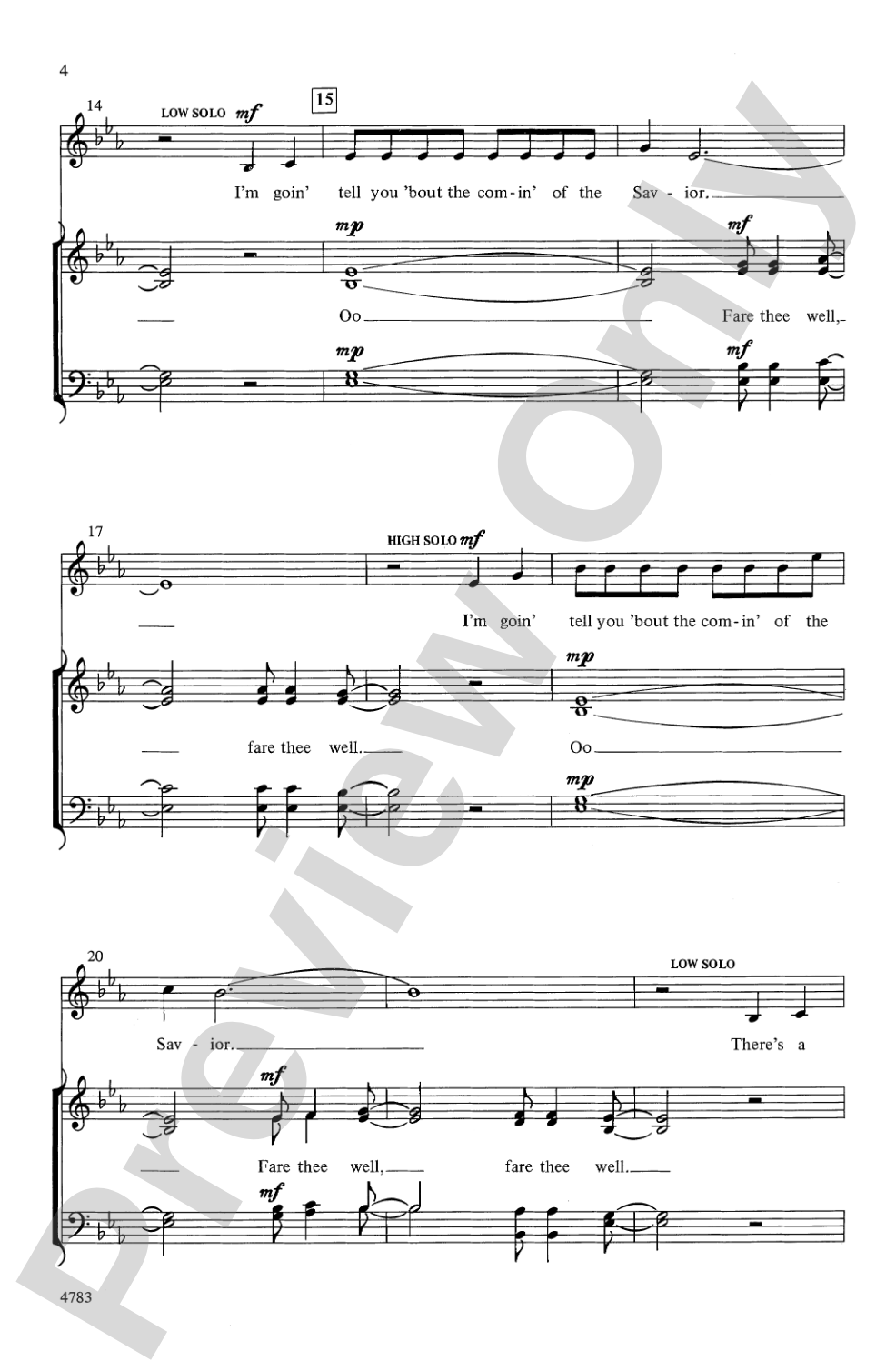
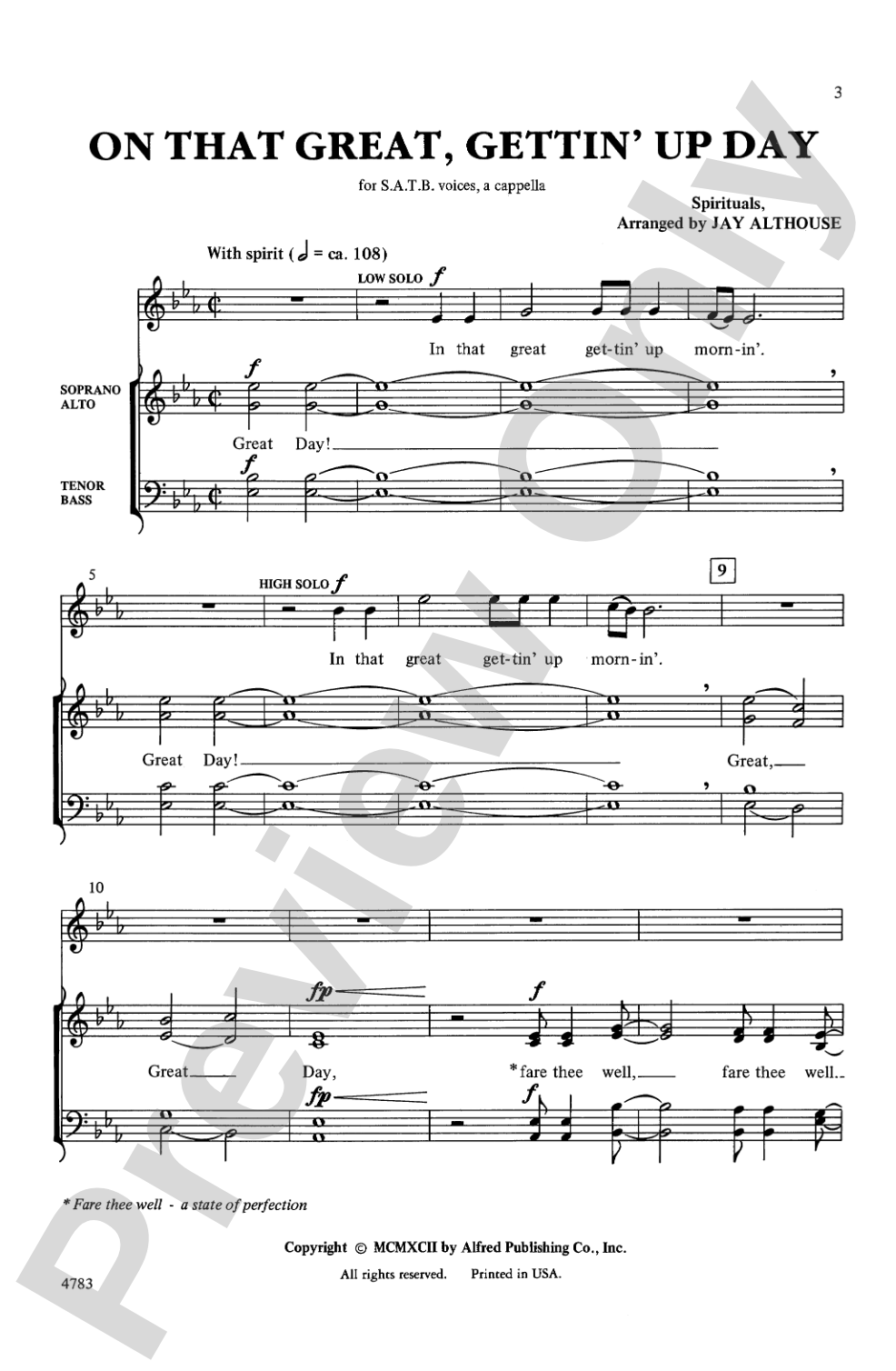
On That Great, Gettin' Up Day Sheet Music Preview

On That Great, Gettin' Up Day: SATB, a cappella Choral Octavo

Music by Jay Althouse

Item: 00-PO-0004459

Digital Download
$2.25

Minimum order quantity: 20 copies

Description
A powerful combination of two spirituals (Great Day and In That Great, Gettin' Up Mornin') in the classic choral tradition. Big dynamic contrasts and excellent voice leading (both Jay Althouse trademarks) make it exciting, yet accomplishable. Features two solo parts (high and low) which can be divided among several singers. This a cappella work will truly be the highlight of your choral concert. Appropriate for general or Christmas use.

On That Great, Gettin' Up Day: SATB, a cappella Choral Octavo isn't in MakeMusic Cloud just yet...but it could be. Let us know you'd like to see it, and you'll help shape what comes next. In the meantime, start a free trial and dive into thousands of interactive titles your students can play along with today.

Sample Audio
No sample audio found.
Sample Video
Additional Details
Series: Alfred Archive Edition: Alfred Choral Designs
Publisher: Alfred Music
Page Count: 12
SKU: 00-PO-0004459

More about this title

About the Composer: Jay Althouse

Jay Althouse

Jay Althouse studied Music Education and Music at Indiana University of Pennsylvania, where he later received the Distinguished Alumni award. His career spans both the publishing industry (eight years as a rights and licenses administrator) and composition, resulting in more than 800 choral works performed throughout the English-speaking world. He holds membership in ASCAP and has been a regular recipient of the ASCAP Special Award.

Beyond composition, Althouse has shaped music education through numerous collaborative projects with his wife, Sally K. Albrecht, including children's musicals and widely adopted books such as The Complete Choral Warm-up Book and Accent on Composers. He has also authored classroom resources on music literacy and composer study. His contributions to American musical life extend to community service, including board roles with the North Carolina Master Chorale and the Folk Art Society of America.

Why we love this

Althouse's gift for combining spirituals with sophisticated voice leading creates an a cappella piece that feels both substantial and singable. The dual-soloist design allows you to feature multiple singers without compromising ensemble cohesion, and the dramatic dynamic arc guarantees an unforgettable concert moment.

What to expect

The piece radiates joy and hope grounded in the spiritual tradition. You'll feel the music build from intimate, almost whispered passages to moments of exultant, full-voiced proclamation, with the two melodic strands weaving together into something greater than either alone.

Who it's for

Choirs with solid reading skills and the ability to balance full SATB ranges will find this work rewards their effort. Any ensemble seeking a spiritually resonant piece that showcases dynamic control and ensemble blend can program this successfully, whether in a sacred concert or holiday service.

How to get the most out of it

  • Prepare the two solo lines (high and low) with different singers for each verse or section to give soloists rest and add textural variety without breaking the piece's momentum.
  • Shape the dynamic contrasts deliberately; Althouse's writing uses silence and volume as structural elements, so commit fully to both the quiet moments and the powerful climax.
  • Balance the blended spiritual material by rehearsing each traditional melody separately before combining them, so singers understand both the roots and the synthesis.

How to use it

This octavo works equally well as a concert finale or as part of a holiday program exploring American choral traditions. Its 12 pages fit comfortably into any concert format, and the a cappella texture makes it an excellent anchor point between accompanied works, giving your audience a moment of focused listening.

Skills your students will build

  • Balancing multiple melodic lines in close harmony
  • Controlling dynamic shifts and sustained intensity
  • Blending spirituals with traditional choral voicing
  • Singing solo passages within ensemble texture
  • Reading and performing without instrumental support

You May Also Like