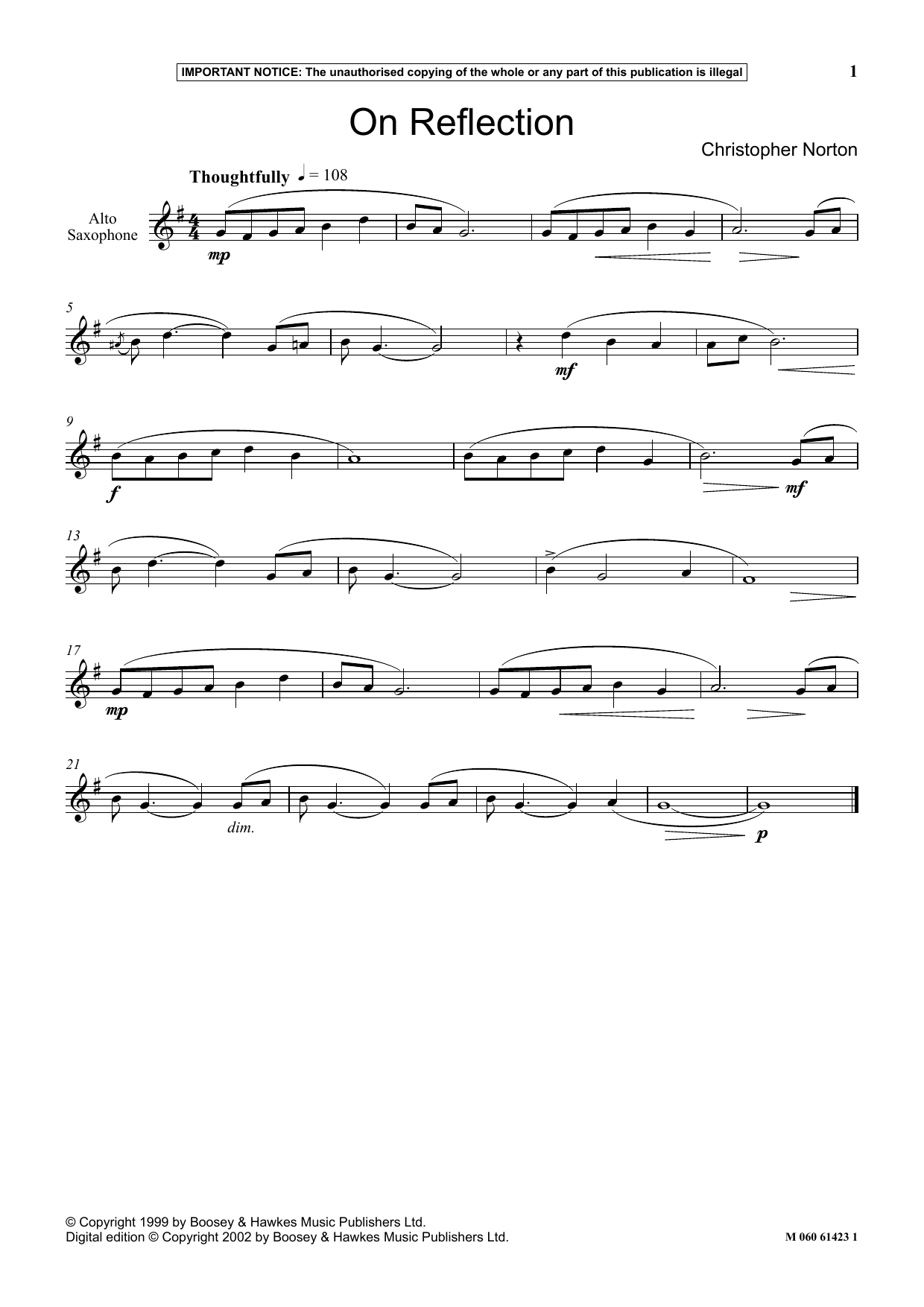
Christopher Norton is a British composer and educator whose work spans classical composition, music education, and contemporary concert music. His writing for students demonstrates both technical sophistication and accessibility, making him a trusted voice in music pedagogy across multiple instruments and ensemble formats.
Why we love this
Norton's reflective character pieces have a way of sounding more substantial than their modest page count suggests. This piece rewards careful listening while remaining genuinely playable, the kind of writing that reminds students why they started studying music in the first place.
What to expect
There's a quiet inwardness here, the sense of turning something over in your mind and examining it from new angles. The music unfolds without urgency, inviting both performer and listener into a space of genuine contemplation.
Who it's for
This suits intermediate musicians who are developing interpretive maturity. It works equally well as a solo recital piece or as part of a larger ensemble program where a moment of introspection serves the overall arc.
How to get the most out of it
Shape the phrasing with attention to the natural breathing points rather than relying on dynamic markings alone; let the musical architecture guide your legato.
Explore the texture carefully in rehearsal to ensure accompanying voices don't overshadow the primary melodic line.
Approach tempo as a flexible framework rather than a metronomic absolute; allow the reflective quality to breathe without rushing.
How to use it
Consider placing this early in a concert to establish a reflective mood, or use it as a palate cleanser between more dramatic works. It's also effective as an encore or as a standalone recital opener that sets expectations for thoughtful, chamber-like music making.
Skills your students will build
Sustaining long-lined phrasing across multiple measures
Balancing melody and accompaniment texture
Finding musical expression through subtle dynamic control
Interpreting character and mood from compositional language
You May Also Like
Scan to Complete Your Purchase
Use your phone's camera to scan the code below
You'll log in on your phone and the order will be added to your account