
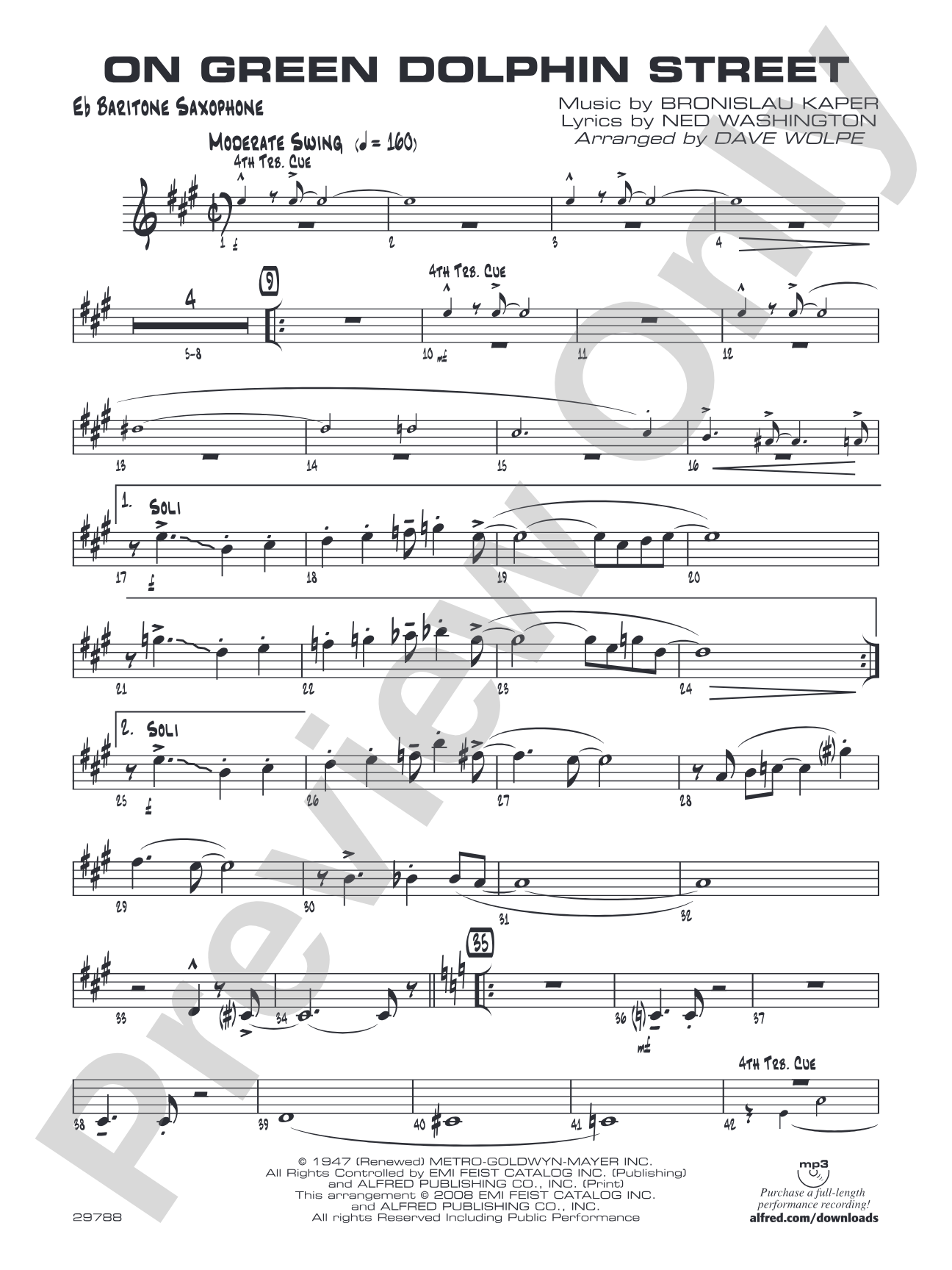

On Green Dolphin Street: E-flat Baritone Saxophone
Music by Bronislau Kaper, lyrics by Ned Washington / arr. Dave Wolpe
Grade: 3 (Medium)
Item: 00-PC-0016183_BTX
$3.00
Pickup currently not available
Description
Only arranger Dave Wolpe can make On Green Dolphin Street the ideal address. A combination of swing and Latin feel, solos for alto 1 and tenor 1 (written out), lead trumpet range is to written A above the staff, a sax soli and a shout chorus. Optional parts are included also for flute, horn, baritone horn/tenor sax and tuba, so what's not to like? It's a superb chart you will enjoy for years to come. (2:56)


Don't just read it, hear it, play along with it, and watch your students grow with it. In MakeMusic Cloud, On Green Dolphin Street: E-flat Baritone Saxophone comes alive with professional accompaniment, adjustable tempo, and built-in practice tools that turn solo practice into real progress.
Open in the Player
Jump straight in and assign it today.
Start Your Free Trial
Open this title and explore the full library in minutes.
Sample Audio
1
Audio File
--:--
0:00
0:00
Sample Video
Additional Details
Series:
Jazz Band Series
Publisher:
Alfred Music
Page Count:
118
SKU:
00-PC-0016183_BTX
More about this title
About the Arranger: Dave Wolpe
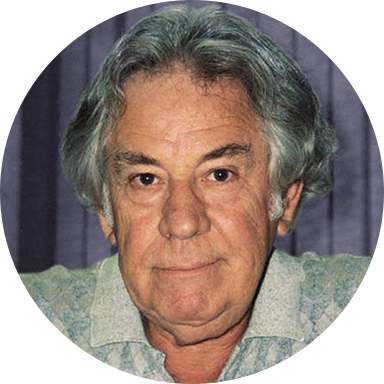
Dave Wolpe has been writing arrangements since 1965, bringing decades of professional experience to the jazz ensemble repertoire. His work for the Glenn Miller Orchestra spans dozens of charts, and he served as co-arranger on the platinum-selling In the Christmas Mood. Throughout his career, he has contributed arrangements to orchestras led by Ray Anthony, Lawrence Welk, and Les Brown, establishing himself as a trusted voice in swing and big band circles.
Why we love this
Wolpe's touch transforms a standard into something immediately playable yet musically substantial. The balance between accessibility (Grade 3) and authentic jazz vocabulary makes this chart work equally well for students developing their chops and ensembles seeking repertoire that sounds polished without overreaching technically. Written-out solos, optional doublings, and a shout chorus give students memorable moments to perform while keeping the arrangement flexible for your specific instrumentation.
What to expect
A chart that swings with purpose and settles into a groove. The interplay between the trumpet's bright lead and the saxes' driving section creates forward momentum, while the Latin feel offers a moment of rhythmic color before returning to classic swing. Written solos give soloists room to breathe without improvisation demands, making the piece feel polished and complete.
Who it's for
Jazz ensemble directors working with intermediate musicians who need repertoire that balances authentic swing language with manageable technical demands. Students ready to navigate solo passages, stylistic shifts between swing and Latin, and collaborative ensemble playing will find plenty to sink their teeth into.
How to get the most out of it
- Shape the swing feel by anchoring the rhythm section's pocket early in rehearsal; the Latin passages demand a crisp contrast, so rehearse those transitions separately before running the full chart.
- Address the lead trumpet range (written A above the staff) during sectional rehearsals with your first trumpet to confirm comfort and plan any necessary adjustments before ensemble reading.
- Lock the alto 1 and tenor 1 solos by having those players work through phrasing and articulation independently, then sit with the rhythm section to groove the accompaniment underneath.
- Bring out the sax soli and shout chorus with clear dynamic intent; these moments anchor the energy arc, so conduct them with conviction and encourage the sections to breathe together.
How to use it
Program this as a centerpiece on a jazz concert, bookended by a standards feature or an uptempo opener. Its three-minute runtime and strong finish make it an excellent closing number for a set, and its approachable difficulty allows younger ensembles to stand confidently alongside more advanced groups on a mixed-level festival or competition.
Skills your students will build
- Swing articulation and phrasing on written solos
- Transitioning between swing and Latin rhythmic feels
- Section ensemble balance and soli cohesion
- Reading lead trumpet in the upper register
- Listening and responding to ensemble dynamic shaping