On Green Dolphin Street: Lead Sheet Digital Sheet Music

On Green Dolphin Street: Lead Sheet Digital Sheet Music

Bronislau Kaper, Jimmy Dorsey

Item: 00-PS-0000680

Digital Download
$1.99
Description

On Green Dolphin Street: Lead Sheet Digital Sheet Music isn't in MakeMusic Cloud just yet...but it could be. Let us know you'd like to see it, and you'll help shape what comes next. In the meantime, start a free trial and dive into thousands of interactive titles your students can play along with today.

Sample Audio
No sample audio found.
Sample Video
Additional Details
SKU: 00-PS-0000680

More about this title

About the Artist: Jimmy Dorsey

Jimmy Dorsey (1904-1957) led one of the most popular big bands of the swing era, commanding orchestras that defined the sound of 1930s and 1940s jazz. A clarinetist and saxophonist of exceptional versatility, Dorsey fronted ensembles that recorded countless standards and novelty numbers, many of which remain teaching staples in jazz curricula today. His arrangements favored clarity and accessibility without sacrificing sophistication, making his recordings excellent models for understanding big band voicing and ensemble balance.

Dorsey's contribution to American popular song extends beyond performance. He appeared regularly on radio and in films, introducing new compositions to mass audiences and helping shape which standards became canonical. For music educators, his recordings serve as primary sources for understanding how swing-era musicians interpreted melody, negotiated harmonic changes, and collaborated across sections.

Why we love this

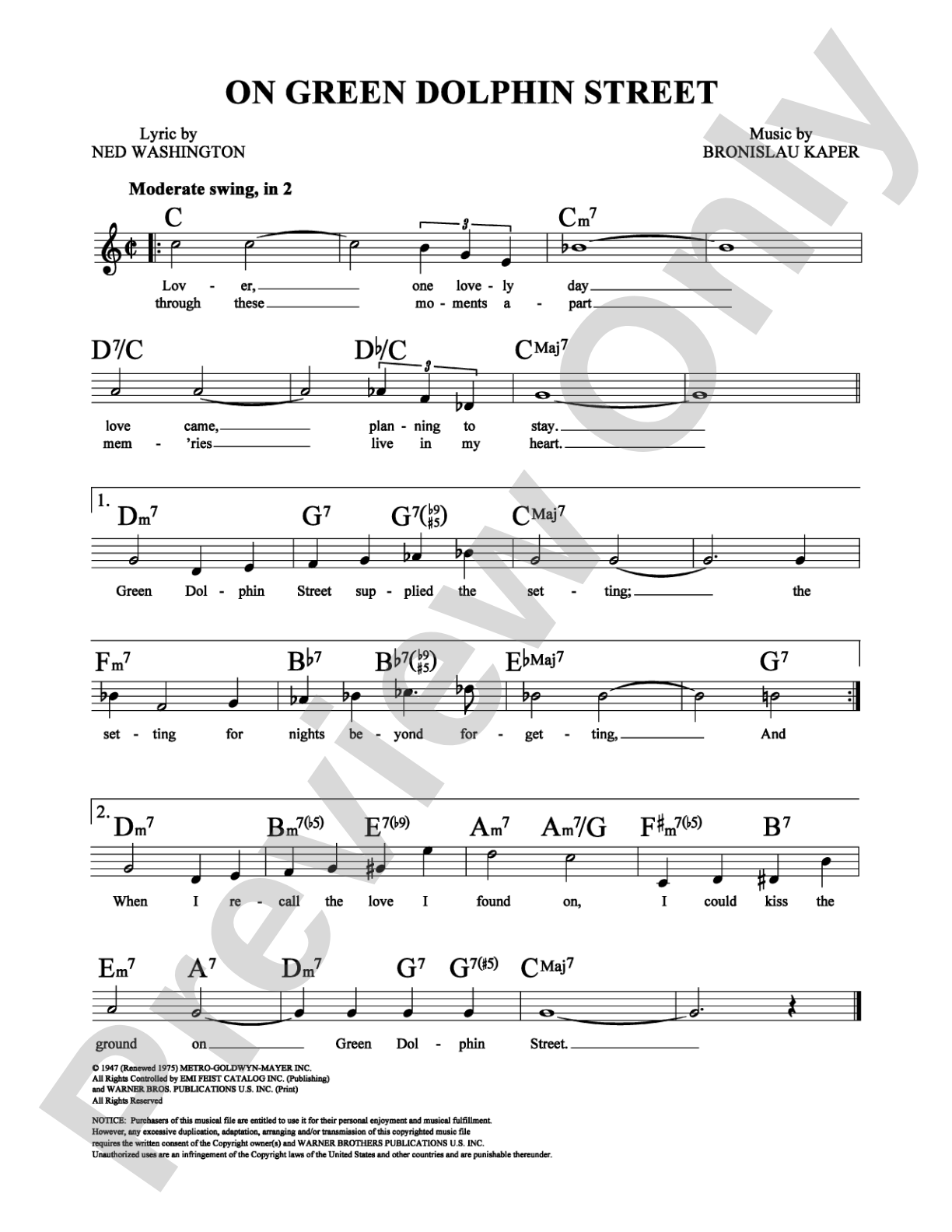
This lead sheet captures a standard that sits at the intersection of accessibility and harmonic richness, making it ideal for jazz combos, small ensembles, or soloists building their repertoire. The melody is singable and memorable, yet the chord changes offer legitimate improvisation challenges that reward players who engage seriously with voice leading and harmonic substitution. Dorsey's association with the tune brings a wealth of recorded interpretations that students can study alongside their own performance.

What to expect

Green Dolphin Street swings with the ease of a tune that has been played thousands of times and polished by each generation of musicians who encountered it. There is an underlying sophistication in the harmonic movement that prevents the melody from ever feeling simple, even though it sits naturally in the voice and across most instruments. The whole character sits in a sweet spot between nostalgia and timeless musicality.

Who it's for

Jazz musicians at the intermediate level and above who are building a standards repertoire, jazz combo directors seeking accessible yet harmonically substantial material, and soloists (saxophonists, trumpeters, singers, pianists) preparing for jam sessions or informal performances. This lead sheet works equally well for a pianist comping changes, a horn player taking a solo, or a vocalist learning a classic tune from the swing repertoire.

How to get the most out of it

  • Study at least one recorded version of the tune from the swing era before you begin, listening specifically for how the melody bends around the chord changes and where the phrasing breathes.
  • Treat the lead sheet as a starting point, not a fixed arrangement. Mark your own articulation and phrasing choices, then compare them against a reference recording to hear where Dorsey-era players pushed or pulled the beat.
  • Work through the changes at a slow tempo first, singing each chord progression aloud to internalize the harmonic movement before improvising over it.

How to use it

Feature this tune in a jazz history or standards unit where students can compare the lead sheet against recorded performances and discuss how interpretation changes with tempo, voicing, and era. Use it as the centerpiece of a small-group recital or as part of a jazz combo concert where players at different proficiency levels can each contribute (soloist, rhythm section, melody instruments) without straining the ensemble balance.

Skills your students will build

  • Reading lead sheet notation and understanding chord symbols in a real standard
  • Identifying and navigating harmonic changes that support melodic phrasing
  • Developing solo improvisation strategies over a ii-V-I progression
  • Listening for and replicating swing-era articulation and rubato
  • Collaborating with rhythm section players to maintain ensemble cohesion over changes

You May Also Like