
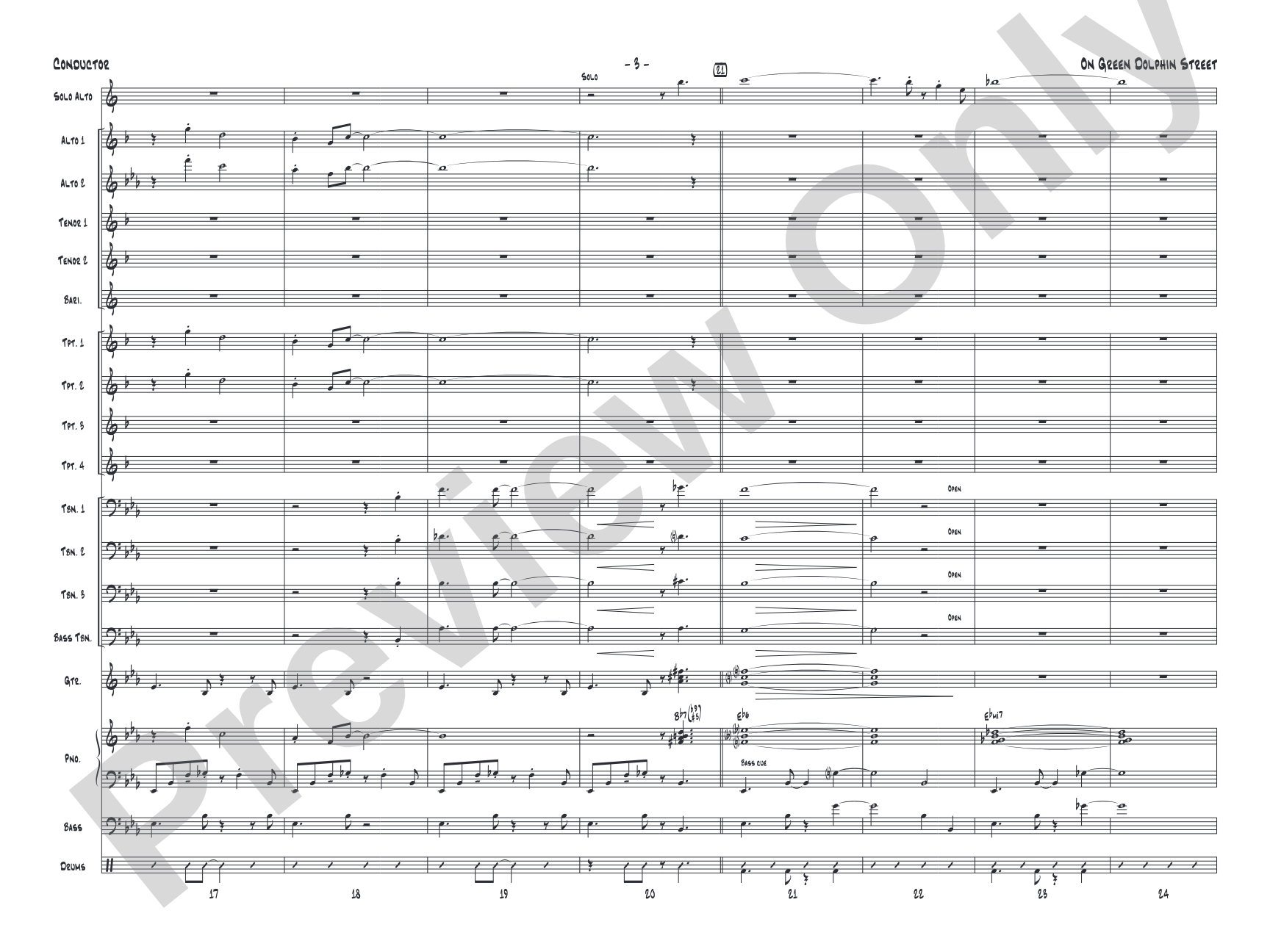
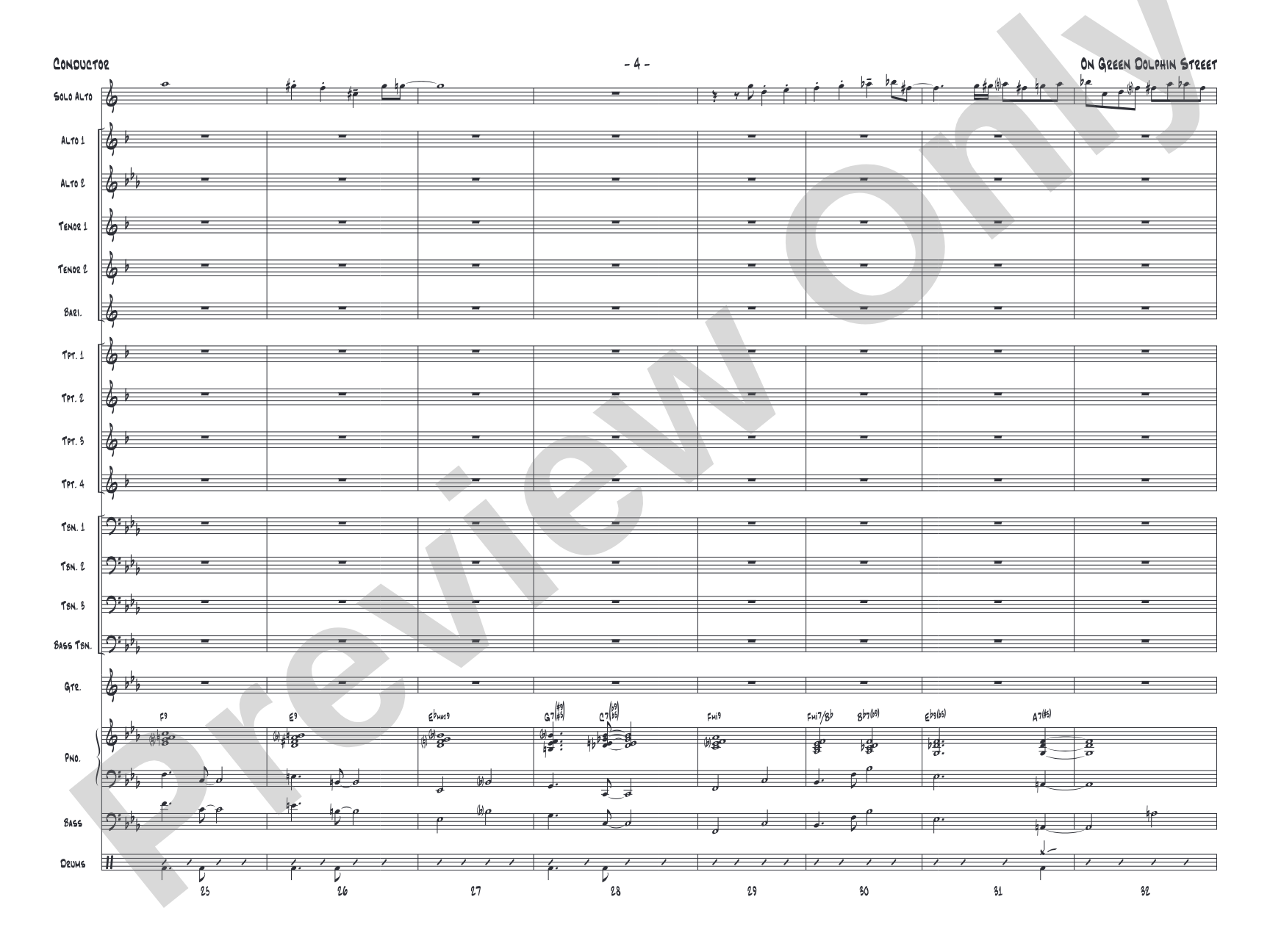
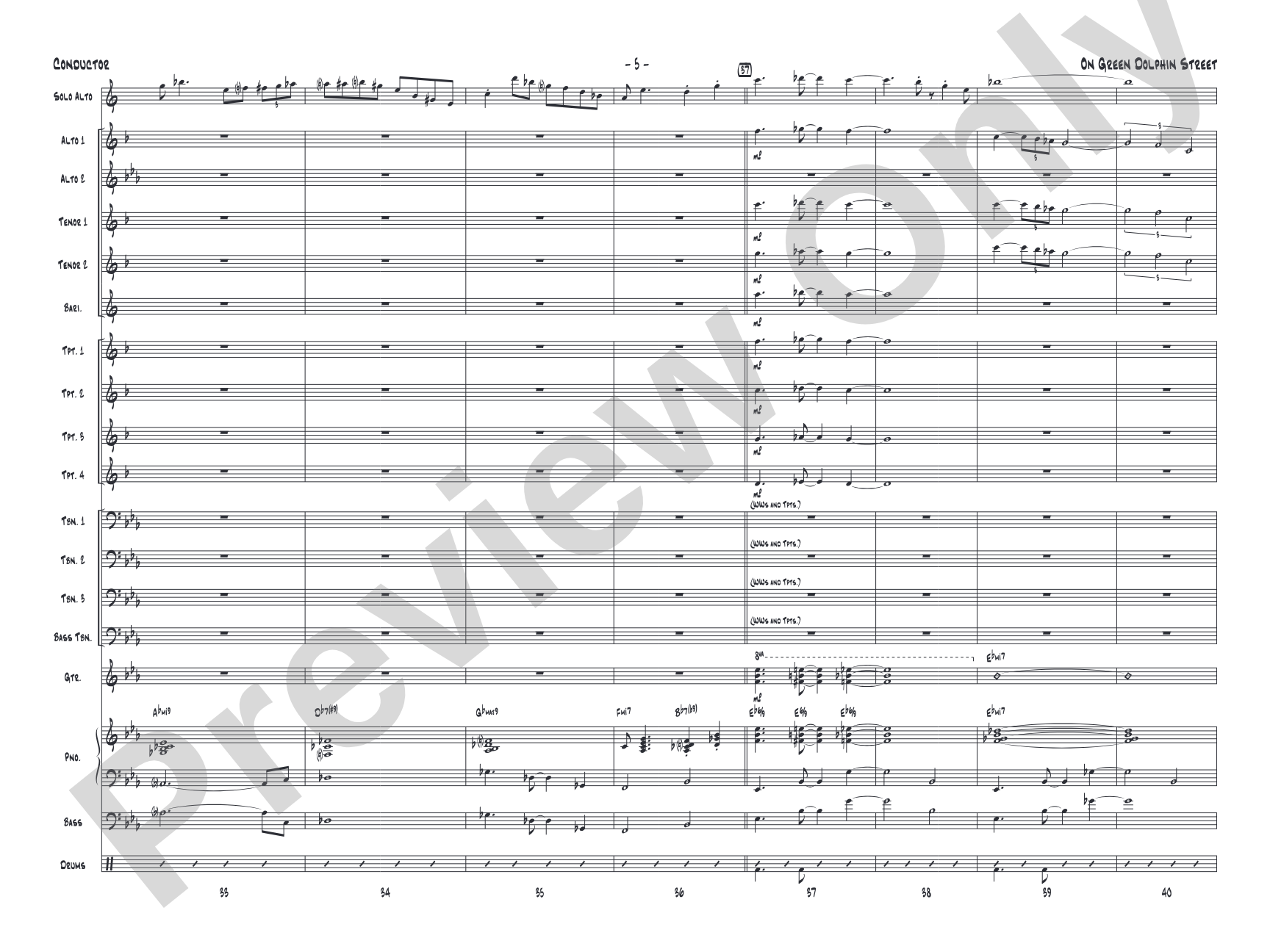
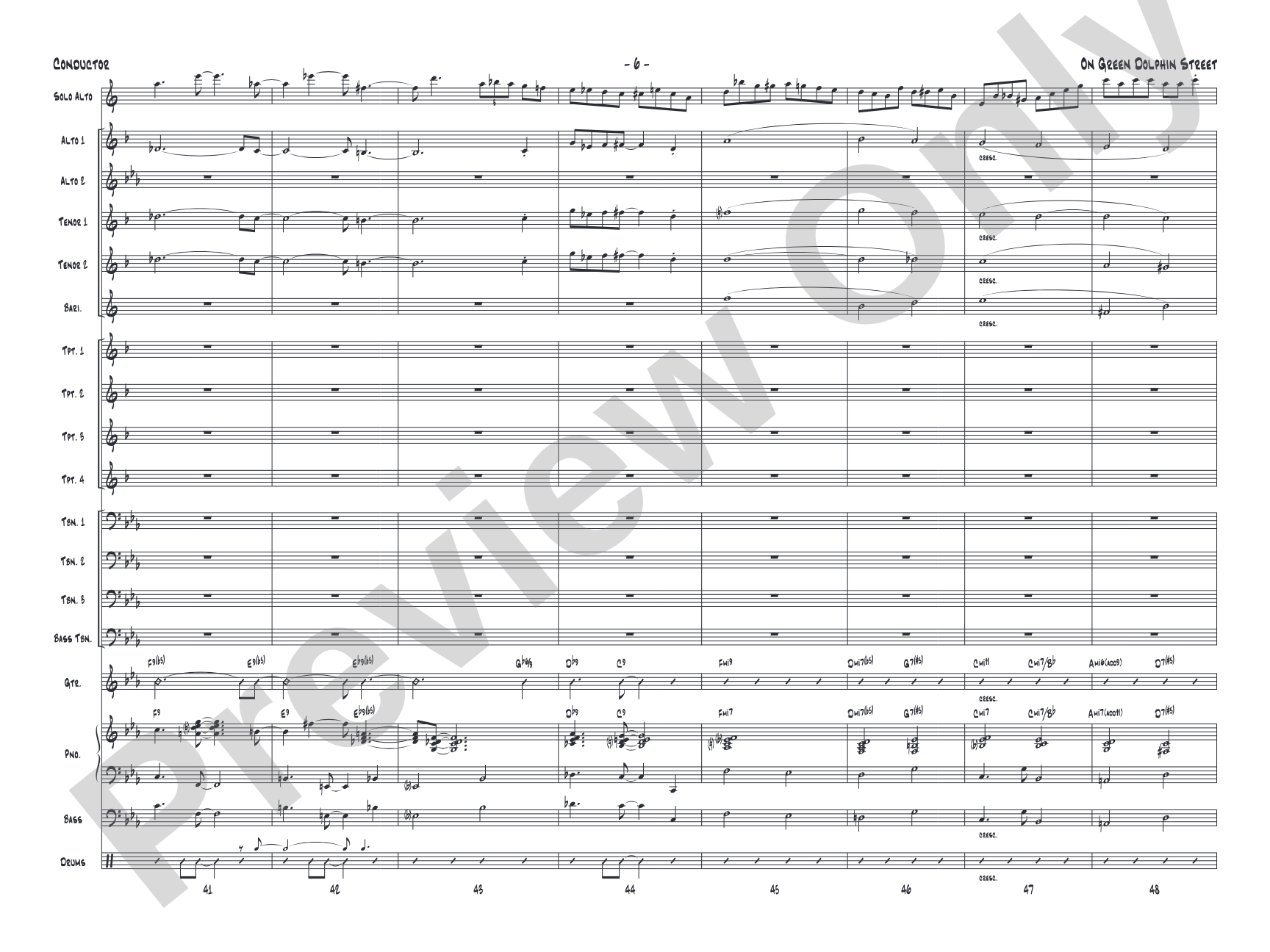
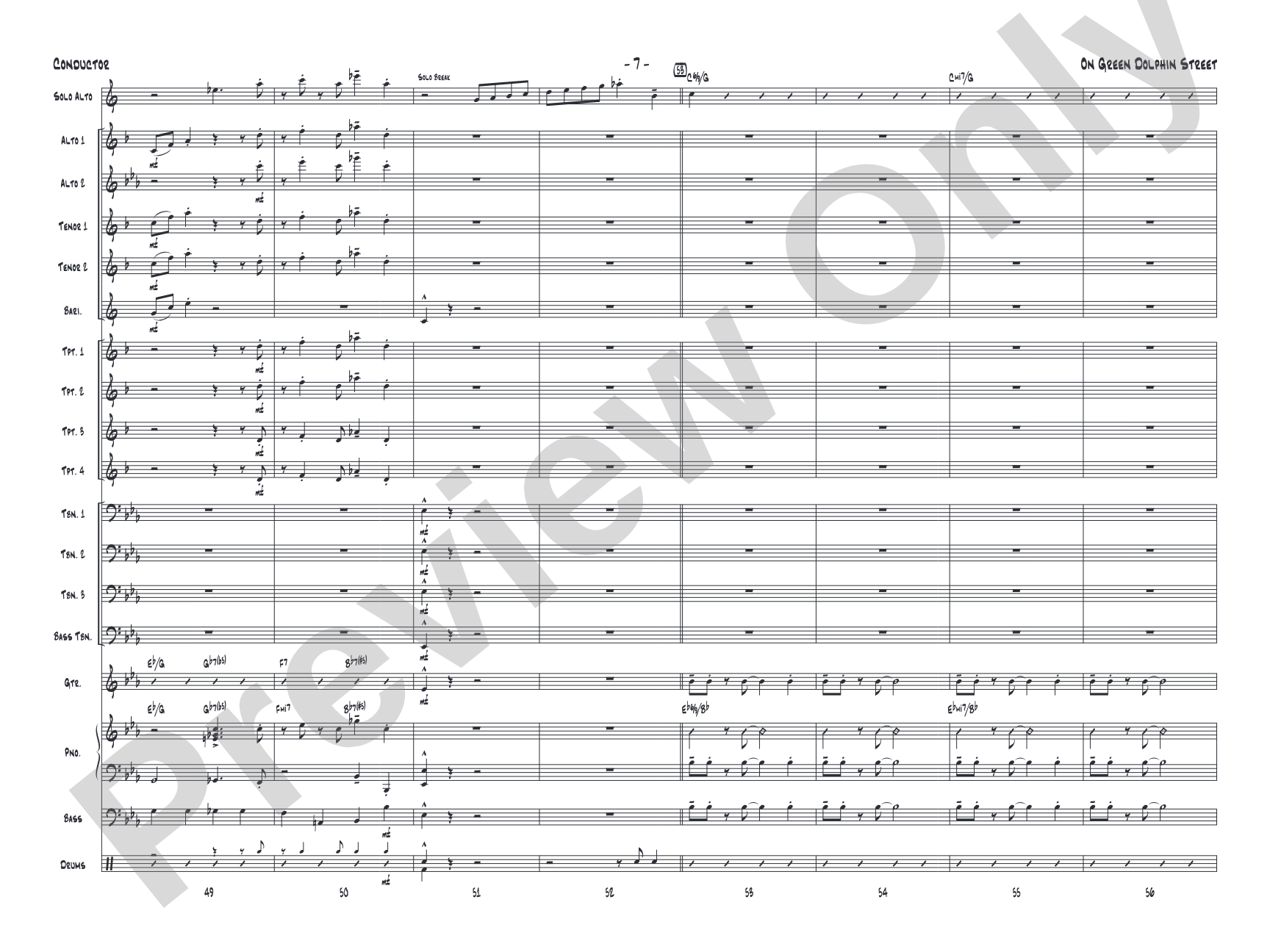
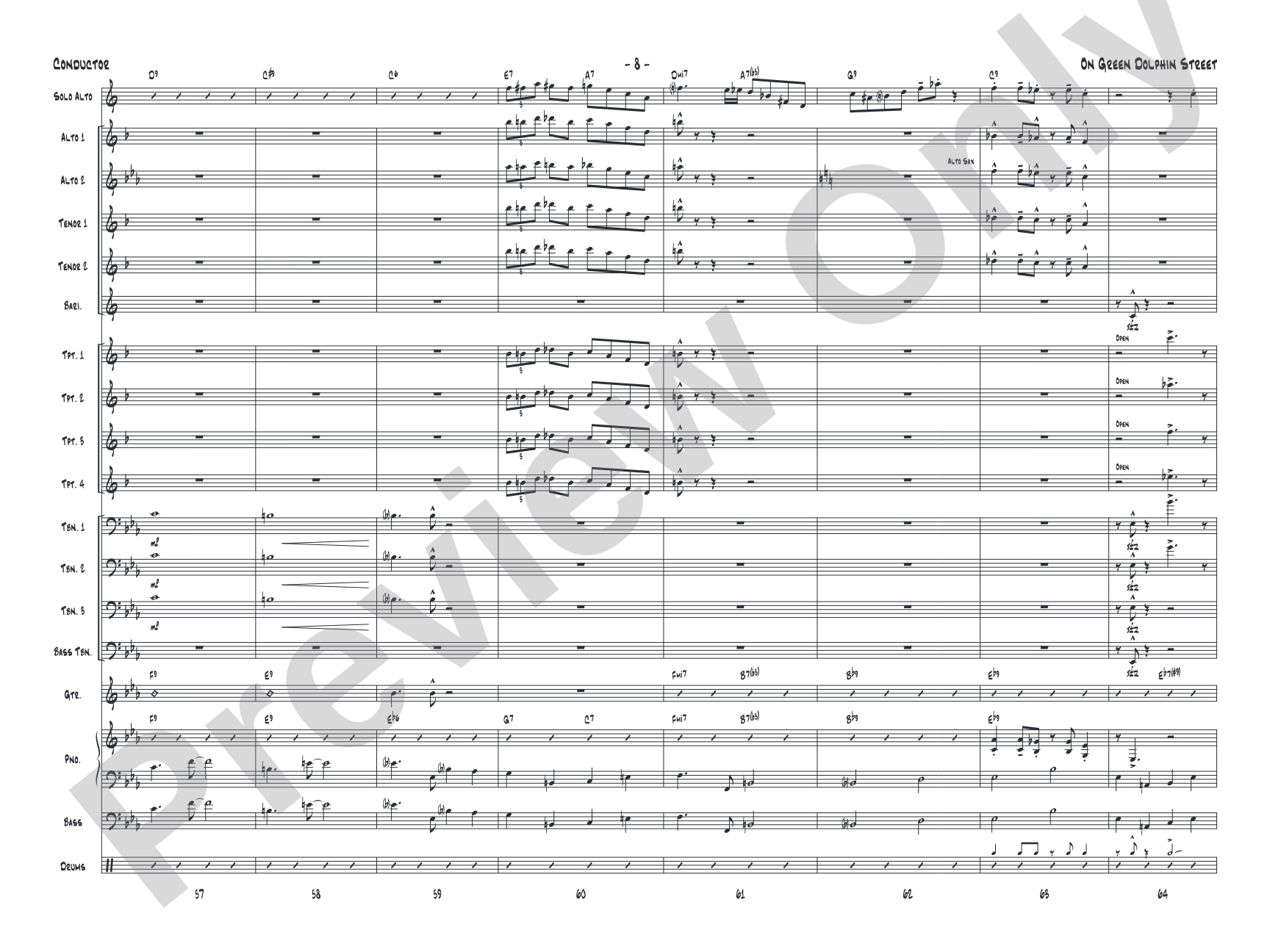
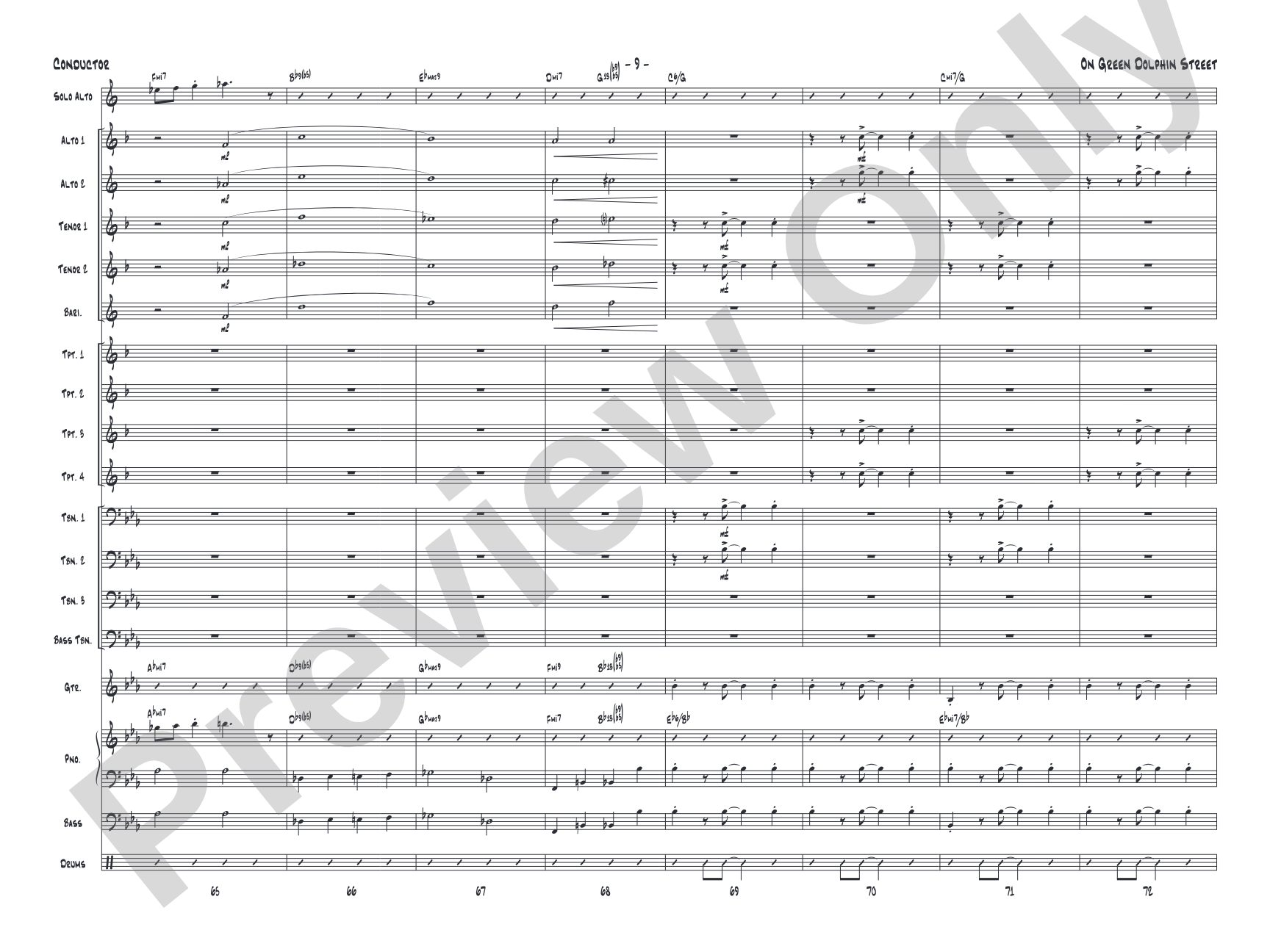
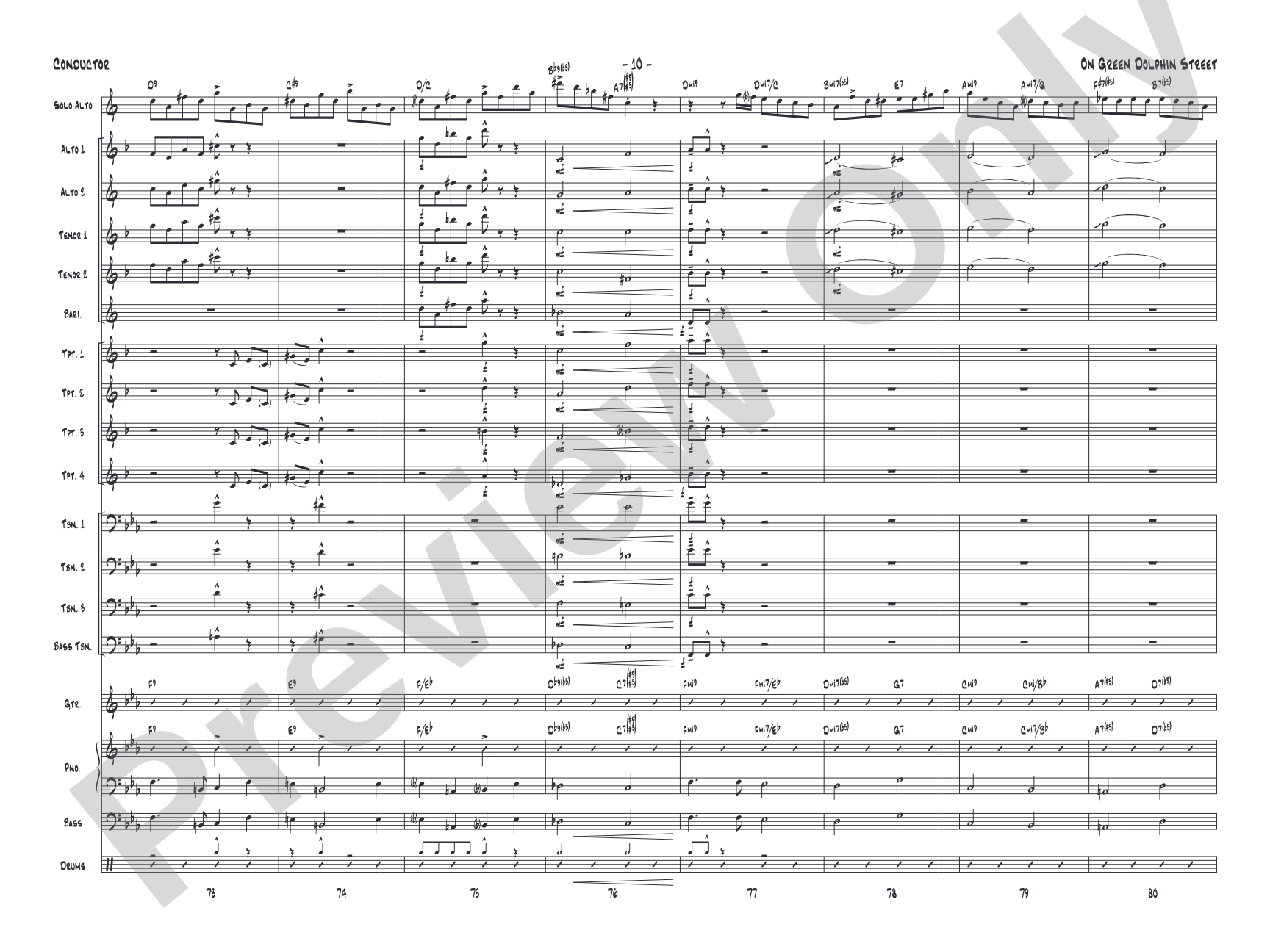
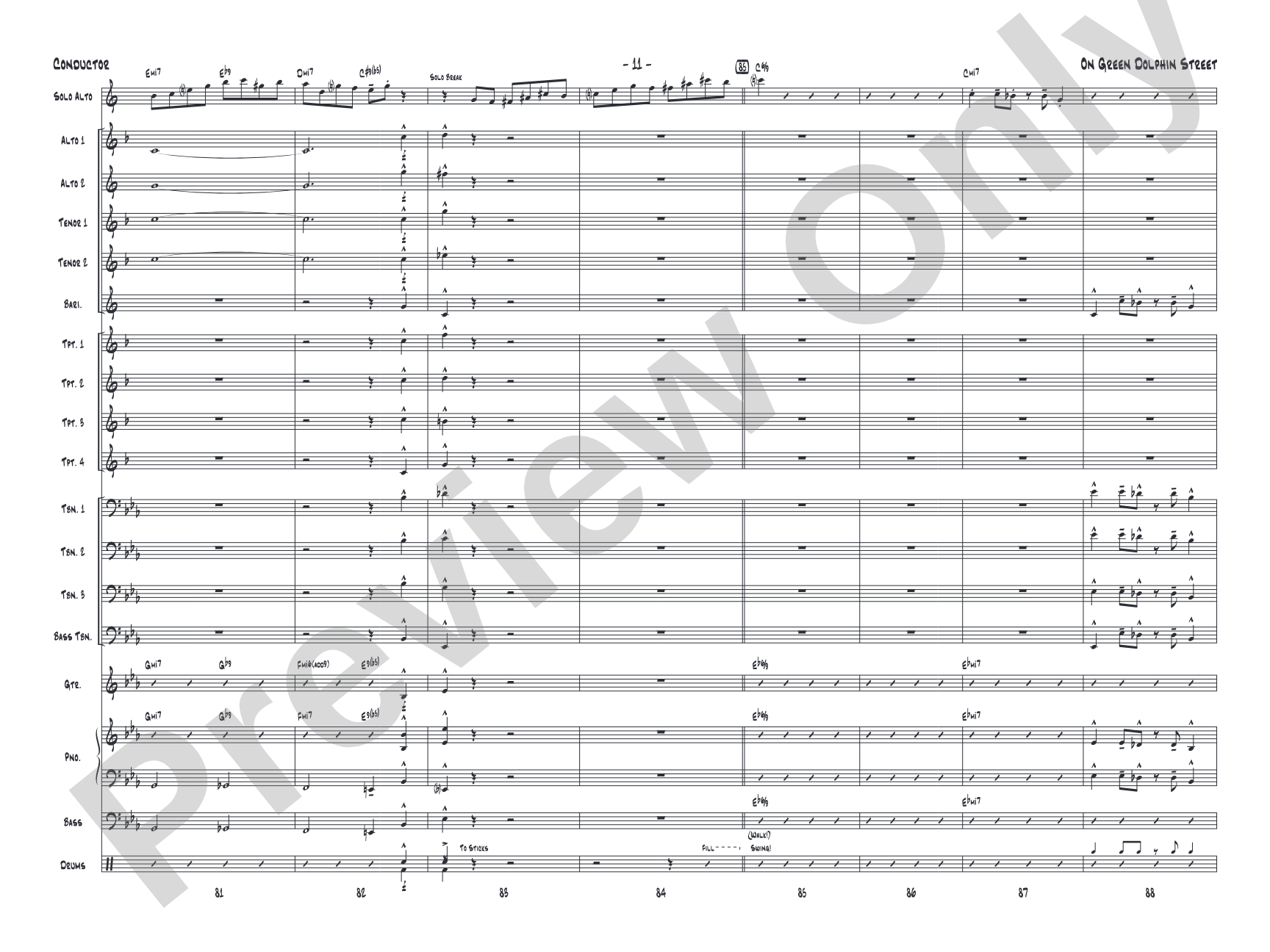
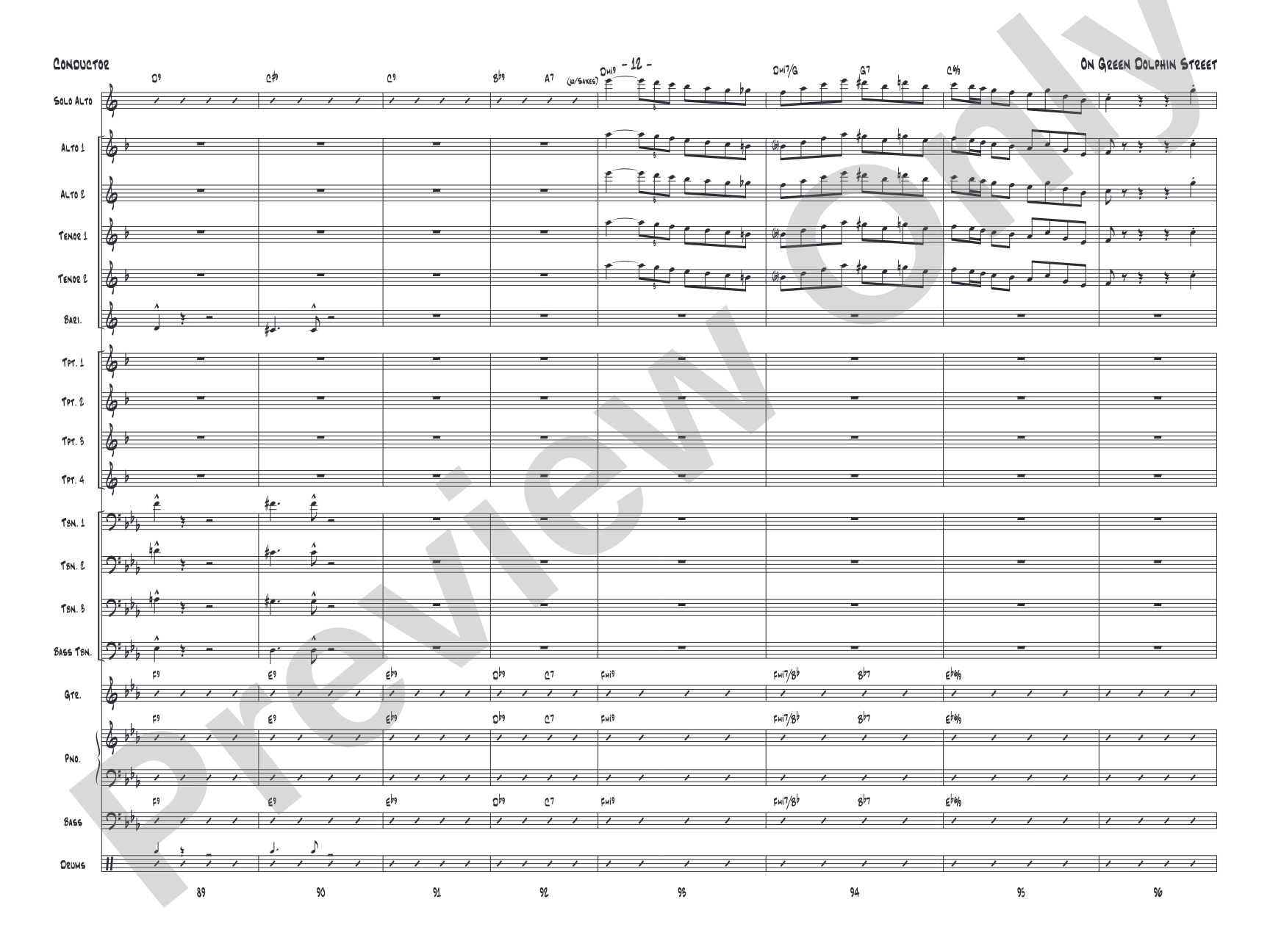
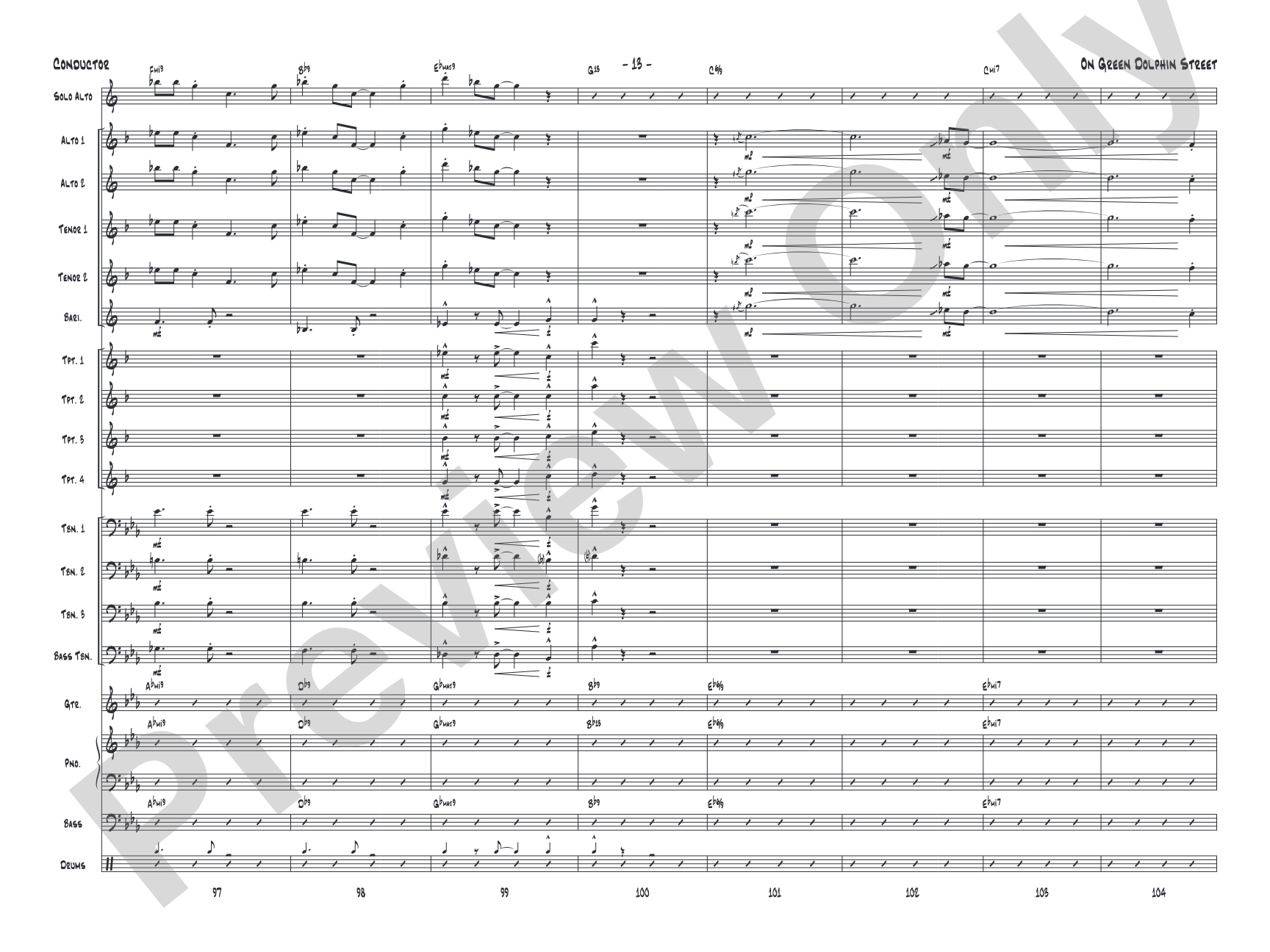
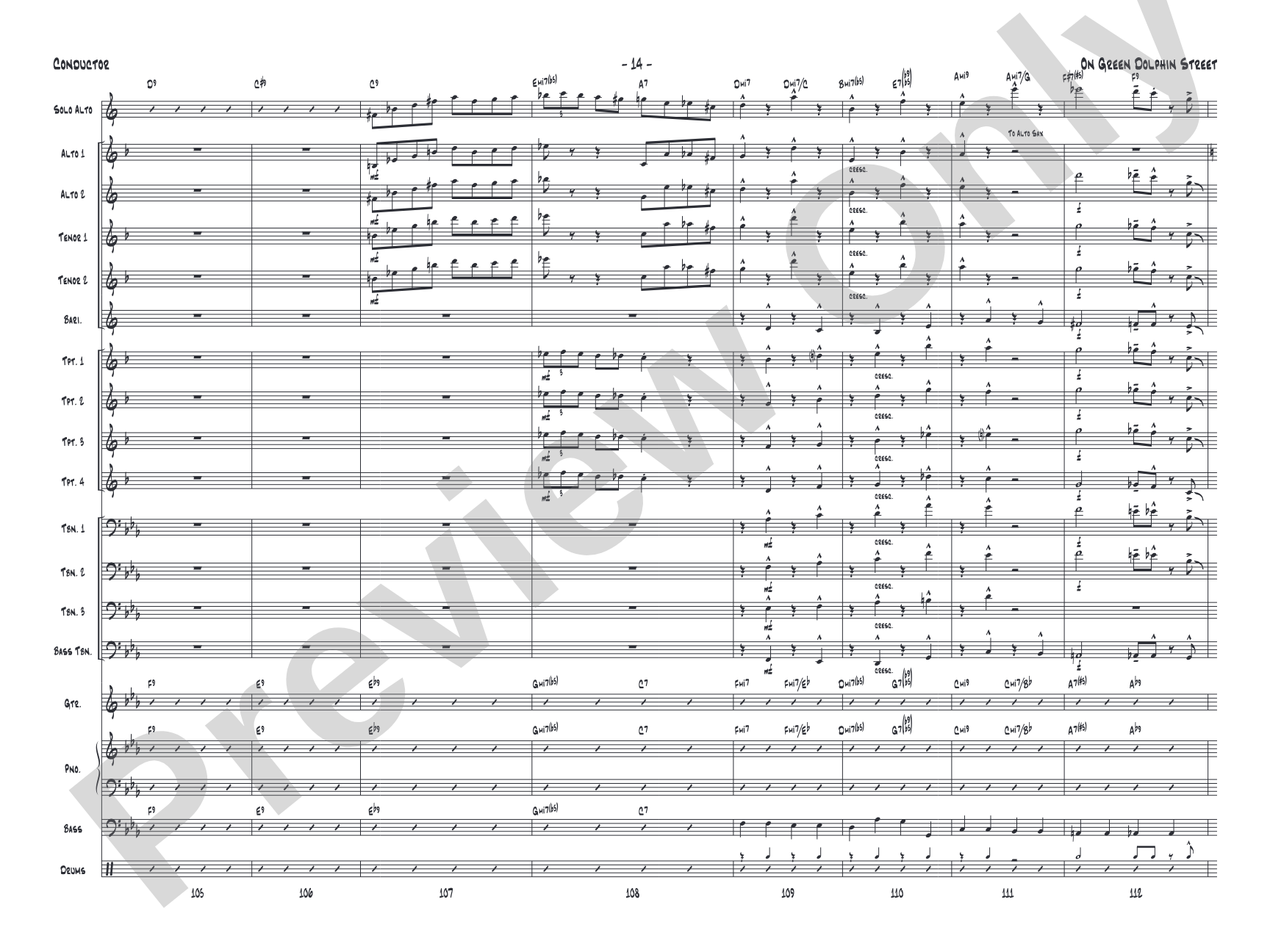
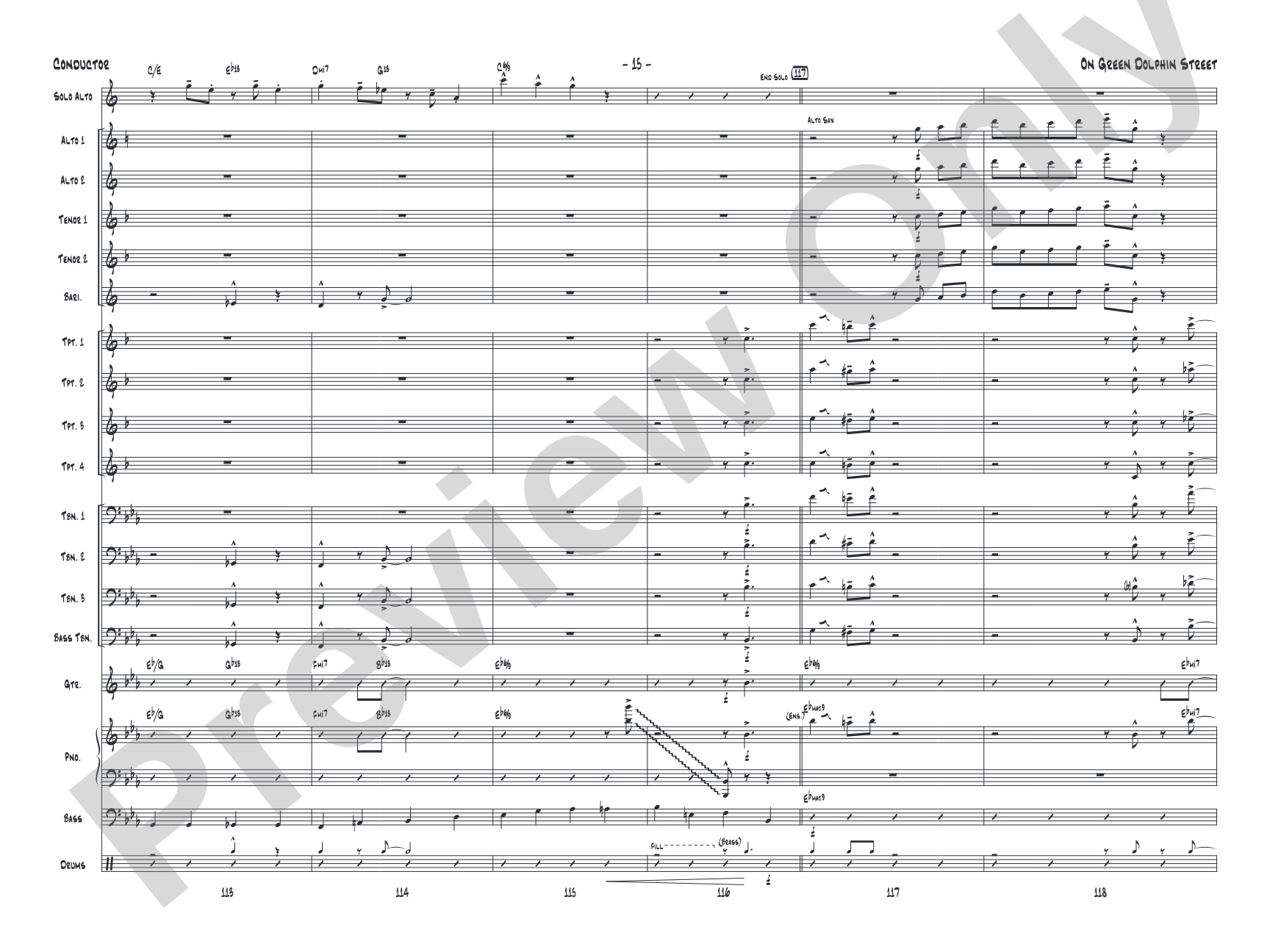
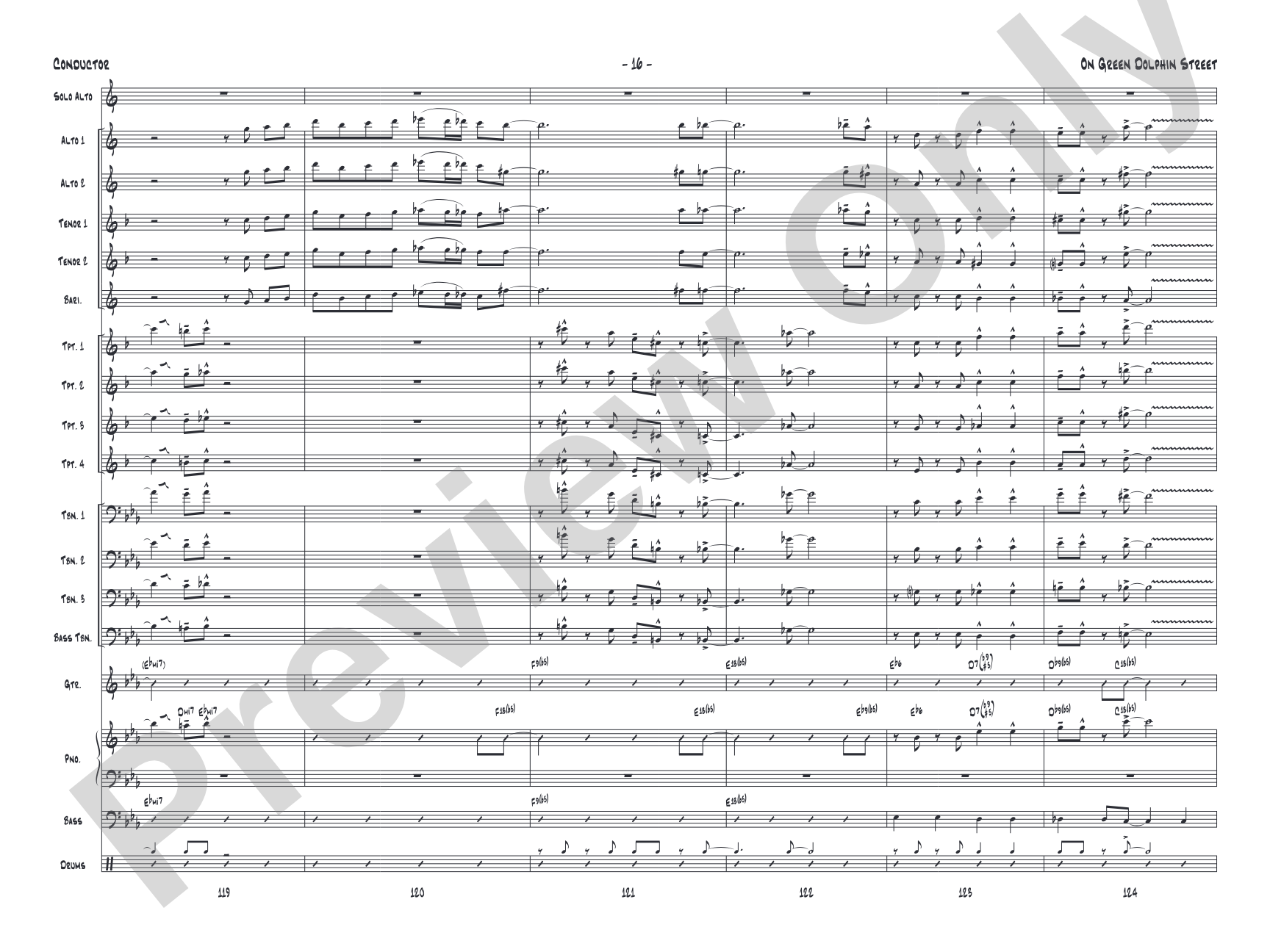
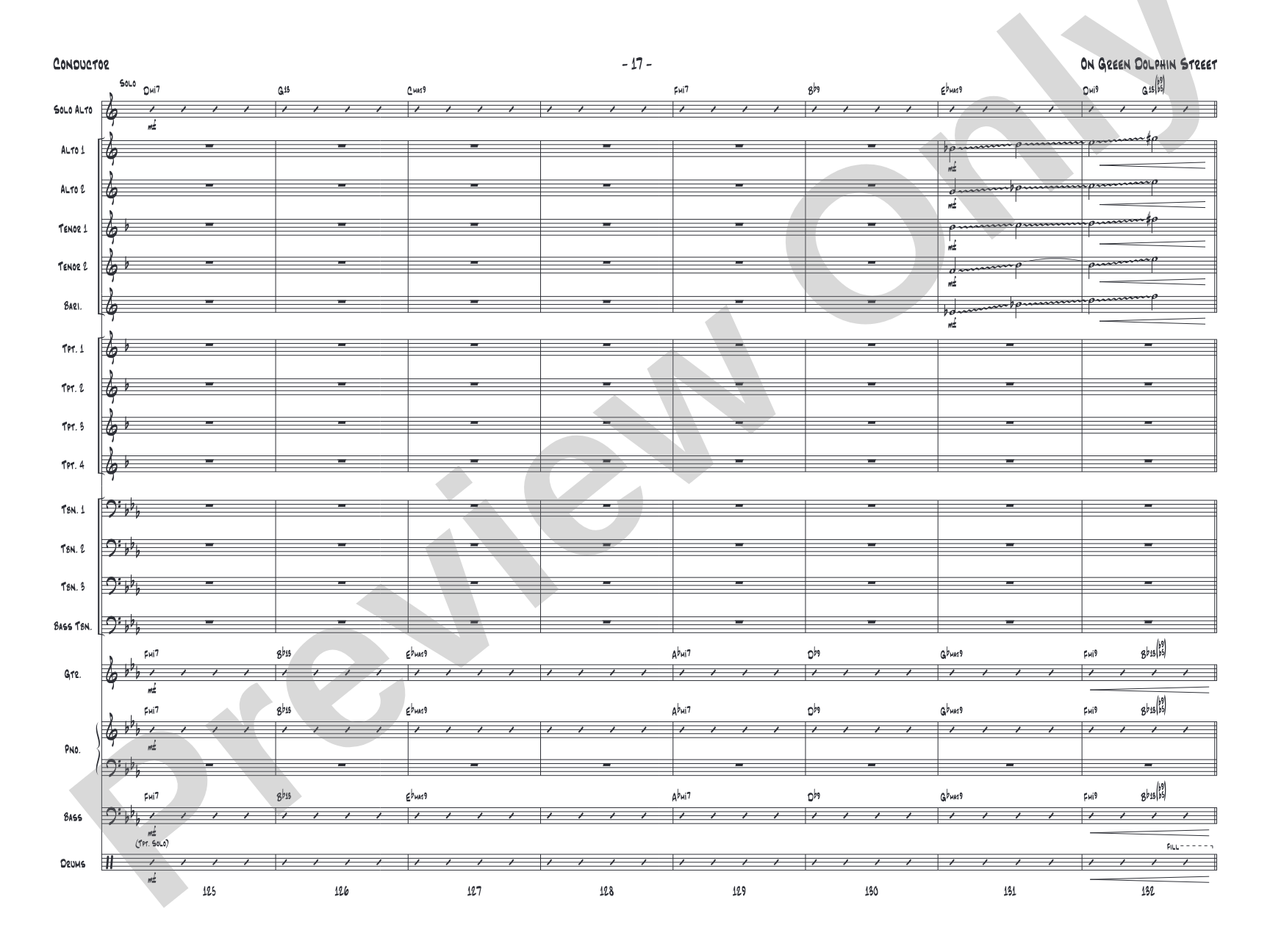
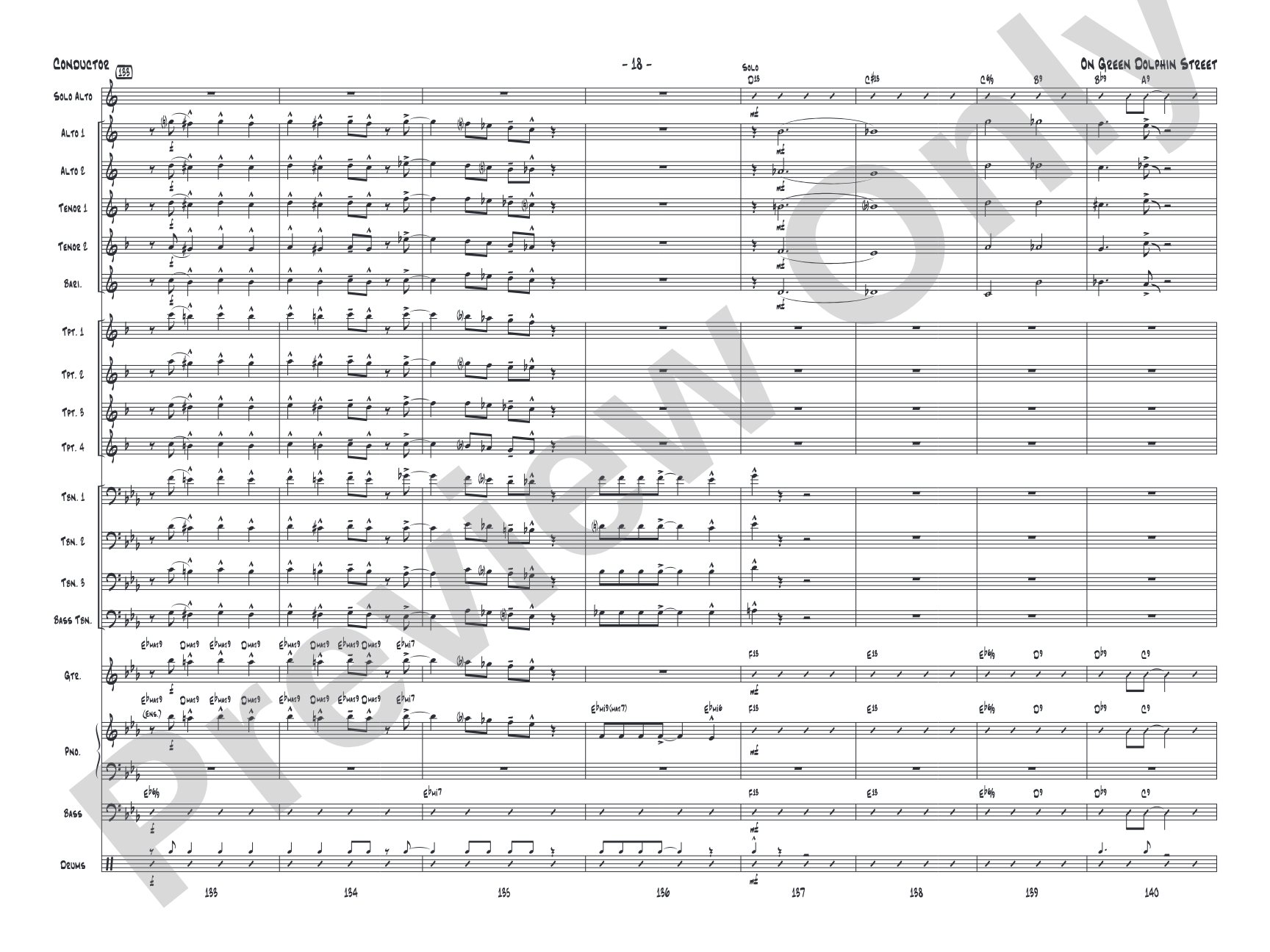
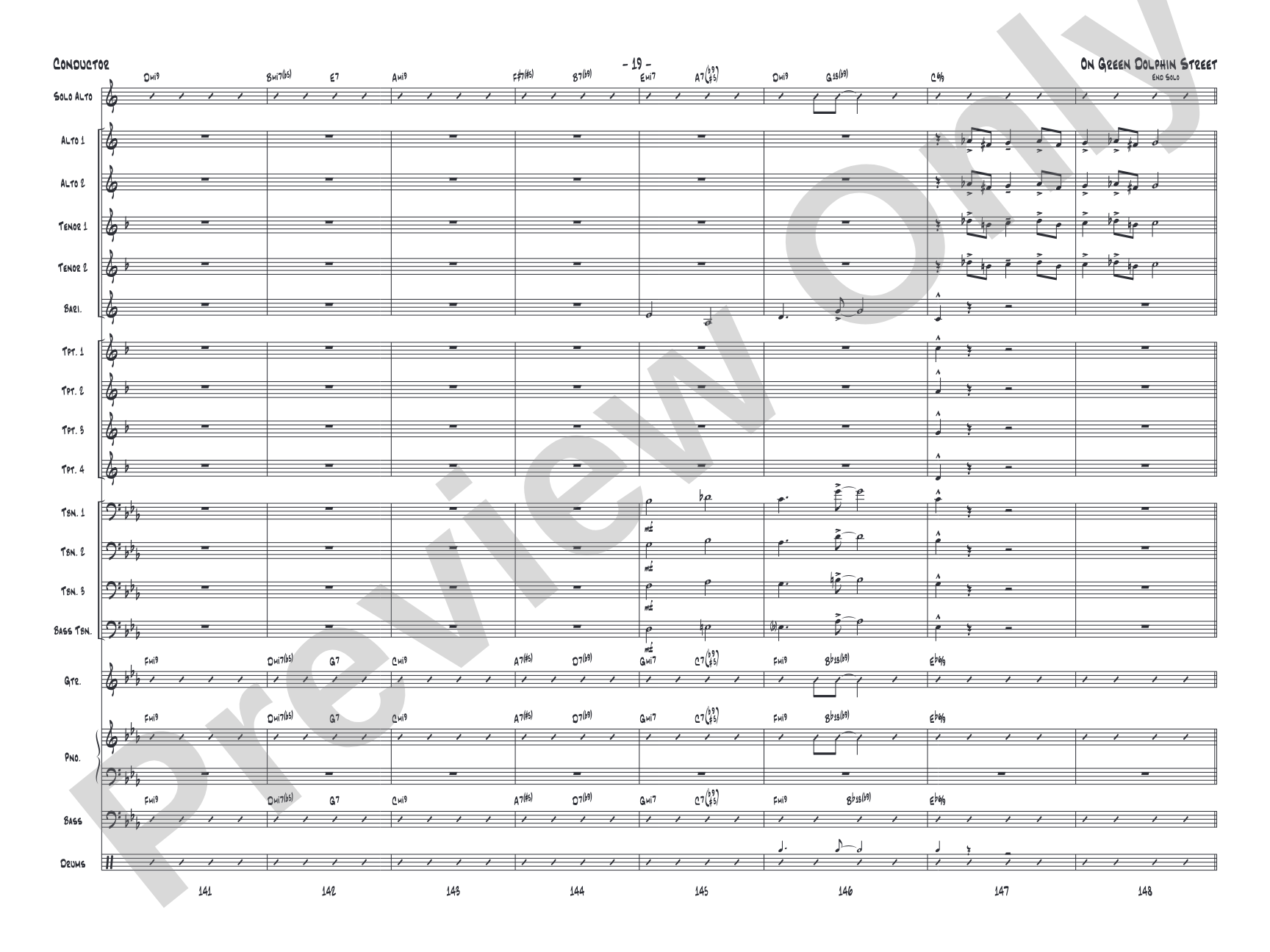
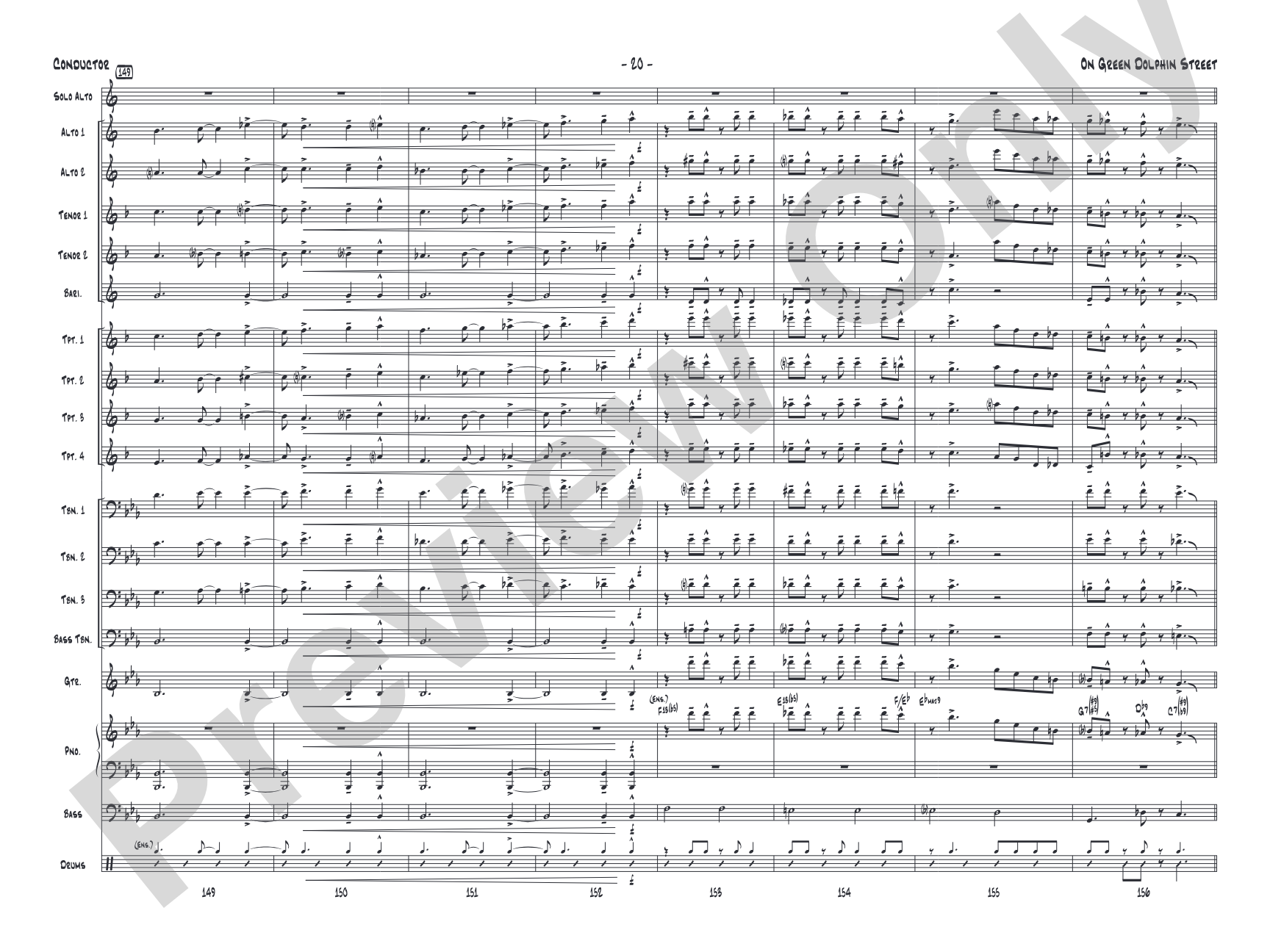
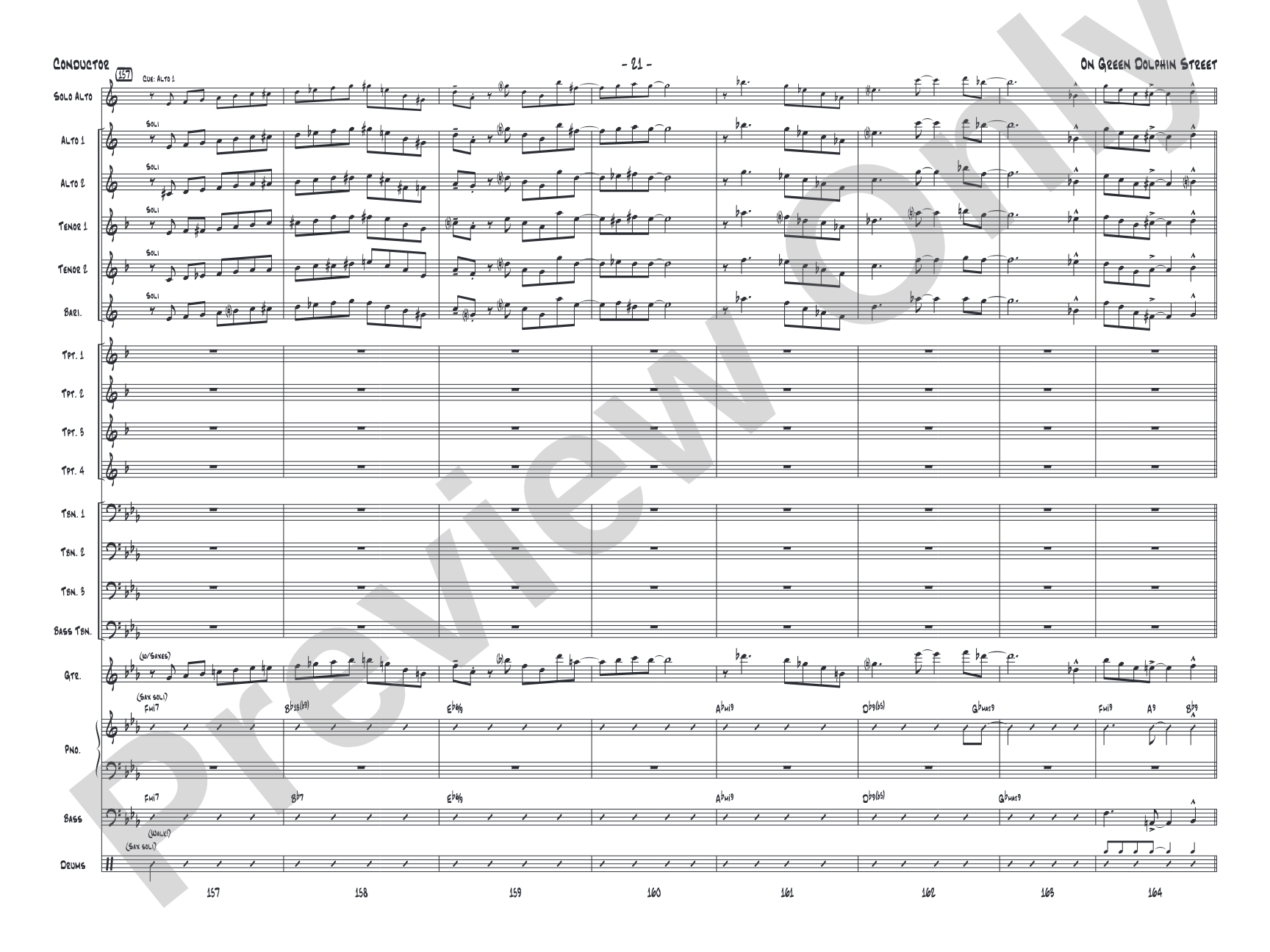
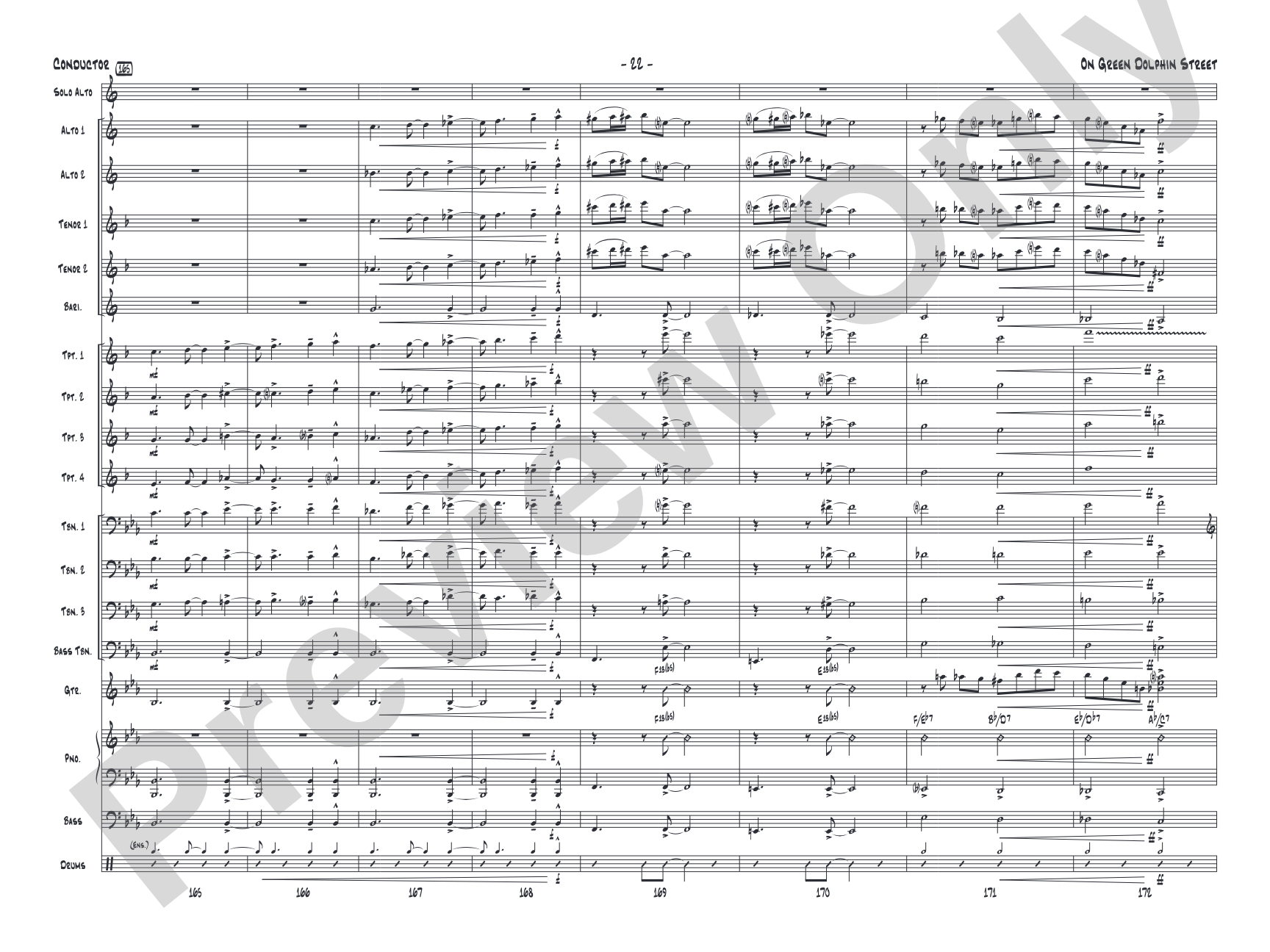
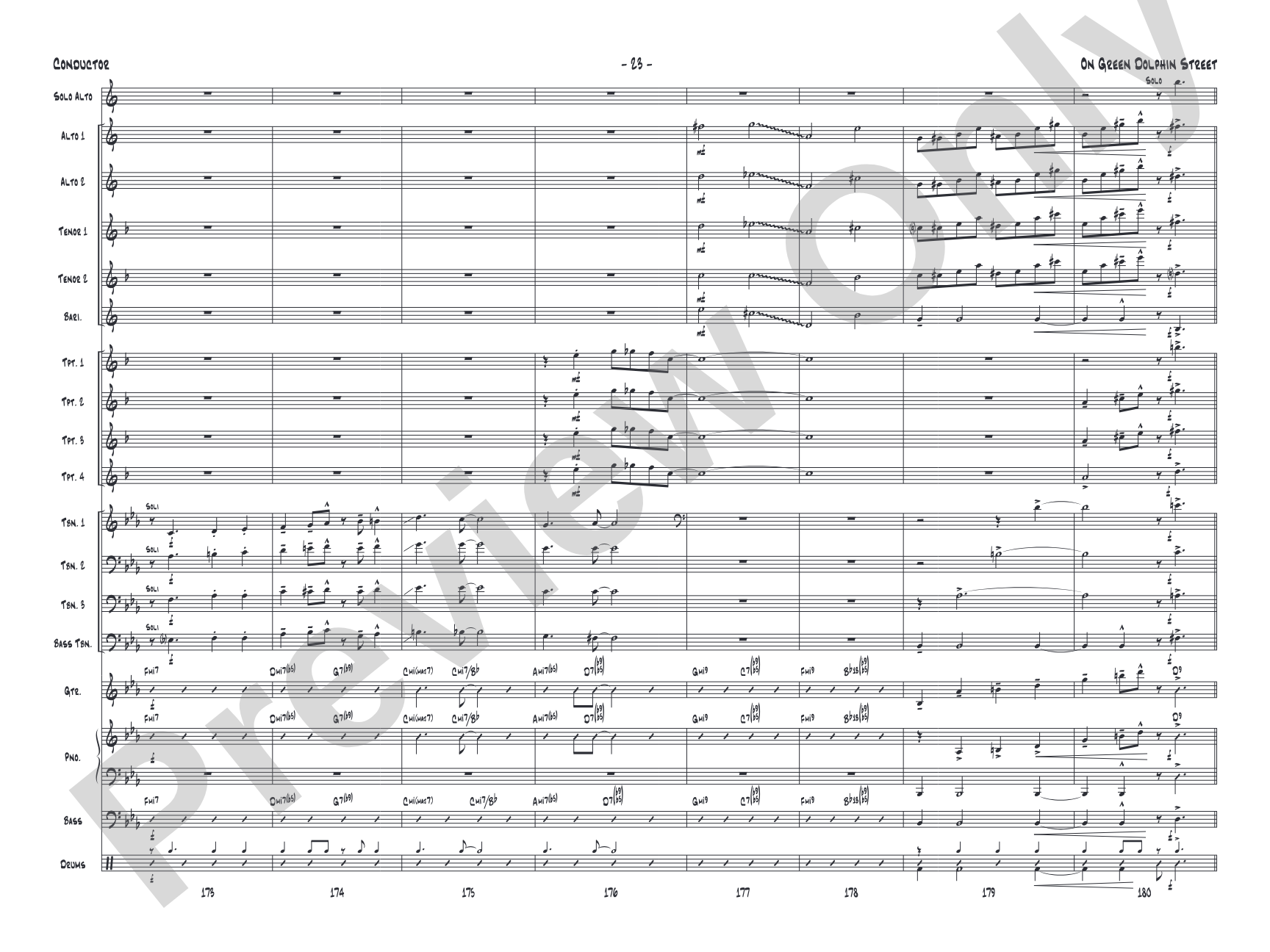
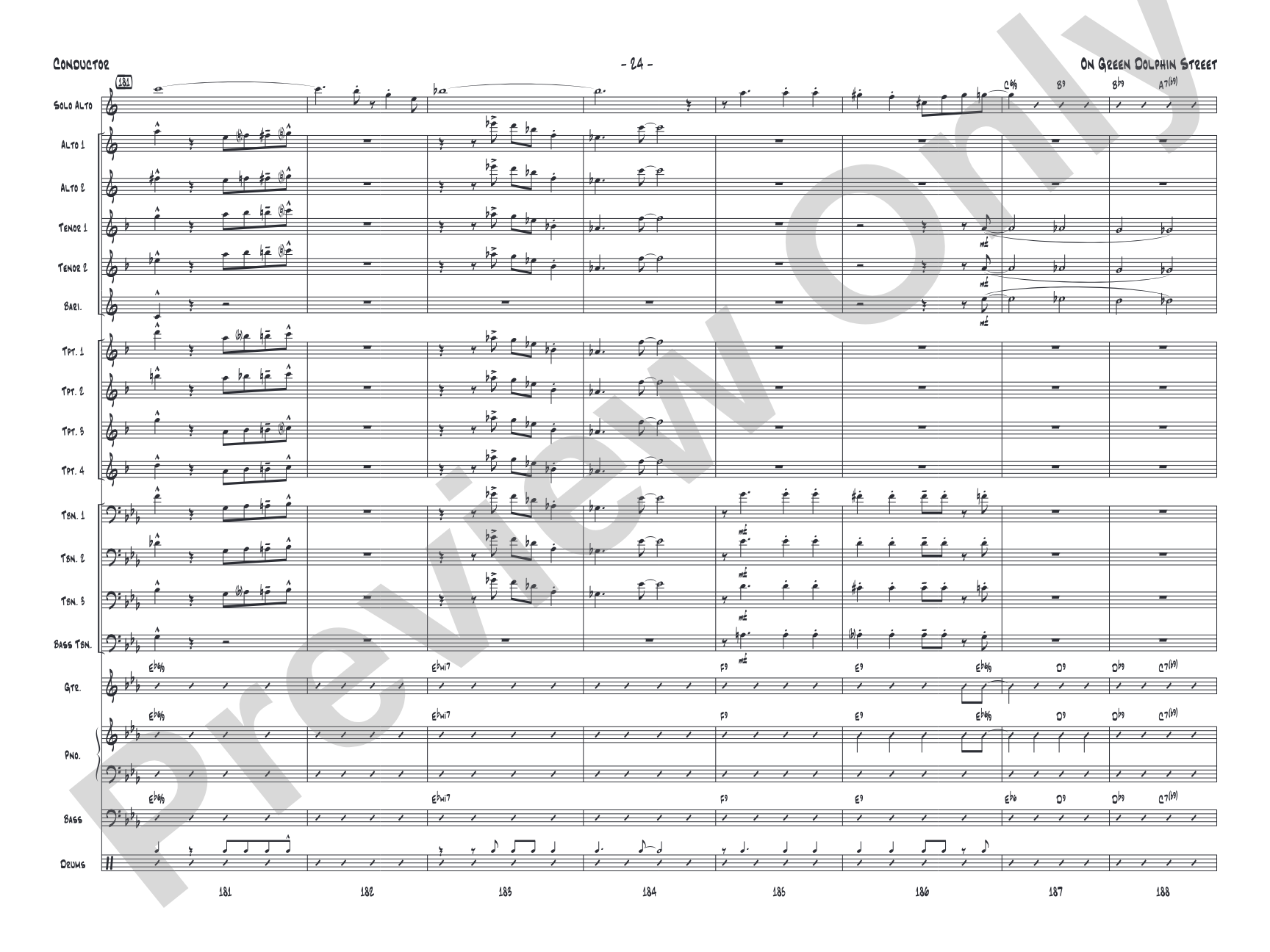
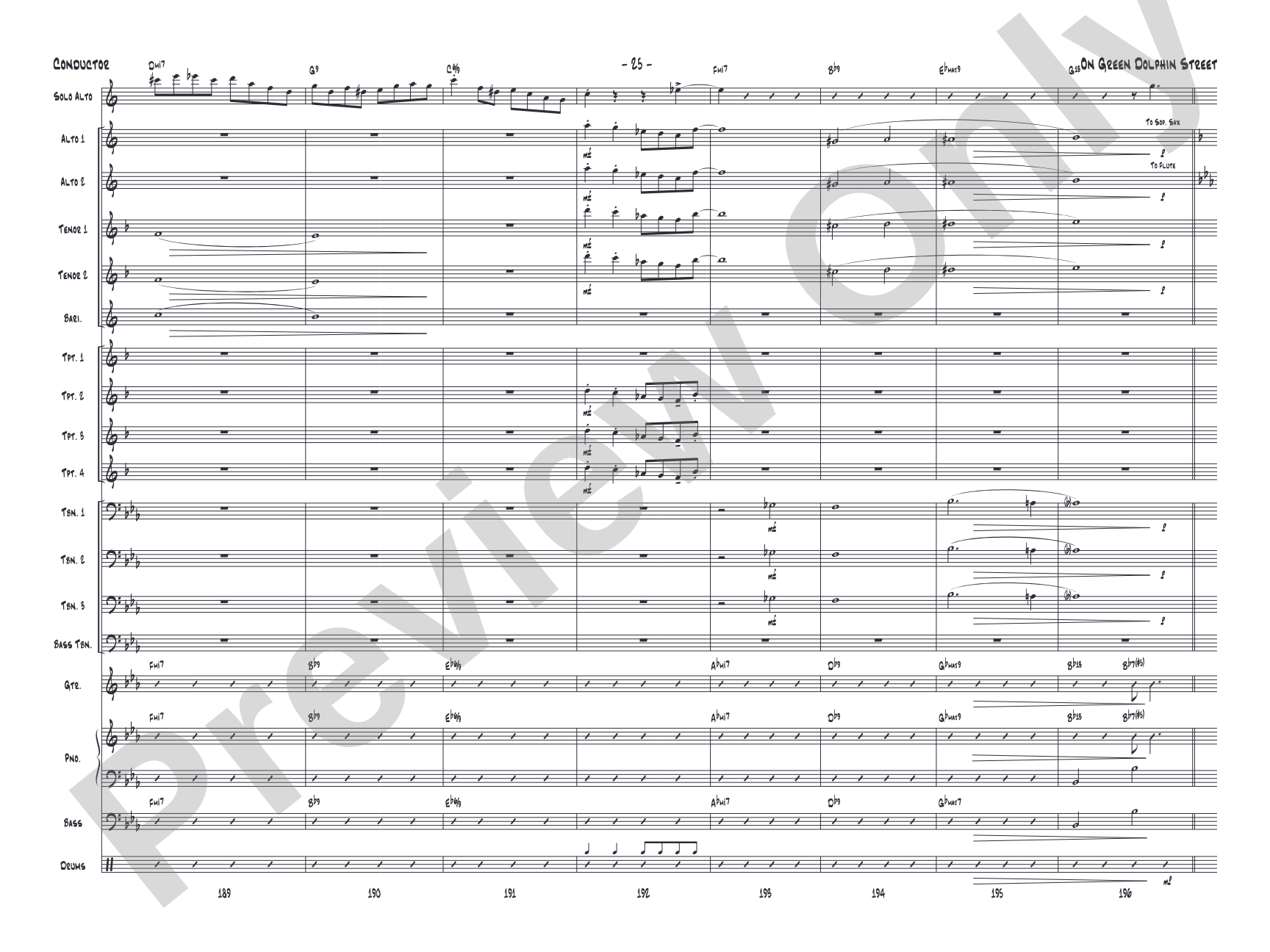
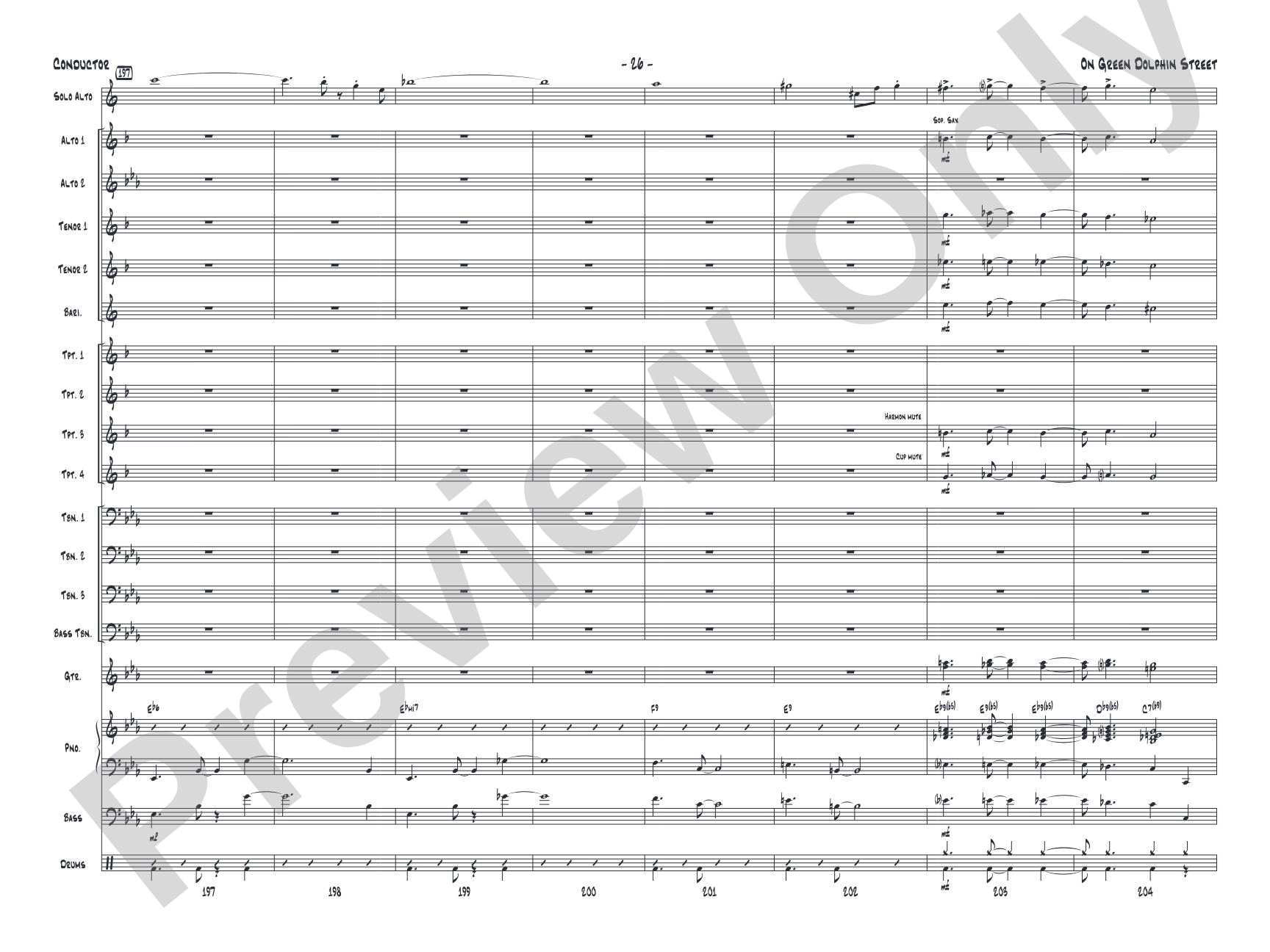
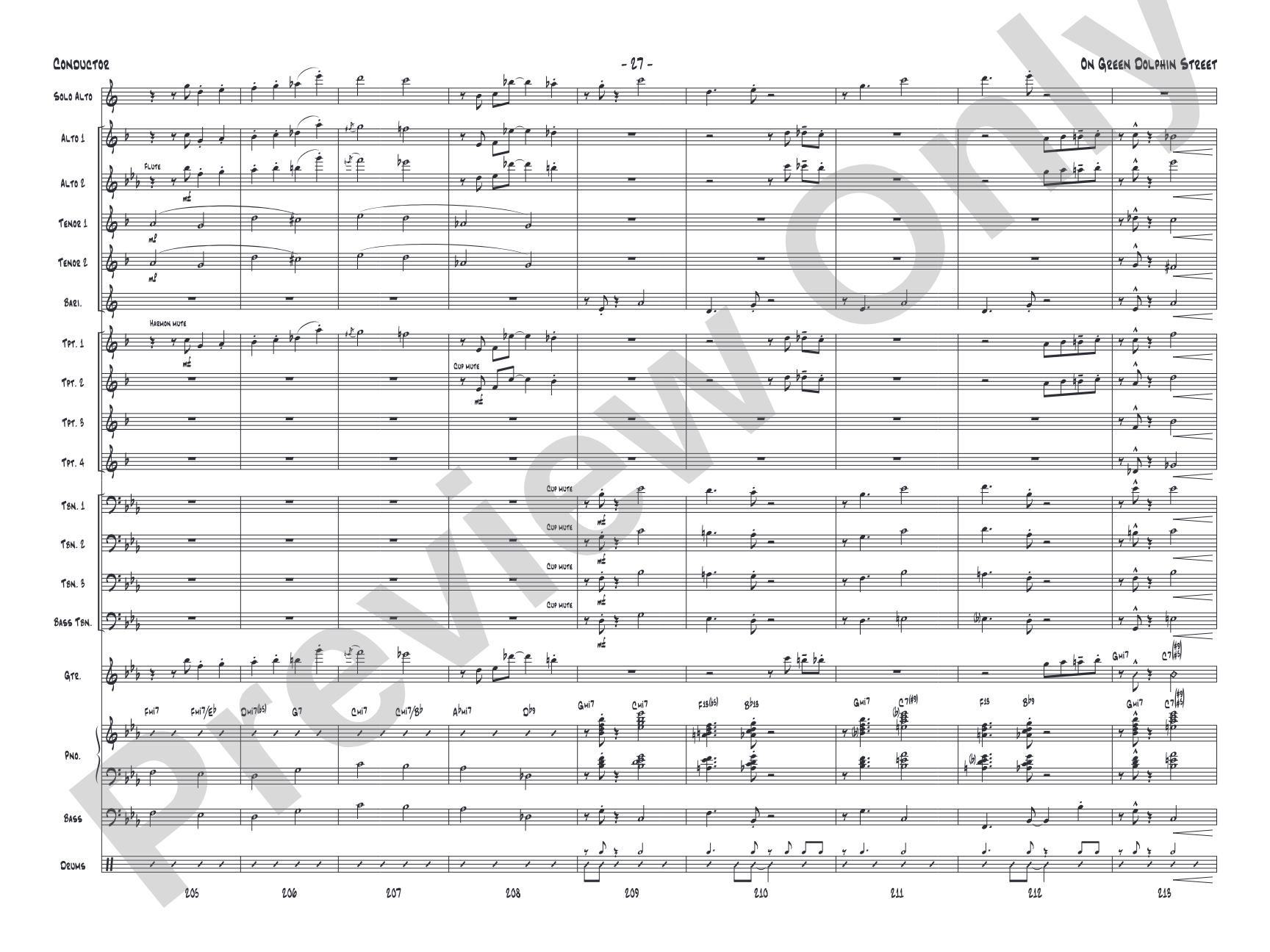
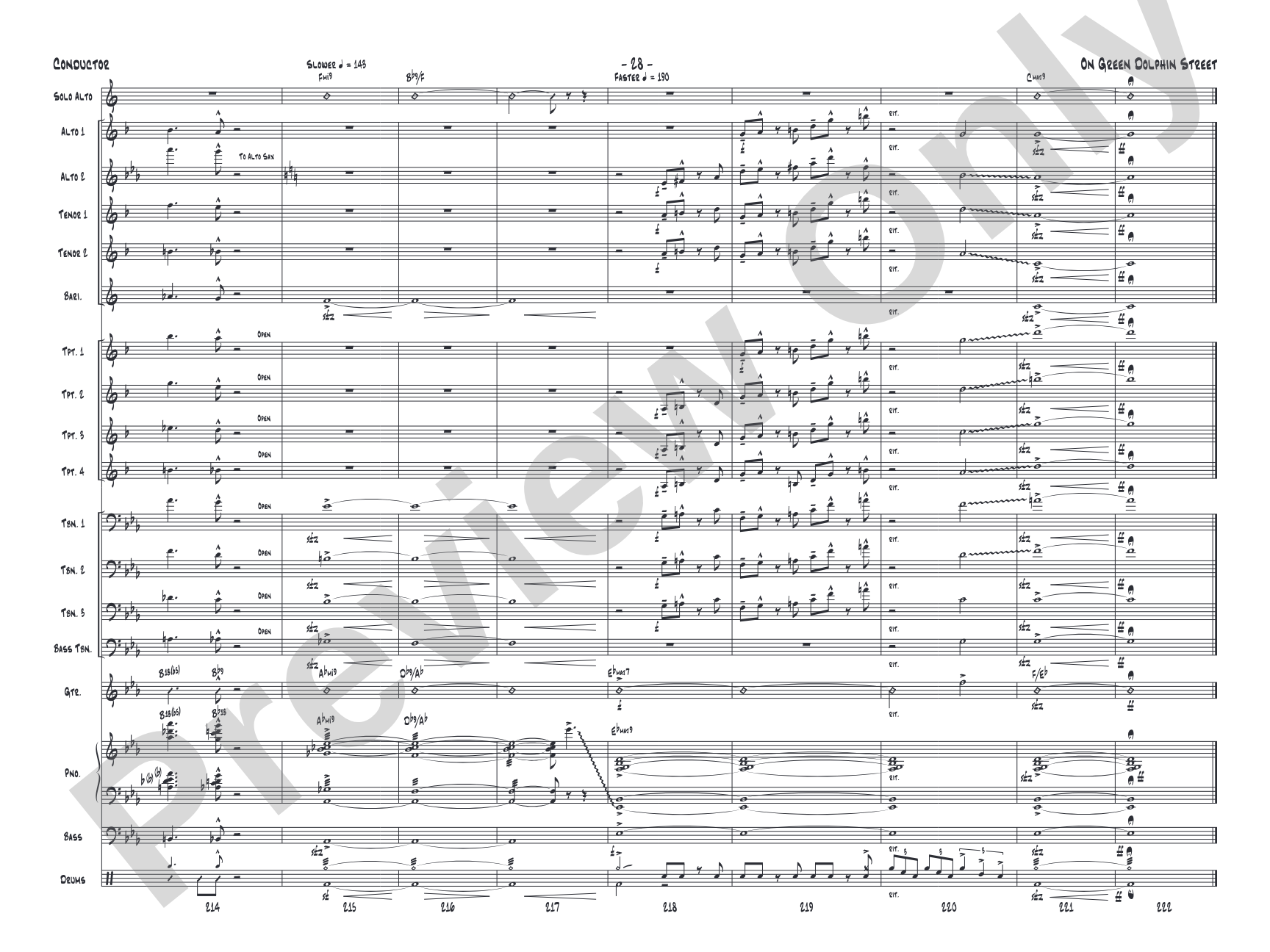

On Green Dolphin Street: Jazz Ensemble Conductor Score & Parts
Music by Bronislau Kaper, lyrics by Ned Washington / arr. Gordon Goodwin
Grade: 6 (Professional / Very Advanced)
Item: 00-PK-0007018

$70.00
One moment…
Description
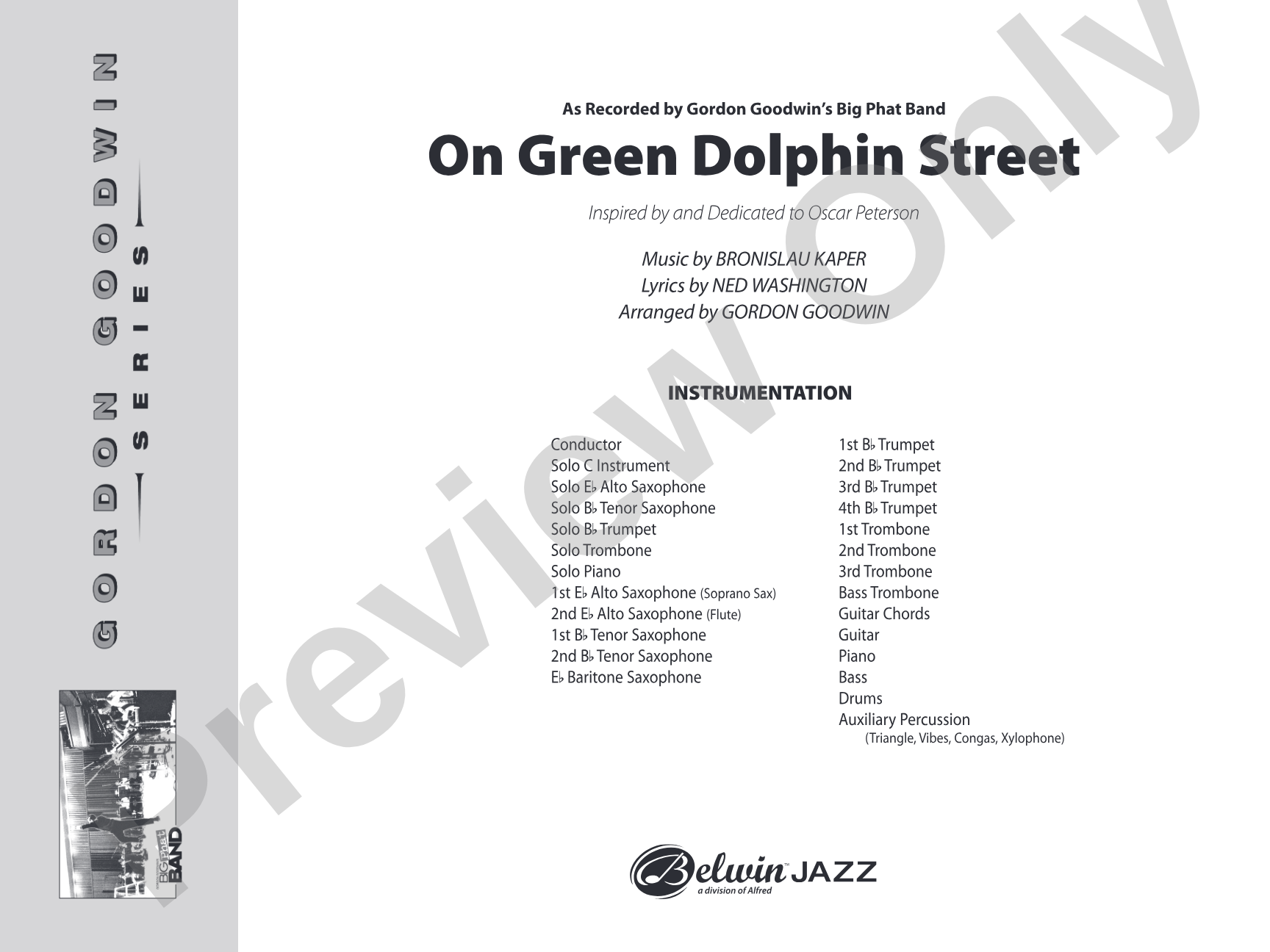
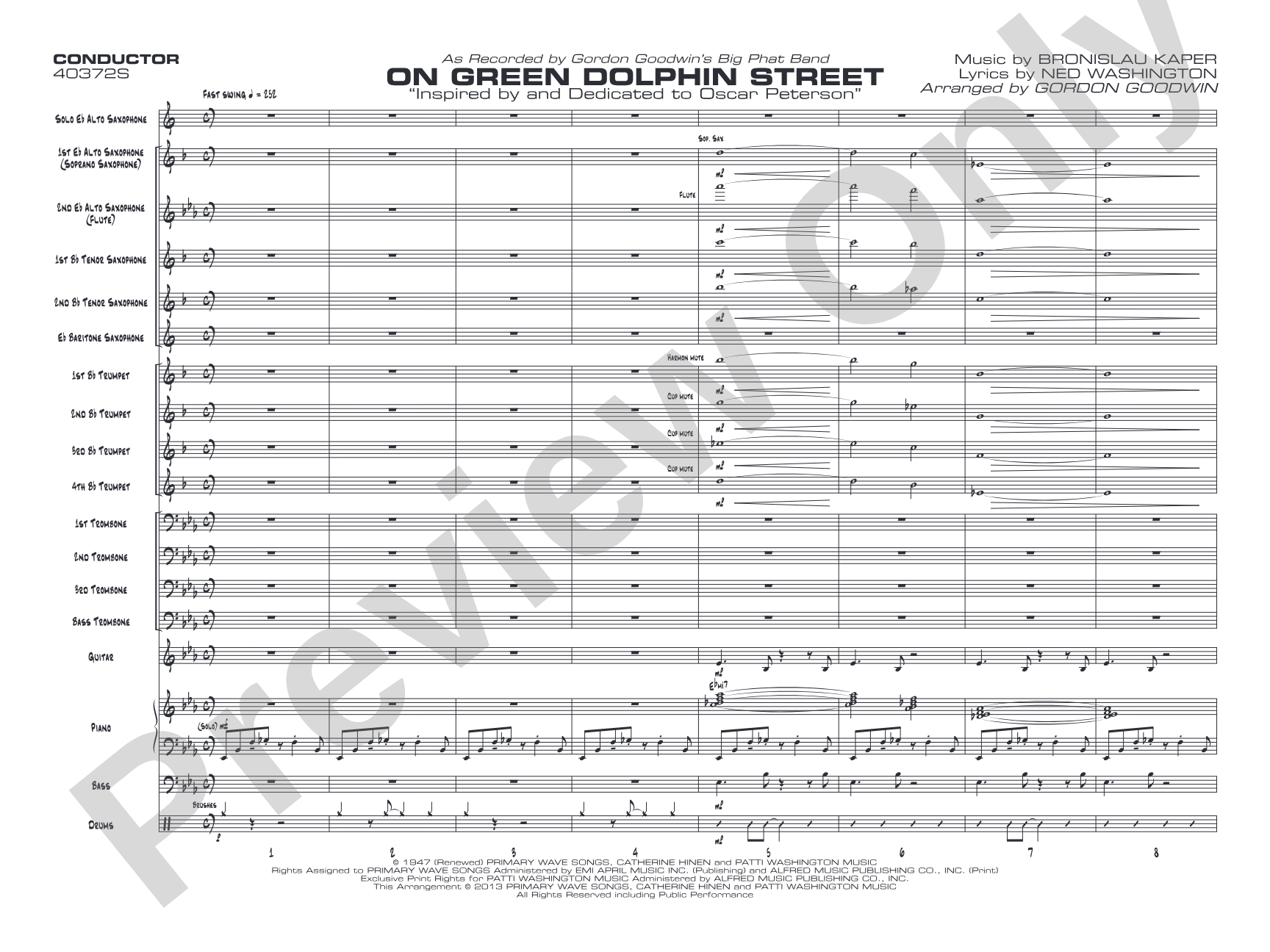
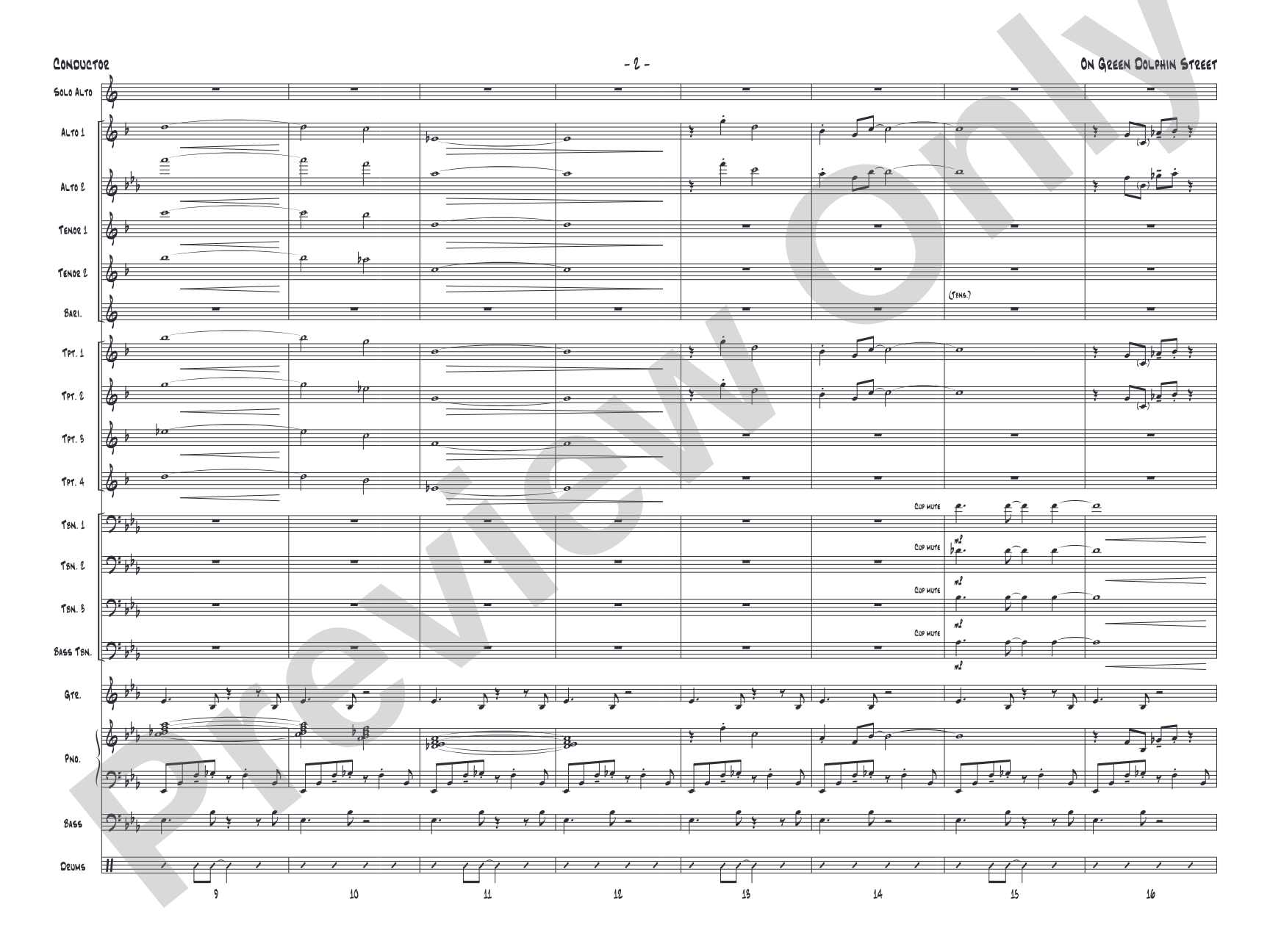
As recorded and released by Gordon Goodwin's Big Phat Band as a digital single. An homage to Oscar Peterson, this chart is a solo feature and includes separate solo parts for piano, C instruments, alto, tenor, trumpet and trombone. The tempo is around 250 BPM, lead trumpet range is to written high F. Alto 1 doubles soprano sax and alto 2 doubles flute. A tour de force chart!


Don't just read it, hear it, play along with it, and watch your students grow with it. In MakeMusic Cloud, On Green Dolphin Street: Jazz Ensemble Conductor Score & Parts comes alive with professional accompaniment, adjustable tempo, and built-in practice tools that turn solo practice into real progress.
Open in the Player
Jump straight in and assign it today.
Start Your Free Trial
Open this title and explore the full library in minutes.
Sample Audio
1
Audio File
--:--
0:00
0:00
Sample Video
No sample videos found.
Additional Details
Series:
Gordon Goodwin Series
Publisher:
Alfred Music
Page Count:
112
SKU:
00-PK-0007018
More about this title
About the Composer: Bronislau Kaper
Bronislau Kaper (1902-1983) was a Polish-born composer who became one of Hollywood's most prolific film score writers. Over a career spanning five decades, he composed music for more than one hundred films, earning two Academy Award nominations. His gift for melody and harmonic sophistication made him equally comfortable writing for dramatic moments and light comedic scenes.
Kaper's work transcended the film studio. His compositions have been recorded by jazz artists and concert orchestras, and his melodies have endured as standards in the jazz repertoire. On Green Dolphin Street, originally composed for the 1947 film of the same name, became one of his most recorded pieces, covered by everyone from Oscar Peterson to contemporary big bands. Educators recognize Kaper's influence on American popular music and his ability to craft singable, memorable themes that bridge classical training and jazz idiom.
Why we love this
Gordon Goodwin's arrangement captures the essence of Oscar Peterson's approach to this standard while showcasing why his big band remains one of the tightest, most musically ambitious ensembles in contemporary jazz. The solo architecture and scorching tempo demand serious musicianship across the section, making this a showcase piece that elevates an entire program. At 112 pages with detailed solo parts for piano, reeds, and brass, this is the kind of chart that keeps a jazz band rehearsing with purpose for weeks.
What to expect
Sophisticated and swinging, with the kind of melodic grace that reminds you why this standard has survived decades. The chart moves with restless energy and smart orchestration that avoids predictability; you feel Goodwin's respect for Peterson's trio concept even as the big band adds color and texture.
Who it's for
Professional and advanced amateur jazz ensembles seeking a charting challenge that respects the tradition while demanding contemporary execution. This is material for groups with disciplined rhythm sections, reliable lead trumpet and trombone players, and soloists comfortable navigating complex harmonic territory at a demanding tempo.
How to get the most out of it
- Establish the tempo precisely before downbeat one. At 250 BPM, rhythmic clarity in the ensemble foundation (bass and drums) determines whether the soloists can float or whether the whole chart drags. Use a click track or metronome in rehearsal relentlessly.
- Balance solo features carefully against ensemble parts. The individual solo parts are written to cut through, but clarify dynamic relationships so that when the piano takes a solo, the band isn't obliterating it with background figures.
- Check lead trumpet range in the upper register regularly. Written high F appears in exposed contexts; ensure your lead can execute with sound quality and articulation clarity, not just pitch accuracy.
- Rehearse the composed interlocking lines between sections (particularly trumpet and trombone) at half tempo first. At this speed, sloppy rhythmic placement in dialogue passages becomes immediately obvious; locking these in early saves rehearsal time later.
How to use it
Program this as a feature that closes a first half or anchors a jazz-focused set. The solo flexibility allows you to spotlight your strongest improvisers while the ensemble writing keeps everyone engaged. This is also a perfect audition or showcase recording opportunity for groups wanting to document their capabilities.
Skills your students will build
- Playing at fast tempos (250 BPM) with articulate precision and rhythmic accuracy
- Improvisation over sophisticated harmonic progressions in a trio and full-band context
- Reading and executing complex ensemble rhythms and background figures while soloists take feature moments
- Balancing solo volume and tone within a full big band texture
- Transposing and doubling on multiple instruments (alto 1 on soprano; alto 2 on flute)
- Understanding arranged jazz composition and how featured sections interlock