
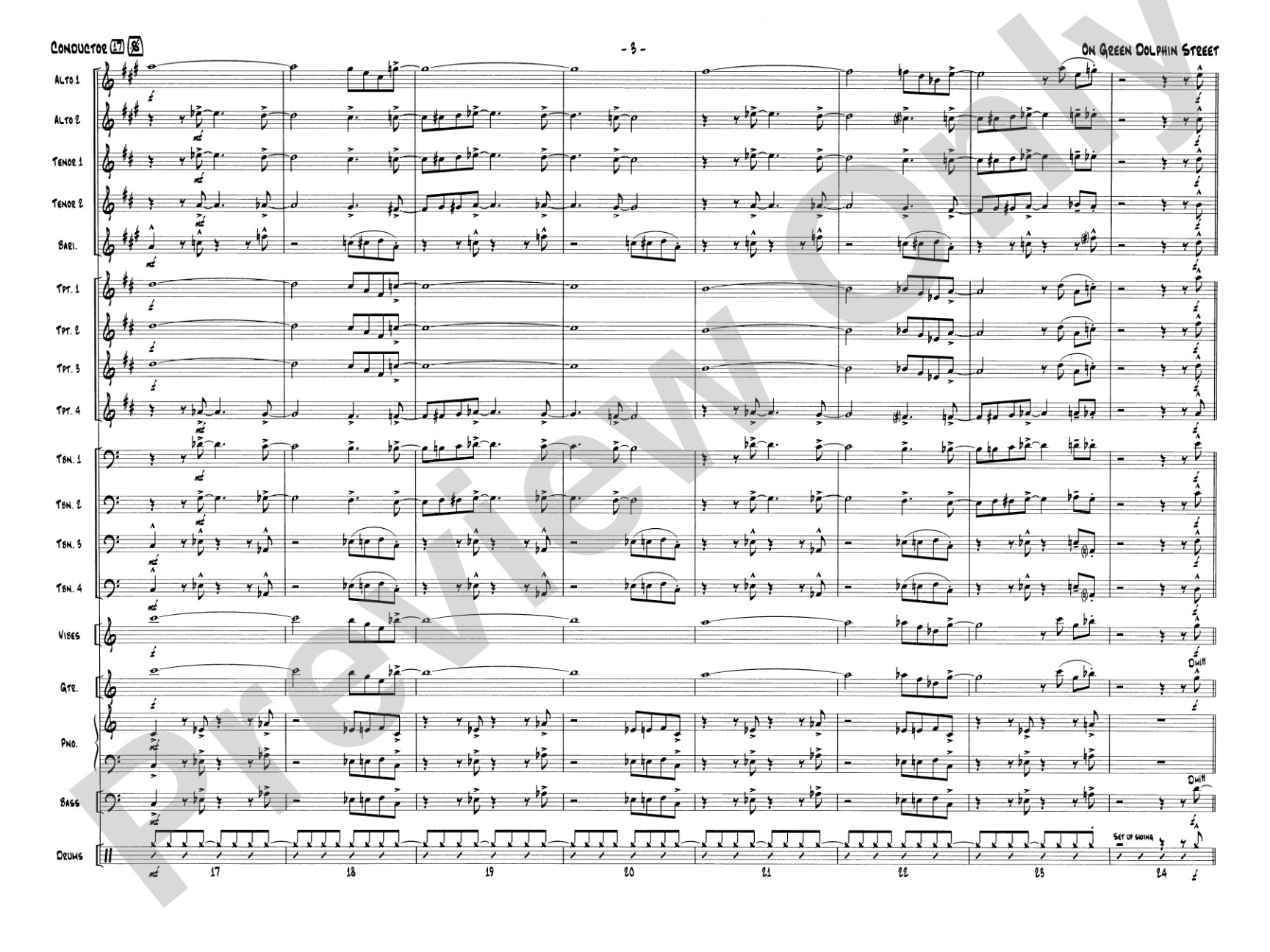
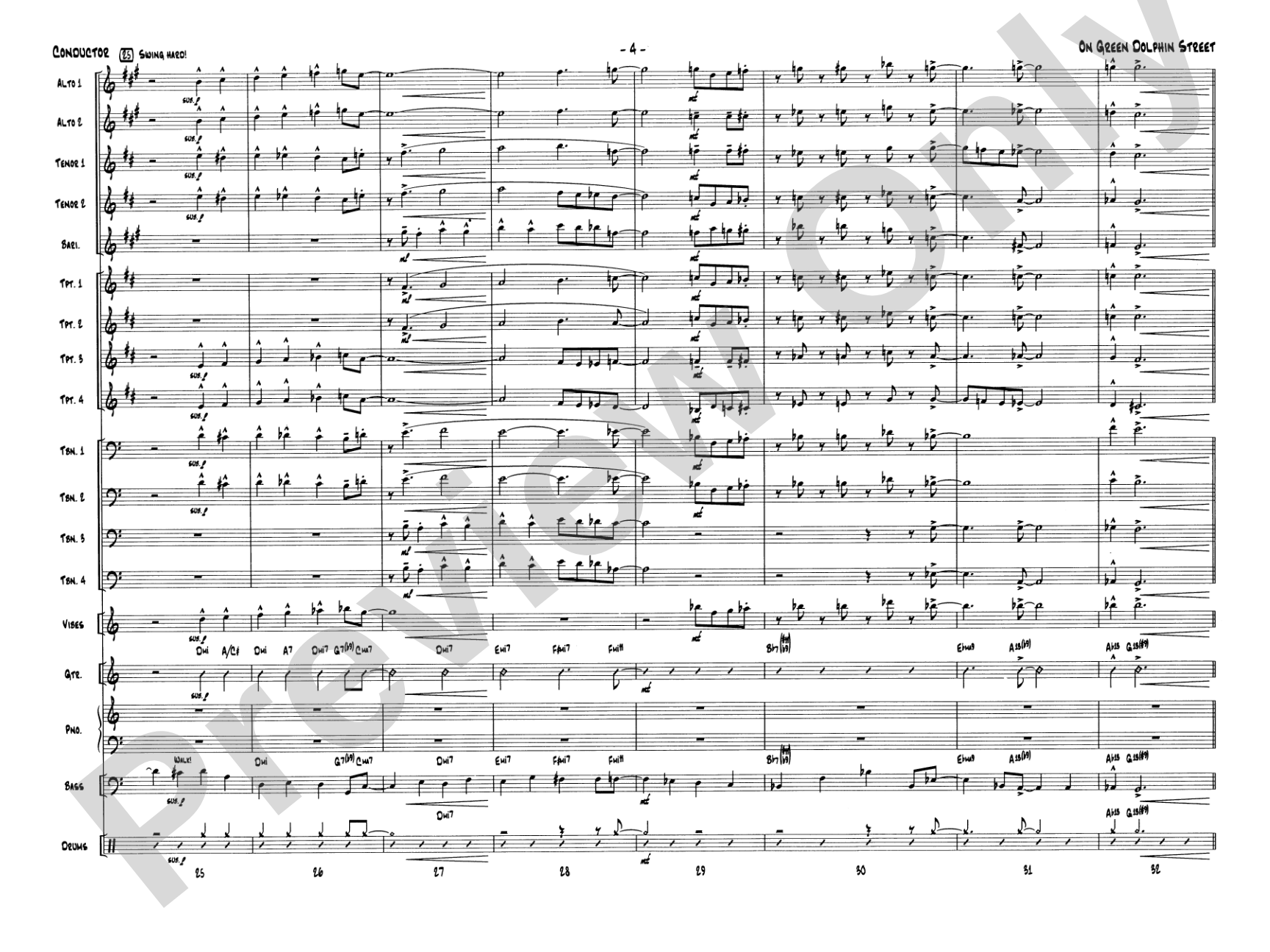
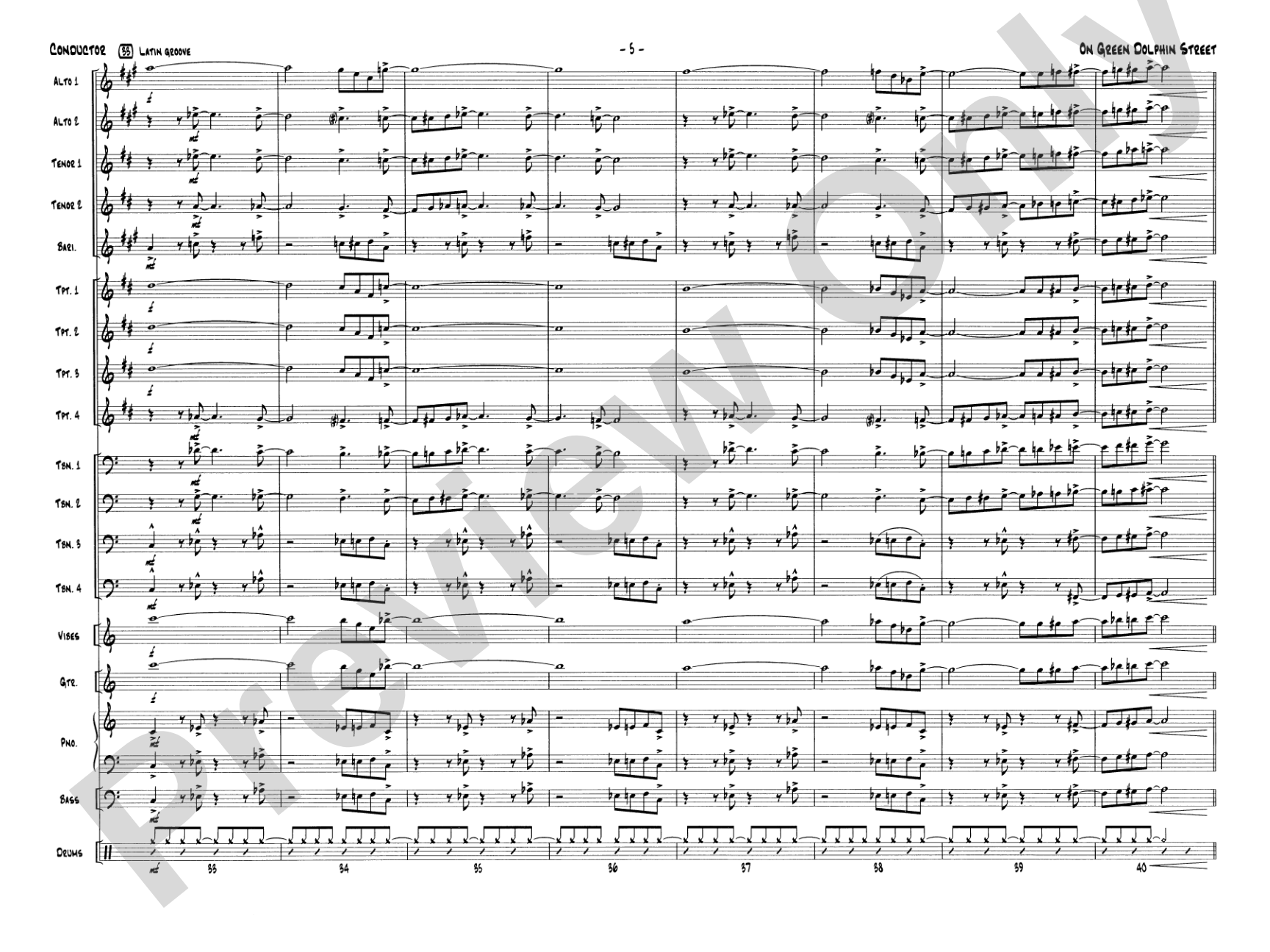
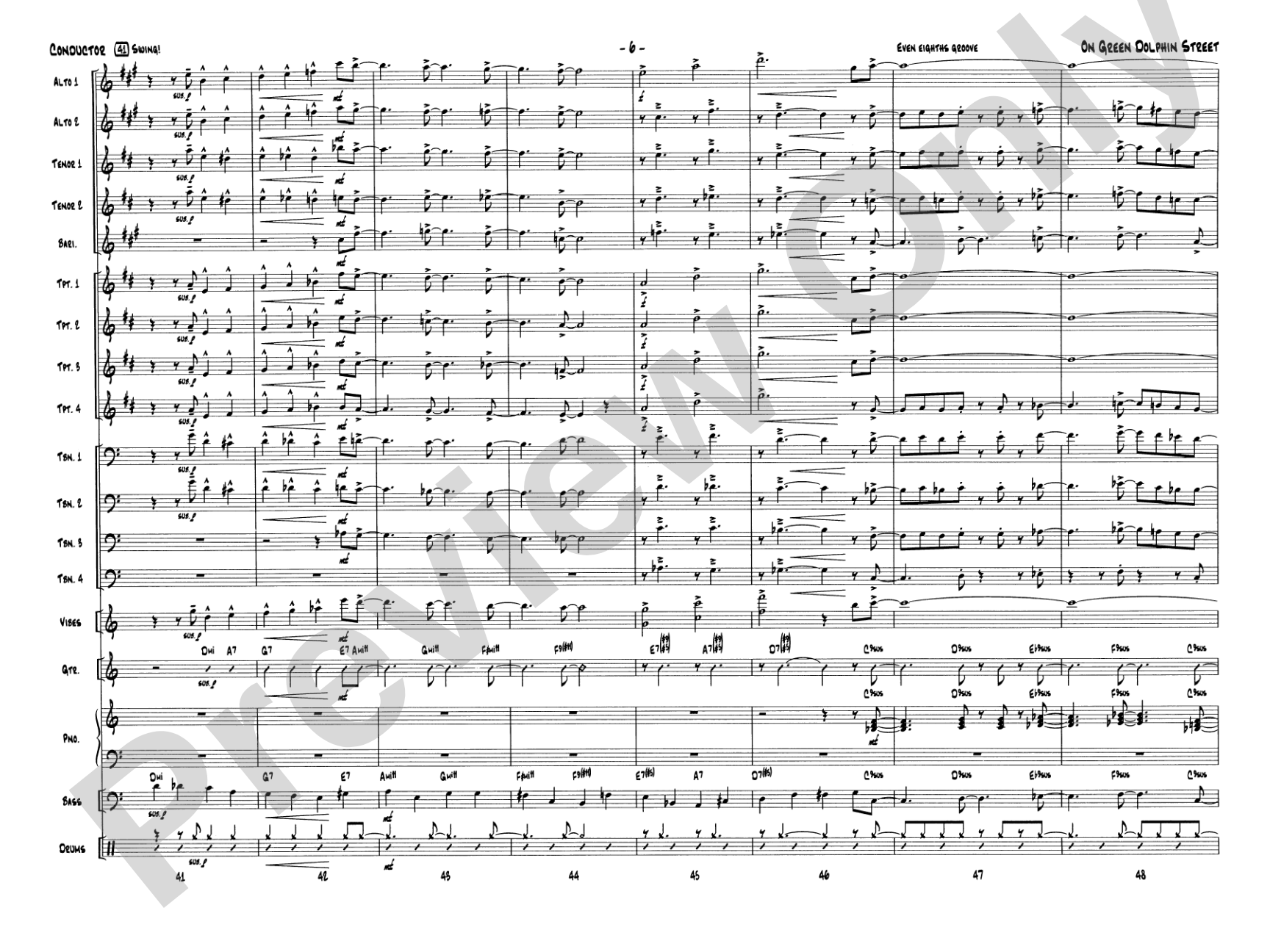
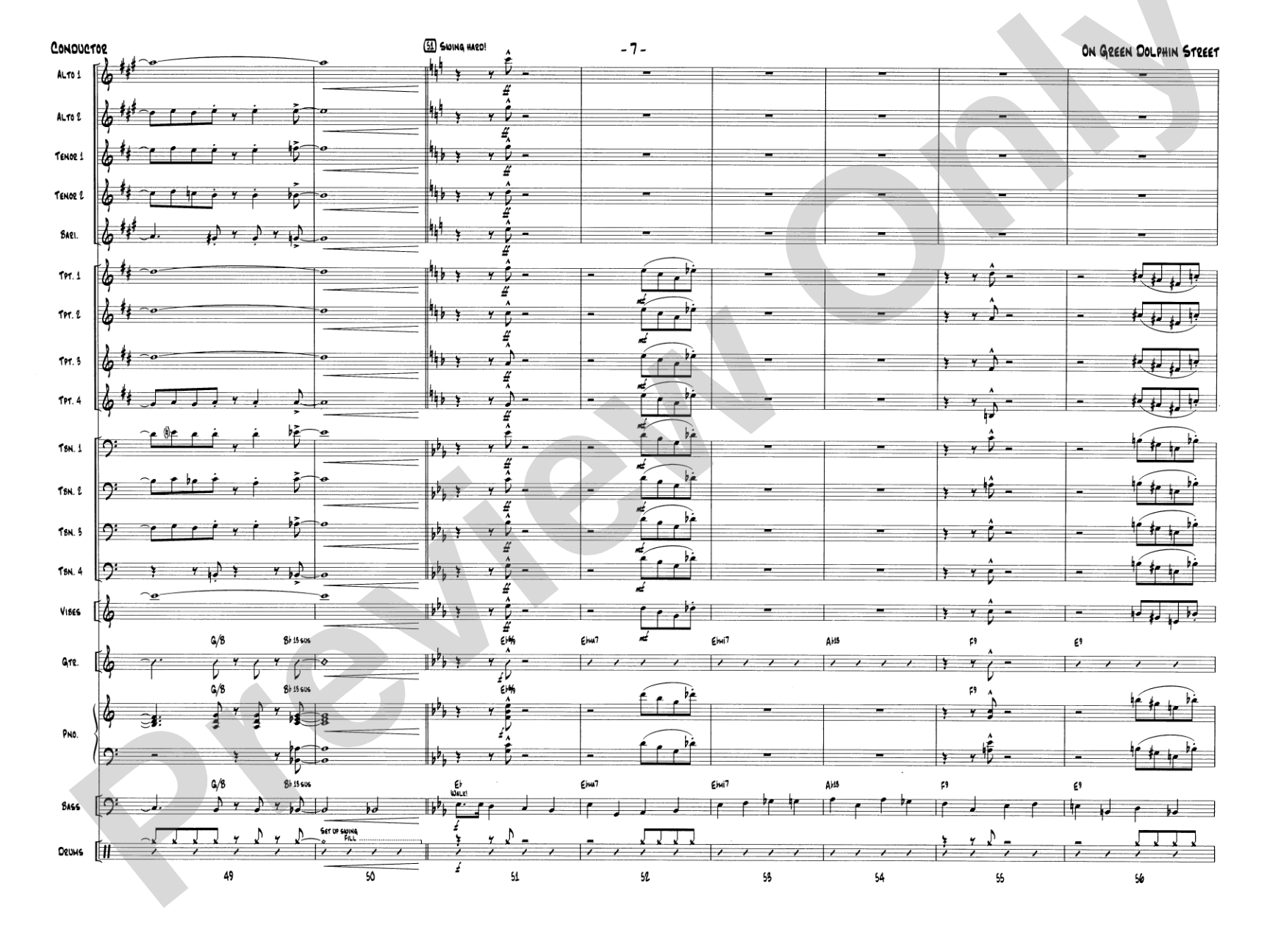
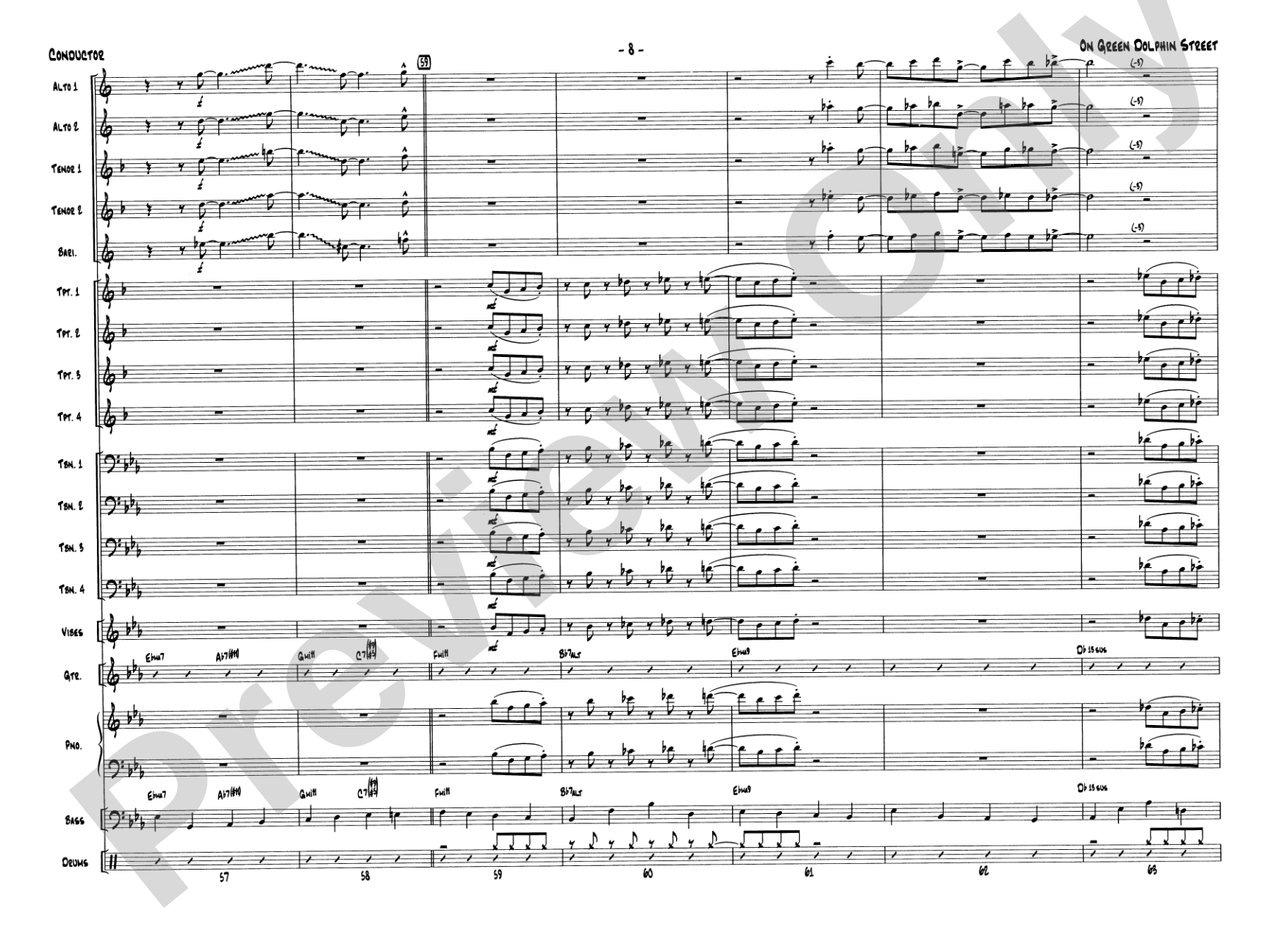
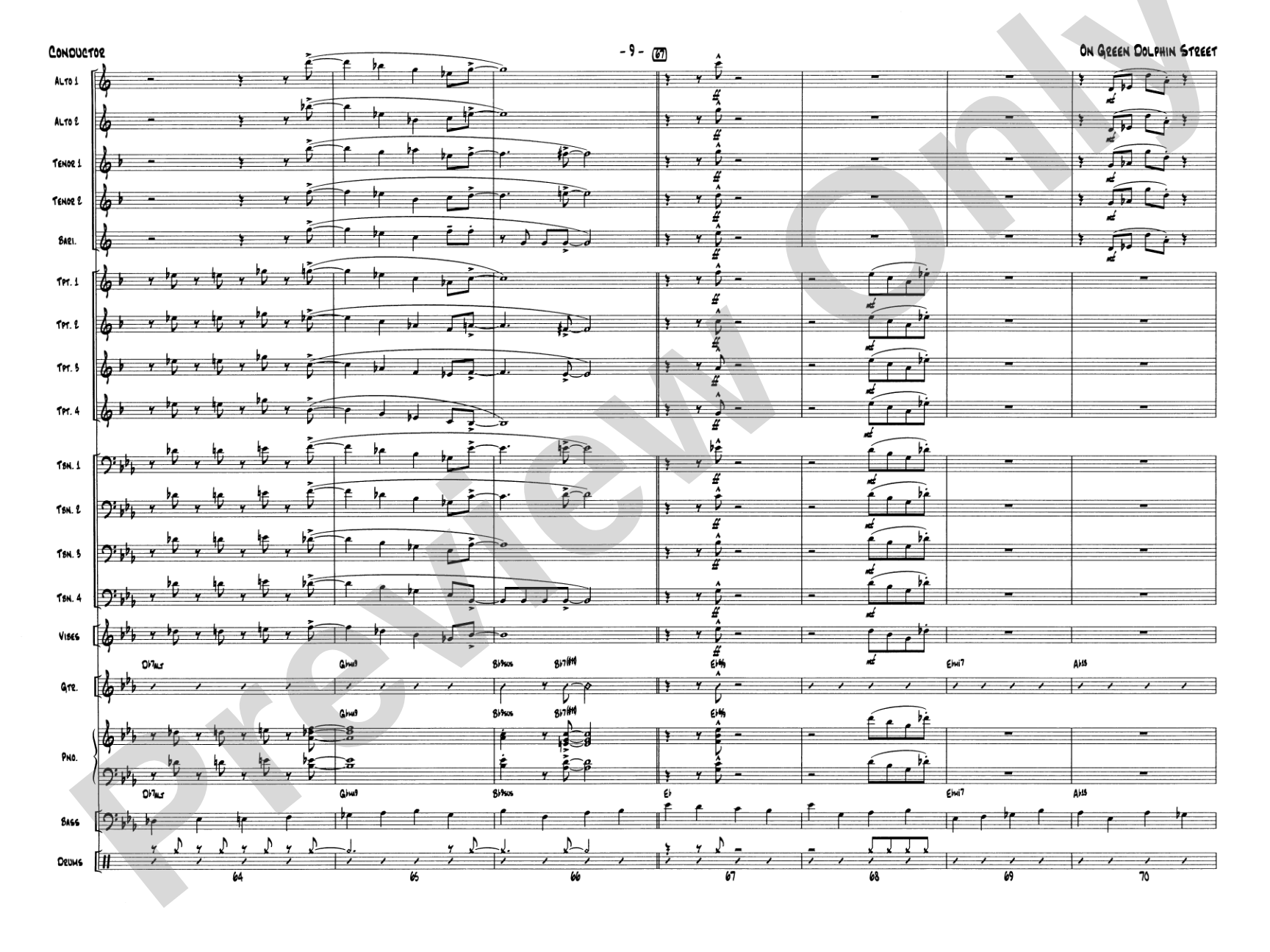
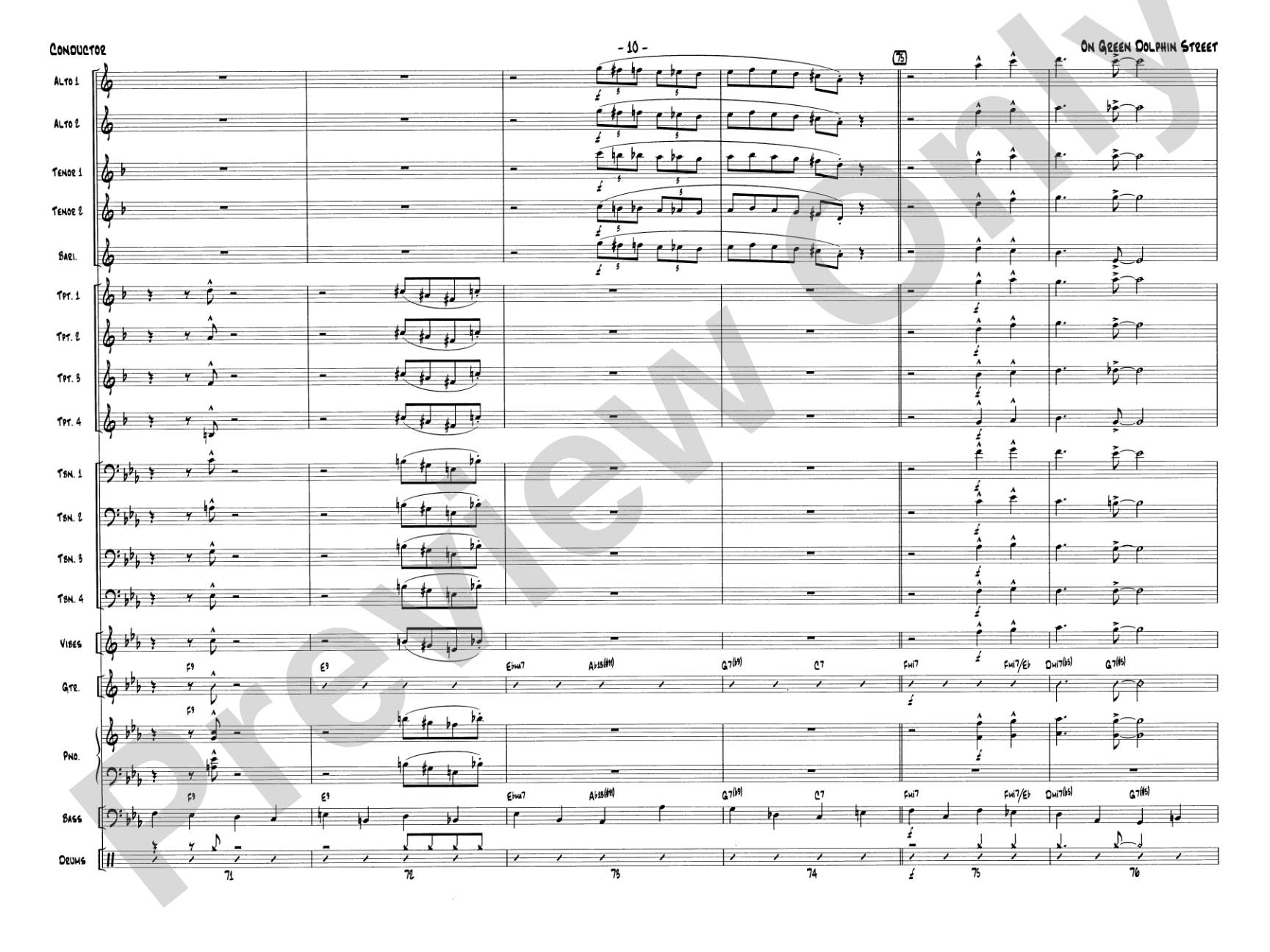
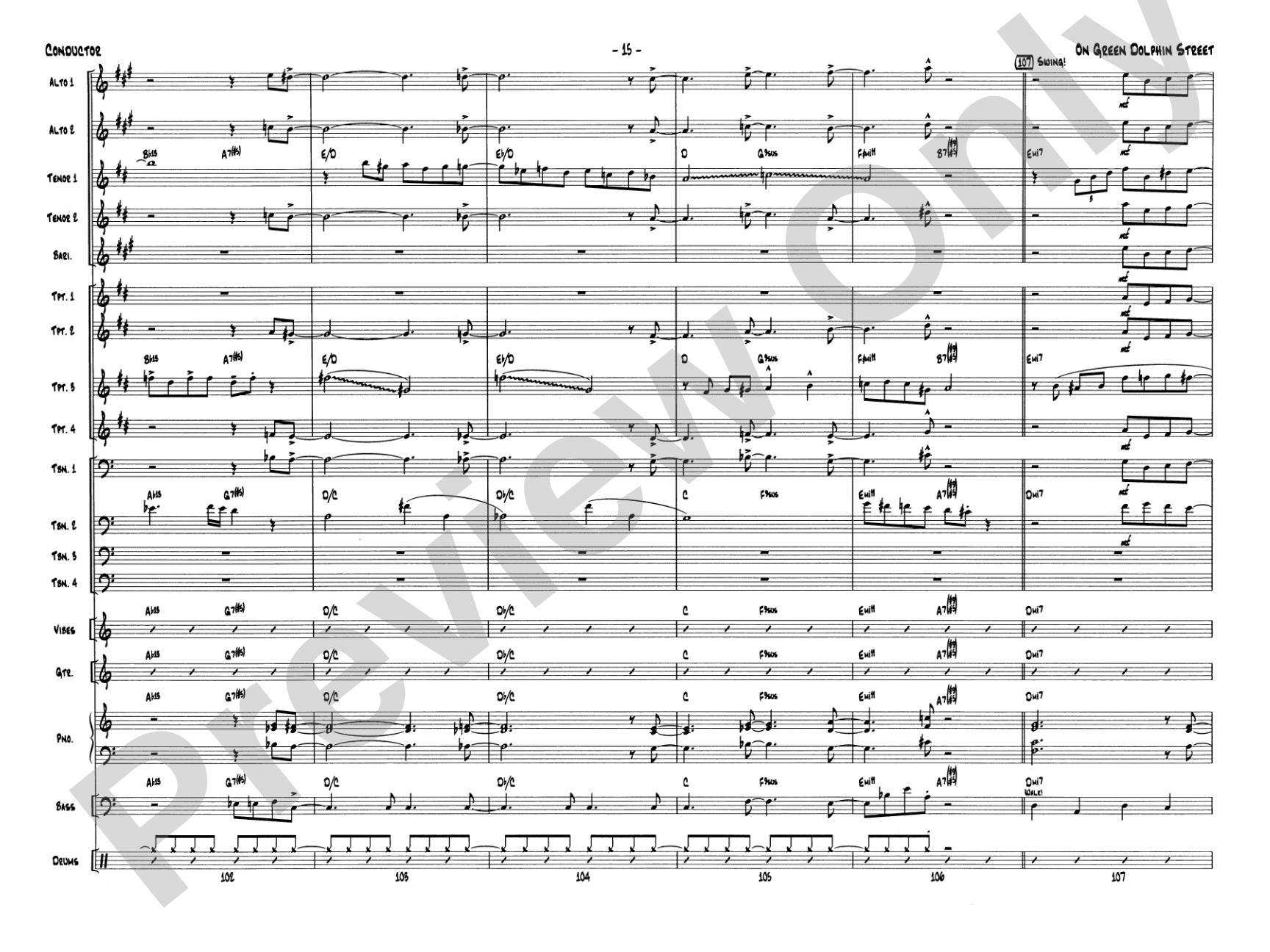
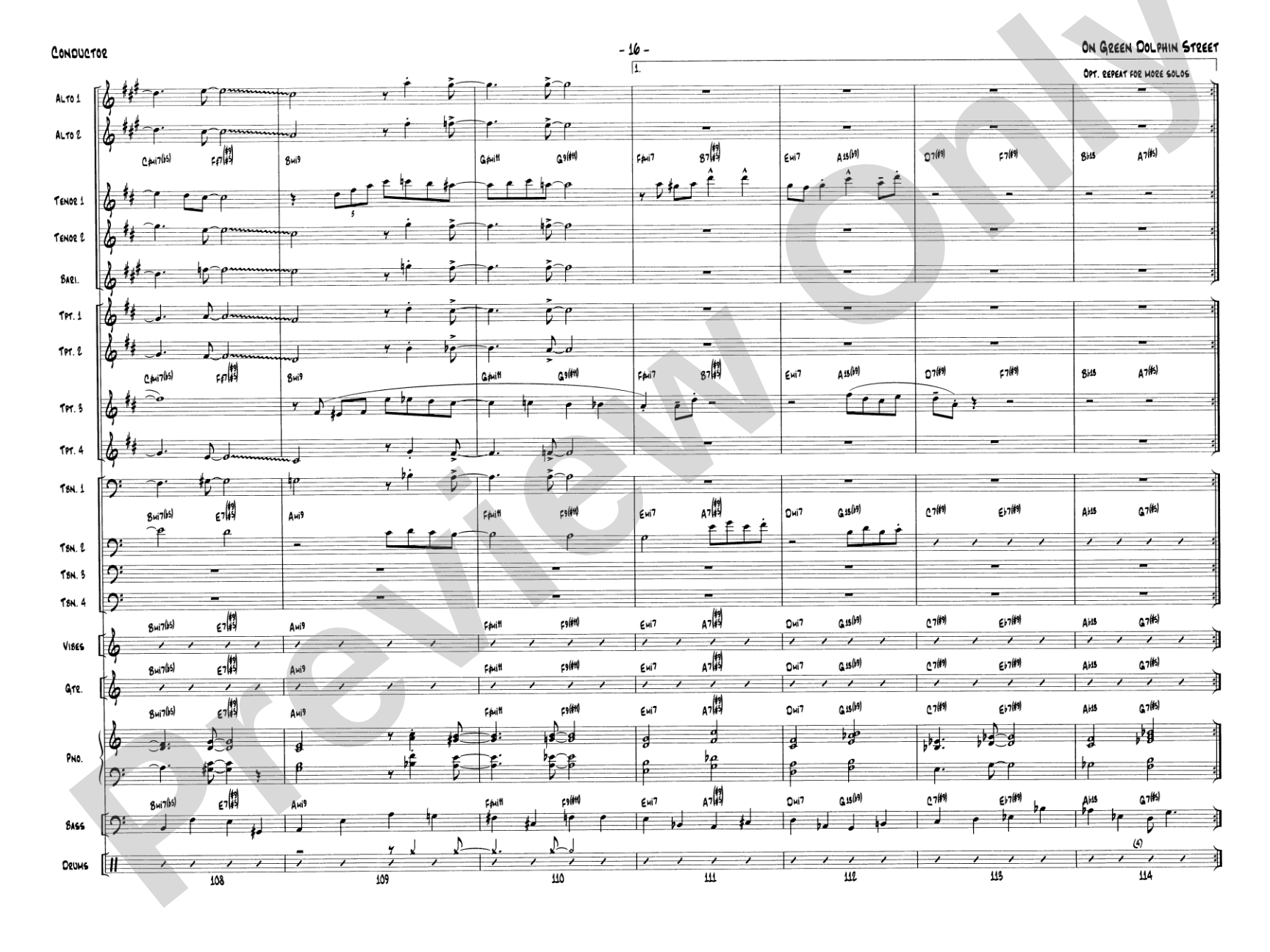
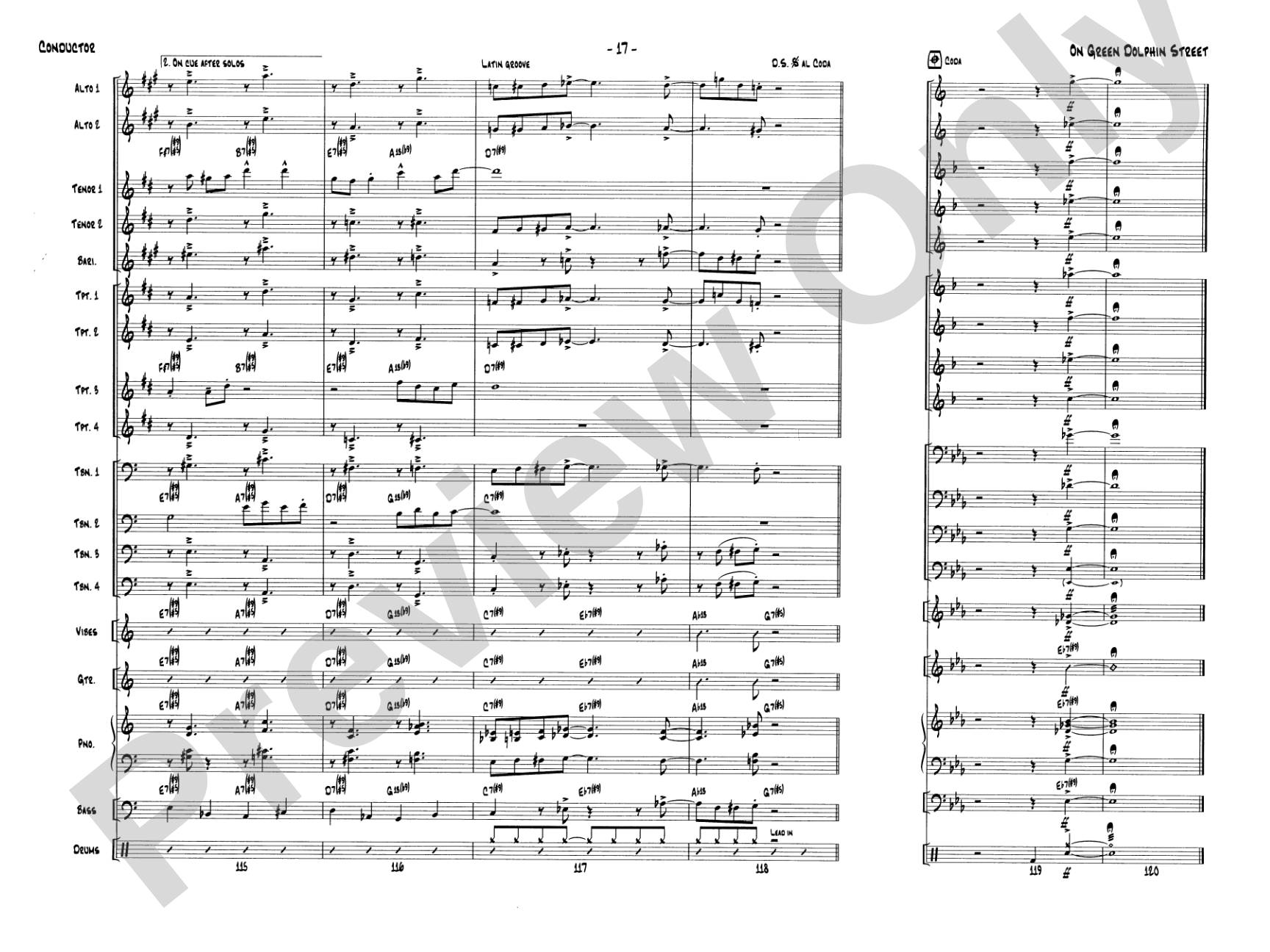


On Green Dolphin Street: Jazz Ensemble Conductor Score & Parts
Music by Bronislau Kaper, lyrics by Ned Washington / arr. Frank Mantooth
Grade: 3 (Medium)
Item: 00-PK-0002532

$52.00
One moment…
Description
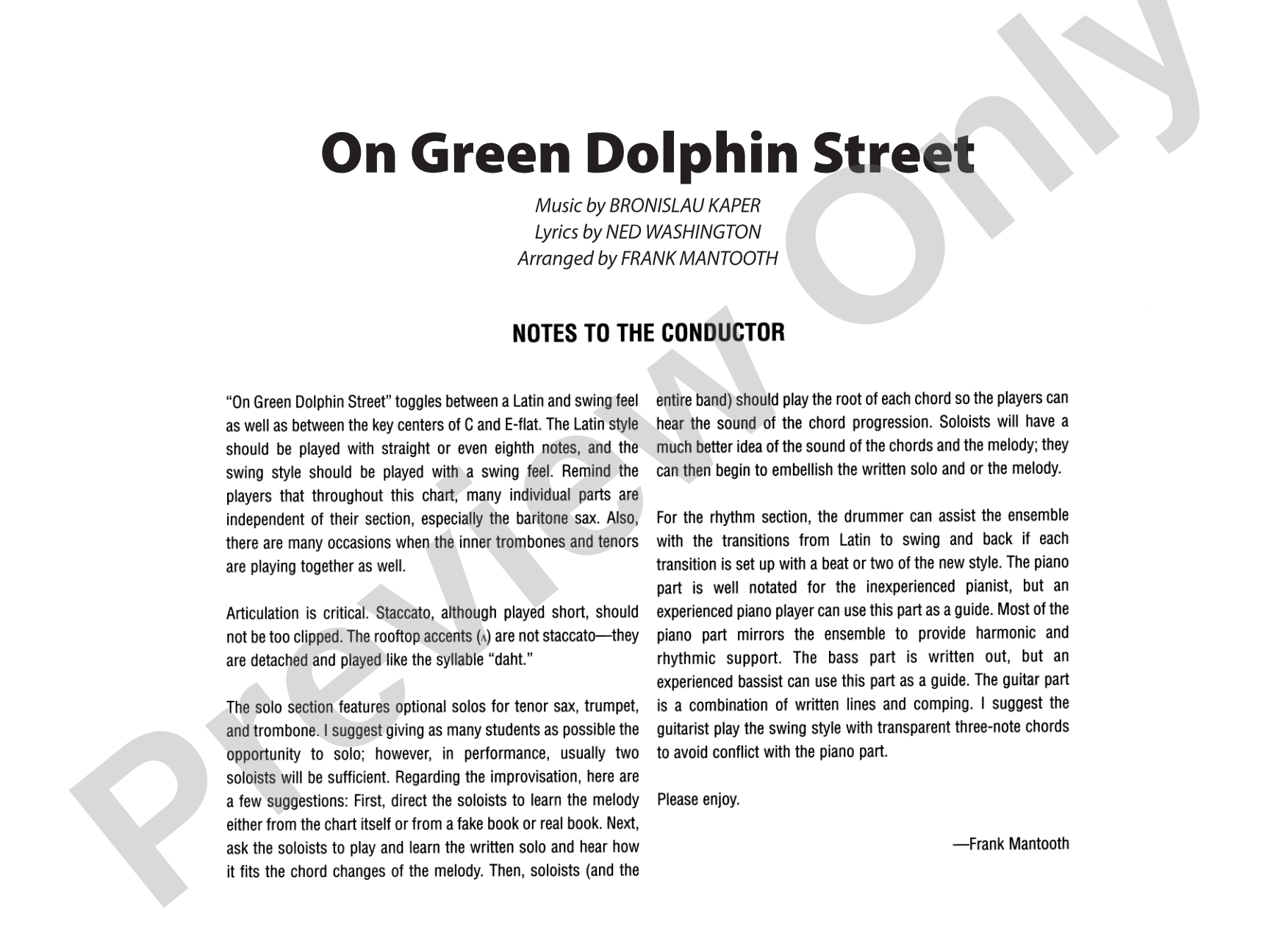
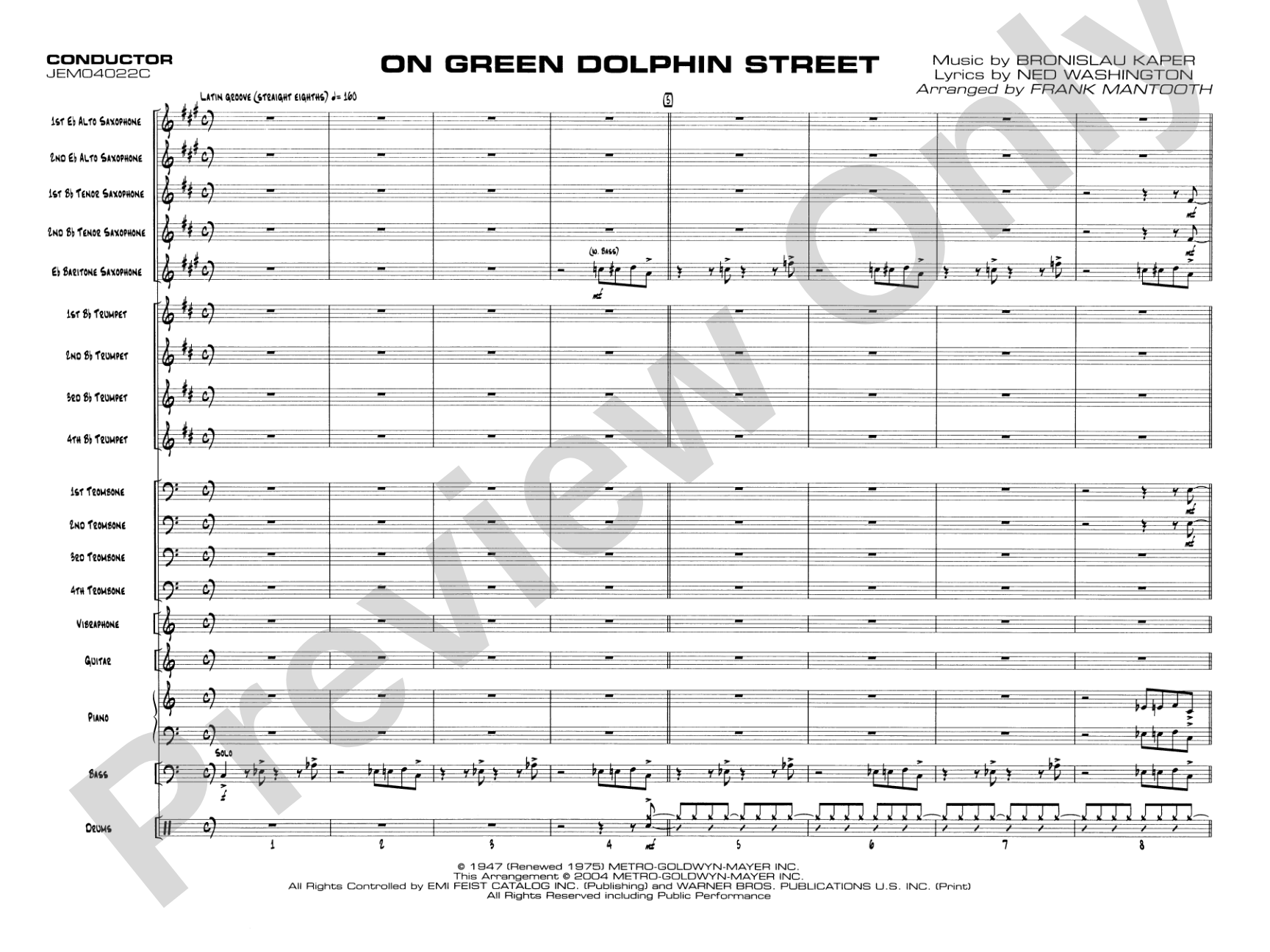
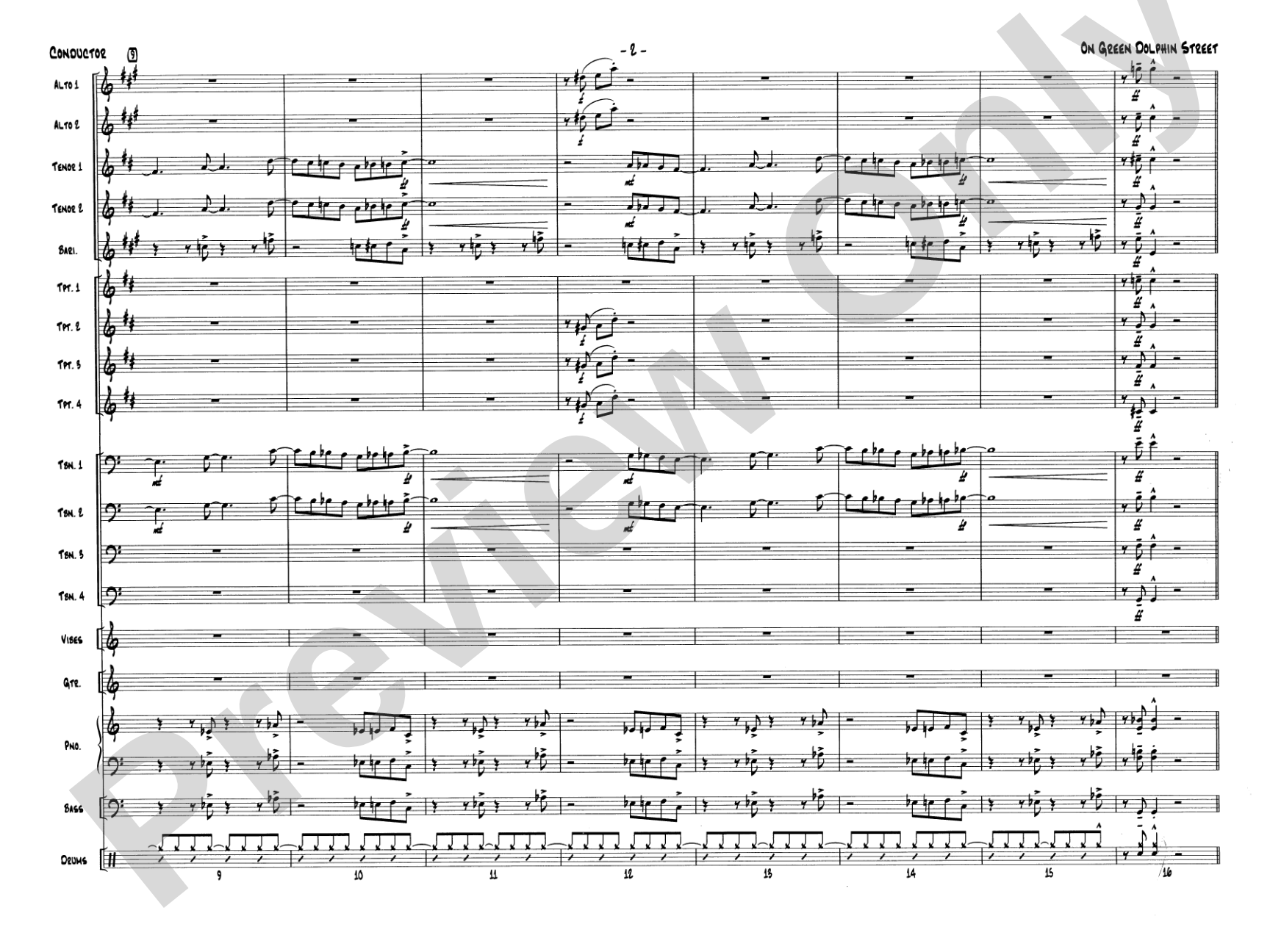
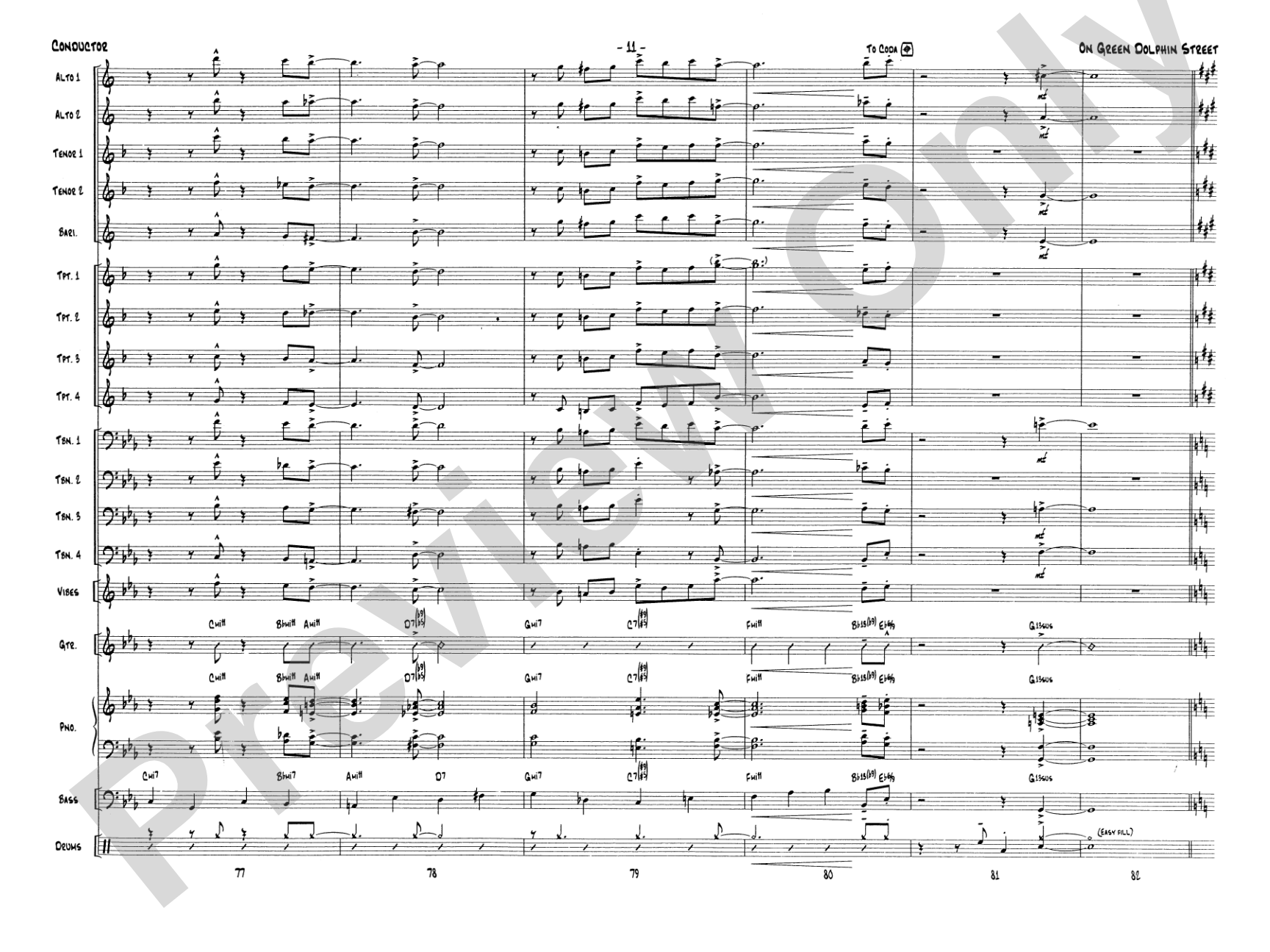
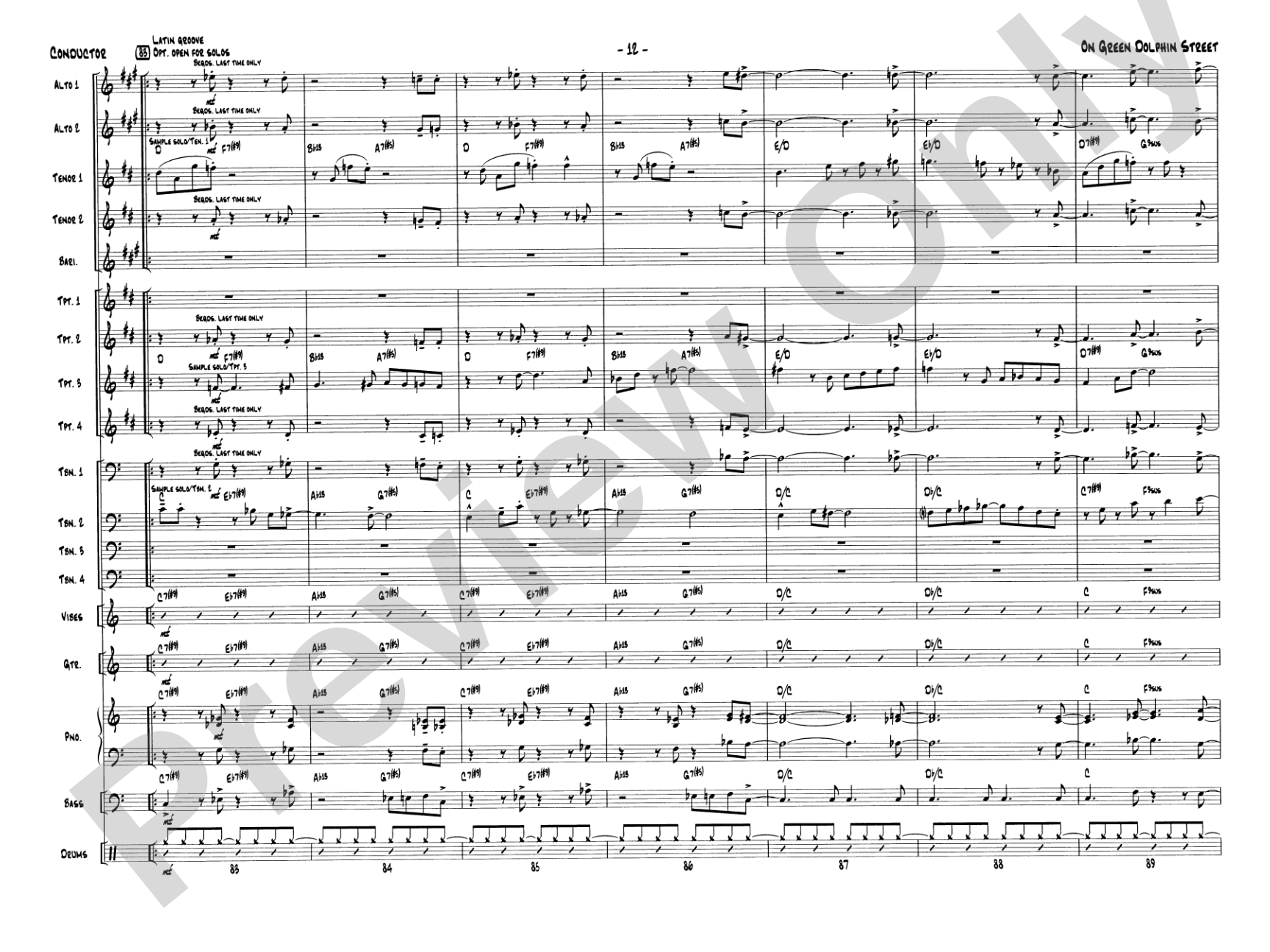
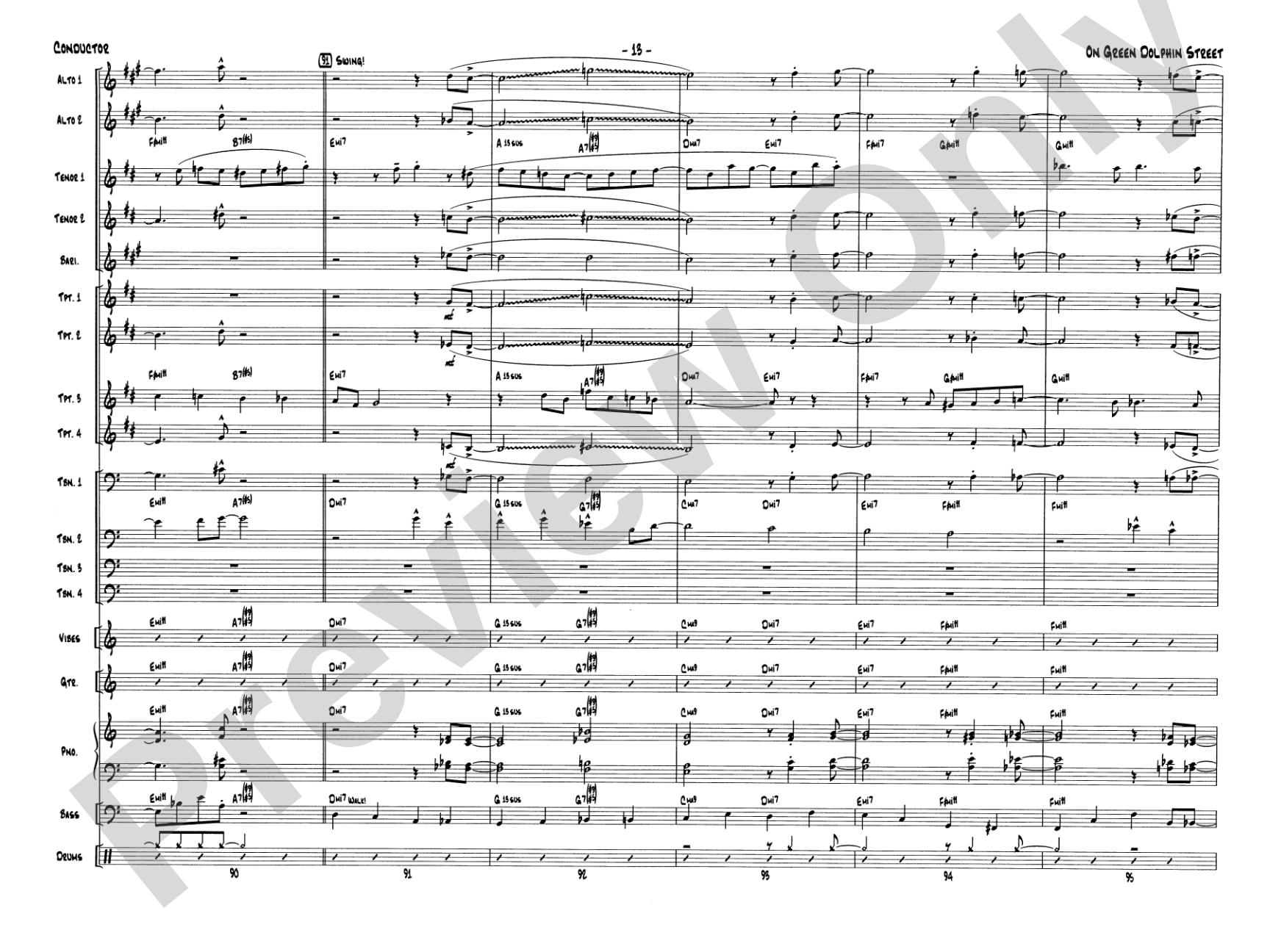
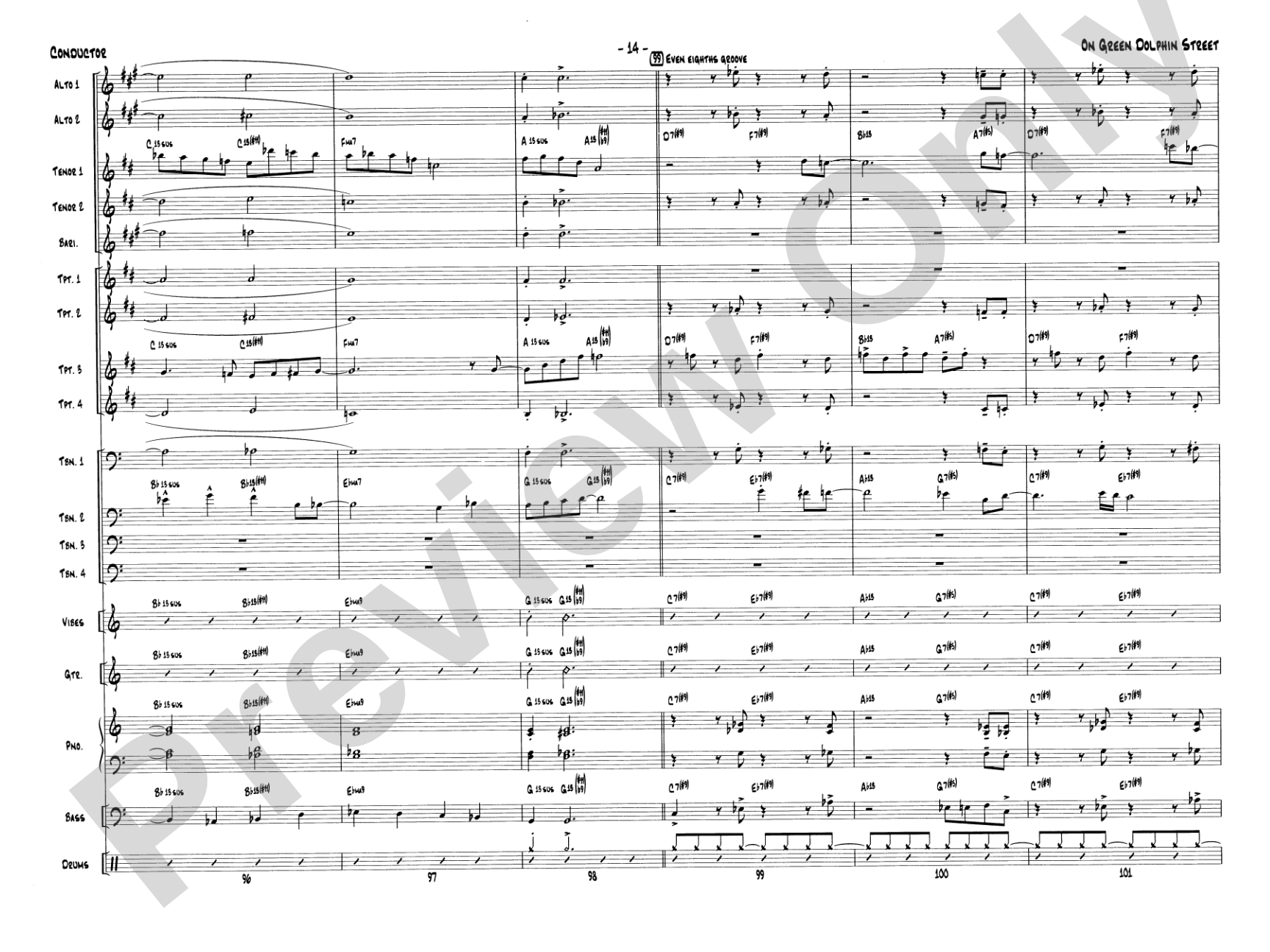
Frank Mantooth was always thinking out of the box, injecting clever and fresh ideas into jazz standards. Frank's chart On Green Dolphin Street toggles between Latin and swing which will help your band lock in the two styles, and solo space (written or ad-lib) is provided for trumpet, tenor, and trombone. This arrangement delivers interesting rhythms and harmonies that the band can sink its teeth into. (4:22)


Don't just read it, hear it, play along with it, and watch your students grow with it. In MakeMusic Cloud, On Green Dolphin Street: Jazz Ensemble Conductor Score & Parts comes alive with professional accompaniment, adjustable tempo, and built-in practice tools that turn solo practice into real progress.
Open in the Player
Jump straight in and assign it today.
Start Your Free Trial
Open this title and explore the full library in minutes.
Sample Audio
1
Audio File
--:--
0:00
0:00
Sample Video
Additional Details
Series:
Jazz Band Series
Publisher:
Alfred Music
Page Count:
128
SKU:
00-PK-0002532
More about this title
About the Composer: Bronislau Kaper
Bronislau Kaper (1902-1983) was a Polish-born composer who became one of Hollywood's most prolific film score writers. Working primarily for MGM from the 1930s through the 1960s, Kaper composed music for over 100 films, earning an Academy Award nomination for his work on Lili. His gift for melody and harmonic sophistication made his themes enduring standards in the American songbook.
Kaper's film themes have become essential repertoire for jazz ensembles and concert bands. His melodies are lyrical and singable, with harmonic movement that rewards thoughtful interpretation. Jazz arrangers and bandleaders have long recognized the quality of his compositional craft, making pieces like On Green Dolphin Street perennial favorites for educational and professional musicians alike.
Why we love this
Frank Mantooth's arrangement captures what makes this standard endure while giving your ensemble real interpretive work to do. The Latin-to-swing toggle isn't merely a stylistic shift for variety; it demands genuine precision in rhythm section coordination and section awareness. The written and open solo space means soloists have room to stretch while the band stays engaged and responsive.
What to expect
The piece breathes with the easy sophistication of a mid-century film score, then swings with propulsive energy. Mantooth's reharmonization and rhythmic sophistication give the tune a contemporary edge while honoring Kaper's original melodic gift.
Who it's for
This arrangement works for any jazz ensemble at the intermediate level and above. It suits directors building a program that balances standards with accessible complexity, as well as ensembles preparing for jazz festival competition or concert settings where style versatility matters.
How to get the most out of it
- Establish the Latin feel in sectionals before ensemble rehearsals. Have your rhythm section nail the clave and tumbao patterns independently so the horn sections can lock in without guessing.
- Mark your transitions between Latin and swing sections clearly in the score and parts. Have the band count through the exact bar numbers where the style shifts so nobody drifts.
- Encourage your trumpet, tenor, and trombone soloists to listen to classic recordings of the melody and other versions to build vocabulary for their solo sections, whether they choose to play written lines or improvise.
- Balance the band texture during solos. The supporting sections need to sit in the pocket while spotlighting the soloist; rehearse dynamics and rhythmic precision in accompaniment passages.
How to use it
Program this as part of a jazz concert exploring film composers' contributions to the American songbook. It pairs well with other Mantooth arrangements or with pieces exploring Latin jazz styles, giving audiences a complete picture of how ensembles navigate genre shifts. The reasonable performance time and educational value also make it suitable for jazz festival competition or educational demonstration contexts.
Skills your students will build
- Distinguishing and executing Latin and swing rhythmic feels
- Responding as an ensemble to style transitions without losing time
- Comping and accompaniment during written and improvised solos
- Harmonic listening and voice leading in a reharmonized standard
- Solo construction over jazz changes with harmonic awareness