
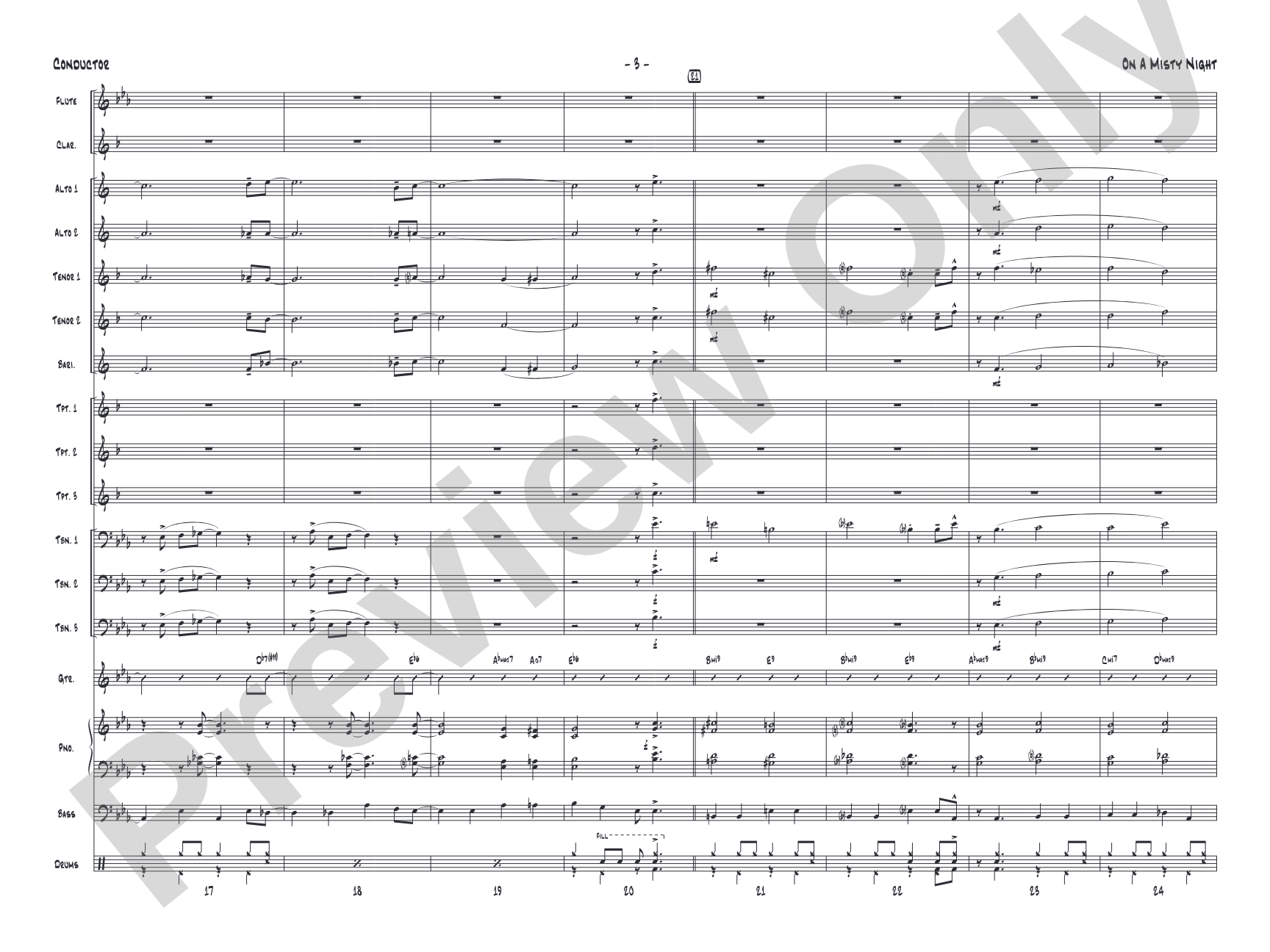
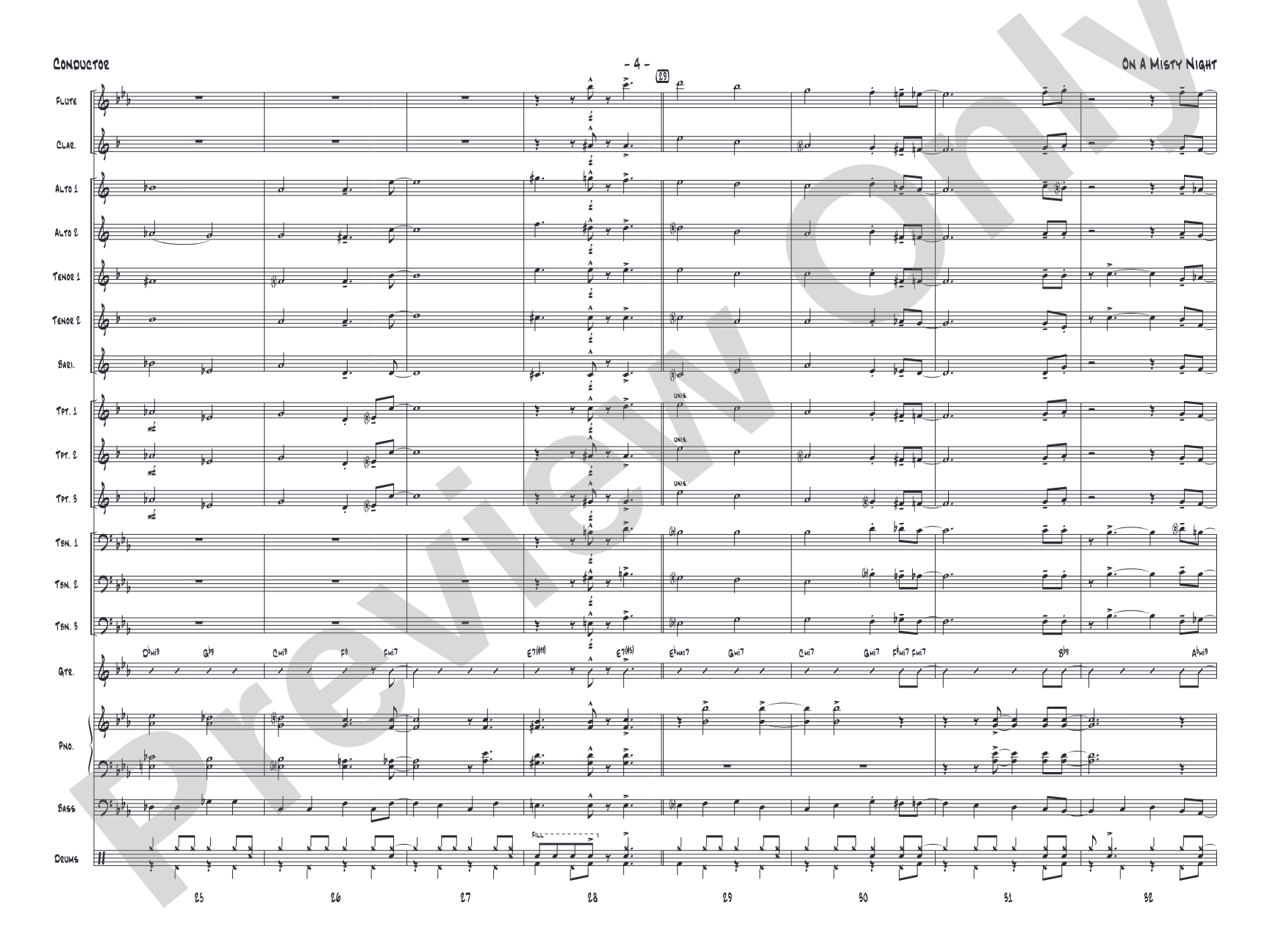
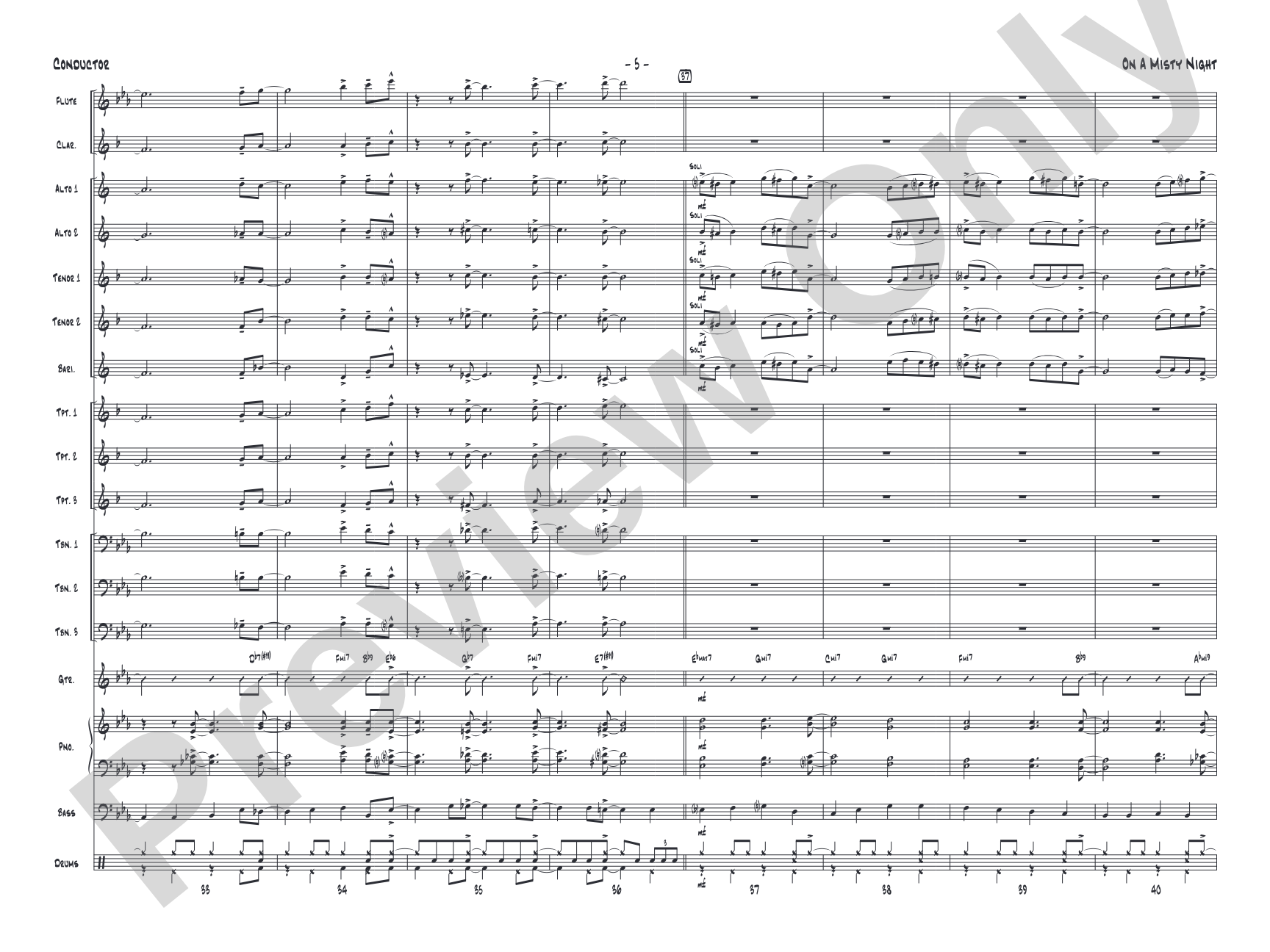
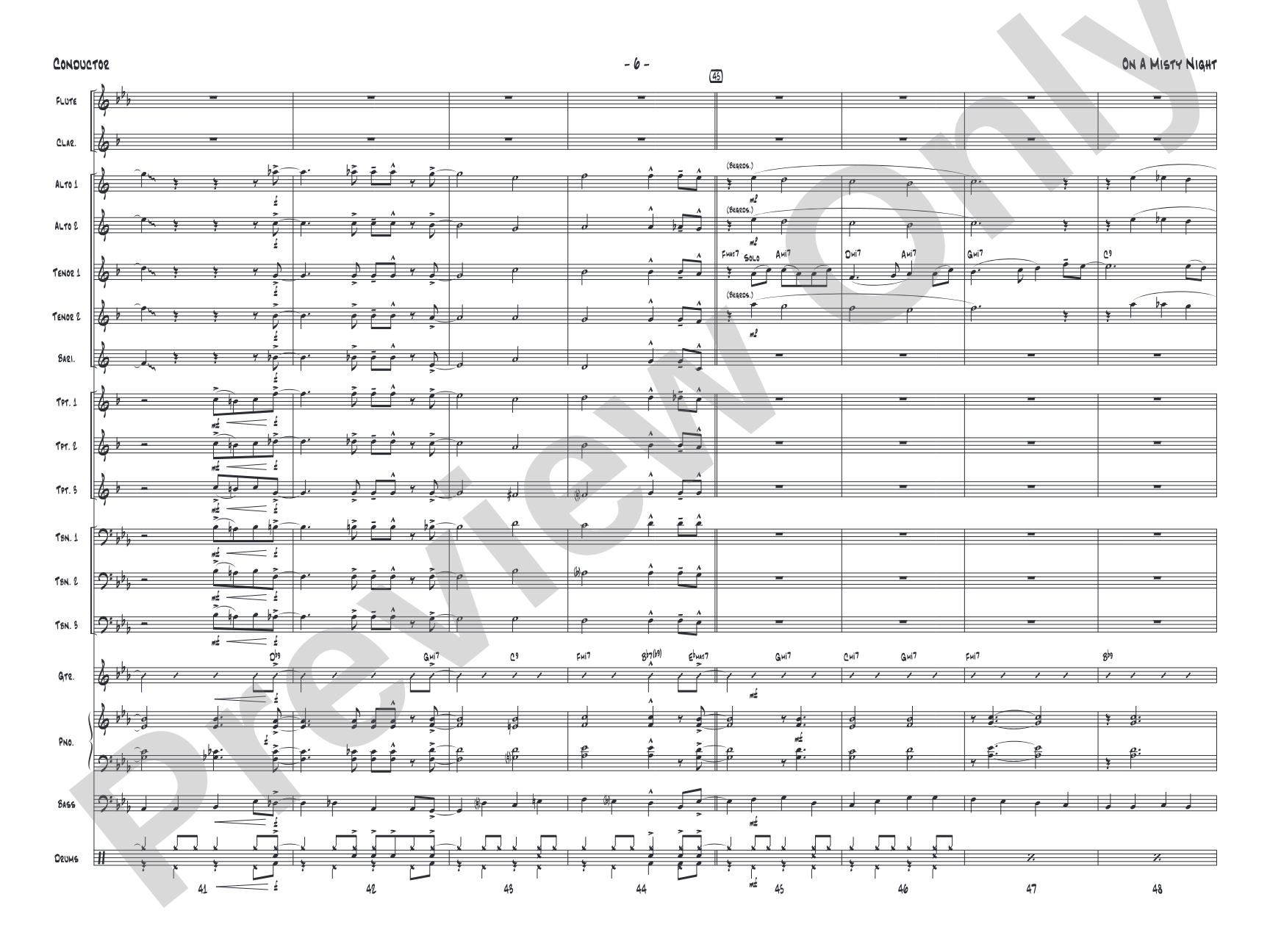
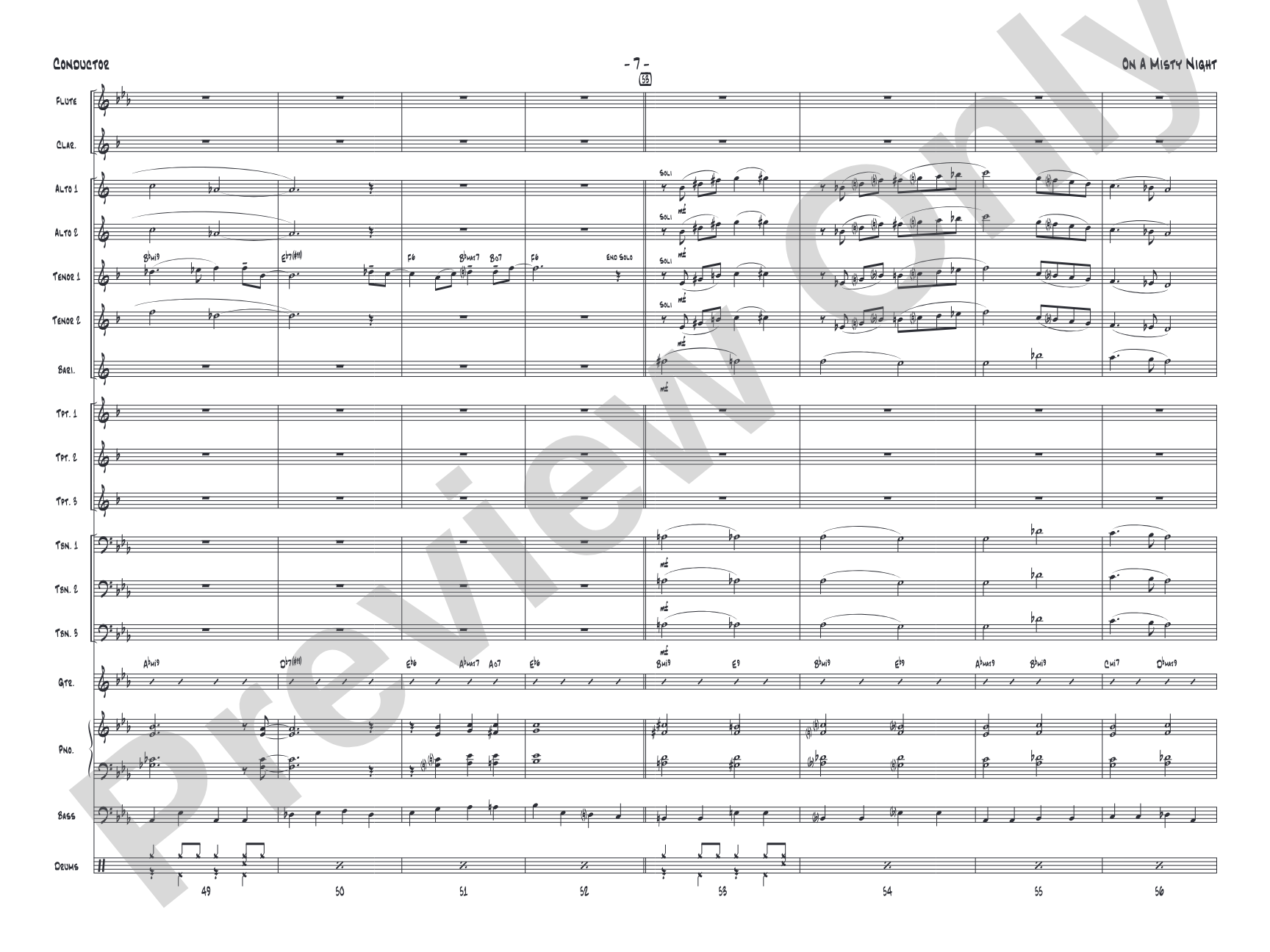
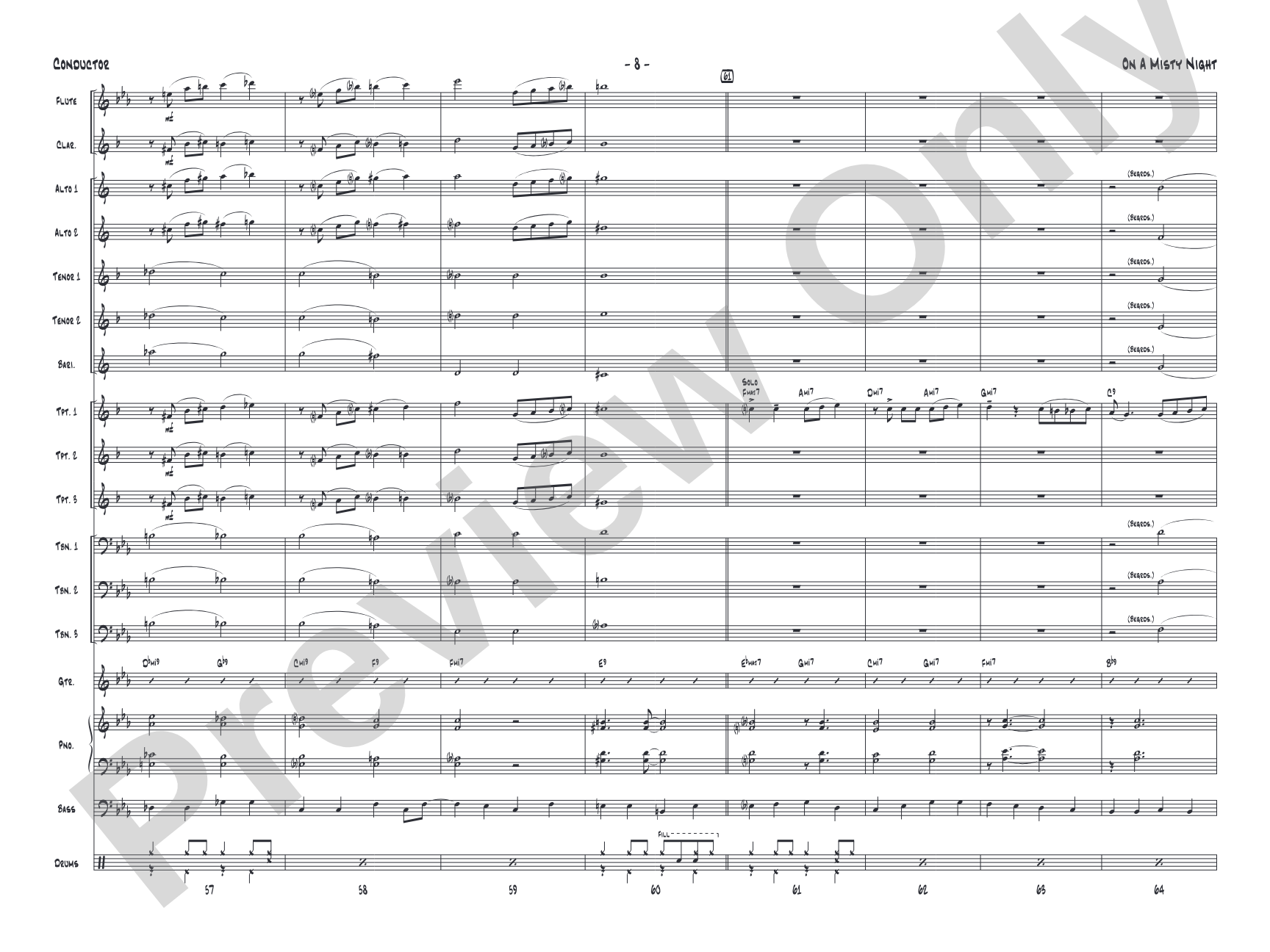
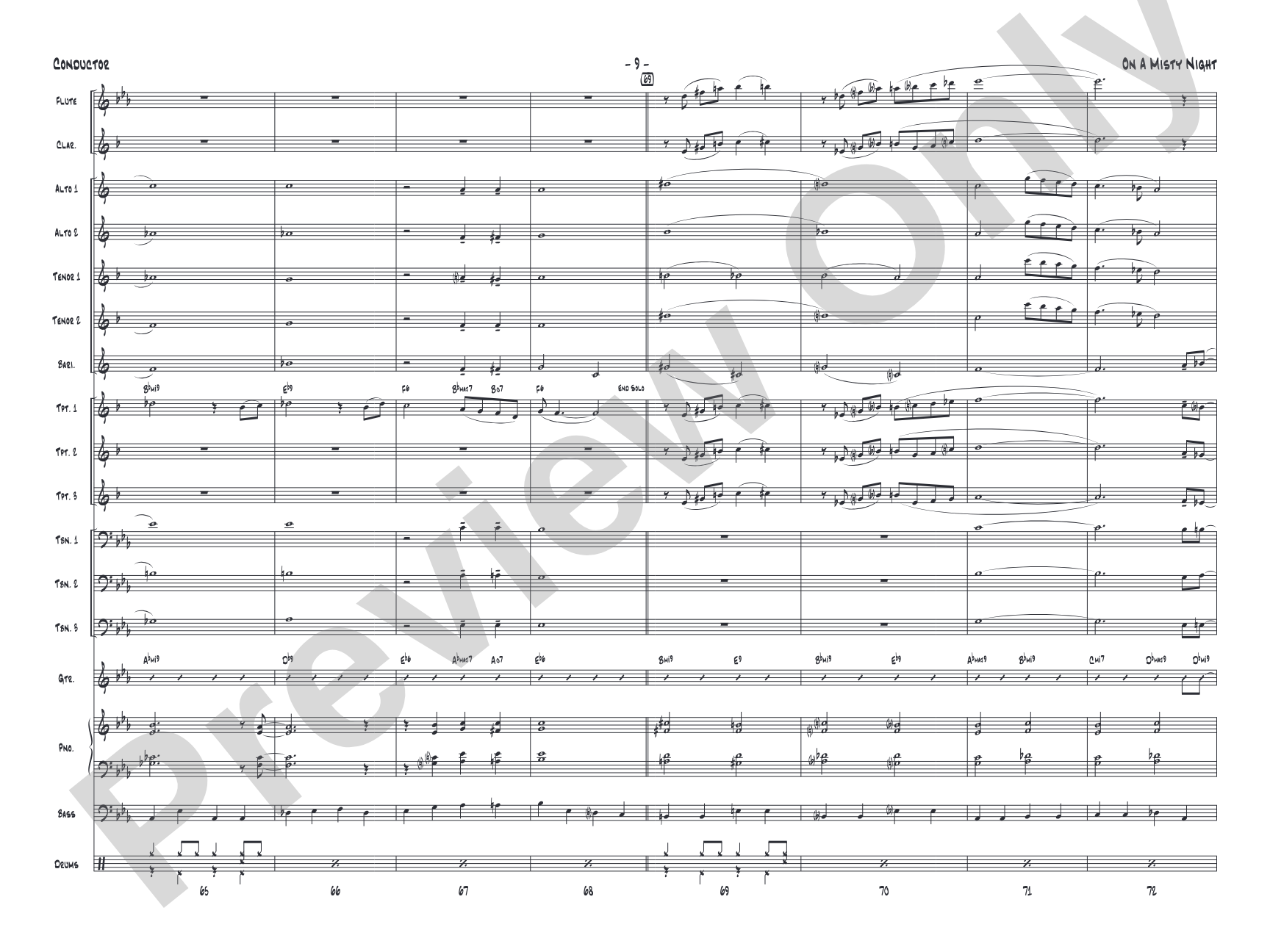
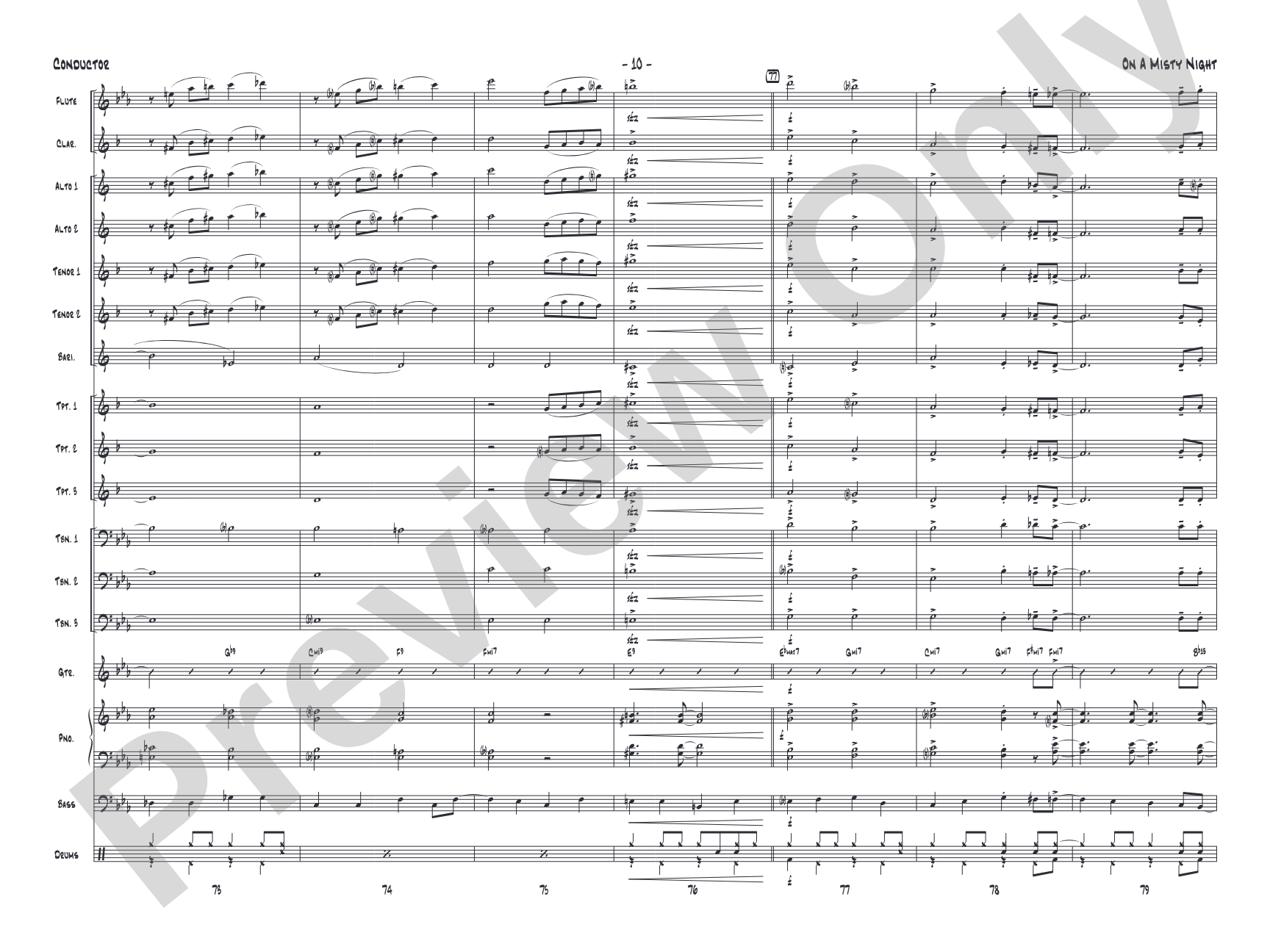
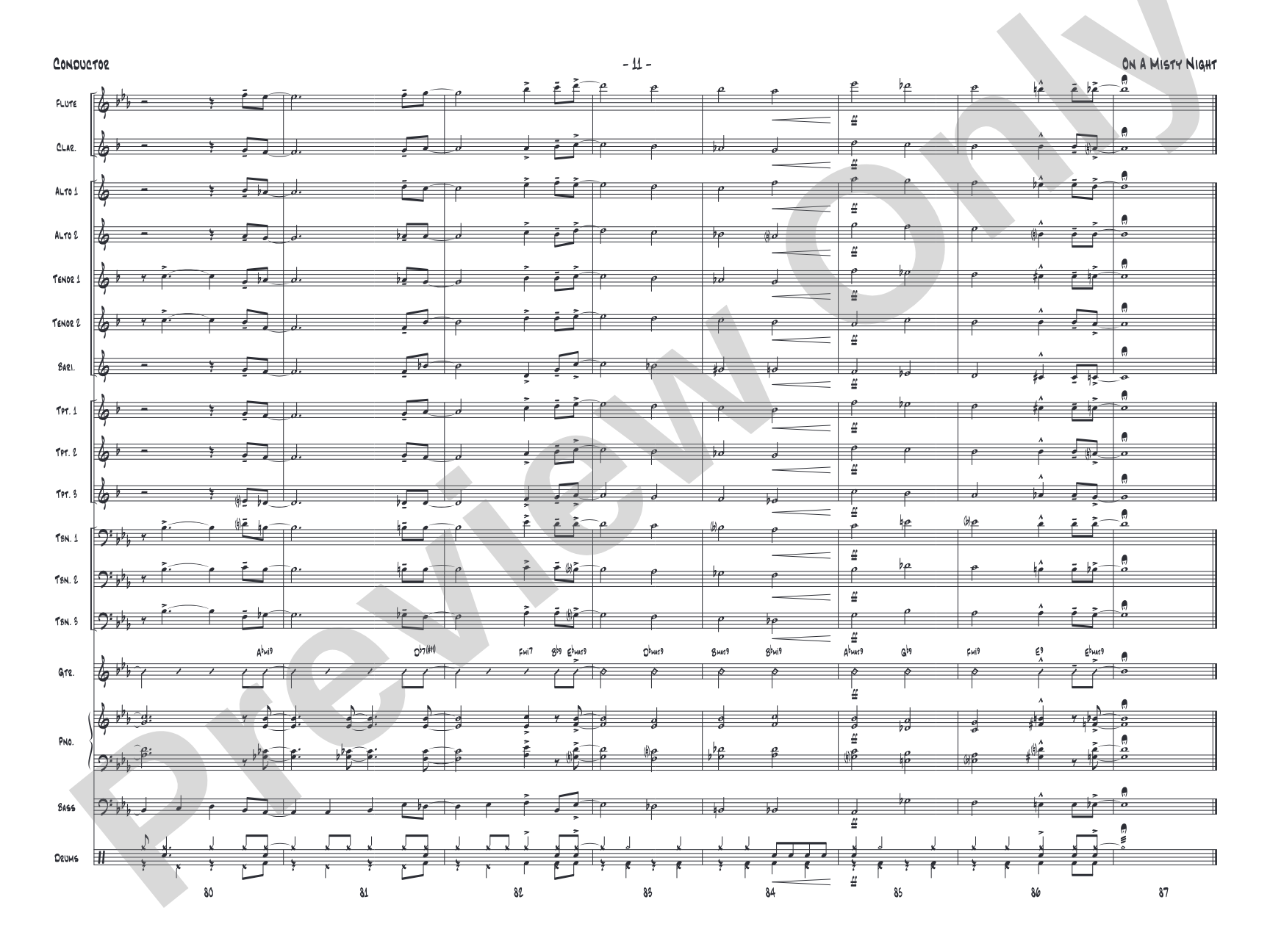

On a Misty Night: Jazz Ensemble Conductor Score & Parts
By Tadd Dameron / arr. Terry White
Grade: 1 (Easy)
Item: 00-PK-0008293

$44.00
One moment…
Description
On a Misty Night arranged by Terry White is a nice medium swing groove played around 128 BPM on a tasty jazz standard. Written out solos for tenor 1 and trumpet 1, a sax soli, with trumpet 1 range to written F on the top line. Optional parts galore to include vibes. This is a fine chart on a great melody. (2:50) This title is available in MakeMusic Cloud.


Don't just read it, hear it, play along with it, and watch your students grow with it. In MakeMusic Cloud, On a Misty Night: Jazz Ensemble Conductor Score & Parts comes alive with professional accompaniment, adjustable tempo, and built-in practice tools that turn solo practice into real progress.
Open in the Player
Jump straight in and assign it today.
Start Your Free Trial
Open this title and explore the full library in minutes.
Sample Audio
1
Audio File
--:--
0:00
0:00
Sample Video
Additional Details
Series:
First Year Charts for Jazz Ensemble
Publisher:
Alfred Music
Page Count:
82
SKU:
00-PK-0008293
More about this title
About the Composer: Tadd Dameron
Tadd Dameron (1917-1965) was a pivotal composer and arranger in the development of bebop and cool jazz. His harmonic sophistication and lyrical melodic gift set him apart from his contemporaries, and his arrangements for big bands and small ensembles became models for how to voice modern jazz idiomatically.
Dameron's compositions remain central to the jazz repertoire because they balance accessibility with musical depth. Players at every level find his melodies memorable and his harmony engaging, making his work especially valuable in educational settings where students need charts that sound professional without requiring advanced harmonic knowledge to execute effectively.
Why we love this
Terry White's arrangement captures the elegant simplicity that makes Dameron's writing so enduring. The written solos and sax soli give your ensemble concrete material to execute rather than requiring improvisation before students are ready, while the optional instrumentation (vibes, for instance) means you can score it to your current personnel without losing the swing or the sound.
What to expect
There's a warmth to this piece that sits somewhere between the brightness of bebop and the relaxed elegance of cool jazz. At medium tempo with tasty harmony underneath, it has the feel of an intimate late-night session rather than a flashy showcase piece.
Who it's for
This chart belongs in the library of any jazz ensemble director working with developing players. The Grade 1 level makes it accessible to first-year jazz groups or younger ensembles, while the arrangement's thoughtful voicing and strong melody keep it rewarding for more experienced players looking to refine their swing feel.
How to get the most out of it
- Keep the tempo steady at 128 BPM; this groove lives in consistency rather than pushing the beat. Lock in with your rhythm section early and let them establish the pocket before bringing in the ensemble figures.
- Balance the written trumpet 1 solo against the rest of the ensemble. The top line sits at written F, which puts real demand on that chair; give that player room to breathe and be heard.
- Use the tenor 1 solo as a moment to shift energy rather than add volume. Dameron's melodies work best when they're clear and relaxed, not forced.
- Pay attention to the sax soli sections. This is where the saxophone section needs to voice blend as a unit, not as individual players; spend rehearsal time on balance and intonation within that soli.
How to use it
Program this early in the concert to establish your ensemble's ability to play a clean, swinging standard with clear voicing. It pairs well before a more complex or uptempo chart, giving the audience a moment to settle into the jazz sound while your ensemble demonstrates control and cohesion.
Skills your students will build
- Swing rhythm and feel at a medium tempo
- Reading written jazz solos and executing them with musicality
- Saxophone section blend in soli passages
- Balancing ensemble figures with solo voices
- Interpreting Dameron's harmonic language through performance