
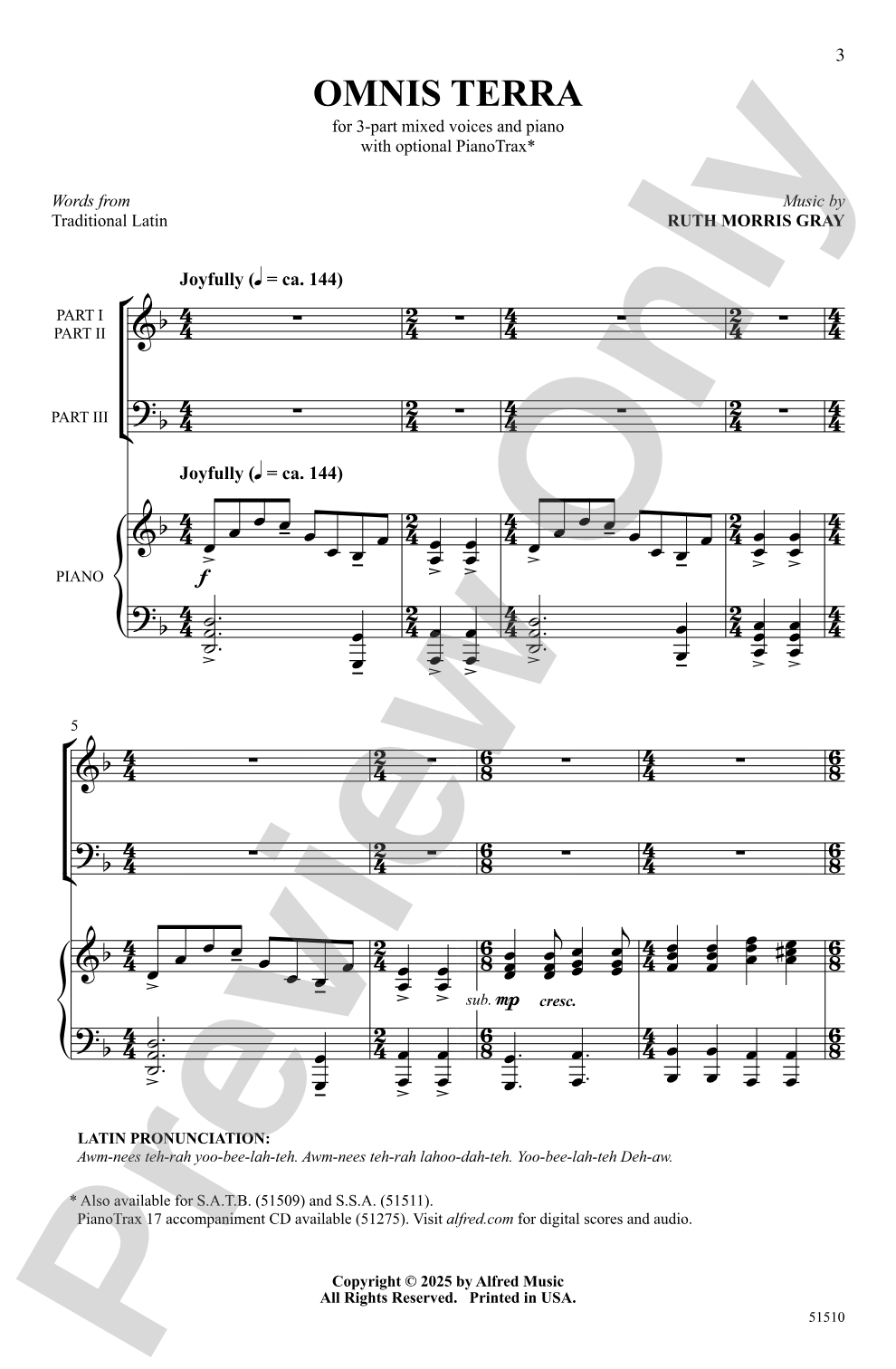
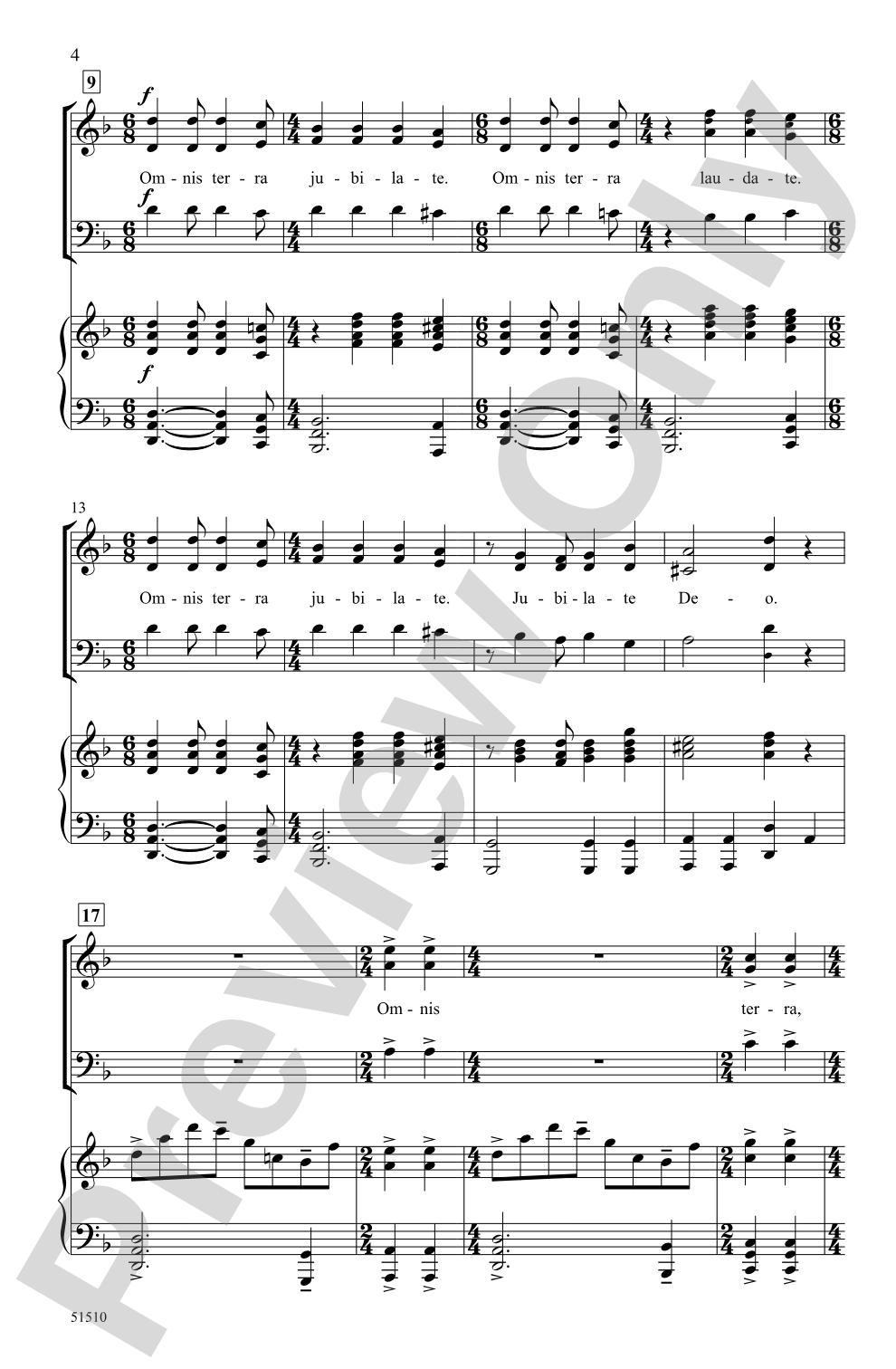

Omnis Terra: 3-Part Mixed Choral Octavo
Words from Traditional Latin, music by Ruth Morris Gray
Item: 00-PO-0007493

$2.30
Minimum order quantity: 10 copies
Please note: Under U.S. copyright law, you must purchase the exact number of copies needed for your ensemble. Printing, duplicating or sharing additional copies is strictly prohibited.
Pickup currently not available
Description
Here's an impressive Latin festival work from composer Ruth Morris Gray. Her joyfully rhythmic setting uses full stacked harmonies in energized mixed meter to build excitement in this minor-key thriller. Contrasting lyrical sections include some English lyrics, and percussive handclaps reflect the "trees will clap their hands" text. A strong standout for concert or contest.


Don't just read it, hear it, play along with it, and watch your students grow with it. In MakeMusic Cloud, Omnis Terra: 3-Part Mixed Choral Octavo comes alive with professional accompaniment, adjustable tempo, and built-in practice tools that turn solo practice into real progress.
Open in the Player
Jump straight in and assign it today.
Start Your Free Trial
Open this title and explore the full library in minutes.
Sample Audio
1
Audio File
--:--
0:00
0:00
Sample Video
Additional Details
Series:
Alfred Choral Designs
Publisher:
Alfred Music
Page Count:
12
SKU:
00-PO-0007493
More about this title
About the Composer: Ruth Morris Gray
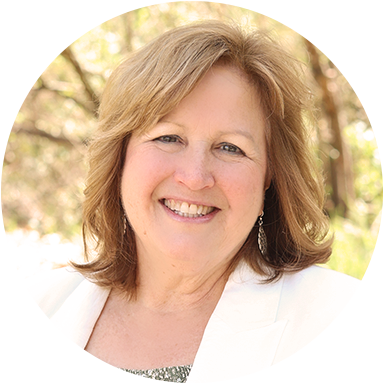
Ruth Morris Gray has directed choirs at Rosemead High School in California since 2004, where she also teaches piano. Her output as a composer is substantial: over 100 published choral works that reflect both her training and her classroom experience.
Gray earned her Bachelor of Music in Piano Performance and Composition from Biola University, followed by a Master of Arts in Music Composition from UC Santa Barbara. She completed her California Single Subject Music Credential at Cal State Northridge. Beyond the music studio, she is an avid traveler, swimmer, reader, and e-bike enthusiast.
Why we love this
Gray writes for real choirs, and it shows. The mixed meters and rhythmic energy here never feel academic or overly clever; instead, they drive the piece forward with genuine joy. The inclusion of English text alongside Latin, plus the handclap percussion, signals a composer who understands how to make festival work feel contemporary without abandoning the sacred tradition.
What to expect
Minor-key brightness and forward momentum define the overall mood, even as the piece alternates between propulsive and contemplative. The rhythmic drive and stacked harmonies create an almost orchestral density, while the lyrical sections open up breathing room. Handclaps punctuate the texture like an invitation to physical participation, grounding the Latin text in something immediate and celebratory.
Who it's for
This work suits mixed choirs of intermediate to advanced abilities who are comfortable with rhythmic complexity and minor-key writing. Whether you're building a festival set or crafting a concert program that needs a high-energy moment, this piece rewards singers who relish contemporary harmonic language and audiences who appreciate sacred texts treated with both respect and vitality.
How to get the most out of it
- Establish the hand clap pattern early in rehearsal as a rhythmic anchor. Even if you eventually cut it or reassign it, getting the pulse locked first makes the mixed meters sit much more naturally in the singers' bodies.
- Balance the stacked harmonies by doubling the root and fifth parts slightly and letting the inner voices breathe. These dense chords can muddy quickly if every line is equally weighted.
- Mark the shift from lyrical to energized sections clearly in your score. The contrast is the piece's backbone, so singers need visual and aural signposts to make that transition feel intentional rather than abrupt.
- If using the recorded accompaniment, rehearse several times without it first. Your singers will internalize the rhythmic profile much more securely if they build it from the ground up before relying on the track.
How to use it
Open a concert with this piece to signal artistic ambition and energy from the first moment. It pairs well alongside other contemporary sacred works or sits naturally in a festival context where its contest appeal and concert polish both matter. The minor key and mixed meters also make it an excellent anchor for a program built around adventurous harmonic language.
Skills your students will build
- Reading and performing mixed meters (primarily 3/4 and 4/4)
- Balancing stacked harmonies in dense choral textures
- Executing rhythmic entrances with precision across three parts
- Navigating text underlay and diction across Latin and English syllables
- Responding to percussion elements (hand claps) as rhythmic and textual reinforcement