
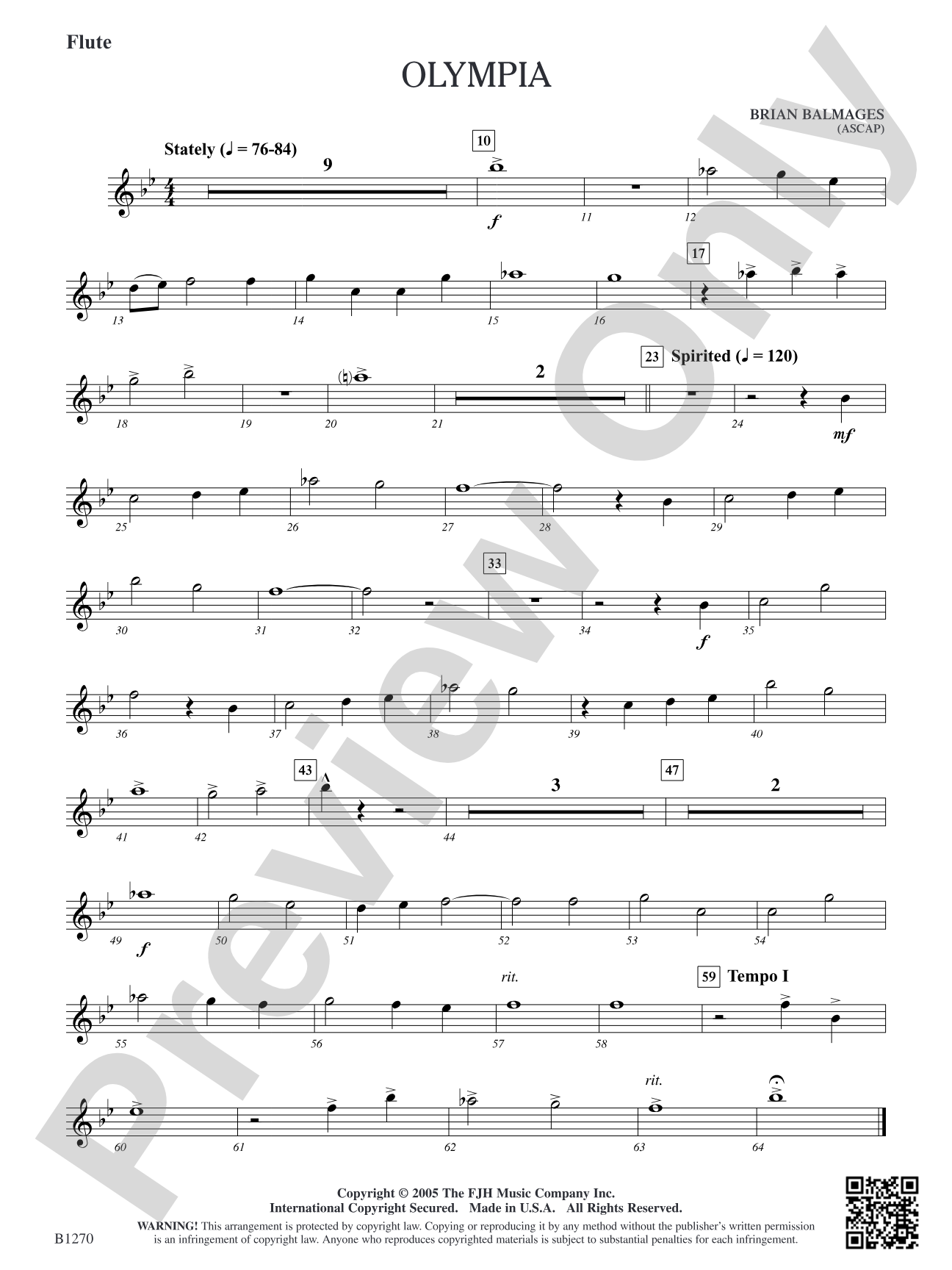

Olympia: Flute
By Brian Balmages
Grade: 1
Item: 98-PC-DB1270_F1
$7.00
Pickup currently not available
Description
This powerful fanfare captures the spirit of Olympia, the birthplace of the Olympic Games. The opening figure in the percussion is reminiscent of Aaron Copland and introduces the opening theme. As the theme seamlessly develops, the piece picks up tempo as snippets of the fanfare theme are interjected between lyrical statements in the woodwinds. Great (and flexible) percussion writing adds depth to the work. In addition to the regular part, an optional advanced snare drum part is included for accomplished percussionists. Bold sounds yet extremely playable!


Olympia: Flute isn't in MakeMusic Cloud just yet...but it could be. Let us know you'd like to see it, and you'll help shape what comes next. In the meantime, start a free trial and dive into thousands of interactive titles your students can play along with today.
Request This Title
Tell us you want it.
Start Your Free Trial
Explore everything that's ready to play right now.
Sample Audio
1
Audio File
--:--
0:00
0:00
Sample Video
No sample videos found.
Additional Details
Series:
FJH Beginning Band
Publisher:
The FJH Music Company, Inc.
SKU:
98-PC-DB1270_F1
More about this title
About the Composer: Brian Balmages

Brian Balmages has established himself as a composer and conductor working across orchestral, band, and chamber repertoires. His works have reached audiences in prestigious venues including Carnegie Hall, the Kennedy Center, and the Sydney Opera House, performed by ensembles ranging from professional orchestras to elementary school groups. He holds membership in the American Bandmasters Association and received the A. Austin Harding Award from the American School Band Directors Association, along with the 2020 NBA William D. Revelli Composition Contest award for Love and Light.
Balmages has conducted all-state ensembles, university groups, and professional orchestras across North America and internationally. His music was performed at the 2013 Presidential Inaugural Prayer Service, and he has been commissioned by James Madison University and the University of Miami for significant compositional projects. Currently serving as Director of MakeMusic Publications and Digital Education for Alfred and MakeMusic, he continues to shape the landscape of contemporary wind band and orchestral music.
Why we love this
Balmages gives Grade 1 conductors exactly what they need: genuinely musical writing that doesn't sacrifice sophistication for playability. The Copland-influenced opening establishes immediate character, while the flexible percussion part (with an optional advanced snare drum layer) lets you adjust the work's impact based on your ensemble's strengths. This is the kind of piece that sounds polished in performance without requiring months of preparation.
What to expect
A grand fanfare that builds athletic energy and triumph without losing lyricism. The piece opens with ancient dignity, then propels forward with Olympic-sized ambition, drawing you into moments of song before surging ahead again. It feels like witnessing something important and celebratory, captured in sound.
Who it's for
Beginning concert bands with solid fundamentals who are ready to tackle a piece with genuine musical character and structure. This work suits ensembles preparing for festival or contest, as it combines accessible technical demands with the kind of bold, confident sound that makes an impression.
How to get the most out of it
- Balance the opening percussion figure carefully; it sets the tone for everything that follows and should speak clearly without overwhelming the ensemble as the theme enters.
- Shape the contrasting lyrical woodwind passages by bringing out the melody against transparent supporting voices, then transition sharply back to fanfare material to emphasize the structural shifts.
- Choose whether to use the optional advanced snare drum part based on your percussionists' experience; the regular part is fully satisfying and allows you to focus ensemble energy elsewhere if needed.
- Use the tempo increase as a dramatic turning point rather than a gradual acceleration; a clear tempo shift heightens the energy and gives the piece architectural clarity.
How to use it
Program this as an opener to establish excitement and showcase your band's sound, or use it as a festival entry that demonstrates musicianship across multiple textures. Pair it with lyrical works to highlight the piece's range, from vigorous fanfare writing to gentle woodwind dialogue.
Skills your students will build
- Balancing ensemble voicing and managing transparent textures
- Responding to tempo changes and maintaining cohesion through structural shifts
- Intonation and blend in opening unison and octave passages
- Articulation clarity and style variation (fanfare sections versus legato woodwind lines)
- Percussion independence and rhythmic precision within an ensemble context