
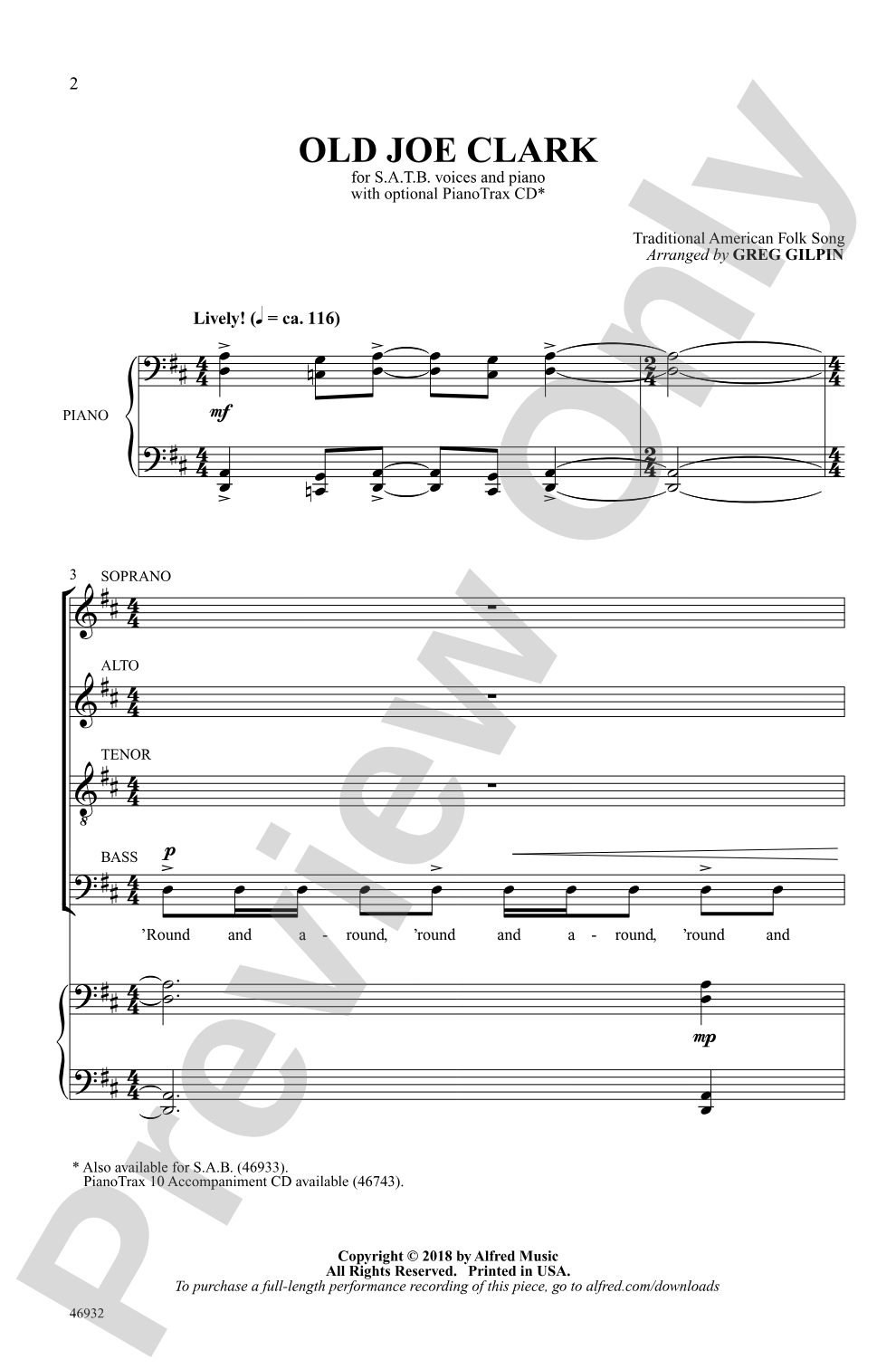

Old Joe Clark: SATB Choral Octavo
Traditional American Folk Song / arr. Greg Gilpin
Item: 00-PO-0005799
$2.20
Minimum order quantity: 20 copies
Pickup currently not available
Description
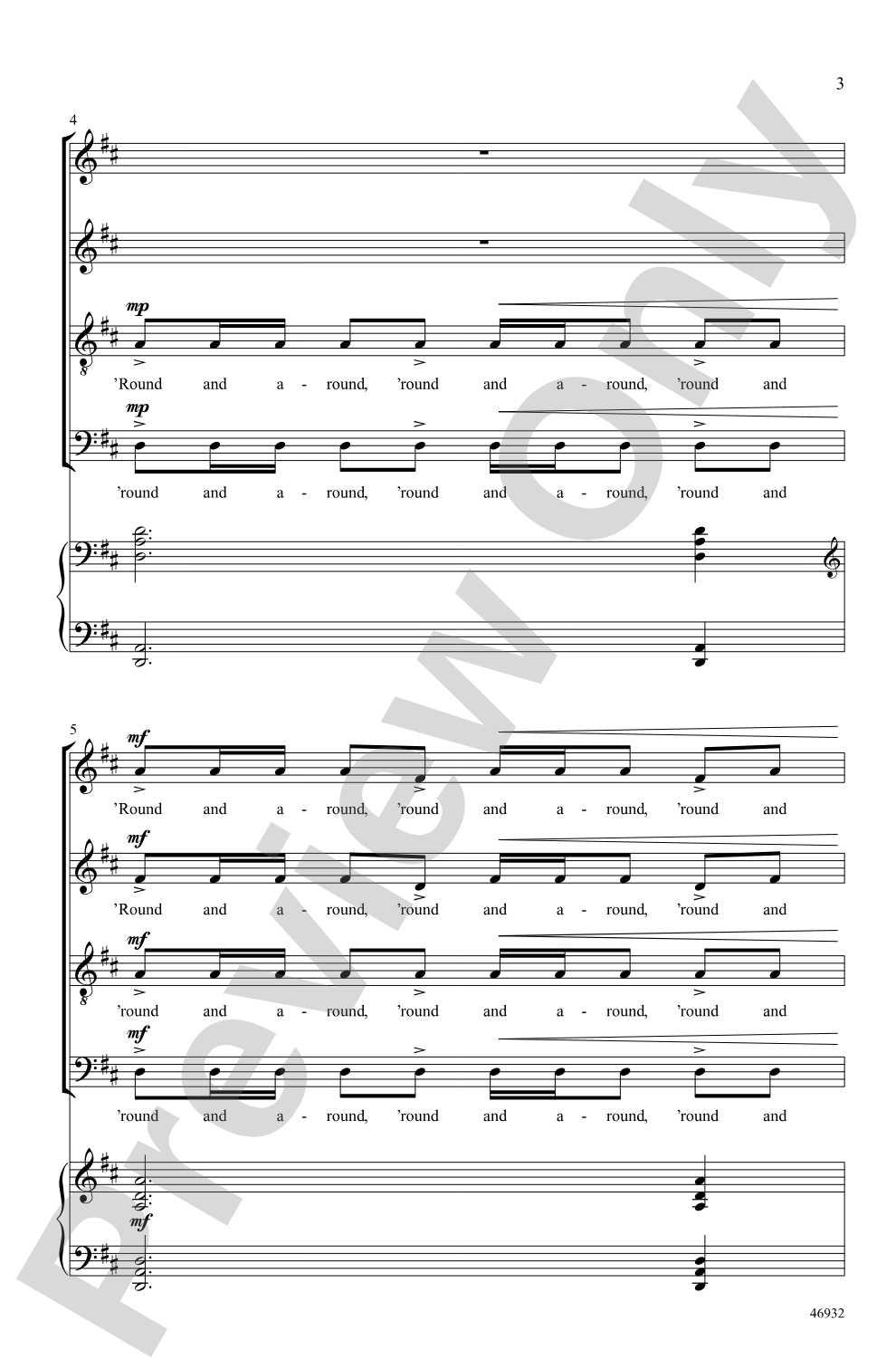
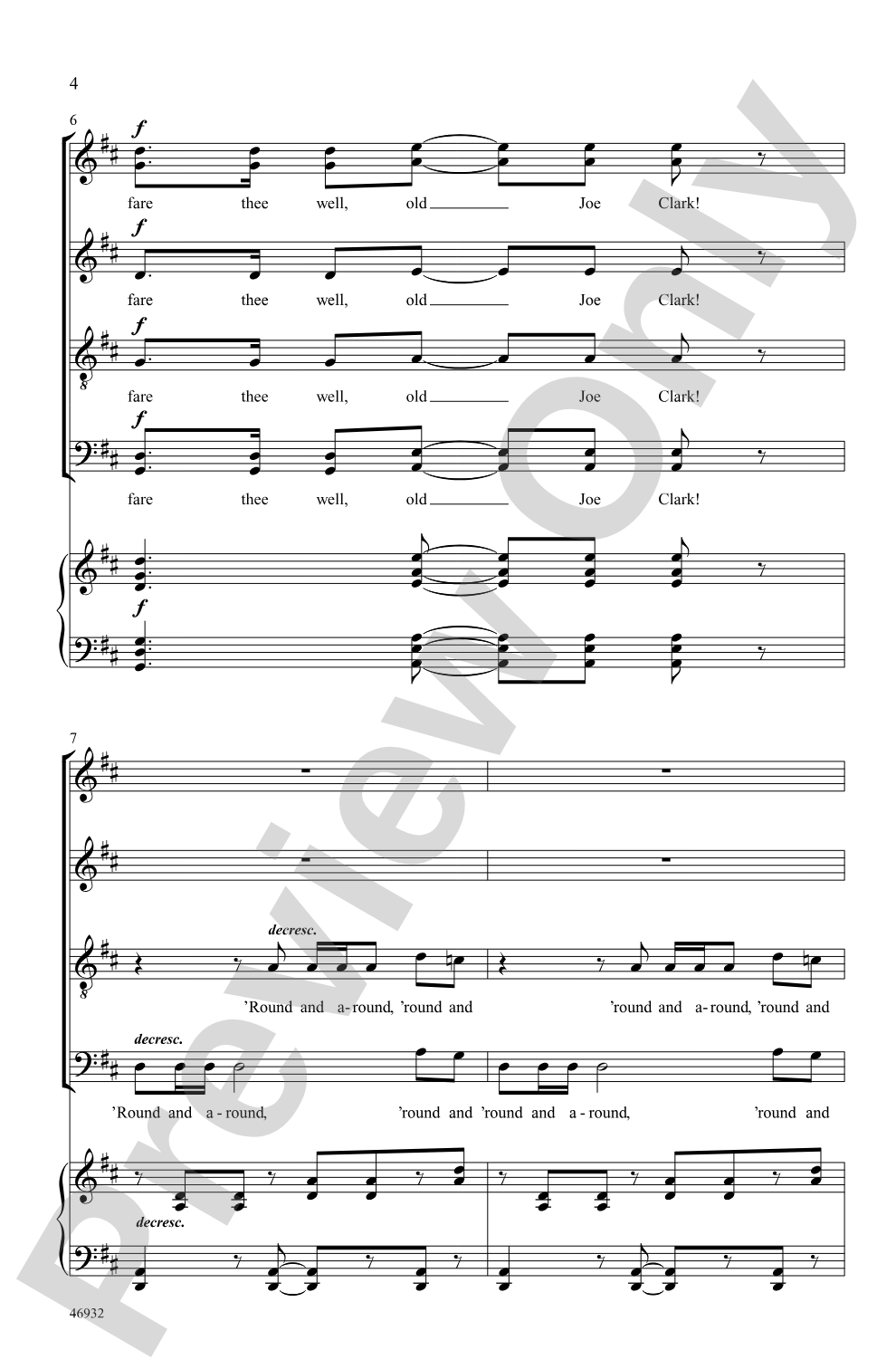
This extraordinary arrangement of the traditional American folk song belongs in every choral library! An urgent "round and around" vocal motive serves as a rhythmic engine throughout the entire piece as the modal melody gets playfully tossed from voice to voice in a variety of styles, but always with class, creativity, and good humor.


Old Joe Clark: SATB Choral Octavo isn't in MakeMusic Cloud just yet...but it could be. Let us know you'd like to see it, and you'll help shape what comes next. In the meantime, start a free trial and dive into thousands of interactive titles your students can play along with today.
Request This Title
Tell us you want it.
Start Your Free Trial
Explore everything that's ready to play right now.
Sample Audio
1
Audio File
--:--
0:00
0:00
Sample Video
Additional Details
Series:
Alfred Choral Designs
Publisher:
Alfred Music
Page Count:
16
SKU:
00-PO-0005799
More about this title
About the Arranger: Greg Gilpin

Greg Gilpin holds significant roles in both the choral conducting and publishing worlds. As Director of Educational Choral Publications for Shawnee Press, he shapes the repertoire available to thousands of choirs nationwide, while his own compositions and arrangements have been performed at major venues including Carnegie Hall, Lincoln Center, Ryman Auditorium, Sydney Opera House, and Royal Festival Hall. His work has earned ASCAP recognition and spans film scoring, including the award-winning score for the short film "Rosie's Rescue."
Beyond music, Gilpin has expanded his professional expertise into organizing and financial coaching, becoming a certified Boss Organizer and financial coach. His multifaceted career reflects both deep roots in music education and a commitment to creative problem-solving across disciplines. He holds membership in ACDA, NAfME, SAG-AFTRA, and maintains Life Loyal status in Phi Mu Alpha Sinfonia.
Why we love this
Gilpin takes a folk standard that could be treated as quaint or overly familiar and instead creates a vehicle for rhythmic precision and voice independence. The persistent "round and around" motive gives every section clear rhythmic responsibility while the melody's journey across parts keeps singers engaged and prevents the arrangement from settling into predictable patterns. This approach makes the piece both musically satisfying and genuinely fun to rehearse.
What to expect
The arrangement pulses with kinetic energy, driven by the insistent rhythmic motive that creates a sense of forward motion. As the familiar melody bounces playfully between sections, there's a quality of discovery and surprise, even though the tune itself is traditional; the piece feels conversational and spirited rather than reverent or weighty.
Who it's for
Choirs seeking concert and festival repertoire that combines accessibility with genuine musical substance will find this arrangement rewarding. The piece suits intermediate to advanced high school choirs and community choirs that value vocal independence and rhythmic precision without needing complex harmony. Programming it appeals to directors who want folk material that feels fresh and contemporary in approach.
How to get the most out of it
- Keep the "round and around" motive crisp and consistent across all four parts; this rhythmic anchor makes the melodic trading feel intentional rather than scattered.
- Highlight the stylistic shifts as the melody moves between voices by adjusting articulation and vowel color subtly with each new section, but resist over-dramatizing the changes.
- Balance the modal melody so it sings through naturally even when it appears in unexpected voice parts; avoid letting harmonic parts overshadow unfamiliar melodic placements.
- Use dynamic contrast to support the hand-offs of the tune; a slight push into the melody and slight pull back from harmony helps listeners follow the line clearly.
How to use it
This piece works exceptionally well on concerts where you want to bridge traditional and contemporary choral styles, particularly when programming alongside more complex modern arrangements. Its accessibility and concert appeal also make it a strong festival entry, and its length (16 pages) positions it as a solid three to four minute anchor that doesn't demand the full program weight of a major work.
Skills your students will build
- Tracking melodic lines across multiple voice parts
- Maintaining rhythmic integrity in a repeated motive while other voices shift
- Singing in modal context (moving beyond major/minor tonality)
- Voice independence and blend when the melody transfers between sections
- Stylistic flexibility within a single piece