Old Devil Moon Sheet Music Preview

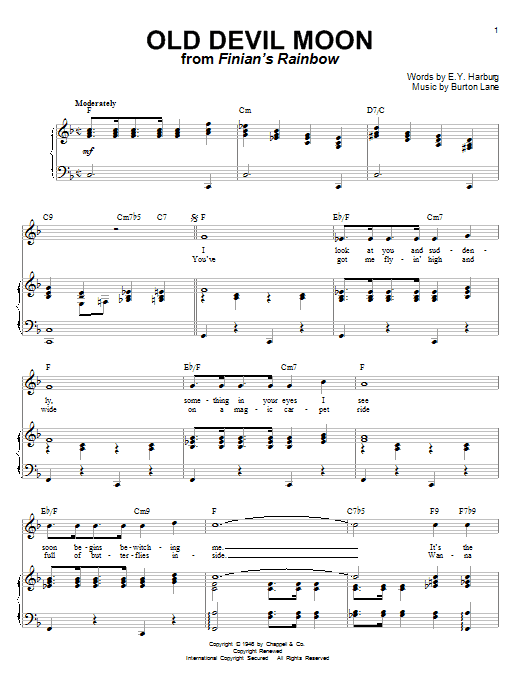
Old Devil Moon: Piano Vocal

As performed by E.Y. Harburg

Item: 35-DS00023338

Digital Download
$5.99
Description

Old Devil Moon: Piano Vocal isn't in MakeMusic Cloud just yet...but it could be. Let us know you'd like to see it, and you'll help shape what comes next. In the meantime, start a free trial and dive into thousands of interactive titles your students can play along with today.

Sample Audio
No sample audio found.
Sample Video
Additional Details
Publisher: Hal Leonard
Page Count: 3
SKU: 35-DS00023338

More about this title

About the Artist: E.Y. Harburg

E.Y. Harburg was one of Broadway's most inventive lyricists, crafting words for some of the twentieth century's most enduring songs. His gift for clever rhyme and emotional directness shaped the sound of the American musical theater from the 1930s onward, collaborating with composers like Harold Arlen and Burton Lane to create standards that remain central to the jazz and vocal repertoire.

Beyond technical mastery, Harburg was known for infusing his lyrics with humanity and wit. His work demonstrates to musicians and students alike how language and melody intertwine, and how a strong lyric elevates a composition from pleasant to memorable.

Why we love this

Harburg's melodic sensibility and harmonic sophistication make this a rewarding choice for singers developing jazz vocabulary and phrasing control. The three-page format is manageable for both rehearsal and performance while offering enough musical substance to hold an audience's attention without feeling slight.

What to expect

Witty and tender at once, this standard carries the sophistication of 1940s Broadway without a trace of sentimentality. The melody dances over the changes with rhythmic playfulness, while the lyrics invite genuine emotional connection beneath the clever surface.

Who it's for

Jazz singers, musical theater performers, and advanced high school or college vocalists building a standards repertoire will find this essential. Pianists accompanying vocalists gain valuable experience supporting a partner through a piece that demands both independence and responsiveness.

How to get the most out of it

  • Shape the phrases around the lyrical content rather than mechanical beat divisions. Harburg's words deserve space to breathe, and the piano part will follow your interpretation naturally.
  • Explore the chord changes beneath the melody. Jazz standards from this era contain rich harmonic movement that creates opportunities for rubato and expressive timing.
  • Balance your vocal tone to sit comfortably with the piano accompaniment across the full range. The piece spans considerable tessitura, so plan your dynamics and breath points with stamina in mind.
  • Study the original recorded versions to absorb the stylistic conventions of the era. Swing inflection and note placement differ from classical art song, and reference recordings anchor your interpretation to the tradition.

How to use it

Pair this with other Harburg standards or place it alongside jazz arrangements of American songbook material in a concert exploring mid-century musical theater. It works equally well as a recital centerpiece for a vocalist or as a feature performance in a jazz ensemble program.

Skills your students will build

  • Jazz phrasing and swing articulation
  • Harmonic analysis and chord progression recognition
  • Lyric interpretation and dramatic storytelling through song
  • Collaborative ensemble listening between vocalist and pianist
  • Extended vocal range navigation and breath management

You May Also Like