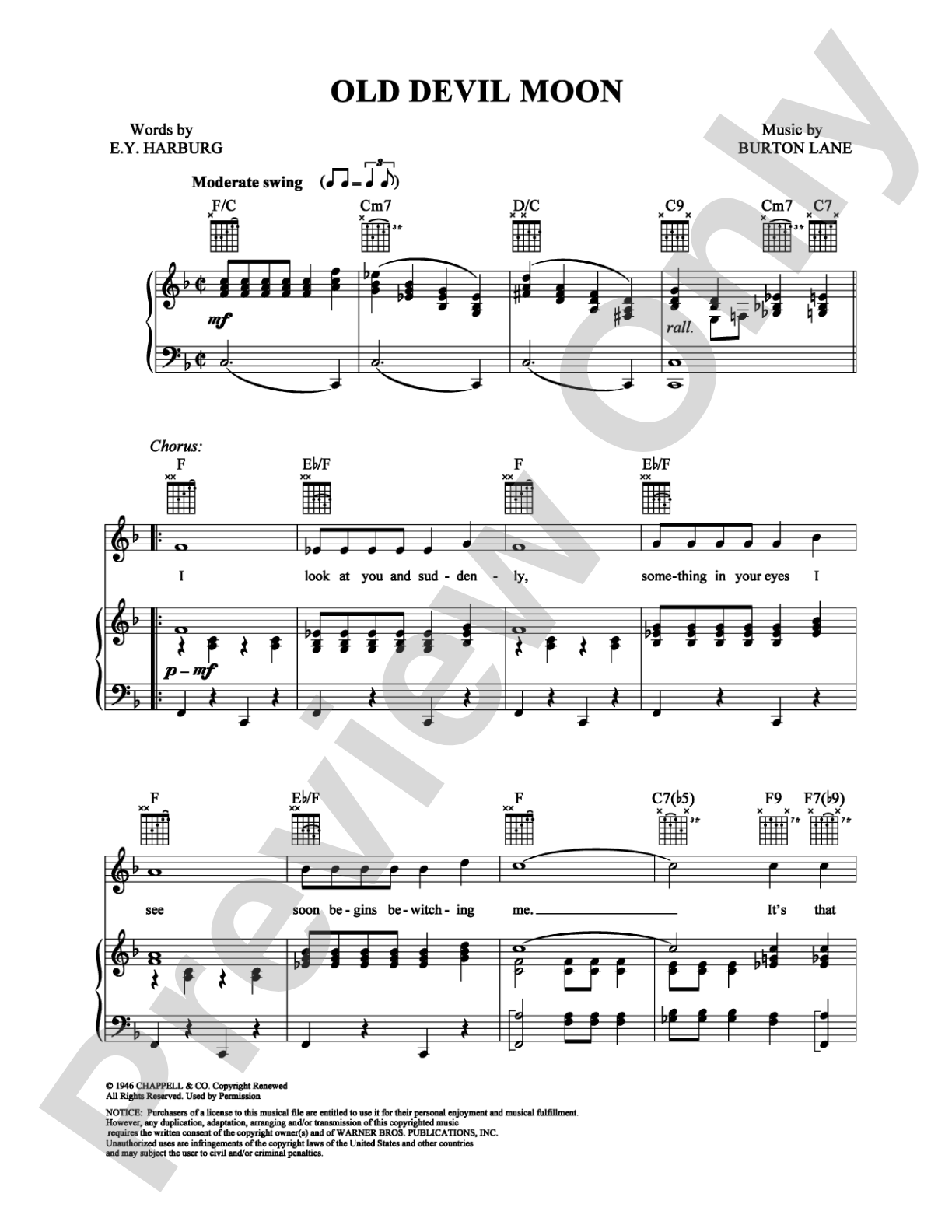
Old Devil Moon: Piano/Vocal/Chords Digital Sheet Music

Old Devil Moon: Piano/Vocal/Chords Digital Sheet Music

Tony Bennett, Burton Lane

Item: 00-PS-0005676

Digital Download
$3.99
Description

Old Devil Moon: Piano/Vocal/Chords Digital Sheet Music isn't in MakeMusic Cloud just yet...but it could be. Let us know you'd like to see it, and you'll help shape what comes next. In the meantime, start a free trial and dive into thousands of interactive titles your students can play along with today.

Sample Audio
No sample audio found.
Sample Video
Additional Details
SKU: 00-PS-0005676

More about this title

About the Artist: Tony Bennett

Tony Bennett spent seven decades as one of America's finest interpreters of the American Songbook, recording over 70 albums and earning 19 Grammy Awards. His approach to vocal phrasing, breath control, and emotional restraint set the standard for how standards should be sung, a model that continues to inspire music students and professionals alike.

Bennett's career demonstrated that classical vocal training and popular song are not opposing forces. His work with jazz ensembles and orchestras showed singers how to navigate sophisticated harmonic language while maintaining accessibility and warmth.

Why we love this

Old Devil Moon is a showcase for jazz-inflected harmony and the kind of standards repertoire that rewards serious singers. Bennett's interpretation captures the playful yet sophisticated character of this Rodgers and Hardin tune, making it an ideal model for teaching how to navigate chromaticism, jazz voicings, and phrasing nuance within a melodically memorable framework.

What to expect

Wistful and knowing. The melody moves with unhurried confidence, and the harmonic movement invites you to lean into the romantic tension of the lyric. There's no sentimentality here, just clear-eyed affection and a touch of melancholy.

Who it's for

Singers working in jazz or standards repertoire who want a reference for phrasing and interpretation. Pianists studying jazz comping and reharmonization will find the chord symbols and harmonic movement instructive. Voice students preparing audition material from the American Songbook will benefit from Bennett's approach to combining technical control with emotional expressiveness.

How to get the most out of it

  • Pay attention to the chord symbols and their voice leading; this tune rewards pianists who voice the changes expressively rather than functionally, especially during the bridge section.
  • Approach the lyric storytelling with specificity. Bennett's phrasing creates space between phrases that singers often rush. Practice holding back slightly on the melody to let the harmony breathe.
  • Balance the swing feel with clarity on the text. The melody can disappear into rhythm if you're not mindful of diction and line support from the piano.
  • Explore how different tempos change the emotional temperature. A slightly slower ballad treatment will highlight the harmonic richness, while a moderate swing tempo emphasizes the tune's wit.

How to use it

Feature this in a jazz standards showcase or vintage American song recital where it can stand alongside other Rodgers compositions. It works equally well as a solo feature for a vocalist or as a duet opportunity for piano and voice in a chamber recital context. Consider pairing it with other standards from the same era to create a cohesive program exploring the Great American Songbook.

Skills your students will build

  • Interpreting jazz chord symbols and understanding voice leading in standards harmony
  • Phrasing and breath management in lyrical melody lines
  • Balancing swing rhythm with textual clarity
  • Accompanying jazz standards with sensitivity to both harmony and vocal line

You May Also Like