
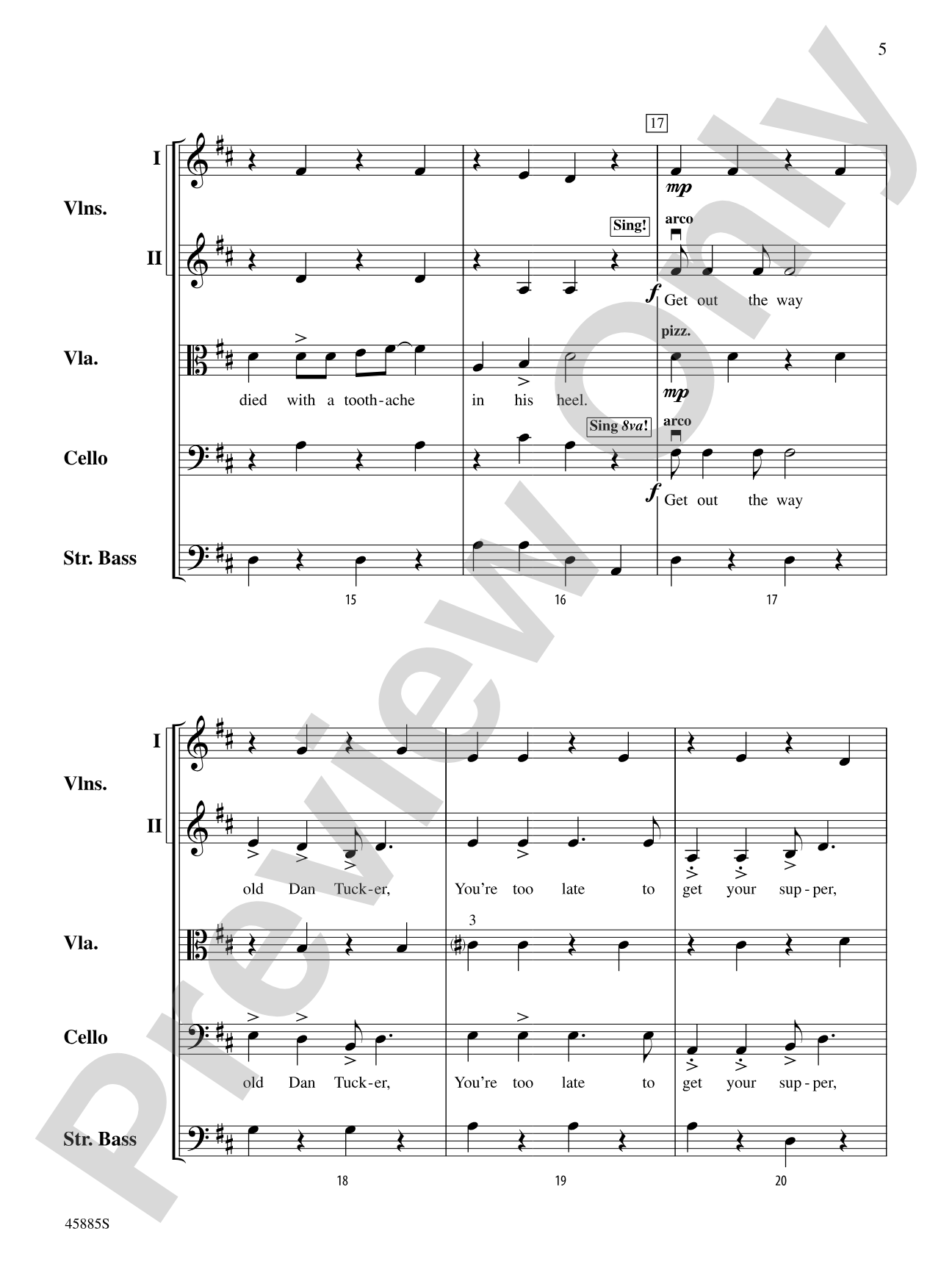
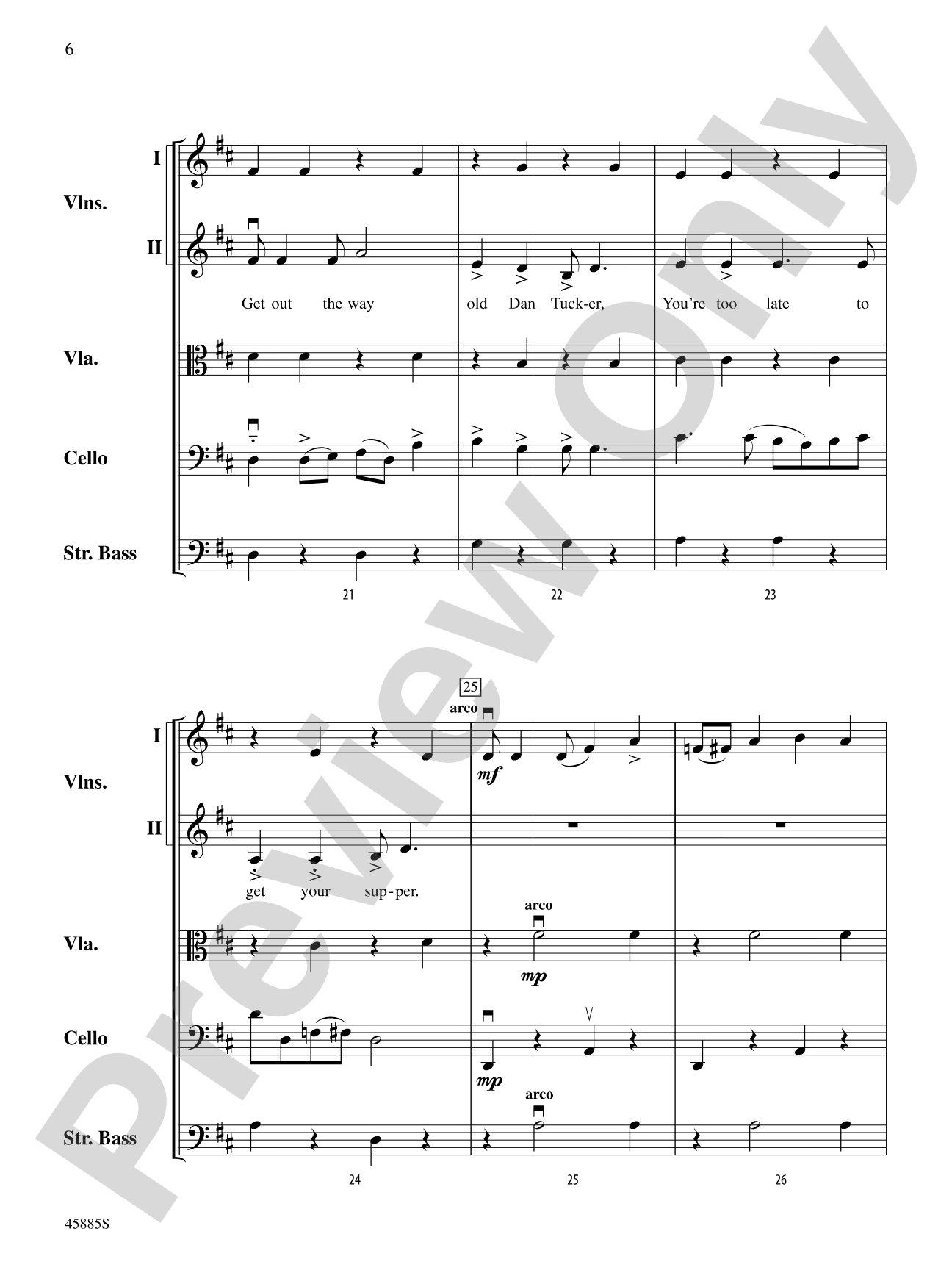
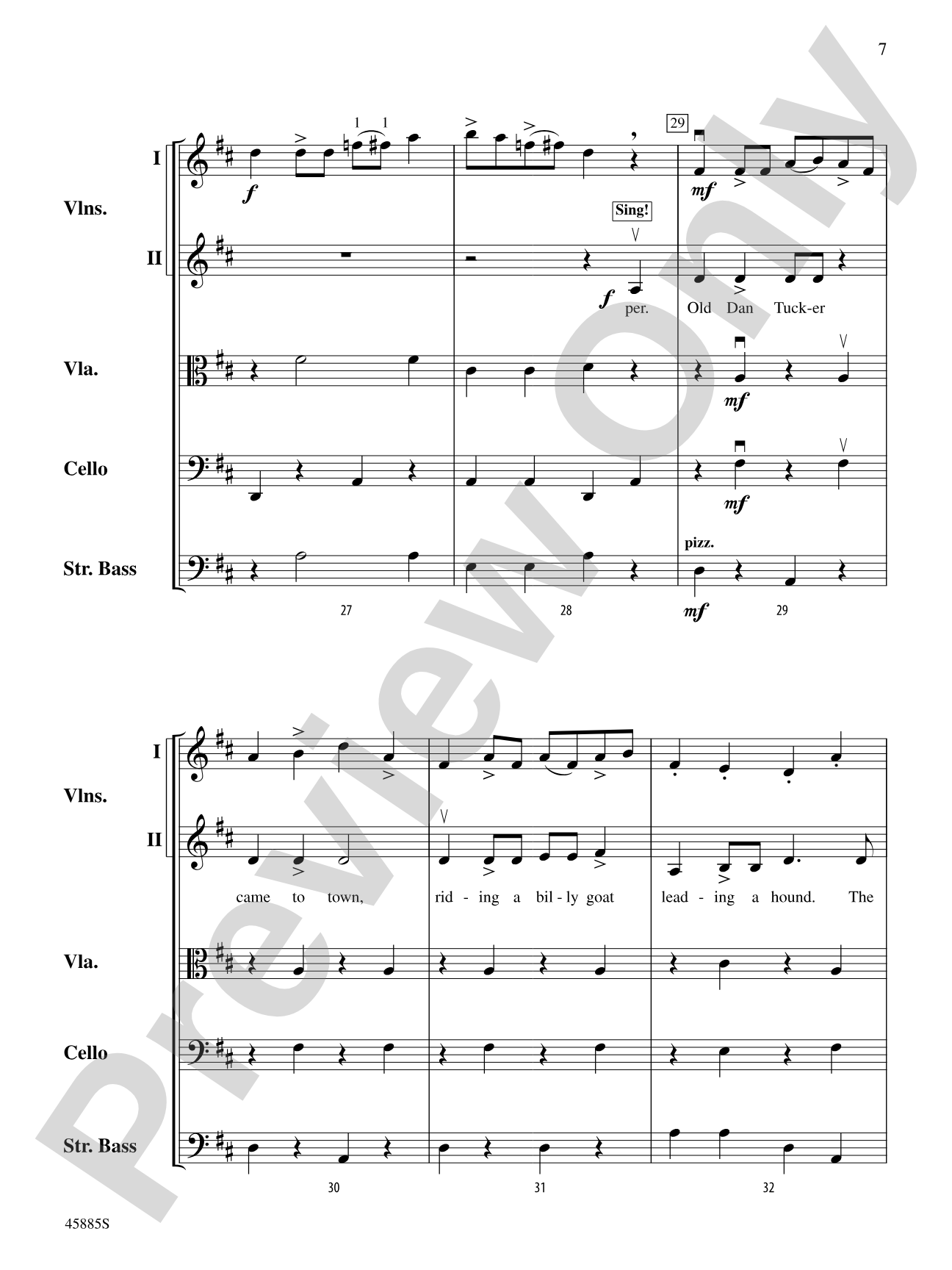
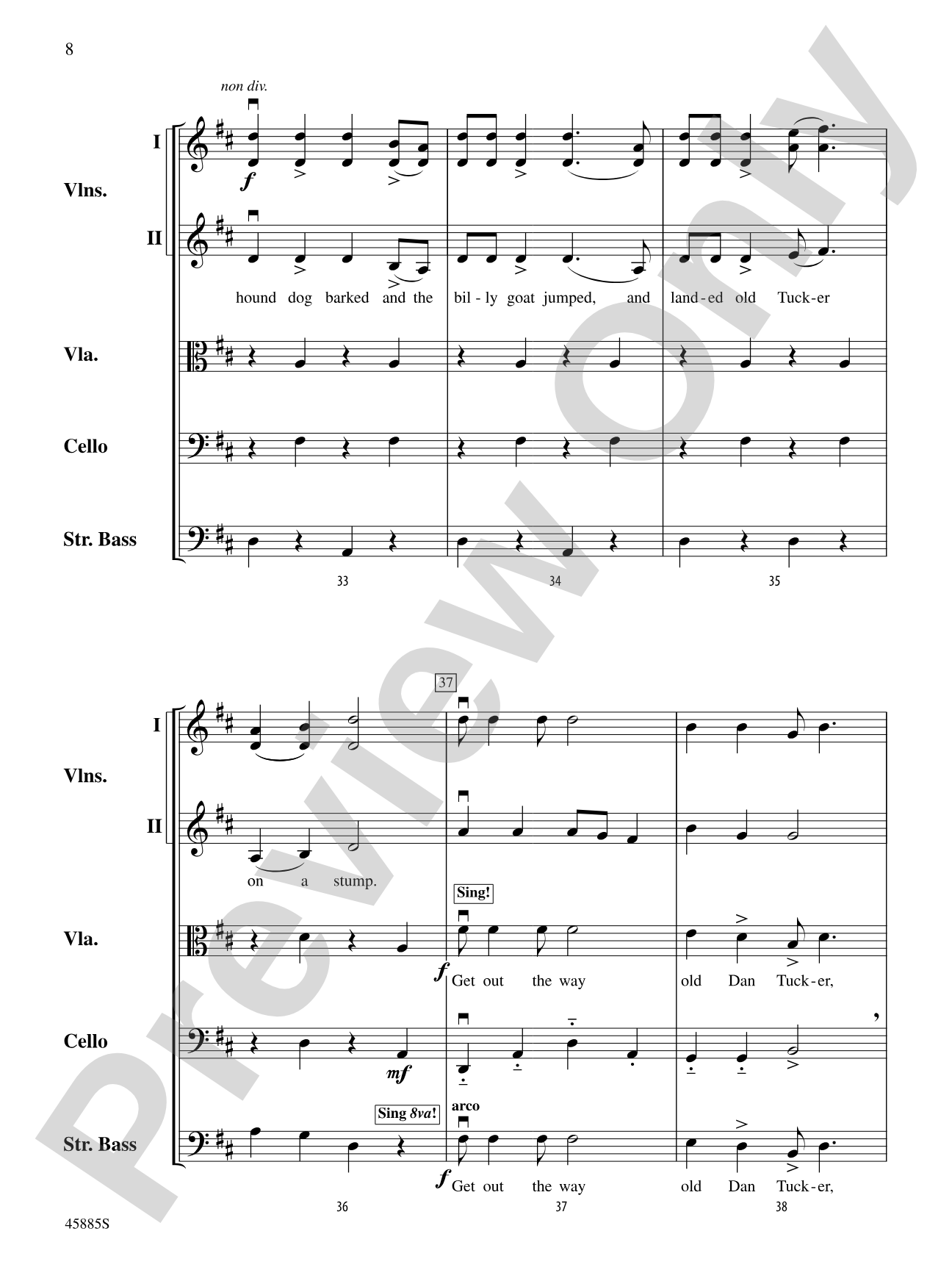
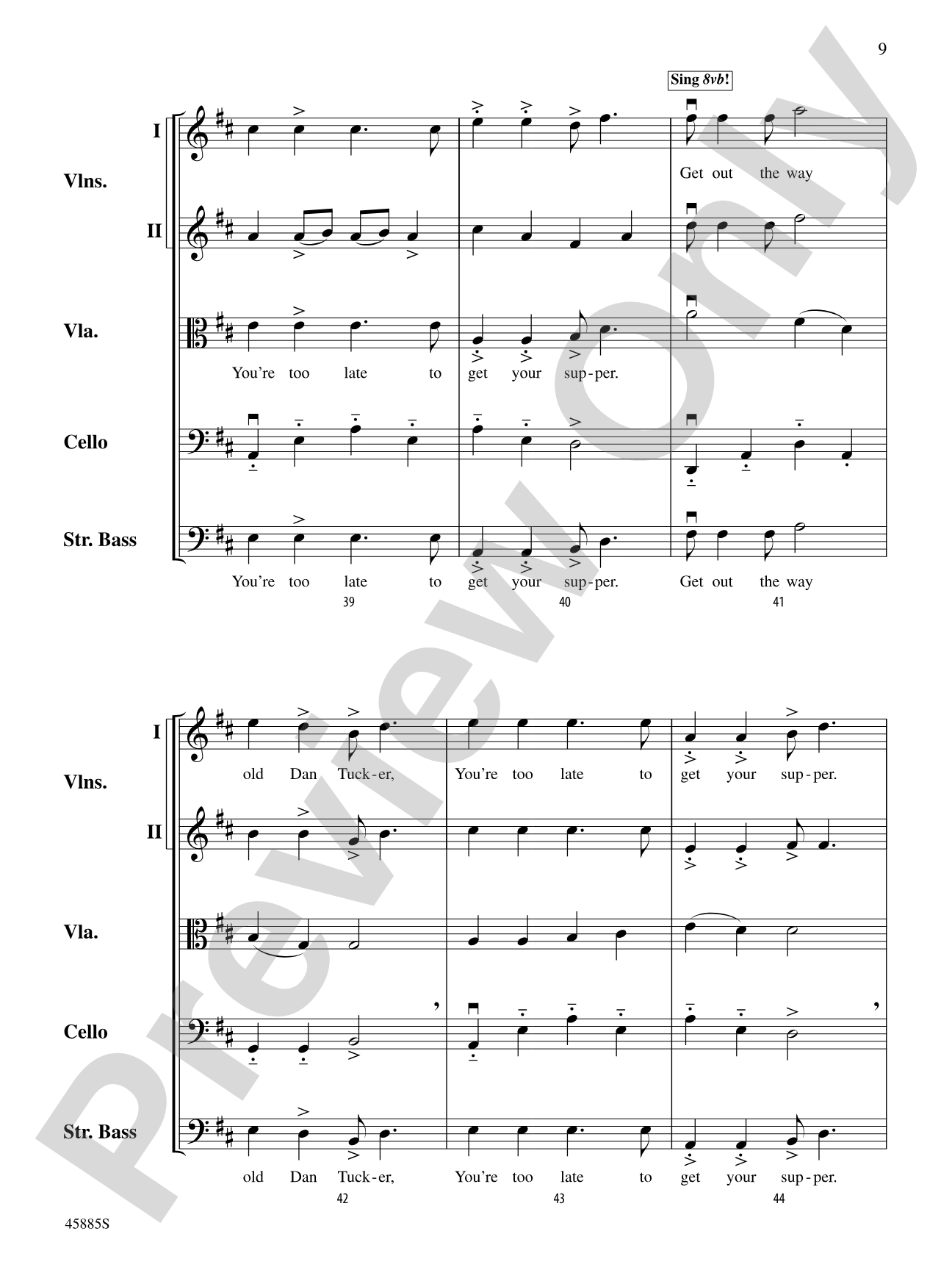
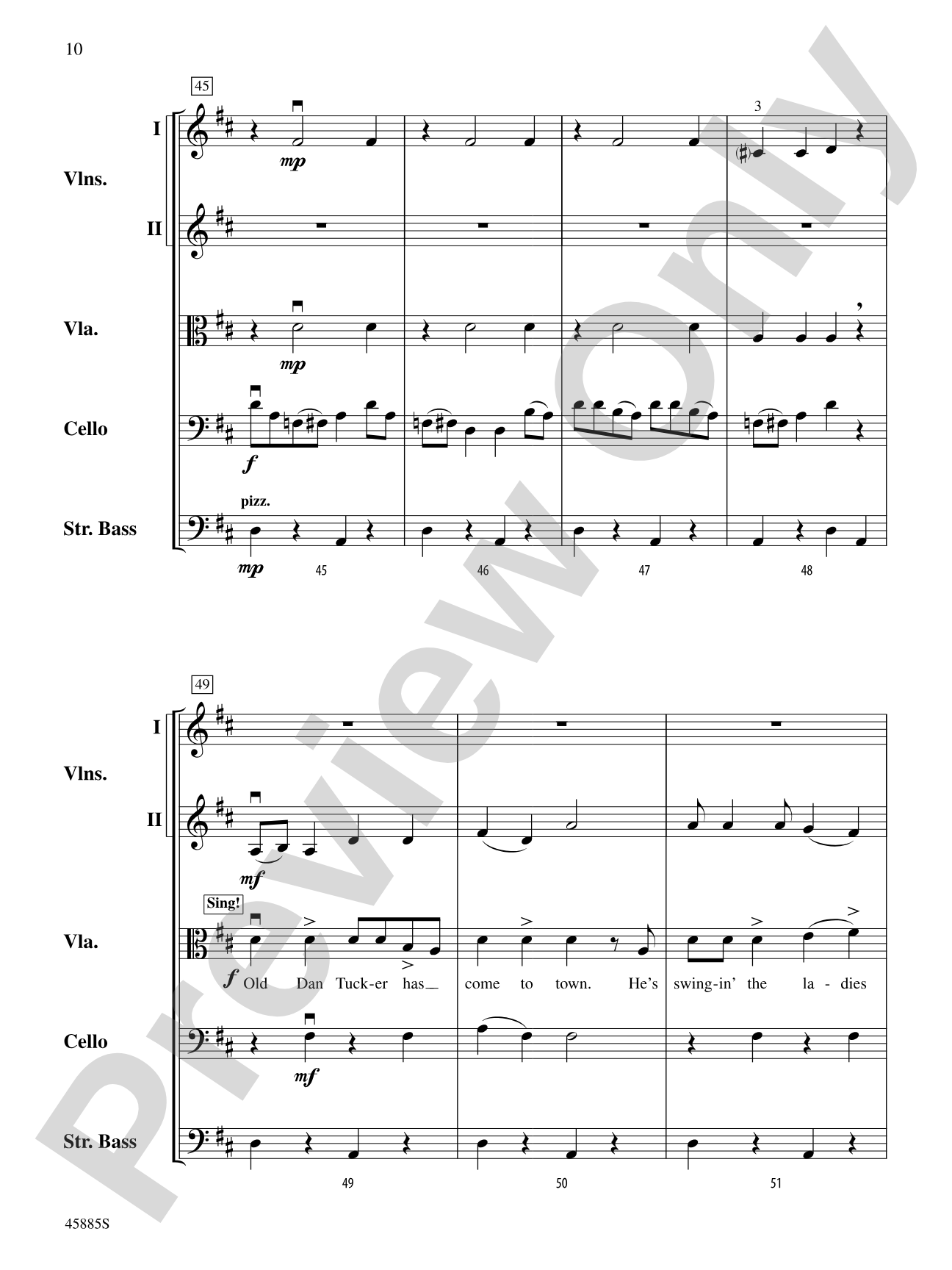
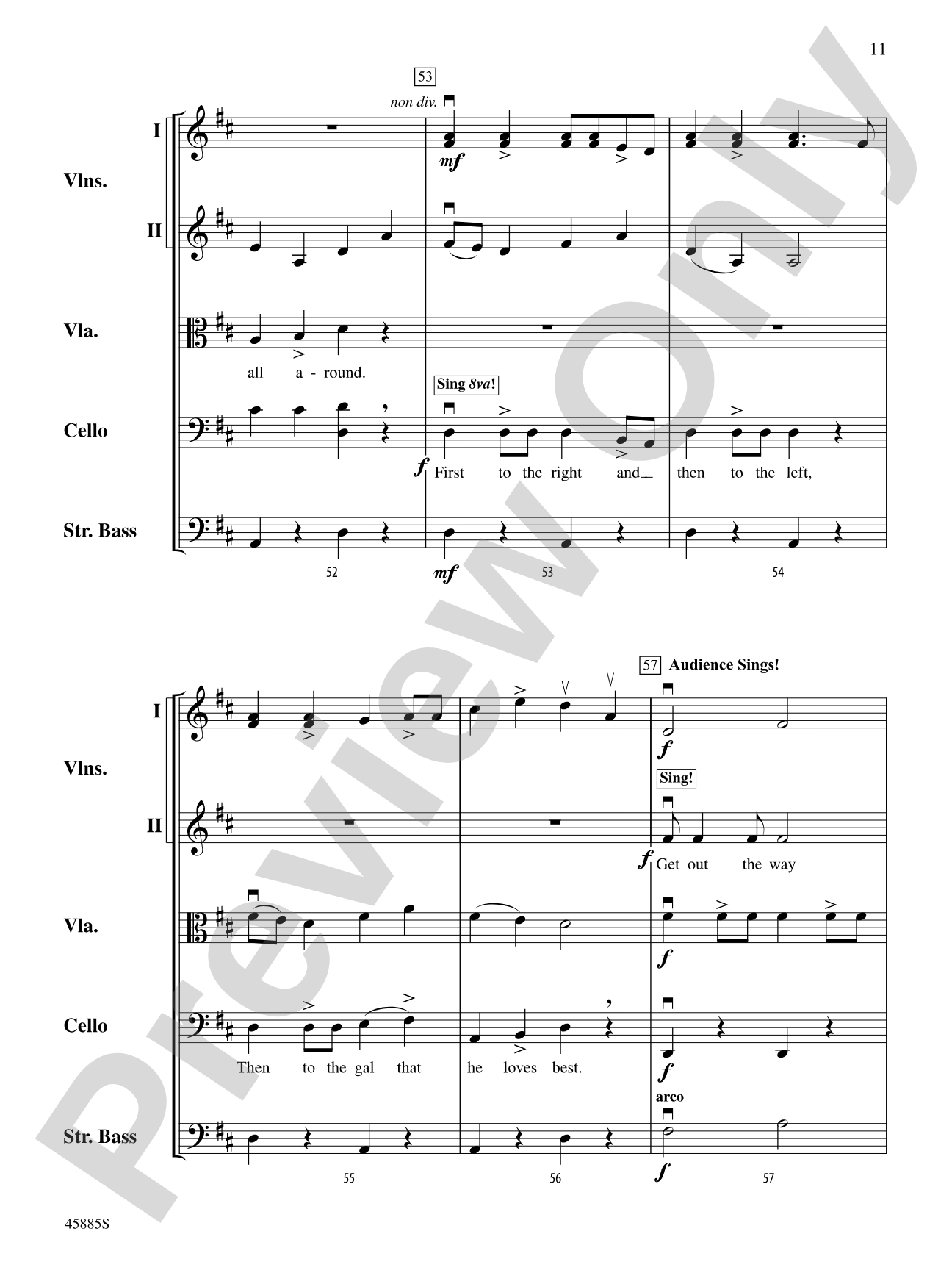
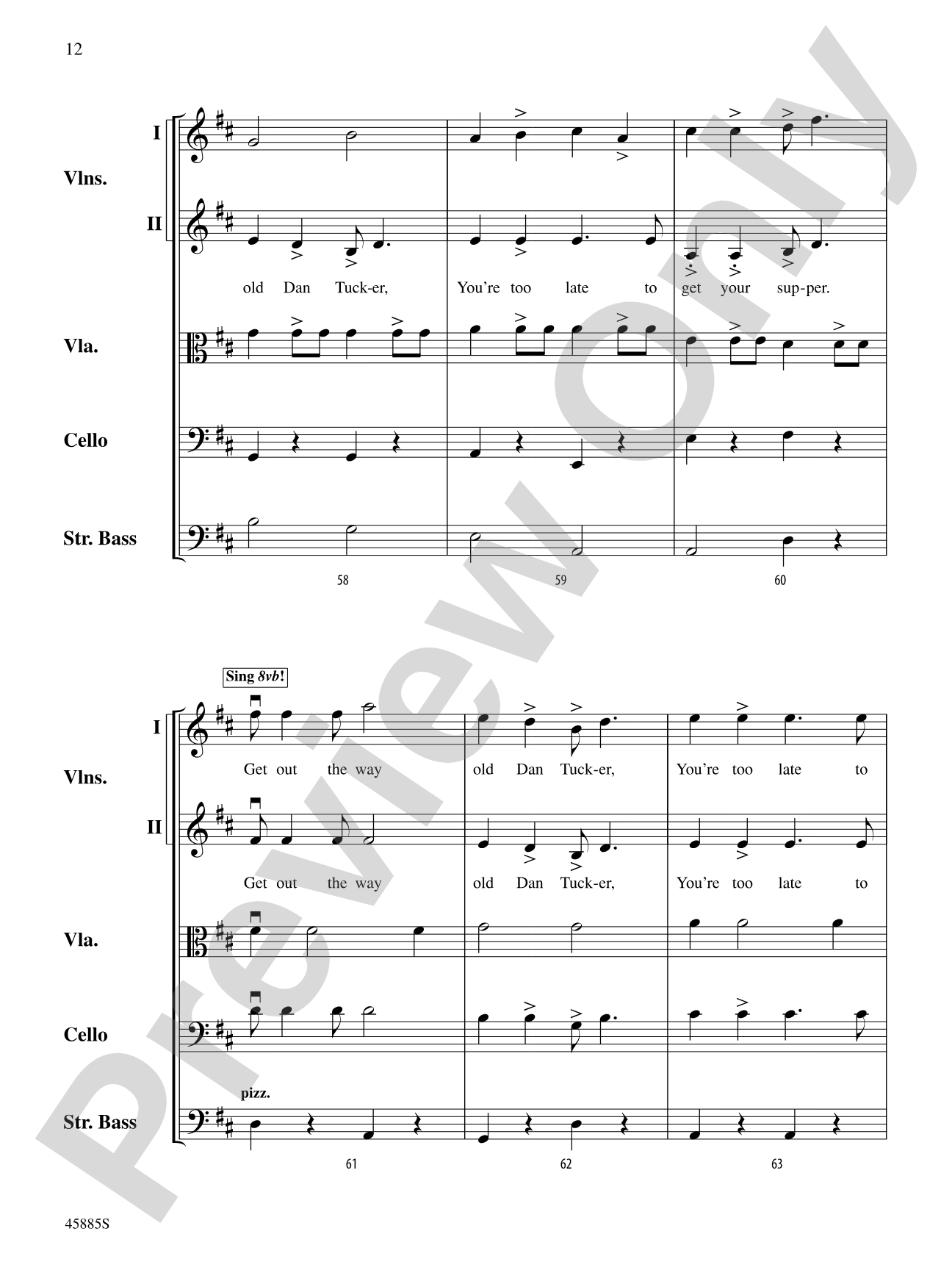

Old Dan Tucker: String Orchestra Conductor Score & Parts
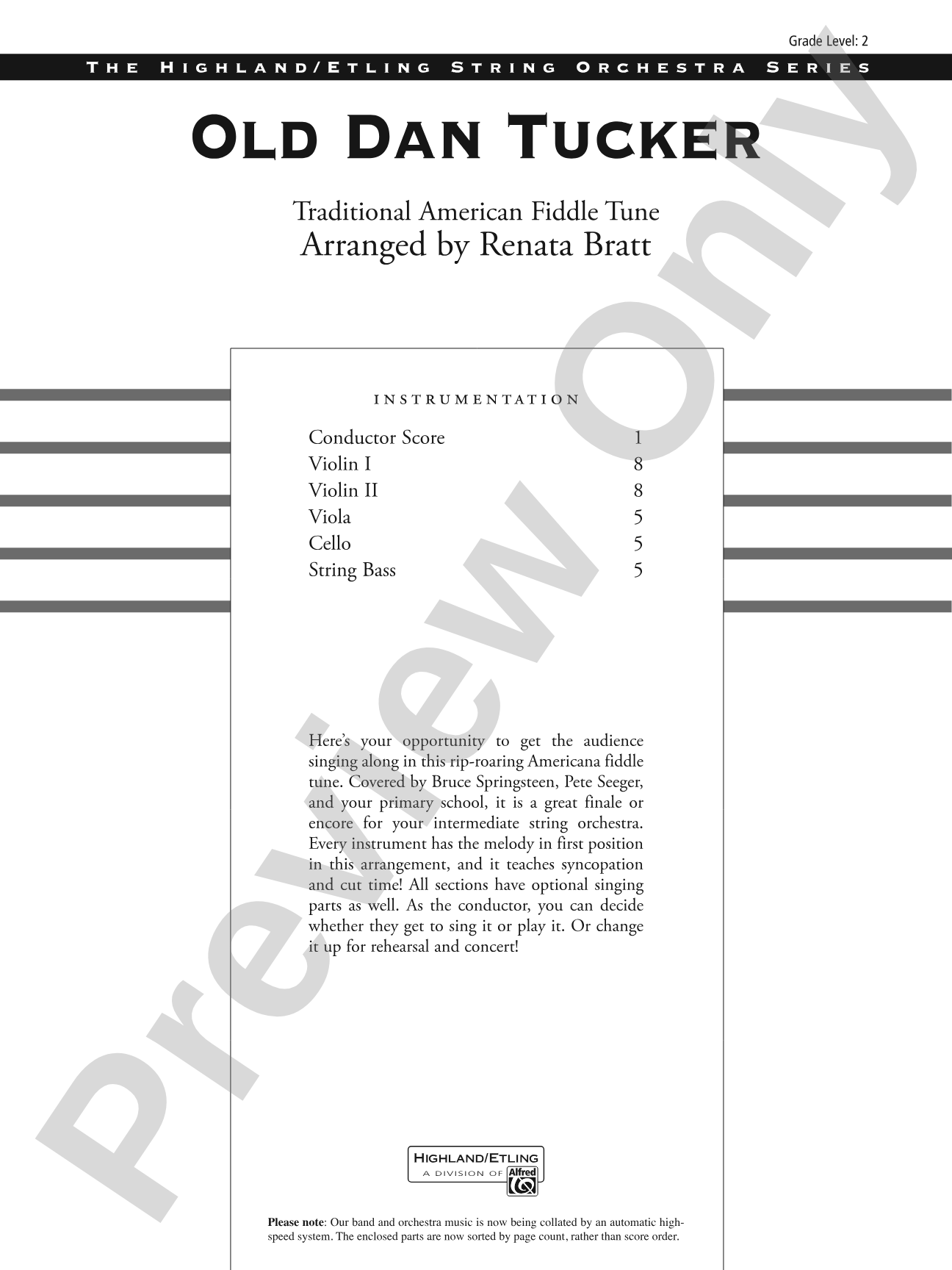
Traditional American Fiddle Tune / arr. Renata Bratt
Grade: 2
Item: 00-PK-0007390

$49.00
Pickup currently not available
Buy Extra Parts (Digital PDF Download)
| Product | Price | Quantity |
|---|---|---|
| Old Dan Tucker: Score | $9.00 | |
| Old Dan Tucker: 1st Violin | $5.99 | |
| Old Dan Tucker: 2nd Violin | $5.99 | |
| Old Dan Tucker: Viola | $5.99 | |
| Old Dan Tucker: Cello | $5.99 | |
| Old Dan Tucker: String Bass | $5.99 |
Parts Added to Cart!
Description
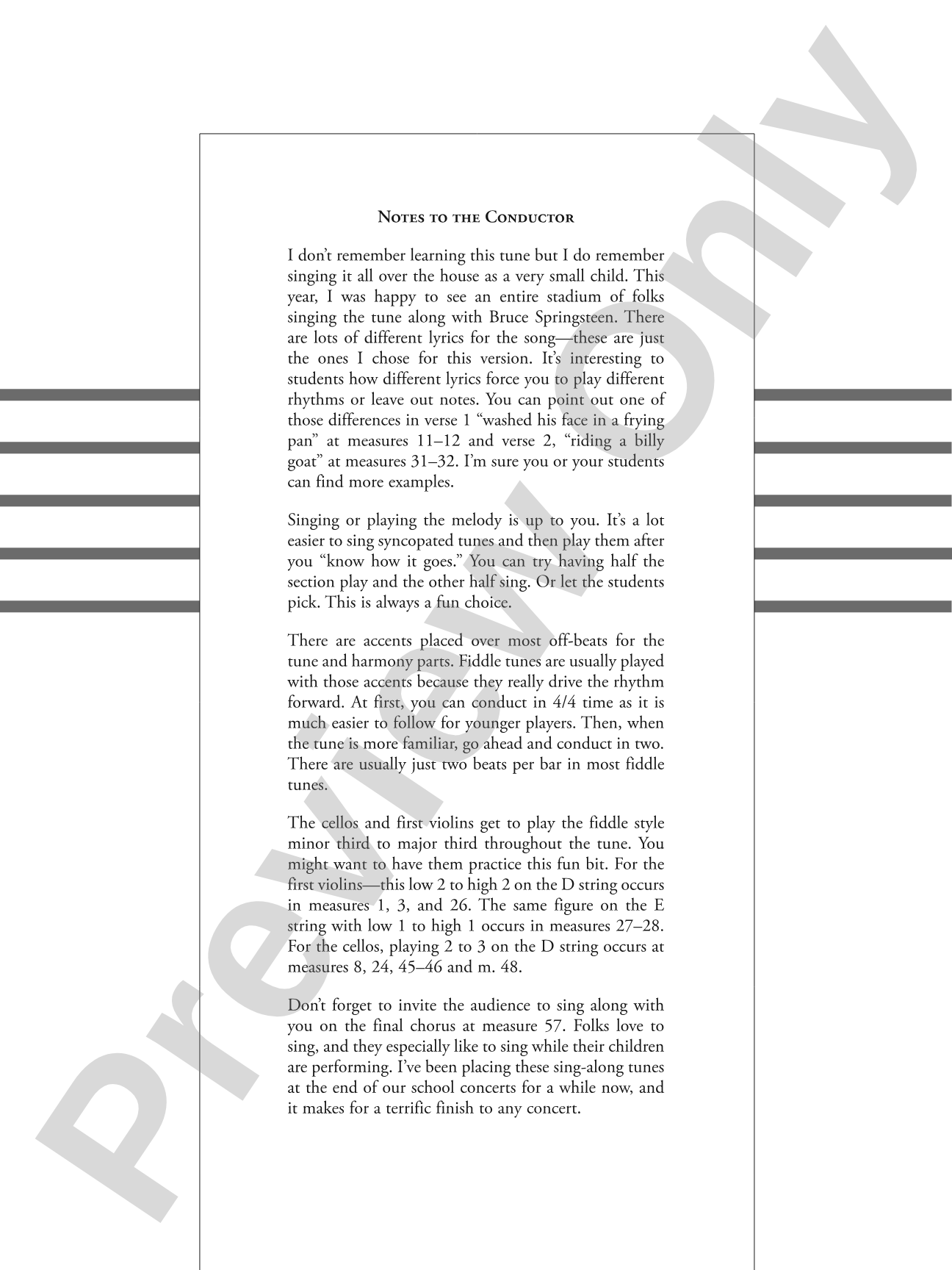
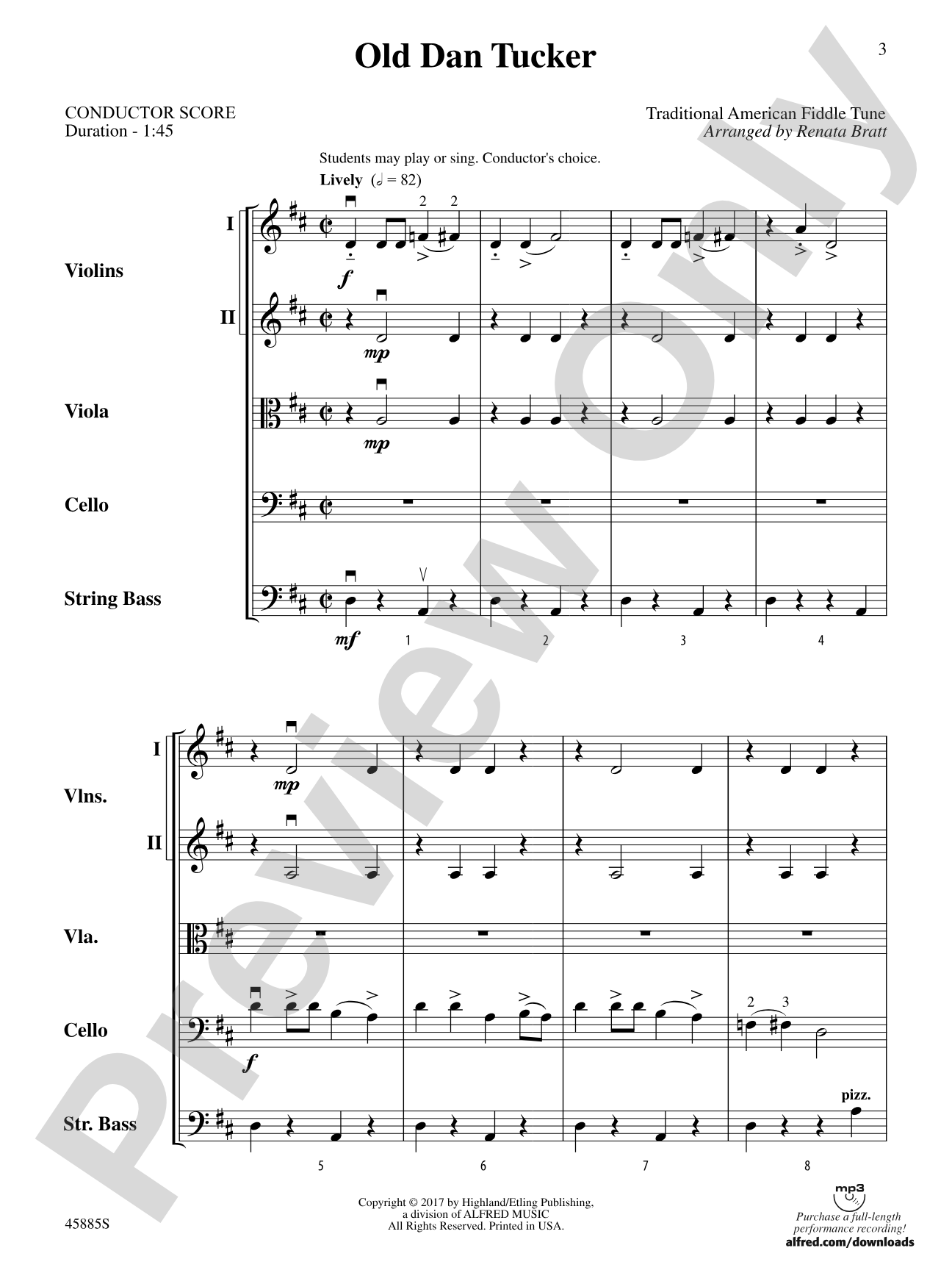
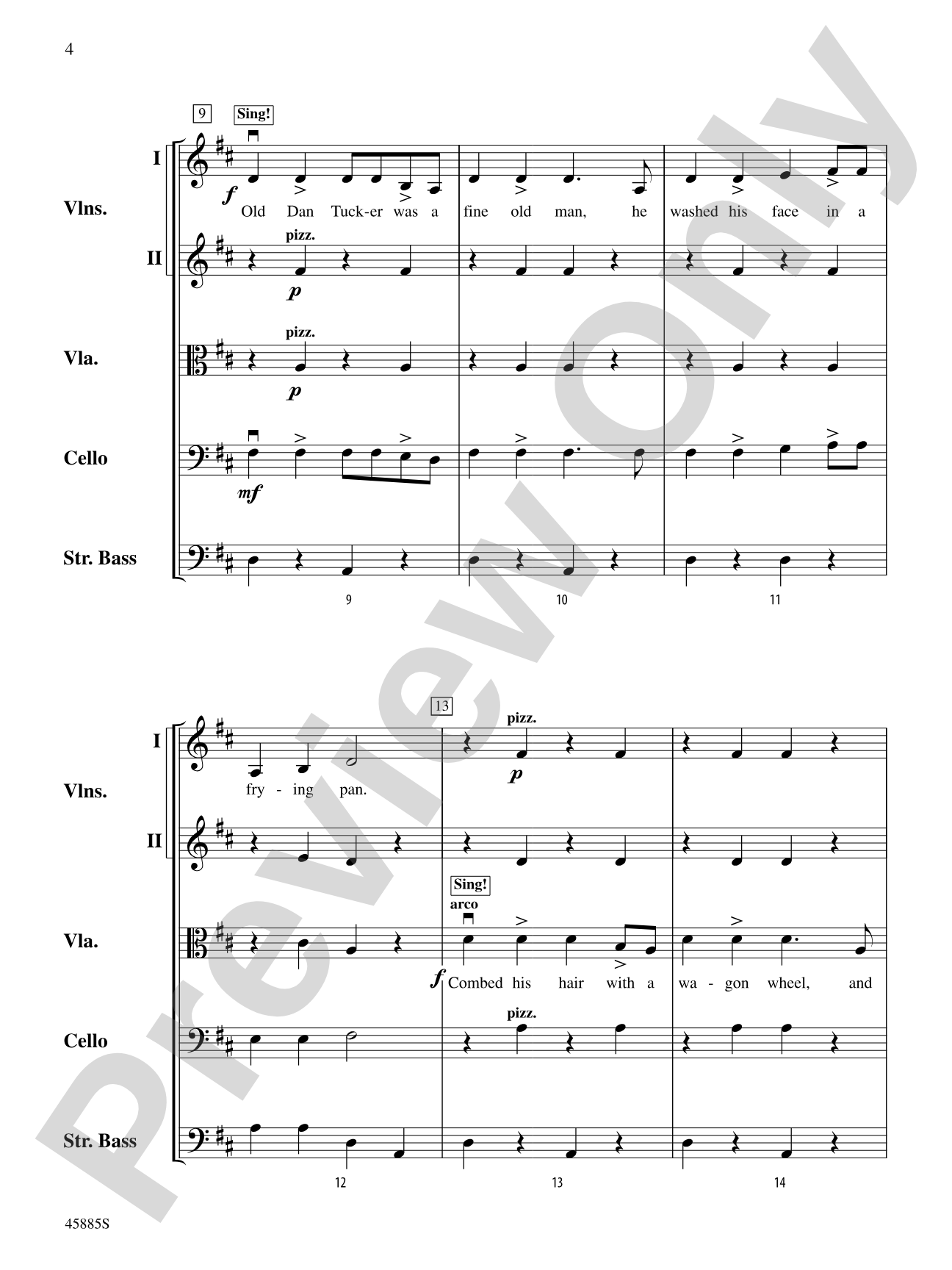
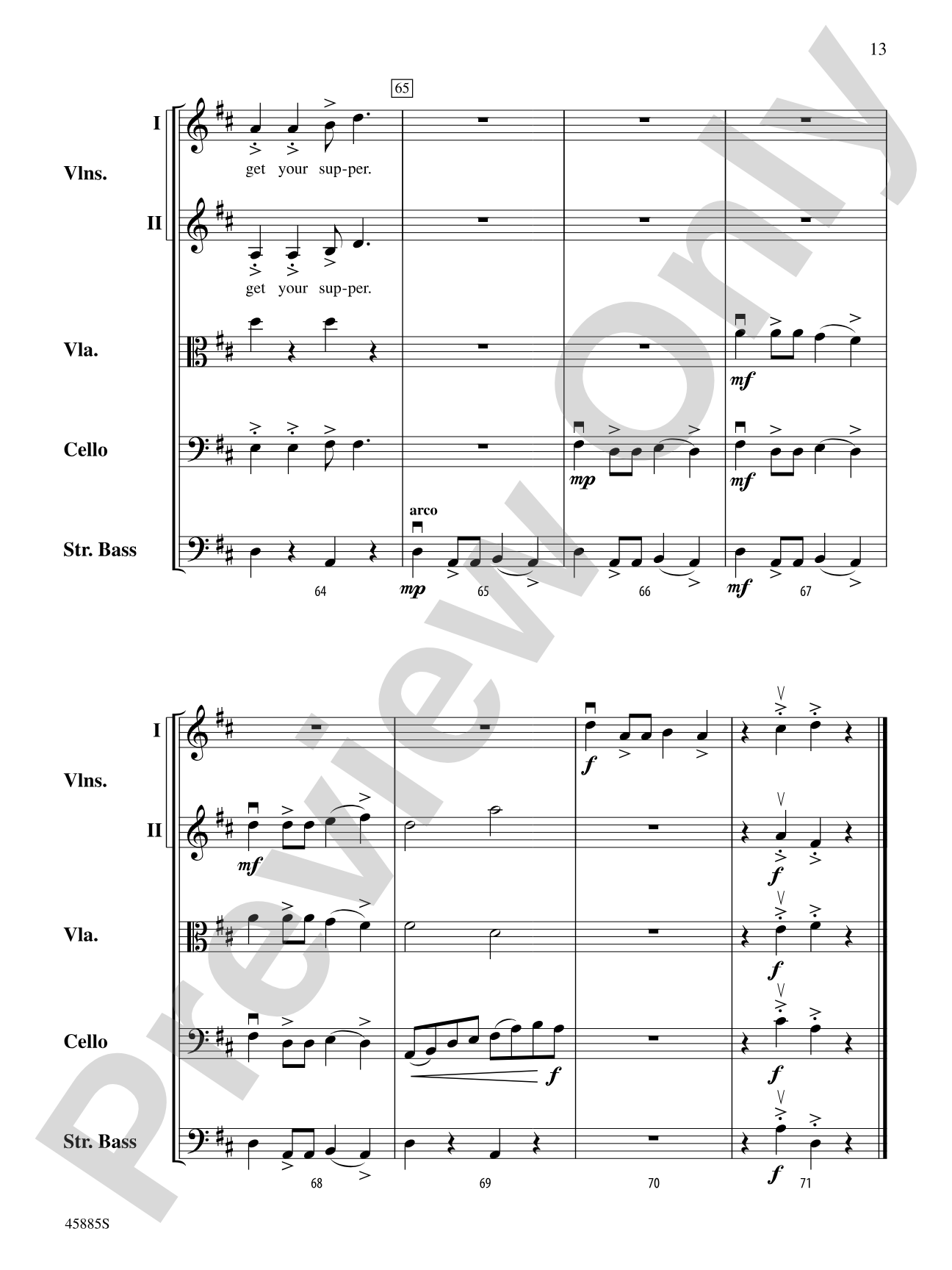
Here's your opportunity to get the students and audience singing along in this rip-roaring Americana fiddle tune arranged by Renata Bratt. Covered by Bruce Springsteen, Pete Seeger, and your primary school, Old Dan Tucker is a great finale or encore for your intermediate string orchestra. Every instrument has the melody in first position in this arrangement that teaches syncopation and cut time! All sections have optional singing parts as well. As the conductor, you can decide whether they get to sing it or play it. Or change it up for rehearsal and concert! (1:45)


Don't just read it, hear it, play along with it, and watch your students grow with it. In MakeMusic Cloud, Old Dan Tucker: String Orchestra Conductor Score & Parts comes alive with professional accompaniment, adjustable tempo, and built-in practice tools that turn solo practice into real progress.
Open in the Player
Jump straight in and assign it today.
Start Your Free Trial
Open this title and explore the full library in minutes.
Sample Audio
1
Audio File
--:--
0:00
0:00
Sample Video
Additional Details
Series:
Highland/Etling String Orchestra
Publisher:
Alfred Music
Page Count:
124
SKU:
00-PK-0007390
More about this title
About the Arranger: Renata Bratt

Renata Bratt is a cellist, clinician, and educator deeply rooted in alternative string styles and jazz improvisation. She serves on the American String Teachers Association Alternative String Styles Advisory Committee and has taught fiddling, classical technique, and jazz at major conferences including the Mark O'Connor String Conference, Alasdair Fraser's Sierra Fiddle Camp, and the New Directions Cello Festival. Her performance resume spans classical chamber music with artists like Liz Carroll and John Doyle, as well as work with rock and alternative acts including Cindy Lee Berryhill's Garage Orchestra, which Rolling Stone recognized for her contributions.
Based in California, Bratt teaches cello at Santa Cruz Waldorf Elementary School, Pacific Elementary School in Davenport, and directs beginning orchestra through the Cabrillo Youth Strings program. She holds a Ph.D. in Music from the University of California at San Diego and has published instructional materials including The Modern Cello Method and The Fiddling Cellist through Mel Bay Publications. Her work bridges classical training with folk and jazz traditions, making her arrangements distinctive for their accessibility and stylistic authenticity.
Why we love this
Bratt's arrangement keeps every instrument singing the melody in first position while introducing syncopation and cut time in a way that intermediate players can absorb through the music itself rather than abstract instruction. The optional singing parts give you real flexibility in rehearsal and performance, letting you respond to your ensemble's energy and readiness. As an encore or closer, this tune delivers the kind of joyful, foot-stomping finale that leaves audiences smiling and kids wanting to play it again.
What to expect
Energetic and infectious, Old Dan Tucker bounces with the syncopated swagger of a genuine Americana fiddle tune. The arrangement keeps the spirit of the folk tradition alive while the string writing adds texture and cohesion, creating something that feels both familiar and freshly arranged. You'll hear audience members tapping along and students wanting to keep playing it after rehearsal ends.
Who it's for
Intermediate string orchestras ready to explore American fiddle traditions and rhythmic complexity through a piece that reads as accessible and performs as exciting. This works well for ensembles that have solid first-position control and can track meter changes without losing focus. It's equally suited to students encountering cut time for the first time or those reinforcing syncopated phrasing in a musically rewarding context.
How to get the most out of it
- Isolate the syncopation in rehearsal by having players tap the rhythm on their instruments before bowing; use the melody's natural phrasing to help them feel where the offbeats land.
- Lock the cut time feel early by conducting a clear two-beat pattern and letting students hear how the pulse shifts from a four-beat mindset; the fiddle tune quality depends on this rhythmic foundation.
- Layer singing and playing across rehearsals: have the ensemble sing the melody once while you play piano, then add instruments section by section, so the tune feels familiar before they perform it mixed.
- Drive the tempo with consistent energy in the final run-through; this piece thrives on forward momentum, and a sluggish cut time drains the spirit out of the arrangement.
How to use it
Program this as your concert closer or encore when you want to send the audience home in high spirits; it works beautifully after a program of more traditional or serious repertoire as an energizing final statement. It also fits well in a folk or Americana-themed concert block, or as a celebration finale at the end of a school year or festival appearance.
Skills your students will build
- Reading and executing syncopated rhythms in first position
- Understanding and performing cut time with steady pulse and forward momentum
- Coordinating bow articulation with syncopated melodic contours
- Blending ensemble sound while maintaining individual melodic clarity
- Connecting notated rhythm to the folk idiom and stylistic feel