Please note: Under U.S. copyright law, you must purchase the exact number of copies needed for your ensemble. Printing, duplicating or sharing additional copies is strictly prohibited.
Pickup currently not available
Description
Discover MakeMusic Cloud: thousands of interactive titles your students can play along with today.
Doug Watts is an accomplished arranger whose work spans theatrical, jazz, and choral idioms. His arrangements are known for respecting the integrity of original melodies while reimagining them for new ensembles and contexts, making beloved standards accessible to singers at various levels.
Why we love this
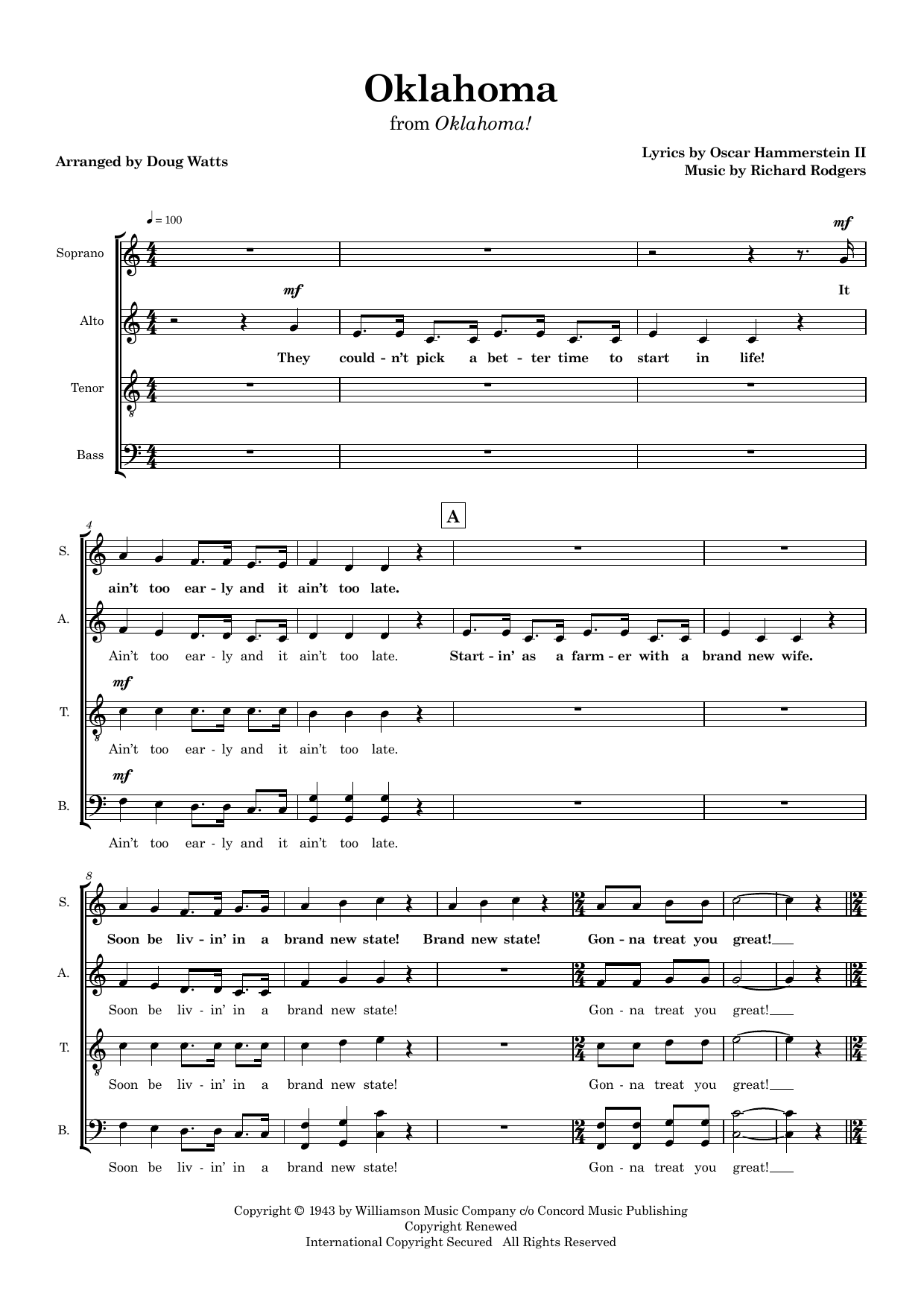
Watts captures the optimism and theatrical sweep of Rodgers and Hammerstein's score without overwhelming your singers. This arrangement strikes the rare balance of sounding full and complete while remaining singable for intermediate choirs who want to include a genuine Broadway showstopper in their concert.
What to expect
Warm, hopeful, and genuinely American. The arrangement unfolds with a conversational quality that invites audiences into the story, building from tender moments to triumphant full harmony. There is a sense of celebration throughout, grounded in the kind of earnest sincerity that makes Oklahoma endure.
Who it's for
Any SATB choir looking to expand beyond traditional choral repertoire into Broadway material. This works equally well for high school show choirs, community ensembles, or college singers seeking accessible theatrical crossover pieces.
How to get the most out of it
Lean into the legit singing style this music demands. Oklahoma thrives on pure vowel sound and emotional directness rather than belt or stylized delivery.
Shape phrases across the bar lines rather than emphasizing individual beats. The melody wants to breathe and move forward.
Balance your four parts carefully in moments where the melody sits in the soprano or alto range. Tenor and bass lines provide harmonic support, not competition.
How to use it
Consider this for spring concerts where you want to lighten the mood and showcase theatrical sensibility alongside classical choral work. It also serves as an excellent bridge piece when programming a concert that mixes genres or when you want to demonstrate that quality music extends well beyond the classical canon.
Skills your students will build
Legit singing style and sustained vowel production
Phrase shaping across bar lines
Part independence in four-part harmony
Theatrical expression and character work in song
Balancing melodic lines with harmonic support
You May Also Like
Scan to Complete Your Purchase
Use your phone's camera to scan the code below
You'll log in on your phone and the order will be added to your account