Oh, What A Beautiful Mornin' (from Oklahoma!) Sheet Music Preview

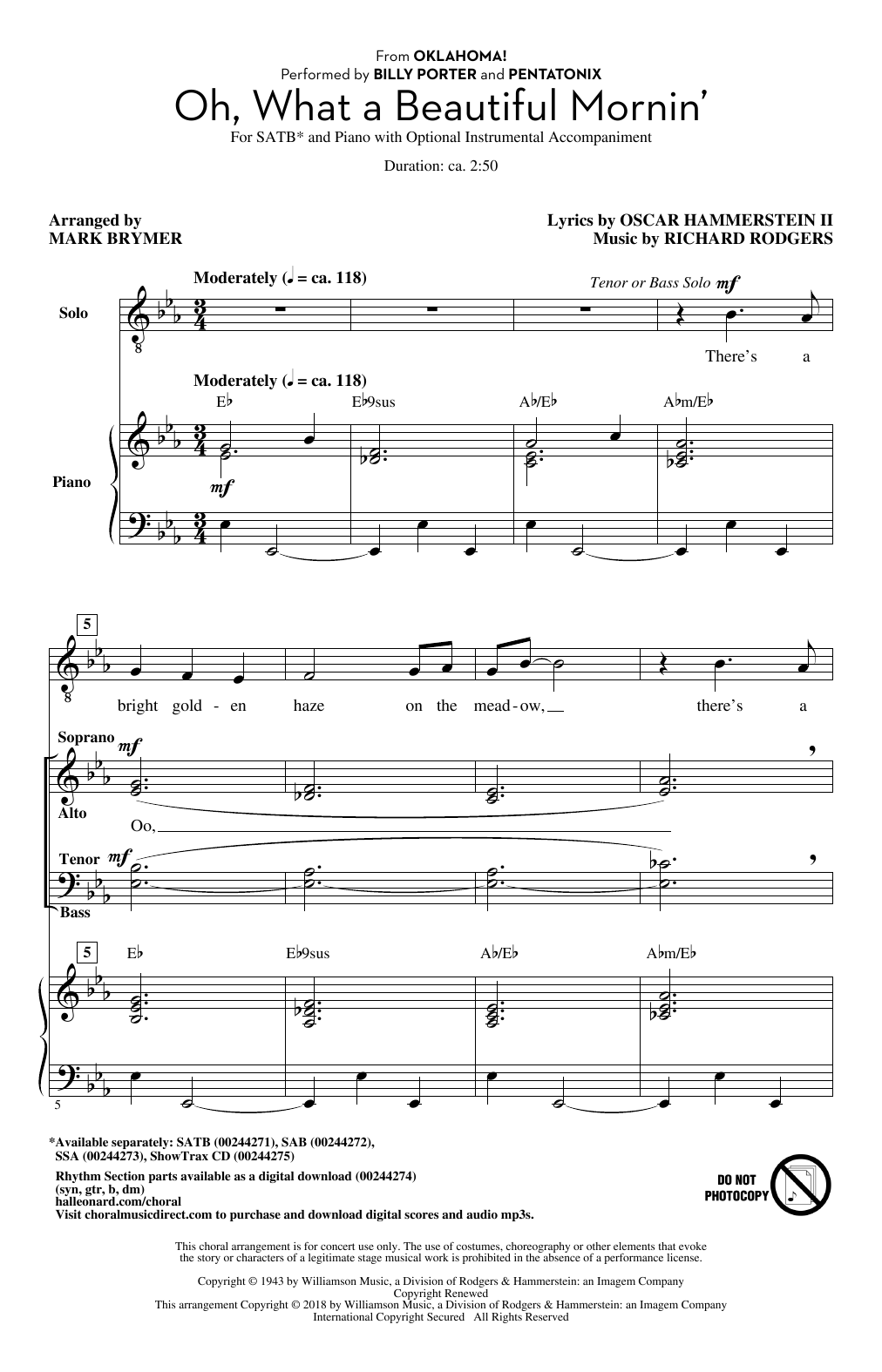
Oh, What A Beautiful Mornin' (from Oklahoma!): SATB Choral Octavo

As performed by Richard Rodgers / As performed by Pentatonix / Arranged by Mark Brymer

Item: 35-DS00416147

Digital Download
$2.99
Description

Oh, What A Beautiful Mornin' (from Oklahoma!): SATB Choral Octavo isn't in MakeMusic Cloud just yet...but it could be. Let us know you'd like to see it, and you'll help shape what comes next. In the meantime, start a free trial and dive into thousands of interactive titles your students can play along with today.

Sample Audio
No sample audio found.
Sample Video
Additional Details
Publisher: Hal Leonard
Page Count: 14
SKU: 35-DS00416147

More about this title

About the Artist: Richard Rodgers

Richard Rodgers (1902–1979) fundamentally shaped American musical theater through his gift for melody and harmonic sophistication. Working first with lyricist Lorenz Hart and later with Oscar Hammerstein II, Rodgers composed some of the most enduring scores in the Broadway canon, including Oklahoma!, The King and I, and The Sound of Music. His music combines the accessibility of popular song with the structural integrity of classical composition, making his work as rewarding for trained musicians to study as it is for audiences to enjoy.

Rodgers' approach to songwriting emphasized clarity and emotional directness. He understood how melody could carry narrative weight and how harmonic color could deepen a moment's significance. For music educators, his scores represent a masterclass in how thoughtful orchestration and voice leading serve the text and dramatic intent, principles that remain central to musical theater composition today.

Why we love this

Mark Brymer's arrangement captures the openness and optimism of this song without sacrificing the sophisticated voice leading that makes Rodgers' original so distinctive. The four-part writing sits comfortably across all sections while revealing the harmonic architecture underneath; your singers will experience how a well-crafted Broadway tune functions as serious choral music. Programming this piece brings immediate recognition and warmth to any concert, and audiences respond to its genuine hopefulness.

What to expect

The piece radiates straightforward joy and possibility. The melody sits naturally in the voice, inviting singers to connect with simple but profound optimism about a new day. There's a buoyancy here that comes from Rodgers' gift for singable lines paired with Brymer's clear, supportive voice writing.

Who it's for

This arrangement serves choirs wanting to explore Broadway literature without stepping into pop territory. It works equally well for concert choirs seeking an accessible crowd-pleaser and for musical theater programs building a legitimate choral component into their productions.

How to get the most out of it

  • Shape the opening phrase with natural breath points rather than pushing through; let the text about the morning suggest an easy, unhurried pace that makes the melody breathe.
  • Balance the melody strongly enough that it projects without forcing tone; altos and tenors carry essential harmonic material that needs clarity, not submergence.
  • Find the rhythmic pocket early in rehearsal by tapping through the syncopations together; Broadway phrasing requires groove awareness, not just note accuracy.
  • Consider the recorded reference carefully for style but make your own choices about tempo and articulation; this song adapts well to slightly different energy levels depending on your concert context.

How to use it

Position this in the second half of a spring or end-of-year concert where its brightness provides lift without feeling frivolous. It pairs well after a substantial classical or contemporary work, offering audiences a moment of genuine pleasure while showcasing your singers' ability to handle Broadway idiom with musicality. Schools building a musical theater curriculum will find this essential for demonstrating how stage music translates to concert settings.

Skills your students will build

  • Maintaining consistent vowel formation across lyrical melodic phrases
  • Balancing four-part harmonic texture where inner voices support rather than compete
  • Interpreting Broadway rhythmic patterns and syncopation accurately
  • Connecting text projection to musical phrasing and emotional intention
  • Reading and executing accidentals and chromatic voice leading

You May Also Like