
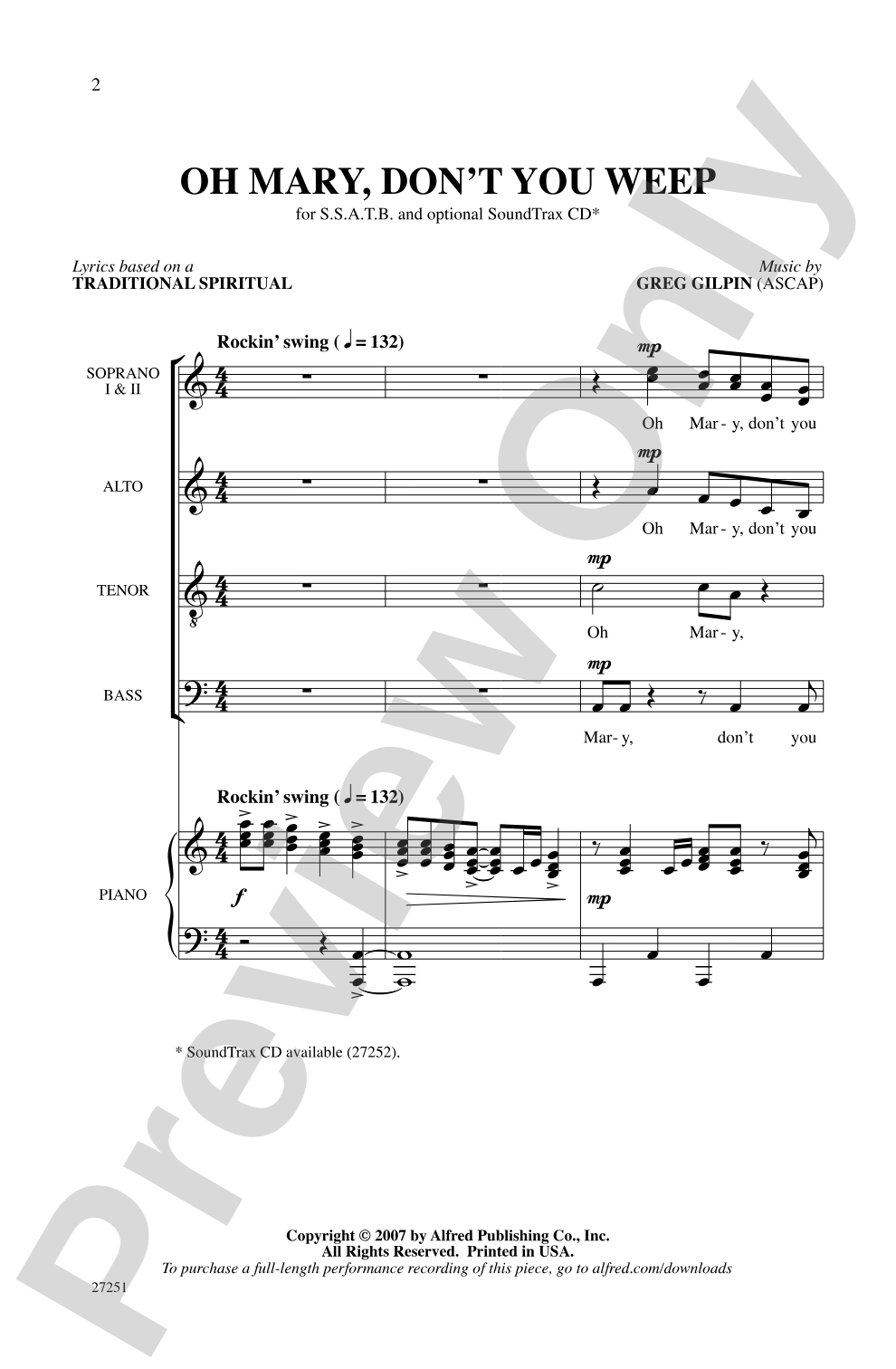
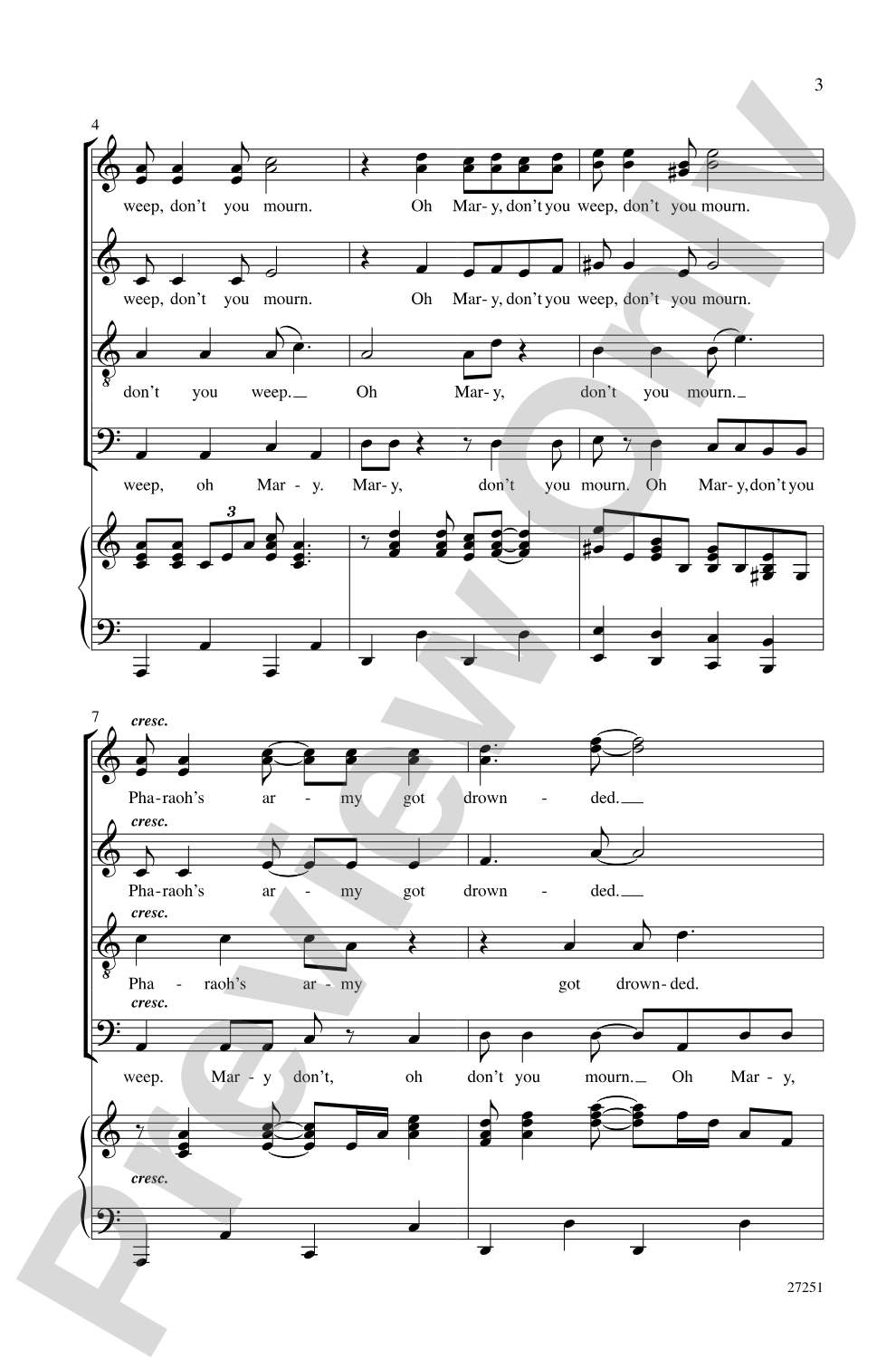
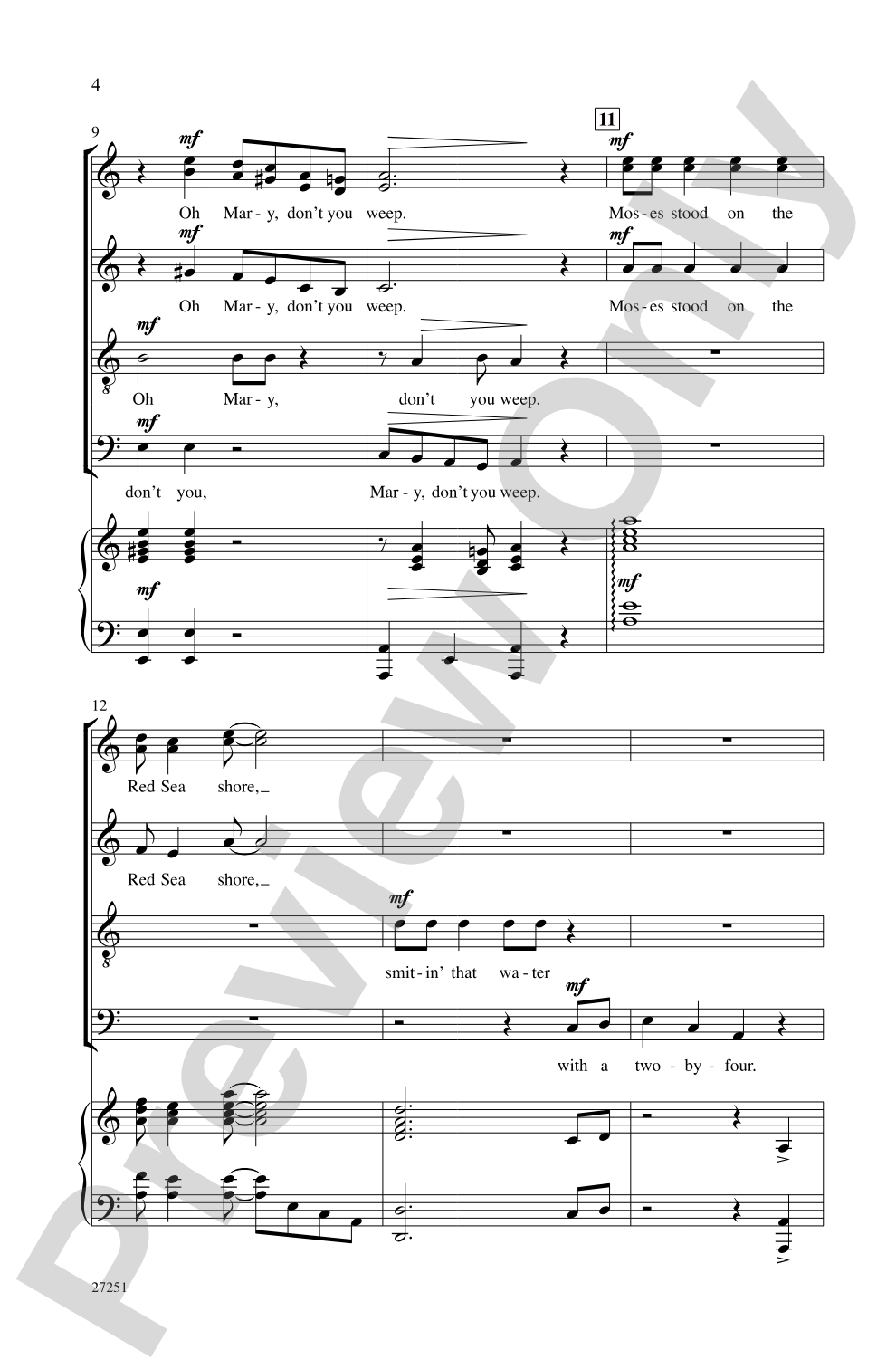

Oh Mary, Don't You Weep: SSATB Choral Octavo
Lyrics based on Traditional Spiritual, music by Greg Gilpin
Item: 00-PO-0000342
$1.95
Minimum order quantity: 20 copies
Pickup currently not available
Description
Dynamic vocal parts, syncopated swing rhythms, and ear-catching minor sonorities bring intensity to this original spiritual, with lyrics based on the traditional. Basses and tenors sing two independent lines while 3-part women add another unique texture creating a dramatic and impressive sound. Another solid Greg Gilpin spiritual!


Oh Mary, Don't You Weep: SSATB Choral Octavo isn't in MakeMusic Cloud just yet...but it could be. Let us know you'd like to see it, and you'll help shape what comes next. In the meantime, start a free trial and dive into thousands of interactive titles your students can play along with today.
Request This Title
Tell us you want it.
Start Your Free Trial
Explore everything that's ready to play right now.
Sample Audio
1
Audio File
--:--
0:00
0:00
Sample Video
No sample videos found.
Additional Details
Series:
Alfred Choral Designs
Publisher:
Alfred Music
Page Count:
16
SKU:
00-PO-0000342
More about this title
About the Composer: Greg Gilpin

Greg Gilpin brings both compositional mastery and conducting expertise to the choral world. As an ASCAP award-winning composer and arranger, he has led performances at Carnegie Hall, Lincoln Center, Ryman Auditorium, Sydney Opera House, Royal Festival Hall, and Harpa Concert Hall. His work as Director of Educational Choral Publications for Shawnee Press shapes choral literature for ensembles across the country.
Beyond the concert hall, Gilpin has expanded his creative reach into film scoring, earning Best Score recognition for the short film "Rosie's Rescue" in 2021. He collaborated with soprano Angela Brown on a world premiere arrangement of "What Child is This?" with the Indianapolis Symphonic Choir. A Life Loyal Member of Phi Mu Alpha Sinfonia and active member of ACDA and NAfME, Gilpin continues teaching, composing, and conducting while maintaining his diverse professional interests.
Why we love this
Gilpin's approach to the spiritual genre respects its roots while refusing to play it safe. The syncopated swing rhythms and minor sonorities create genuine dramatic tension, and the stratified voicing (independent bass and tenor lines paired with 3-part treble voices) gives every section material that feels essential rather than filler. This is a spiritual that challenges your singers while remaining deeply musical.
What to expect
Energy and intensity pulse through minor harmonies and syncopated grooves, creating something that honors the spiritual tradition while feeling contemporary and alive. The textural independence across the voices builds a rich, layered sound that keeps listeners engaged through structural complexity rather than relying on familiar harmonic progressions.
Who it's for
Choirs at the intermediate to advanced level seeking spirituals with genuine harmonic and rhythmic complexity. Directors working with ensembles that can manage independent part-writing and want to expand beyond traditional four-part arrangements will find this piece responsive and rewarding.
How to get the most out of it
- Balance the syncopated rhythms between sections by having your basses and tenors lock their independent lines together first, then bring in the women's voices to layer above rather than compete.
- The minor sonorities work best when singers shape phrases with intentionality; avoid letting the darker harmonies flatten into monotone, and encourage dynamic direction within each phrase.
- Highlight the textural shift created by the 3-part women's writing; this separation from traditional four-part harmony becomes a distinctive feature if it's clearly voiced rather than blended away.
- If using the recorded accompaniment, allow it to establish the swing feel before your singers enter, then maintain that rhythmic conversation rather than fighting against it.
How to use it
This piece works effectively as a centerpiece in a spirituals or African American music program, particularly when programmed alongside more traditional arrangements to show stylistic range. Its dramatic arc and modern harmonic language make it a strong bridge between classical choral repertoire and contemporary sacred music.
Skills your students will build
- Syncopated rhythm reading across multiple independent part lines
- Singing in minor tonality with harmonic awareness
- Maintaining distinct voicing in stratified textures (SATB with subdivided tenor and treble sections)
- Interpreting swing-influenced rhythmic feels in a cappella or accompanied contexts