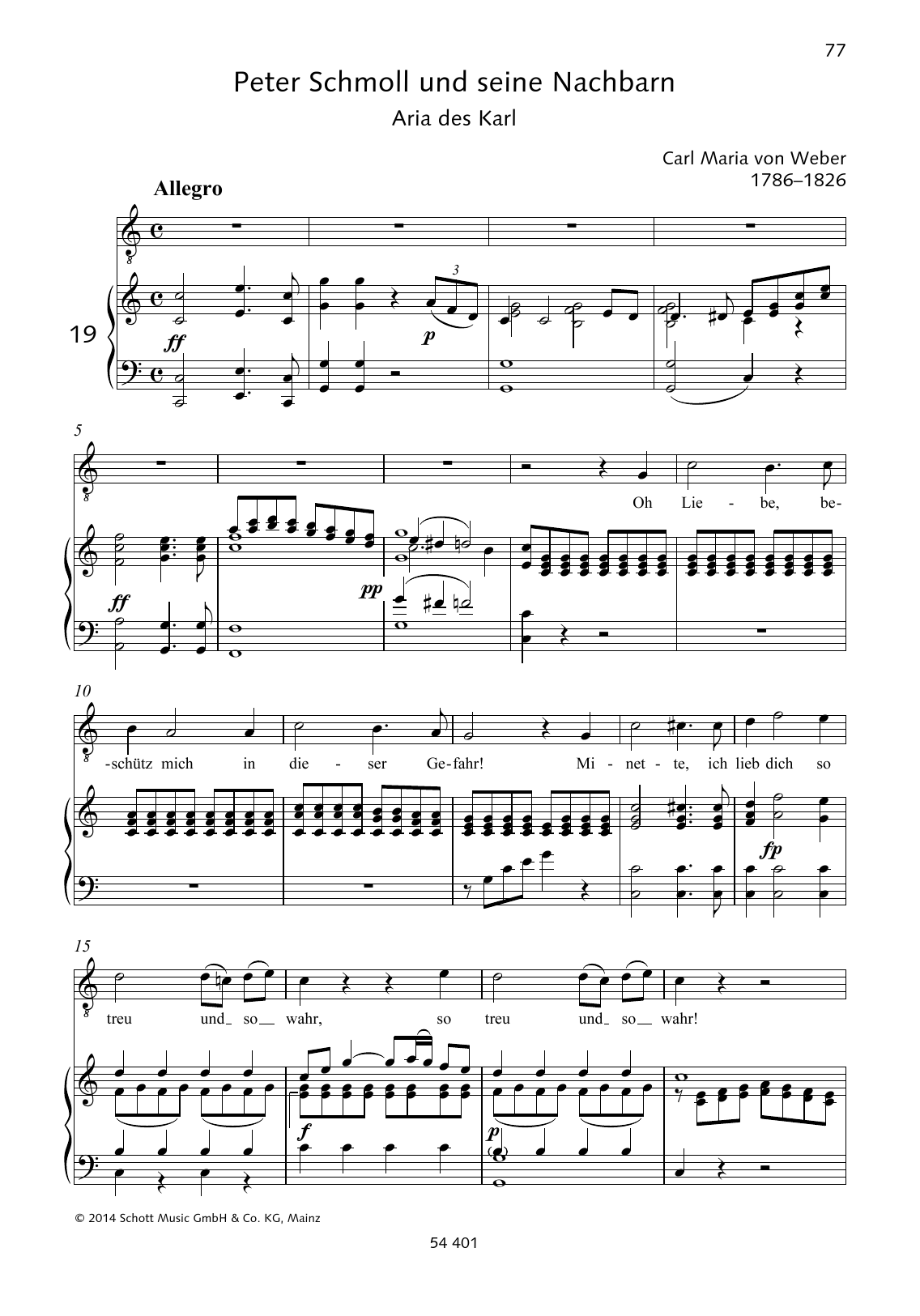
Carl Maria von Weber (1786–1826) stands as a pivotal figure in the transition from Classical to Romantic opera. As a composer, conductor, and pianist, he fundamentally shaped German operatic traditions while maintaining deep roots in the concert and vocal music repertoire. His dramatic sensibility and orchestral innovation influenced generations of composers who followed, making his vocal works essential touchstones for singers exploring the expressive possibilities of the early Romantic era.
Beyond his operatic masterpieces, Weber's songs and solo vocal works reveal a composer equally committed to intimate expression. These pieces demonstrate his gift for memorable melody, harmonic sophistication, and the art of setting text with genuine drama. For vocal students and teachers, Weber's music bridges the gap between Classical restraint and Romantic emotional depth.