
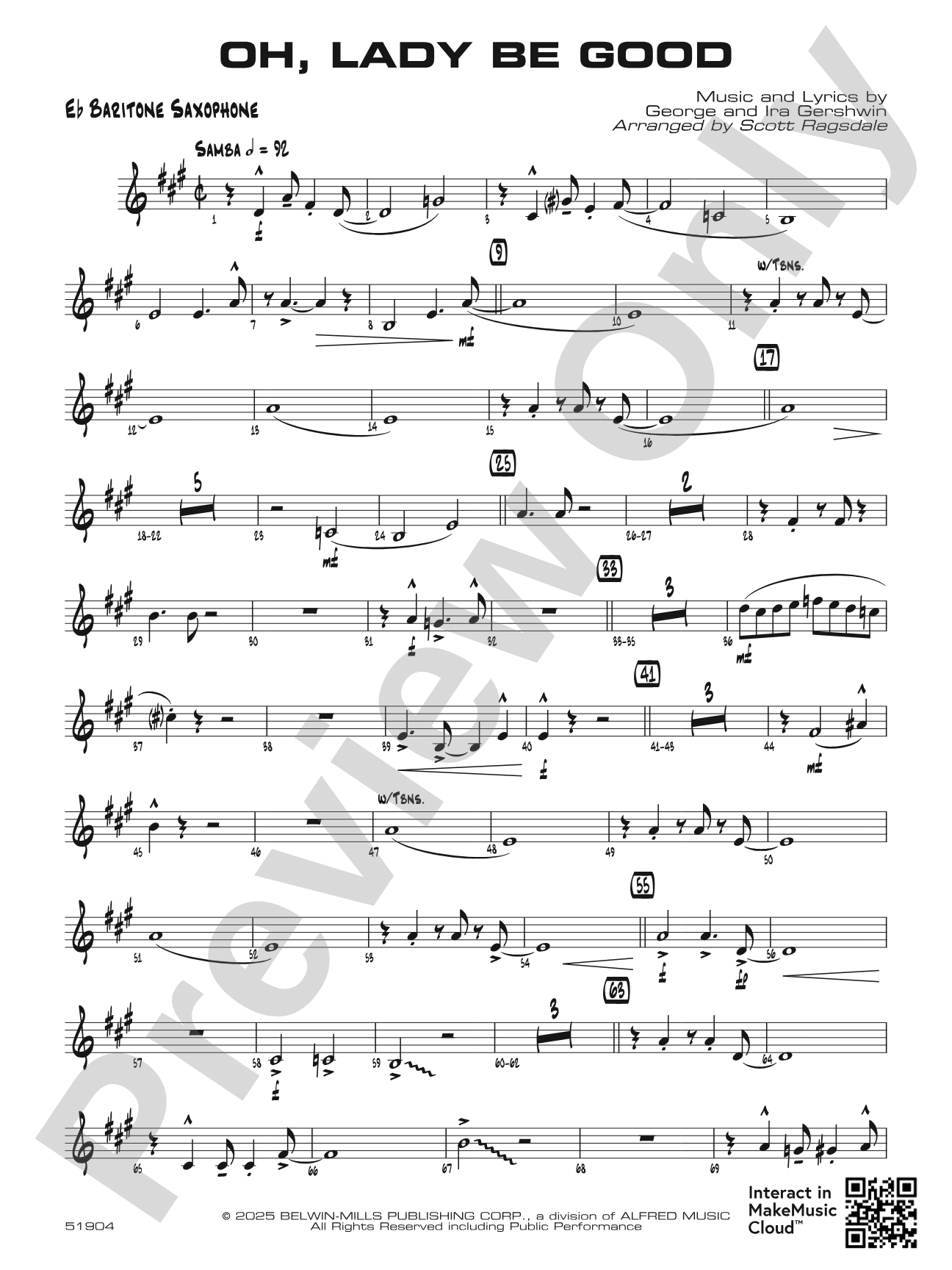

Oh, Lady Be Good: E-flat Baritone Saxophone
Music and lyrics by George Gershwin and Ira Gershwin / arr. Scott Ragsdale
Grade: 3
Item: 00-PC-0019594_BTX
$3.00
Pickup currently not available
Description
A terrific Gershwin song for your female vocalist. The vocal range is from G below middle C to third-line B-flat. The lead trumpet range is to written high B-flat. This chart flows very well and will be a hit for your vocalist and the ensemble. Tempo is around 98 in cut time. Highly recommended. (3:30)


Oh, Lady Be Good: E-flat Baritone Saxophone isn't in MakeMusic Cloud just yet...but it could be. Let us know you'd like to see it, and you'll help shape what comes next. In the meantime, start a free trial and dive into thousands of interactive titles your students can play along with today.
Request This Title
Tell us you want it.
Start Your Free Trial
Explore everything that's ready to play right now.
Sample Audio
1
Audio File
--:--
0:00
0:00
Sample Video
Additional Details
Series:
Jazz Vocal Series
Publisher:
Alfred Music
SKU:
00-PC-0019594_BTX
More about this title
About the Composer: George Gershwin
George Gershwin (1898-1937) bridged classical and popular music in ways that transformed American composition. His rhythmic sophistication, harmonic innovation, and gift for melody made jazz idioms respectable in concert halls while keeping popular songs deeply musical. For educators, Gershwin's work remains essential because it models how to write with both accessibility and craft, showing students that artistic integrity and broad appeal aren't mutually exclusive.
Gershwin's theater songs and orchestral works reveal a composer who understood ensemble writing, vocal writing, and the specific demands of performers at every level. His influence on jazz composition, swing arranging, and the American songbook continues to shape what musicians study and audiences expect from jazz and popular repertoire.
Why we love this
Scott Ragsdale's arrangement respects the elegance of the original while giving your ensemble real work to do. The Latin-tinged groove and clean voicings create genuine ensemble interplay, and the vocal range sits comfortably for singers with moderate to strong classical training while the trumpet climax gives your lead player a moment to shine.
What to expect
Urbane and conversational, with just enough Latin spice to keep the swing from feeling nostalgic. The melody sits in a conversational register, inviting the vocalist to sell the lyric rather than push for volume; the ensemble colors underneath suggest a smoky room where the music matters more than the spectacle.
Who it's for
Jazz ensembles with a capable female vocalist and a confident lead trumpet section. This works well for programs that need a sophisticated vocal feature with ensemble support and for ensembles comfortable with Gershwin's harmonic language and Latin jazz vocabulary.
How to get the most out of it
- Establish the cut-time feel cleanly in rehearsal; many ensembles rush the quarter-note pulse, which flattens the swing. Lock the tempo around 98 and stay there.
- Balance the vocalist against the ensemble texture. At 3 minutes 30 seconds, the arrangement will expose any murkiness in your voicings, so clarity in the lower voices pays immediate dividends.
- The lead trumpet's high B-flat passage needs preparation time. Confirm your trumpeter can execute this comfortably and has adequate rest before the passage; a tired lead player won't nail the moment when it matters.
- Shape the Latin feel with light articulation in the rhythm section. Over-punching the groove kills the swing; think conversation rather than declaration.
How to use it
Pair this with other songs from the American songbook for a cohesive vocal feature set, or use it as a sophisticated opener that signals your ensemble's maturity and range. It's equally at home in a concert devoted to Gershwin standards or in a mixed repertoire program where you want to demonstrate that jazz ensemble work can be both vocally rewarding and musically substantial.
Skills your students will build
- Playing swing eighth notes and maintaining a steady cut-time groove
- Reading mixed harmonic textures typical of jazz standards
- Balancing ensemble voices to support rather than obscure a lead melody
- Executing Latin jazz rhythms and articulation
- Accompanying a vocalist with flexibility and responsiveness