Oh, Lady Be Good!: E-flat Baritone Saxophone Sheet Music Preview

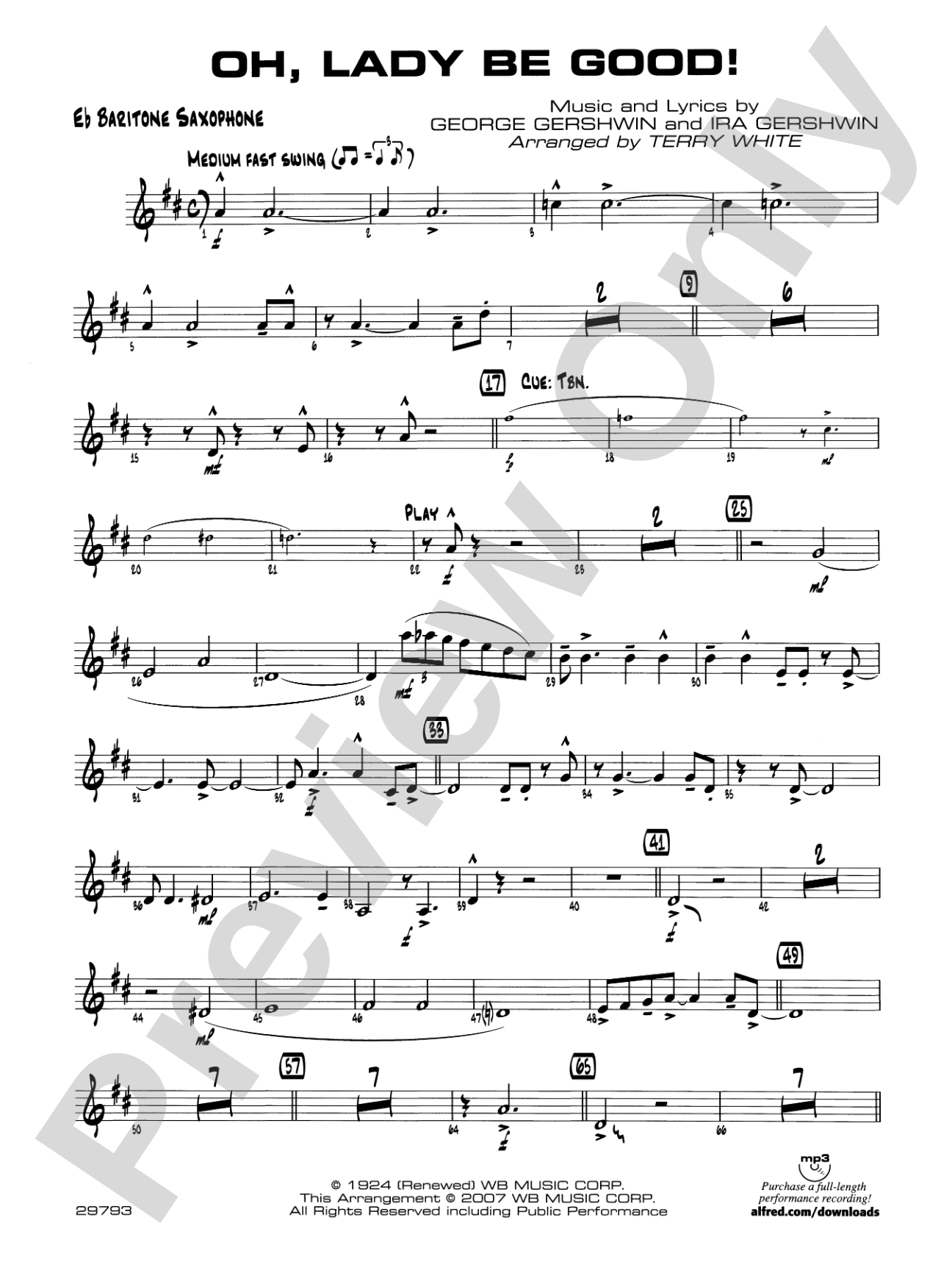
Oh, Lady Be Good!: E-flat Baritone Saxophone

Music and lyrics by George Gershwin and Ira Gershwin / arr. Terry White

Grade: 3 (Medium)

Item: 00-PC-0015288_BTX

Digital Download
$3.00
Description
Check out arranger Terry White's straight-ahead bebop-influenced chart on this Gershwin standard. Swing feel throughout, a beefy sax soli, lead lines and solos (written out) for alto 1 and trumpet 2 and lead trumpet range is to written A above the staff. All the ingredients you need for a swingin' chart. (3:09)

Don't just read it, hear it, play along with it, and watch your students grow with it. In MakeMusic Cloud, Oh, Lady Be Good!: E-flat Baritone Saxophone comes alive with professional accompaniment, adjustable tempo, and built-in practice tools that turn solo practice into real progress.

Sample Audio
0:00
0:00
Sample Video
Additional Details
Series: Jazz Band Series
Publisher: Alfred Music
Page Count: 94
SKU: 00-PC-0015288_BTX

More about this title

About the Composer: George Gershwin

George Gershwin (1898-1937) bridged classical and popular music in ways few composers have managed. His melodies became synonymous with American jazz and musical theatre, and his influence on how educators teach 20th-century repertoire remains profound. Gershwin's gift for writing singable, memorable lines that also swing hard makes his standards ideal vehicles for teaching jazz phrasing and harmonic sophistication to developing ensembles.

Why we love this

Terry White's arrangement captures the infectious energy of bebop language without overcomplicating a tune that already swings. The written-out solos for alto 1 and trumpet 2 let younger players experience jazz articulation and phrasing in a supported context, while the beefy sax soli give your section a chance to blend and lock in on the high-energy moments that make this chart memorable.

What to expect

Bouncy and energetic, built on Gershwin's instantly recognizable melody but dressed in bebop threads. The arrangement pulses with rhythmic drive; phrases snap with the kind of syncopated confidence that makes audiences lean forward in their seats.

Who it's for

Jazz ensembles at the high school or early college level seeking a crowd-pleasing standard with real bebop character. Directors who want to deepen their players' understanding of swing feel and jazz articulation without requiring extensive improvisation experience will find the written-out solos invaluable.

How to get the most out of it

  • Shape the swing eighth-notes with slight space between them; the bebop influence in White's voicings demands clarity and air, not a blended wash.
  • Mark the lead trumpet's high passages (written A above the staff) as a milestone for your section's range work; secure this range in sectionals before full ensemble rehearsal.
  • Balance the sax soli so each voice cuts through without the top saxophone drowning out the harmonic underpinning; blend matters more than volume.
  • Lock the rhythm section (bass, drums, piano) to a steady quarter-note pulse before layering the written solos; a relaxed, confident foundation makes the bebop figures sing.

How to use it

This chart works beautifully as a concert opener or an uplifting closer on a jazz ensemble program. It pairs naturally with other Gershwin standards or with mid-century swing repertoire, and the 3:09 runtime keeps pacing tight without feeling rushed.

Skills your students will build

  • Swing eighth-note articulation and phrasing
  • Reading and executing written jazz solos
  • Ensemble blend in sax soli (matching tone and attack)
  • Lead trumpet range extension (written A above staff)
  • Bebop-influenced harmonic listening and tuning
  • Rhythm section time feel and pocket awareness

You May Also Like