Oh, Lady Be Good! Sheet Music Preview

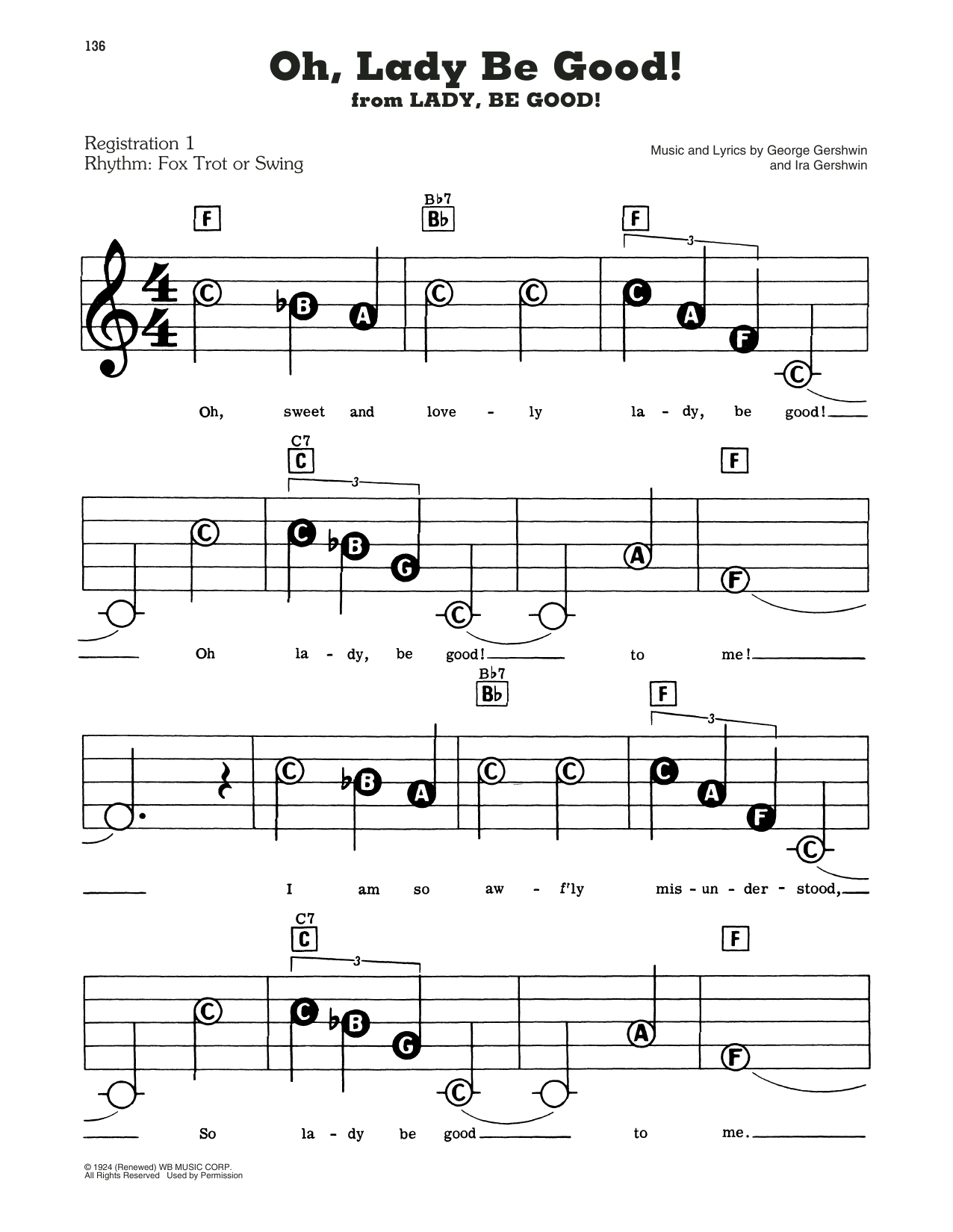
Oh, Lady Be Good!: E-Z Play Today

Item: 35-DS00556994

Digital Download
$4.99
Description

Oh, Lady Be Good!: E-Z Play Today isn't in MakeMusic Cloud just yet...but it could be. Let us know you'd like to see it, and you'll help shape what comes next. In the meantime, start a free trial and dive into thousands of interactive titles your students can play along with today.

Sample Audio
No sample audio found.
Sample Video
Additional Details
Publisher: Hal Leonard
Page Count: 2
SKU: 35-DS00556994

More about this title

About the Creator

George Gershwin and Ira Gershwin created "Oh, Lady Be Good!" in 1924 for the Broadway musical of the same name. The song became an instant standard, showcasing George's gift for melody and Ira's wit in equal measure. This enduring jazz standard has been recorded by countless artists across generations and remains a cornerstone of the American songbook.

The piece exemplifies 1920s popular music at its finest: sophisticated yet accessible, with harmonies that swing and lyrics that sparkle. Its success launched both brothers into prominence and established the template for what a great American song could be.

Why we love this

E-Z Play Today arrangements strip away unnecessary complications while preserving the character that makes this standard shine. Students encounter genuine jazz harmony and period style without getting tangled in dense voicings, making it ideal for building confidence in jazz idioms.

What to expect

Sophisticated, urbane, and genuinely fun. The melody sits comfortably in the hand while the harmonies hint at the jazz world just beyond the surface. There's a lightness here, a wink, that captures the spirit of 1920s Broadway optimism.

Who it's for

Early intermediate pianists ready to explore jazz standards without overwhelming technical demands. Students who want to play recognizable, singable melodies grounded in authentic American songwriting will find this rewarding.

How to get the most out of it

  • Keep the swing feel relaxed and conversational rather than stiff; the accompaniment should dance beneath the melody, not march.
  • Shape the phrases with the phrasing marks as guides for breath points and musical thought, even on an instrument.
  • Find the natural rubato in the verse if one is included; the chorus typically locks into a more measured swing rhythm.

How to use it

Feature this in a jazz standards showcase or a concert celebrating American songbook classics. Pair it with other Gershwin works or other 1920s standards to build a thematic set that highlights the era's melodic genius.

Skills your students will build

  • Swing rhythm and triplet subdivision
  • Jazz chord progression reading (I, IV, V7 movements and secondary dominants)
  • Period-appropriate phrasing and articulation
  • Playing with conversational rubato and flexibility within a steady pulse

You May Also Like