Oh, Lady Be Good! Sheet Music Preview

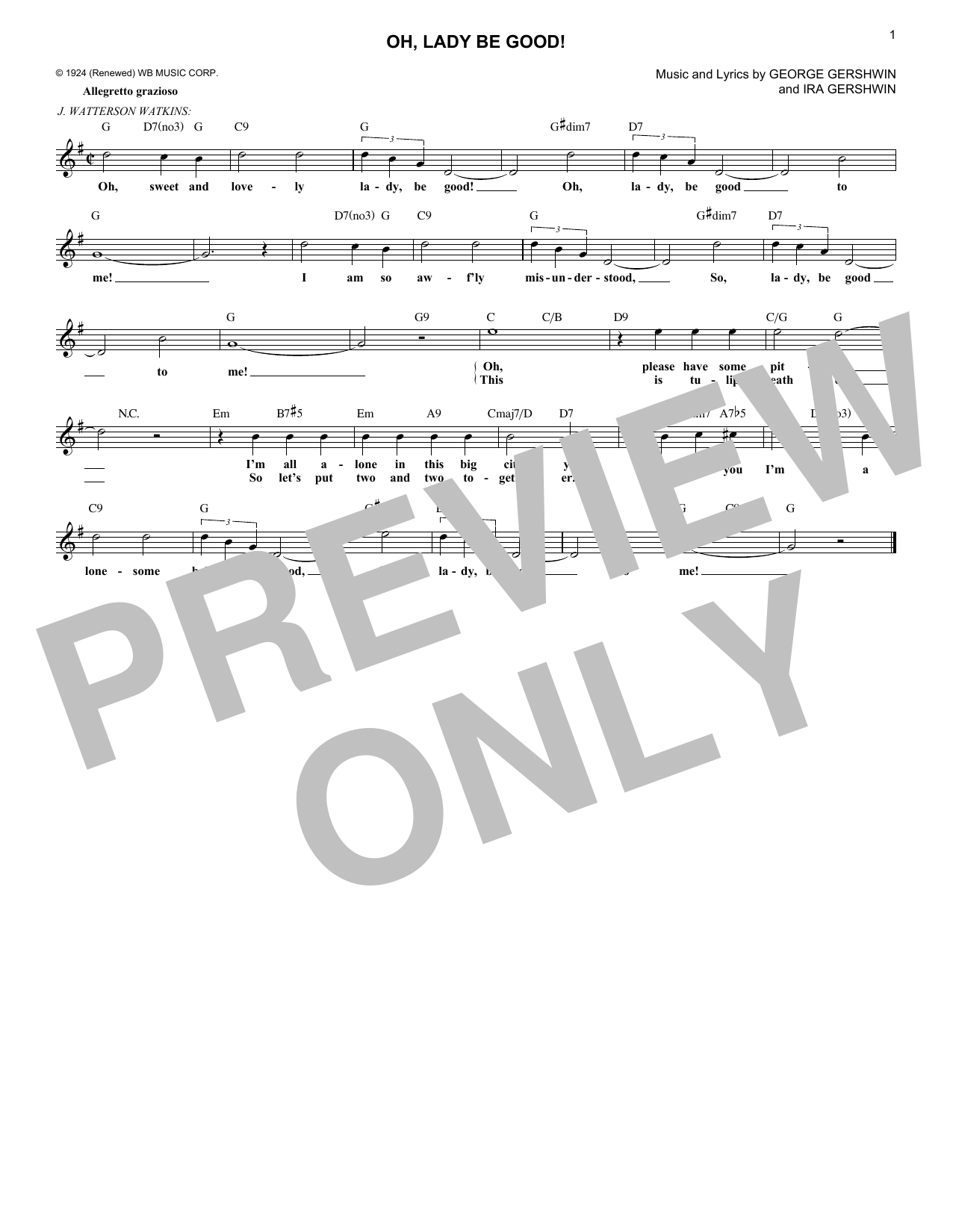
Oh, Lady Be Good!: Lead Sheet / Fake Book

Item: 35-DS00411482

Digital Download
$3.99

One moment…

One moment…

Description

Oh, Lady Be Good!: Lead Sheet / Fake Book isn't in MakeMusic Cloud just yet...but it could be. Let us know you'd like to see it, and you'll help shape what comes next. In the meantime, start a free trial and dive into thousands of interactive titles your students can play along with today.

Sample Audio
No sample audio found.
Sample Video
Additional Details
Publisher: Hal Leonard
Page Count: 1
SKU: 35-DS00411482

More about this title

About the Creator

George Gershwin and Ira Gershwin created "Oh, Lady Be Good!" in 1924 for the Broadway musical of the same name. George composed the melody while his brother Ira provided lyrics that capture the playful, earnest charm of the Jazz Age. The song became one of the Gershwins' signature pieces, recorded countless times and performed in jazz clubs, concert halls, and music studios ever since.

Ira's witty, conversational lyrics paired with George's memorable tune made this standard an instant favorite among musicians. The song's straightforward charm and sophisticated yet accessible harmonic language exemplify why the Gershwin brothers remain central to American popular song. Generations of musicians have learned and performed this tune as a gateway into jazz standards and Broadway repertoire.

Why we love this

This lead sheet captures one of the most enduring melodies in American music in its simplest, most usable form. Pianists and singers gravitate toward it for its perfect balance of familiarity and interpretive freedom, giving performers plenty of room to explore phrasing and swing without getting bogged down in orchestration.

What to expect

Breezy and optimistic with an underlying sophisticated groove. The melody moves with natural ease while the harmonic language hints at the jazz language of the 1920s, creating a piece that feels both instantly approachable and genuinely musical.

Who it's for

Jazz pianists, singers working through standards repertoire, and music students building fluency with swing-era material. This works equally well for someone sight-reading a tune for the first time or a seasoned performer developing a fresh interpretation.

How to get the most out of it

  • Treat the melody as a conversation rather than a strict melodic line; jazz phrasing allows you to sit slightly behind or ahead of the beat to create character
  • Explore the harmonic possibilities in the changes; this tune rewards pianists who comp thoughtfully rather than just play block chords underneath
  • Sing or play the melody with rhythmic ease on the verse, then add lift and syncopation on the refrain to highlight the structural contrast

How to use it

Include this in a jazz standards showcase or a concert featuring American songbook classics. It pairs beautifully alongside other Gershwin numbers or as a solo keyboard feature that bridges classical training and jazz repertoire.

Skills your students will build

  • Reading lead sheet notation and chord symbols
  • Swing phrasing and rhythmic flexibility
  • Harmonic analysis and chord progression recognition
  • Comping skills for piano accompaniment
  • Melodic interpretation within a standard form

You May Also Like