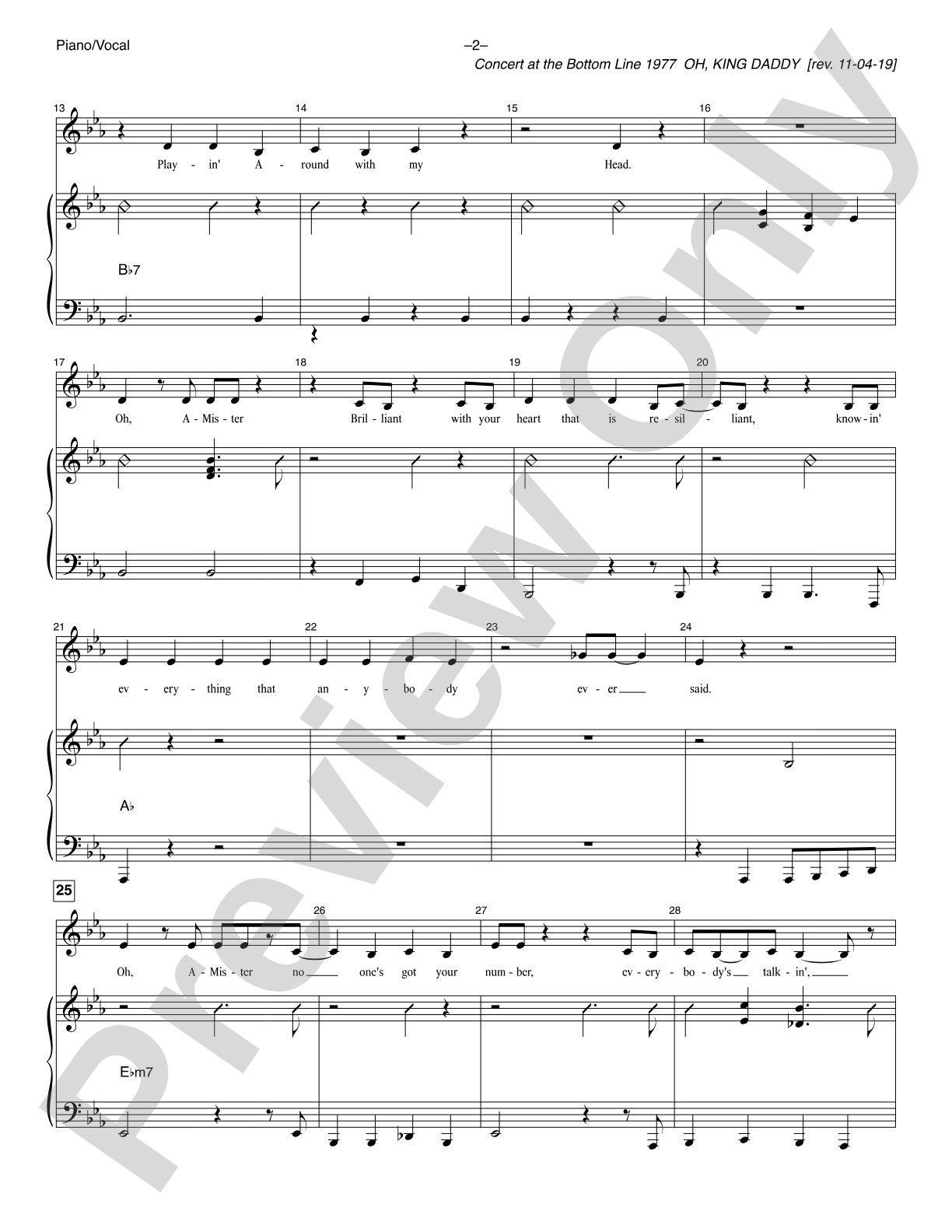
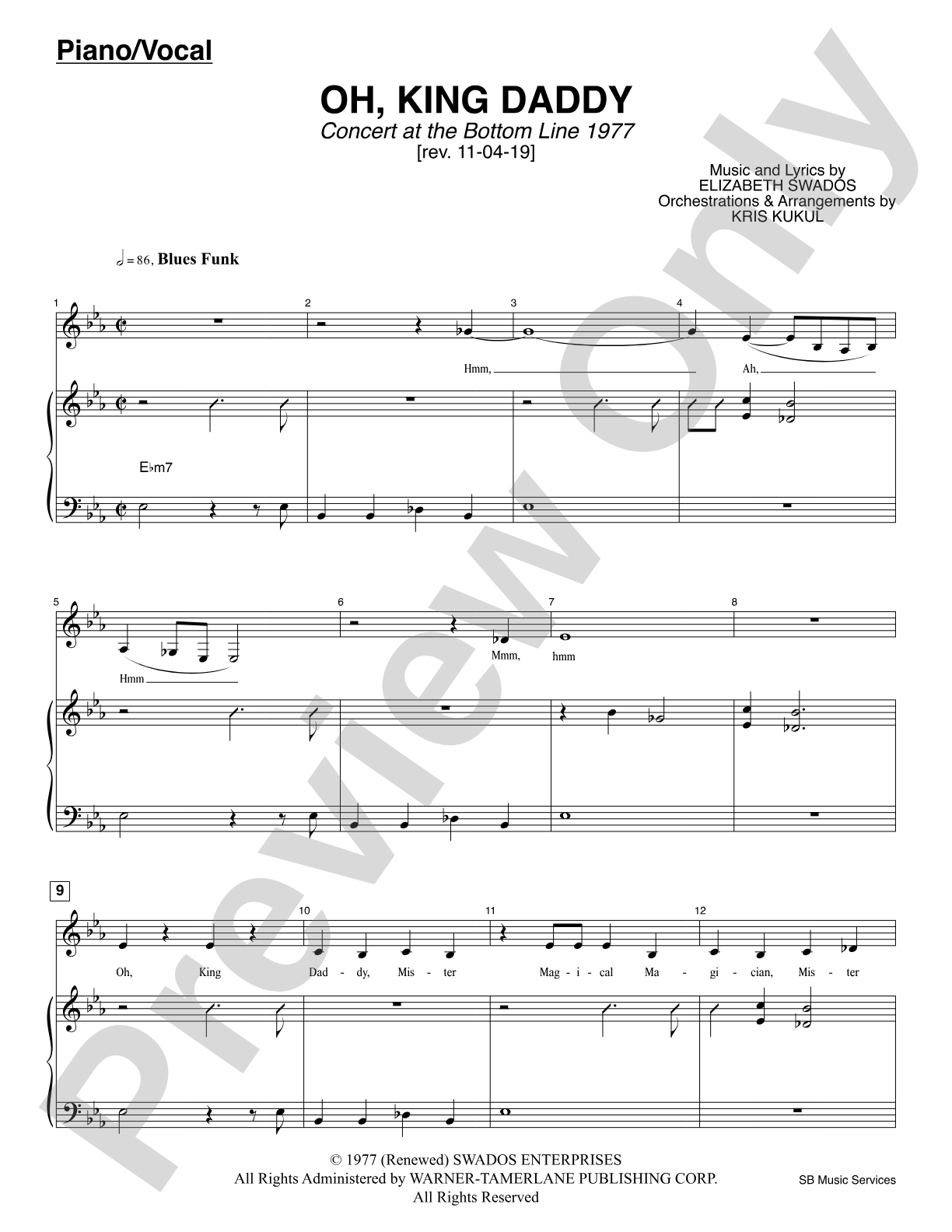
Oh, King Daddy (<i>Concert at the Bottom Line 1977</i>) Sheet Music Preview

Oh, King Daddy (Concert at the Bottom Line 1977): Piano/Vocal

Music and lyrics by Elizabeth Swados / Orchestrations and arrangements by Kris Kukul

Item: 00-PS-0016360

Digital Download
$3.99

One moment…

Description
From The Liz Swados Project---a tribute album to the Tony-nominated artist Elizabeth Swados.

Oh, King Daddy (Concert at the Bottom Line 1977): Piano/Vocal isn't in MakeMusic Cloud just yet...but it could be. Let us know you'd like to see it, and you'll help shape what comes next. In the meantime, start a free trial and dive into thousands of interactive titles your students can play along with today.

Sample Audio
No sample audio found.
Sample Video
Additional Details
SKU: 00-PS-0016360

More about this title

About the Composer: Elizabeth Swados

Elizabeth Swados (1951-2016) was a composer, lyricist, director, and choreographer who brought a distinctive theatrical voice to American musical theater. Her work emerged from the experimental theater scene of the 1970s and carried an uncompromising commitment to social consciousness and intimate storytelling. Swados earned a Tony nomination for her musical *Runaways* (1978) and continued creating work that bridged downtown theater aesthetics with Broadway audiences.

Her compositional voice blended folk, rock, and contemporary song forms with poetic text, often exploring themes of displacement, survival, and human connection. For music educators and singers, Swados represents a model of socially engaged artistry and the power of music to amplify overlooked stories.

Why we love this

This piece captures a moment of intimate artistry from a groundbreaking theater musician, and the Kris Kukul arrangement preserves that rawness while making it accessible for singers and pianists working outside the original theatrical context. The song's conversational tone and character-driven storytelling make it rewarding material for singers developing interpretive instinct and emotional specificity. Programming work by women composers from theater and experimental traditions helps broaden the repertoire singers encounter beyond traditional concert and musical theater canons.

What to expect

The song carries the intimacy of a late-night performance space, where the boundary between performer and audience dissolves. There's an understated intensity to the storytelling, a sense of witness and confession rather than spectacle. The music supports the vocal narrative with conversational ease, letting language and emotion lead the way.

Who it's for

This piece suits vocalists with some performance experience who are developing their interpretive voice and comfortable with contemporary song material outside the classical or traditional musical theater canons. Pianists who accompany singers in recital settings or studio teaching will find the arrangement accessible and musically rewarding. It works equally well in cabaret-style recitals, concert programs celebrating theater composers, or studio repertoire that values artistic authenticity and historical context.

How to get the most out of it

  • Study the lyrical phrasing and conversational rhythm before locking into strict tempo; this song benefits from breathing room and spontaneity in the vocal line.
  • Work with your pianist to establish clear communication about rubato and dynamic shaping, since the arrangement likely follows Swados' original performance style rather than metronomic precision.
  • Listen to the original recording from *Concert at the Bottom Line 1977* to absorb the performance tradition and understand the emotional temperature Swados brought to the material.
  • Shape the piano part as accompaniment rather than competition; the focus should remain on the vocalist's connection to the text.

How to use it

Include this in a recital exploring American song from theatrical traditions, pairing it with other work by women theater composers or pieces that bridge experimental and mainstream musical contexts. It serves as an excellent choice for a cabaret-style concert that prioritizes artist biography and cultural history alongside musical performance. A vocalist might perform it as a standalone piece introducing audiences to Swados' legacy, or as part of a broader tribute concert celebrating her contributions to American musical theater.

Skills your students will build

  • Interpreting contemporary song material with character and emotional specificity
  • Coordinating rubato and flexible phrasing between vocalist and pianist
  • Reading and performing theater-influenced musical language (conversational rhythm, speech-song hybrids)
  • Understanding performance tradition through listening and transcription

You May Also Like