
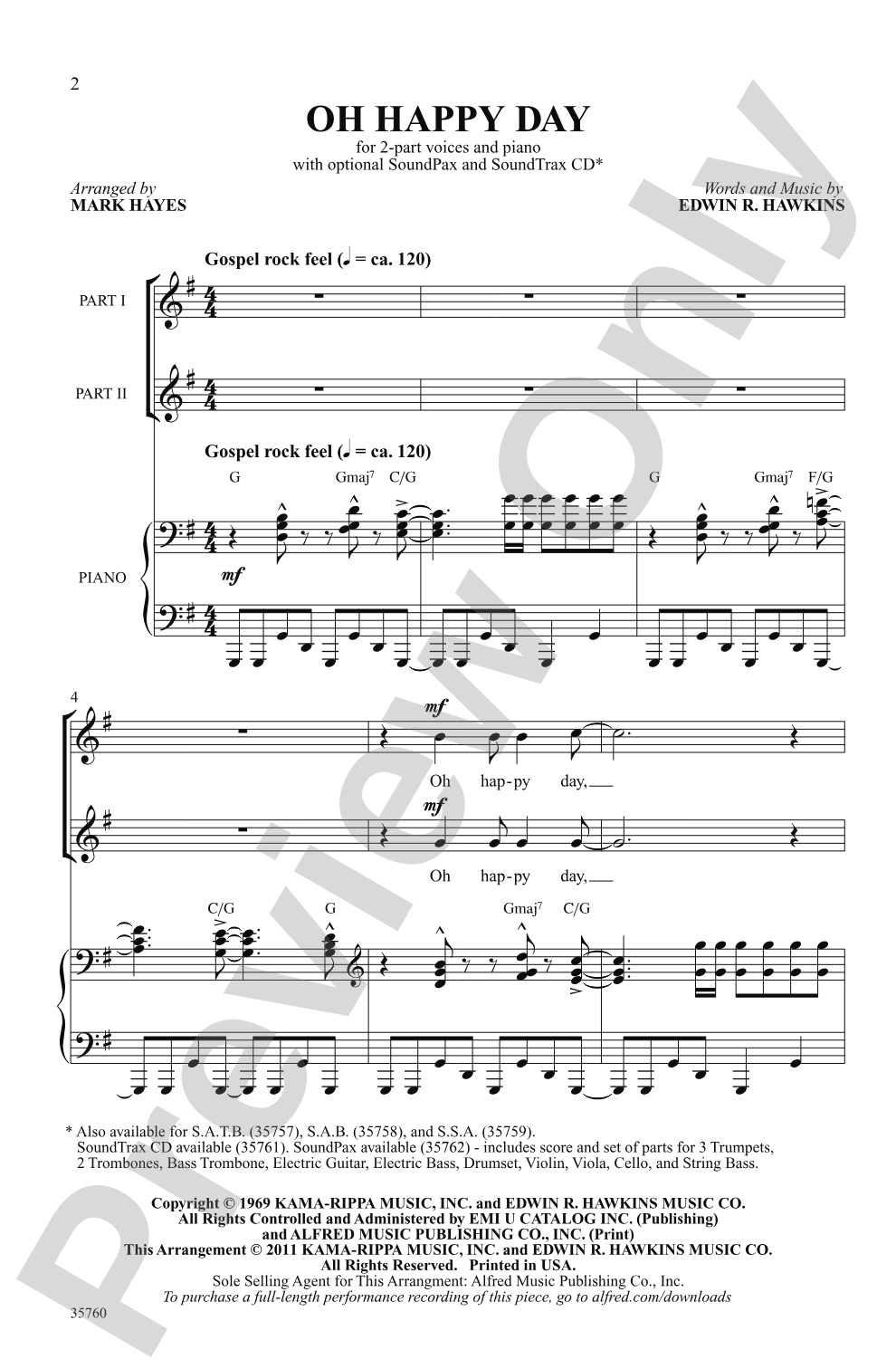
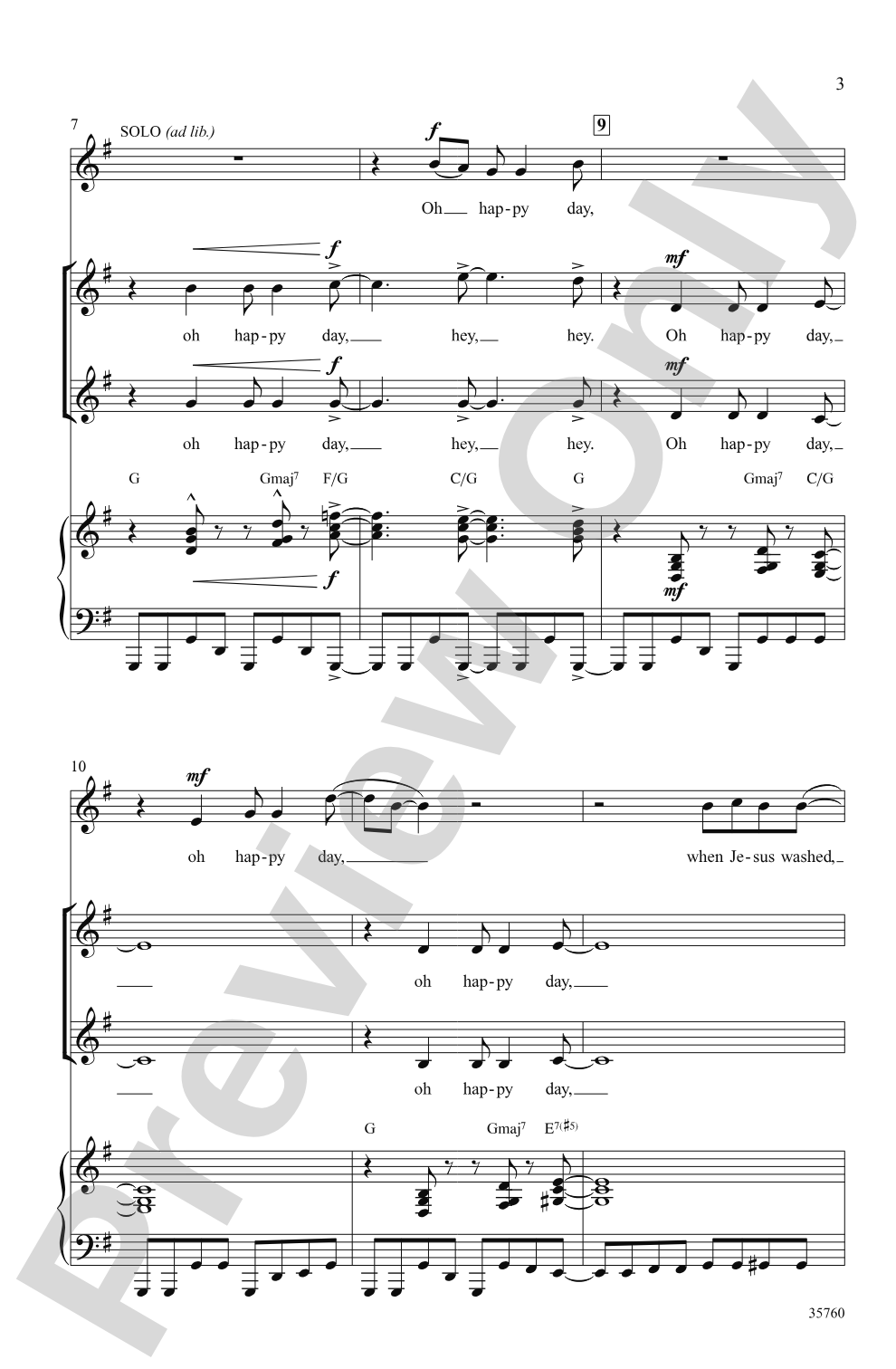
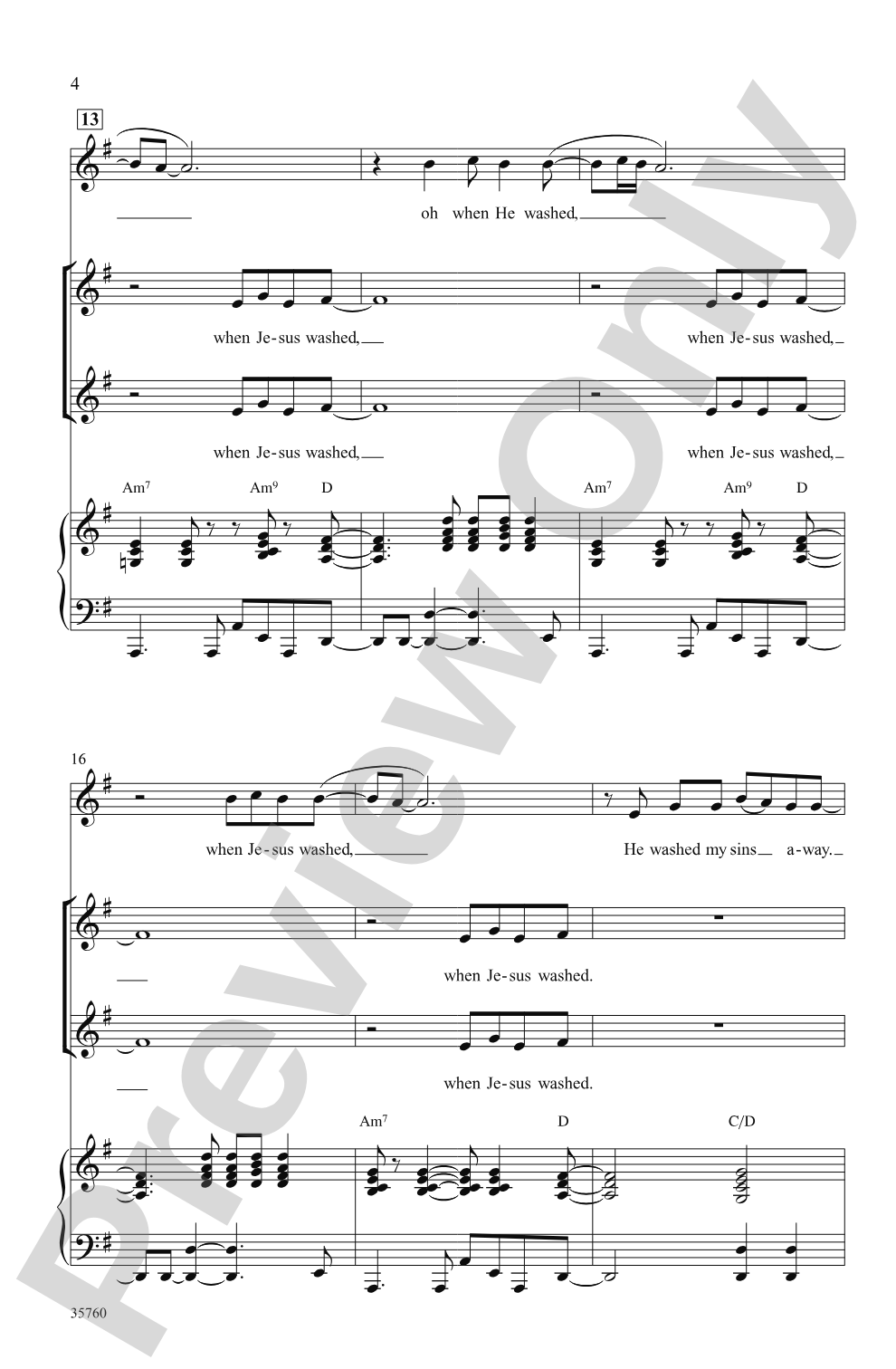
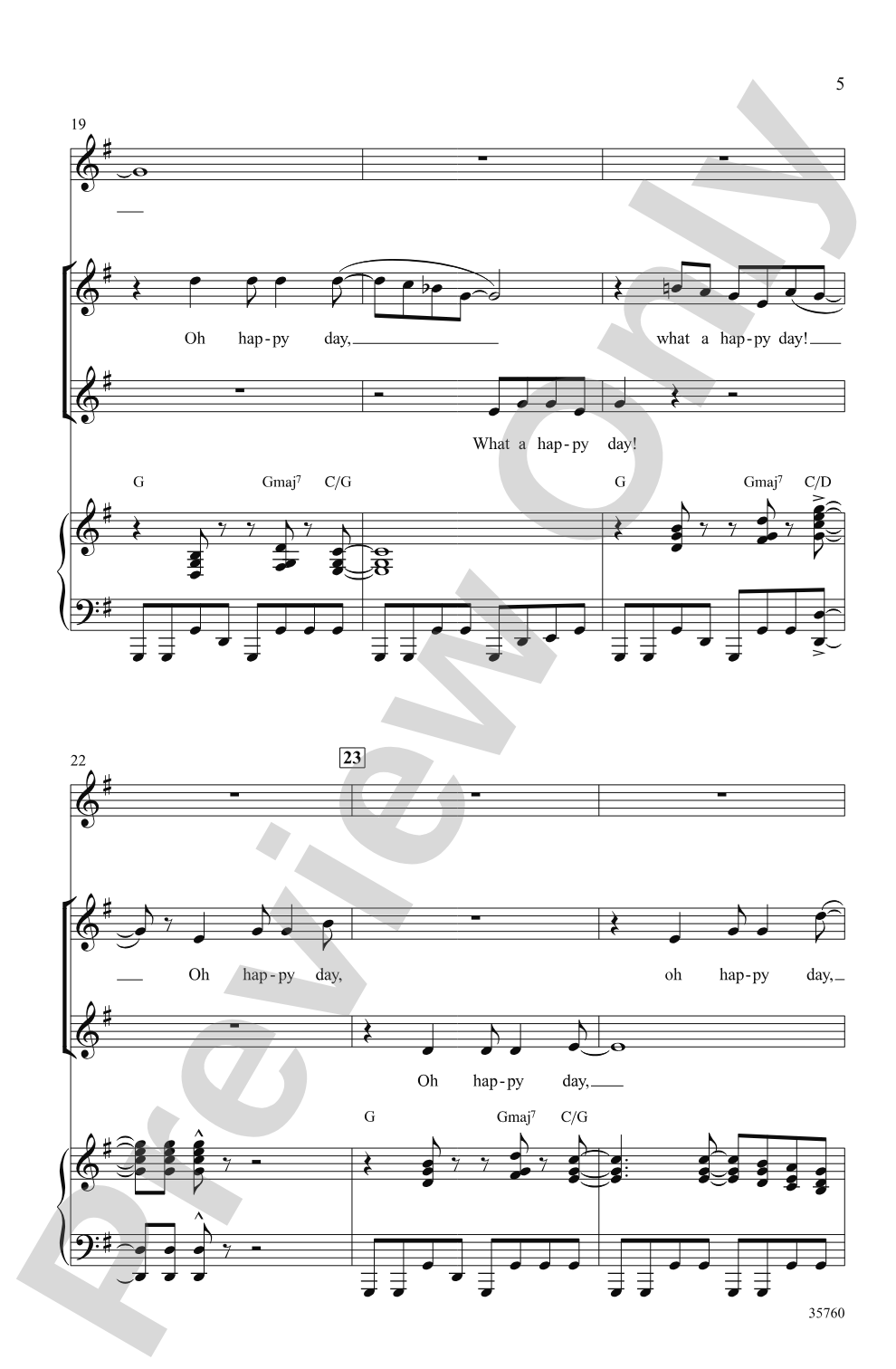

Oh Happy Day: 2-Part Choral Octavo
Words and music by Edwin R. Hawkins / arr. Mark Hayes
Item: 00-PO-0001079

$3.50
Minimum order quantity: 20 copies
One moment…
Related Items
Oh Happy Day: SoundTrax Digital Audio Download |
$29.99
|
View | |
Oh Happy Day: SATB Choral Octavo |
$2.35
|
View | |
Oh Happy Day: SAB Choral Octavo |
$2.35
|
View | |
Oh Happy Day: SSA Choral Octavo |
$2.25
|
View | |
Oh Happy Day: Choral SoundPax |
$45.00
|
View | |
Oh Happy Day: SATB Choral Octavo |
$2.35
|
View | |
Oh Happy Day: SAB Choral Octavo |
$2.35
|
View | |
Oh Happy Day: SSA Choral Octavo |
$2.25
|
View | |
Oh Happy Day: 2-Part Choral Octavo |
$3.50
|
View | |
Oh Happy Day: Choral Octavo SoundTrax CD |
$29.99
|
View | |
Oh Happy Day: Choral SoundPax |
$45.00
|
View |
Description
Get into the gospel groove with this rockin' Mark Hayes arrangement of an all-time Edwin Hawkins favorite. Gives you an opportunity to highlight a favorite soloist or two.


Don't just read it, hear it, play along with it, and watch your students grow with it. In MakeMusic Cloud, Oh Happy Day: 2-Part Choral Octavo comes alive with professional accompaniment, adjustable tempo, and built-in practice tools that turn solo practice into real progress.
Open in the Player
Jump straight in and assign it today.
Start Your Free Trial
Open this title and explore the full library in minutes.
Sample Audio
1
Audio File
--:--
0:00
0:00
Sample Video
No sample videos found.
Additional Details
Series:
Alfred Pop Choral Series
Publisher:
Alfred Music
Page Count:
20
SKU:
00-PO-0001079
More about this title
About the Composer: Edwin R. Hawkins
Edwin R. Hawkins stands as a pivotal figure in contemporary gospel music. His 1969 recording of "Oh Happy Day" became a watershed moment for gospel in popular culture, reaching audiences far beyond the church and earning a Grammy nomination that helped introduce the Northern California Soul Choir's infectious energy to mainstream listeners.
Hawkins' contribution to music education extends through his arrangements and compositions that bridge traditional gospel idioms with accessible, singable voicings. His work demonstrates how gospel music can energize young singers while maintaining the spiritual depth and rhythmic sophistication of the tradition.
Why we love this
Mark Hayes' 2-part arrangement captures the irresistible joy of this gospel standard while remaining genuinely singable for developing choirs. The stripped-down voicing keeps the focus where it belongs: on the infectious groove, the harmonic warmth, and any featured soloists you choose to spotlight. It's the kind of piece that sounds impressive without requiring advanced vocal technique, which means your students get the satisfaction of performing something authentically gospel without drowning in complexity.
What to expect
Warmth and celebration radiate from this music. The 2-part voicing creates a bright, unified sound that feels accessible yet jubilant, with harmonic motion that propels you forward. Gospel syncopation gives it swagger and joy; this is music that makes you want to move.
Who it's for
This arrangement works well for middle school and high school choirs seeking an energetic, culturally rich piece that engages students immediately. It also fits intermediate community and church choirs who want a piece that sounds confident and contemporary without overwhelming singers who may be new to gospel idioms.
How to get the most out of it
- Anchor the groove by locking the rhythm section (piano, bass, drums if available) to a consistent tempo before rehearsing vocals; gospel music lives in the pocket, and students will track the feel more naturally than a click track.
- Let soloists choose their own ornamentation and interpretation rather than writing out every melisma; "Oh Happy Day" invites personalization, and giving singers agency over their lines builds confidence and authenticity.
- Emphasize the contrast between straight rhythmic passages and more syncopated moments; this articulation clarity will make the arrangement feel grounded and prevent it from sounding rushed.
- Record a rough accompaniment track early in rehearsals so singers can internalize the groove at home; familiarity with this particular rhythm style accelerates learning.
How to use it
Open a concert with this piece to set an energetic, welcoming tone immediately. It pairs beautifully alongside other sacred or spirituals repertoire, or stand it alone as a feel-good moment in a program that spans multiple genres. The built-in space for featured soloists also makes it an excellent vehicle for recognizing student leaders or senior singers.
Skills your students will build
- Gospel rhythmic feel and syncopation
- Singing in 2-part harmony with independent line security
- Stylistically appropriate phrasing and articulation for contemporary gospel
- Interpretation and expressive freedom within a structured arrangement
- Call-and-response or solo-ensemble balance