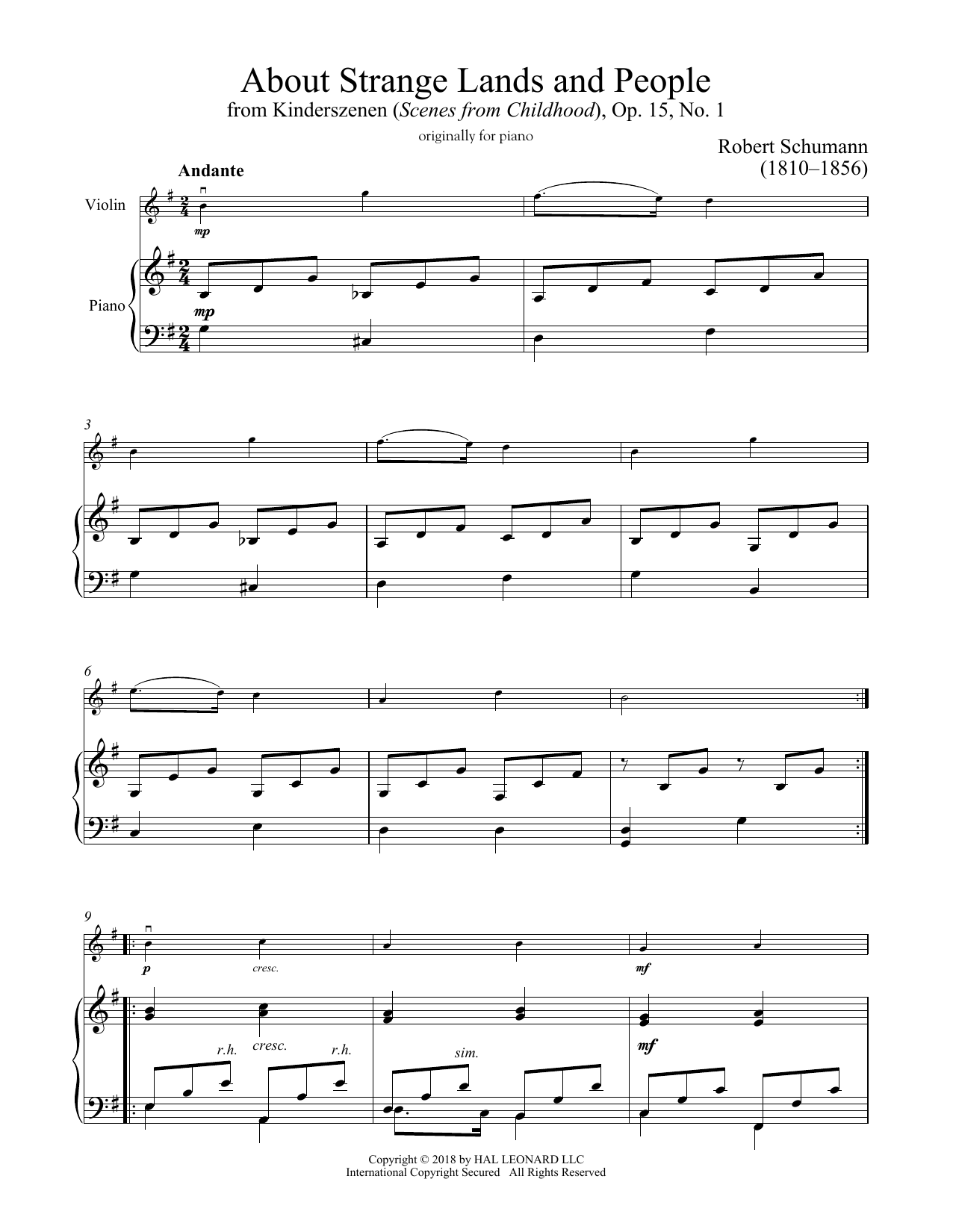
Robert Schumann (1810-1856) was a German composer and music critic who bridged the Classical and Romantic eras through his deeply expressive, harmonically adventurous works. His output spans orchestral, chamber, choral, and solo piano music, but he also devoted considerable attention to the violin, recognizing its lyrical potential and technical capabilities. Schumann's compositional approach combined rigorous formal training with emotional authenticity, influencing generations of musicians to pursue both technical mastery and interpretive depth.
Schumann's Album for the Young and related collections represent his philosophy that serious music could serve young musicians without condescension. His works for violin and piano in particular showcase a collaborative partnership between the instruments, where neither dominates but both contribute equally to a unified artistic vision. This collaborative spirit and accessible yet sophisticated musical language made his chamber works essential repertoire for developing musicians throughout the 19th century and beyond.