Of Gentle Spirit: Bells Sheet Music Preview

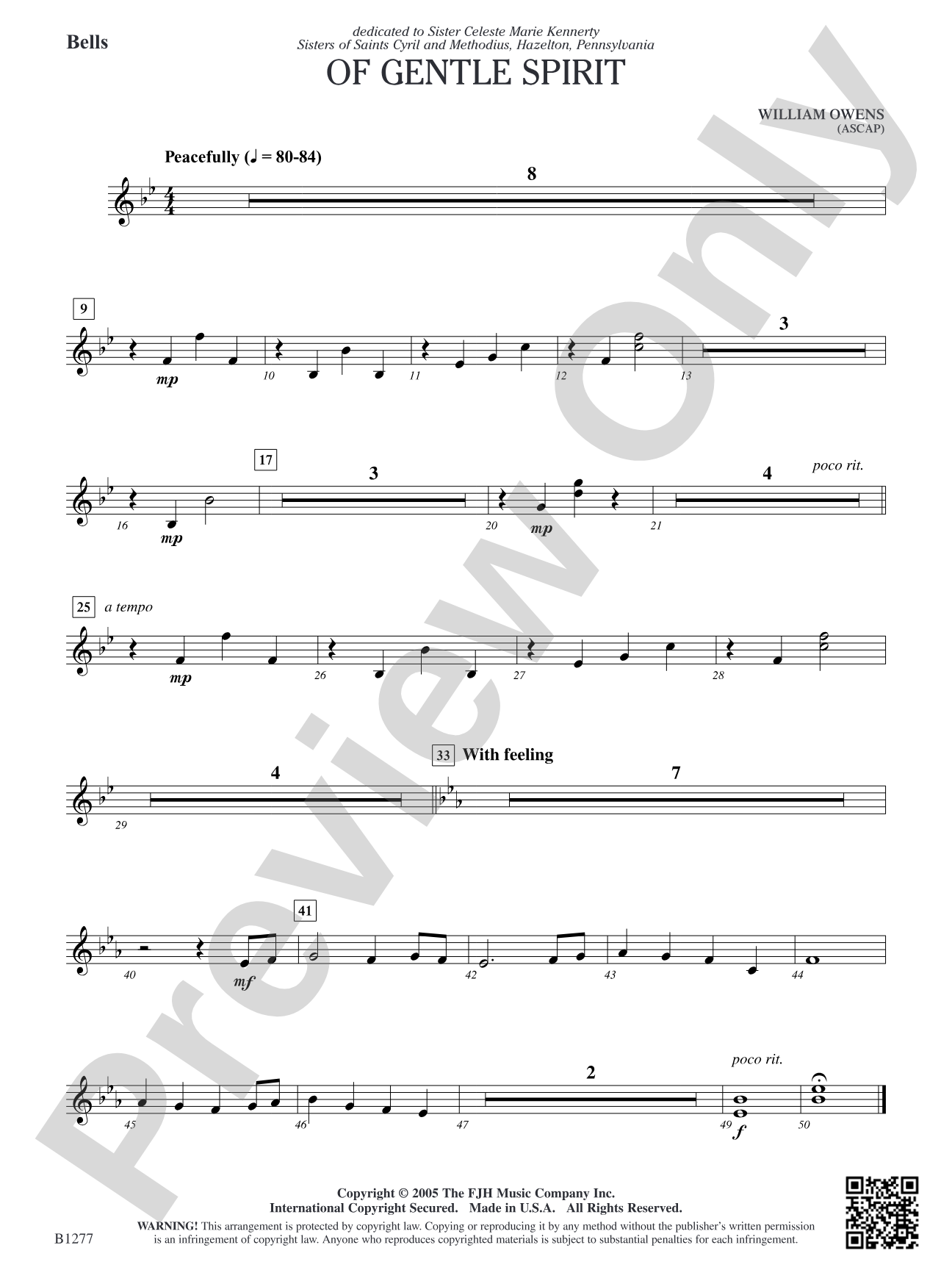
Of Gentle Spirit: Bells

By William Owens

Grade: 1

Item: 98-PC-DB1277_B

Digital Download
$7.00
Description
This emotional new work promises to be an excellent study in phrasing and dynamics. From the tender opening to the glorious key change and climax, the beautiful themes will take your audience through an array of emotions. Interesting harmonies and countermelodies make this a unique and colorful work at this grade level. Highly recommended.

Of Gentle Spirit: Bells isn't in MakeMusic Cloud just yet...but it could be. Let us know you'd like to see it, and you'll help shape what comes next. In the meantime, start a free trial and dive into thousands of interactive titles your students can play along with today.

Sample Audio
0:00
0:00
Sample Video
Additional Details
Series: FJH Beginning Band
Publisher: The FJH Music Company, Inc.
SKU: 98-PC-DB1277_B

More about this title

About the Composer: William Owens

William Owens

William Owens brings three decades of classroom experience to his composition work. A 1985 graduate of VanderCook College of Music, he has established himself as a prolific voice in young band literature, with over 300 published titles since 1993. His work appears on required music lists across North America and has been studied in educational texts as a model of practical, pedagogically sound writing for developing ensembles.

Owens has served as a clinician and conductor throughout the United States and Canada, and his contributions to the field have earned him recognition as a Distinguished Alumnus of VanderCook and a recipient of the Texas Bandmasters Association's Meritorious Achievement Award. He holds memberships in ASCAP, TMEA, and Phi Beta Mu International Bandmasters Fraternity. After 30 years directing bands in Texas, he retired in 2014 and now resides in Fort Worth with his wife, Georgia.

Why we love this

Owens writes with a clear understanding of what beginning bands need: music that teaches musicianship without overwhelming the players. The emotional arc here (tender opening, key change, climactic finish) gives students genuine expressive content to work with, not just technical exercises. At Grade 1, it's rare to find a piece this substantial in musical weight.

What to expect

The piece unfolds like a gentle conversation that gradually builds in warmth and intensity. Tender harmonies and the interweaving of countermelodies create a sense of color and sophistication that belies the accessible difficulty level. By the key change and climax, the band discovers its own power to convey genuine musical meaning.

Who it's for

Beginning concert bands looking for repertoire that combines emotional depth with accessibility. The Grade 1 level makes it ideal for middle school bands in their first year or programs working through foundational band skills.

How to get the most out of it

  • Shape the opening phrases with careful attention to the dynamic contours. Beginning players often play all dynamics at the same volume, so mark and drill the specific soft attacks and gentle releases that define the tender character.
  • Prepare the key change as a major rehearsal landmark. Have the band mark the measure number prominently and practice the transition multiple times so the modulation lands with clarity and confidence.
  • Balance the countermelodies so they support rather than overwhelm the main thematic material. This requires intentional sectional balance work and listening to how parts relate in context.
  • Use the glorious climax as a moment to reinforce ensemble unity. Even at this level, students should understand that the impact comes from everyone arriving at the peak together.

How to use it

Program this as a standalone concert piece to demonstrate your band's growing musicality to families and community members. Its emotional scope works well on a concert that mixes celebratory, energetic works with more introspective selections.

Skills your students will build

  • Shaping long phrases with dynamic control from pianissimo to forte
  • Playing countermelodies while maintaining awareness of the primary thematic line
  • Executing key changes with harmonic clarity and smooth voice leading
  • Balancing ensemble tone during climactic moments and complex harmonic textures

You May Also Like