
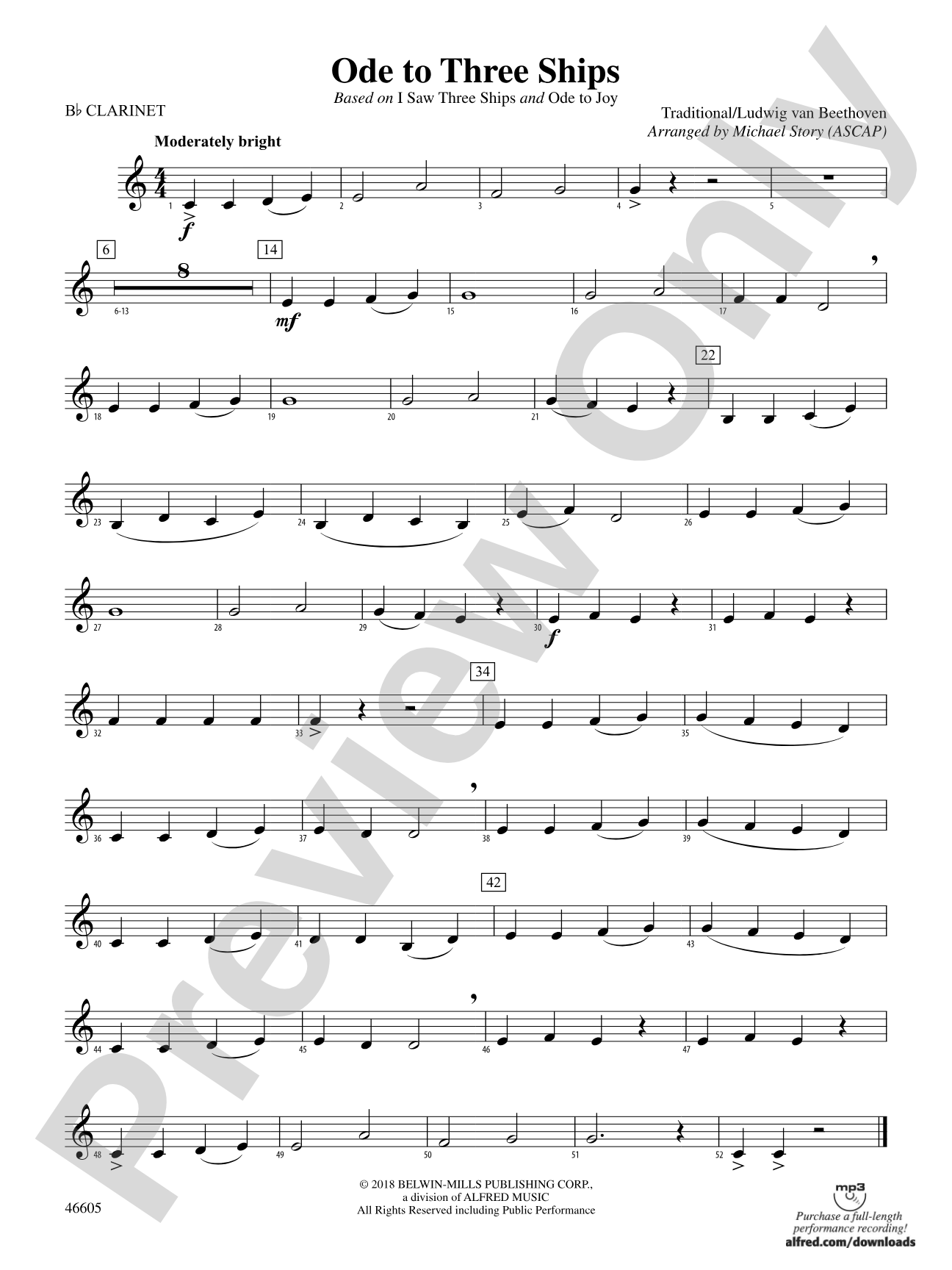

Ode to Three Ships: 1st B-flat Clarinet
Based on "I Saw Three Ships" and "Ode to Joy"
Traditional and music by Ludwig van Beethoven / arr. Michael Story
Grade: 0.5 (Very Easy)
Item: 00-PC-0018039_C1
$3.00
Pickup currently not available
Description
Imagine a holiday tune created with no key signature and using only the first few notes learned that's suitable to perform after only a few months of instruction. This arrangement is a mash-up using the popular Christmas carol "I Saw Three Ships" combined with Ludwig van Beethoven's "Ode to Joy" from his 9th Symphony. Merry first 'band' Christmas! (1:45)


Don't just read it, hear it, play along with it, and watch your students grow with it. In MakeMusic Cloud, Ode to Three Ships: 1st B-flat Clarinet comes alive with professional accompaniment, adjustable tempo, and built-in practice tools that turn solo practice into real progress.
Open in the Player
Jump straight in and assign it today.
Start Your Free Trial
Open this title and explore the full library in minutes.
Sample Audio
1
Audio File
--:--
0:00
0:00
Sample Video
Additional Details
Series:
Belwin Very Beginning Band
Publisher:
Alfred Music
Page Count:
132
SKU:
00-PC-0018039_C1
More about this title
About the Composer: Ludwig van Beethoven
Ludwig van Beethoven (1770-1827) stands as one of history's most influential composers, bridging the Classical and Romantic eras through works of unprecedented emotional depth and structural innovation. His Ninth Symphony, from which "Ode to Joy" originates, revolutionized the symphonic form by incorporating a choral finale and remains one of the most performed and recognized compositions in Western music.
For music educators, Beethoven's legacy extends beyond the concert hall. His melodic gift for writing singable, memorable lines makes his work accessible to young musicians even in simplified arrangements. The "Ode to Joy" theme in particular has become a cornerstone of music education worldwide, appearing in countless beginner band and orchestra programs as students encounter their first masterworks.
Why we love this
Michael Story has crafted an arrangement that honors Beethoven's iconic melody while respecting the real limitations of musicians in their first months of instruction. The pairing with "I Saw Three Ships" creates a natural holiday context that keeps young players engaged, and the deliberate choice to avoid a key signature removes a significant cognitive barrier for absolute beginners. Your newest band members get to perform genuine masterwork material alongside a beloved carol, creating an immediate sense of accomplishment that builds confidence and retention.
What to expect
The arrangement radiates warmth and familiarity. Starting without a key signature and using only the foundational notes students know prevents technical anxiety while the beloved melodies create immediate recognition and joy. There's a genuine spirit of celebration here, a musical affirmation that beginning musicians can play together on something that matters.
Who it's for
This score and parts set is designed for first-year band students, typically in their third to sixth month of instruction. It works equally well in middle school beginning band programs, elementary school advanced ensembles, or as an engaging piece for private studio instructors introducing group performance contexts to young students.
How to get the most out of it
- Establish a steady pulse before rehearsals begin. These simple melodies succeed when the band locks into a consistent tempo, so conduct with absolute clarity and consider asking students to tap their feet during early run-throughs.
- Balance your melody voices carefully. With such exposed parts in a Grade 0.5 arrangement, any squeaks or cracks become noticeable, so give extra attention to young first-chair players and offer them confidence-building solo moments in sectional rehearsals.
- Use the short duration (1:45) as an advantage. This arrangement is long enough to feel like a complete performance but short enough that young players can maintain focus and energy from downbeat to final note.
How to use it
This piece is ideal for a winter or holiday concert as your opening number, setting a celebratory tone while the audience immediately recognizes the familiar "Ode to Joy" theme. It also works beautifully as a confidence-building performance for a family night or pep band event where young musicians need a guaranteed success. Consider performing it early in the season (November or early December) when students have had just enough rehearsal time to master it solidly.
Skills your students will build
- Reading and playing without a key signature
- Executing simple rhythmic patterns in 4/4 time
- Playing sustained whole notes and half notes with consistent tone
- Following a conductor's beat in an ensemble setting
- Balancing melody and accompaniment parts
- Performing recognizable masterwork material with stylistic integrity