Ode to Joy: Trombone 1 Sheet Music Preview

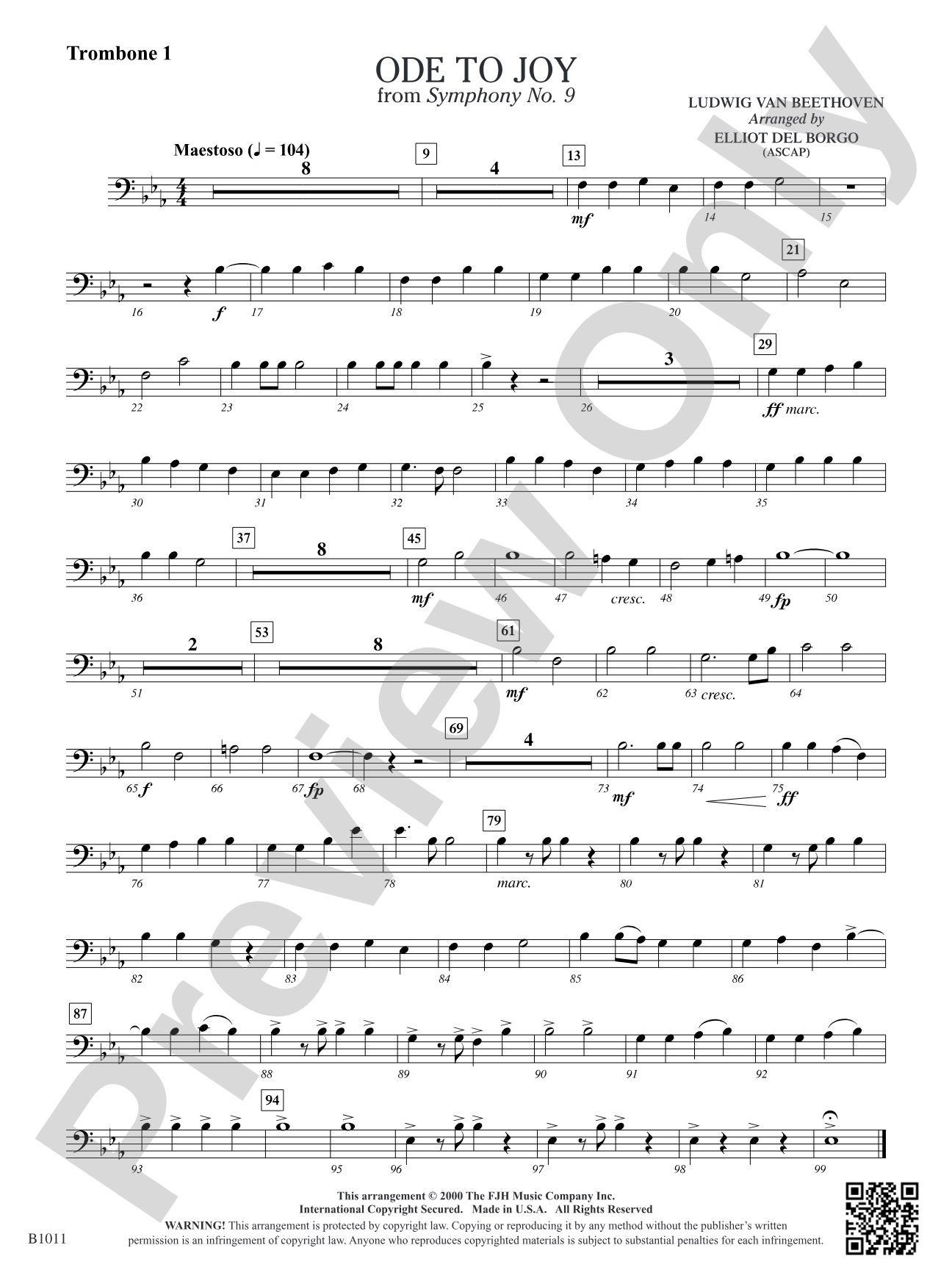
Ode to Joy: Trombone 1

By Ludwig van Beethoven / arr. Elliot Del Borgo

Grade: 2

Item: 98-PC-DB1011_TN1

Digital Download
$7.00
Description
This arrangement of the well-known Ninth Symphony melody is scored in various voices throughout. The arranger has skillfully scored the melodic line in many textures to create an interesting work that develops several times before the final cadence. A great concert closer. (3:50)

Ode to Joy: Trombone 1 isn't in MakeMusic Cloud just yet...but it could be. Let us know you'd like to see it, and you'll help shape what comes next. In the meantime, start a free trial and dive into thousands of interactive titles your students can play along with today.

Sample Audio
0:00
0:00
Sample Video
Additional Details
Series: FJH Young Band
Publisher: The FJH Music Company, Inc.
SKU: 98-PC-DB1011_TN1

More about this title

About the Composer: Ludwig van Beethoven

Beethoven's Ninth Symphony stands as one of the most consequential works in Western music, and its final movement contains one of the world's most recognizable melodies. Written late in the composer's life when he was completely deaf, the symphony represents his final artistic statement and has become a universal symbol of human triumph and joy. For music educators, Beethoven's structural clarity and emotional directness make his work enduringly valuable; students can study how a simple, singable idea develops through orchestration and harmonic enrichment.

Why we love this

Del Borgo's orchestration respects the melody's iconic status while offering enough textural variety to keep students engaged across a three-minute performance. The Grade 2 accessibility means this familiar masterwork reaches ensembles that might otherwise skip it entirely, and ending a concert with this piece leaves audiences with genuine joy rather than polite applause.

What to expect

Uplifting and purposeful without sentimentality. The piece unfolds with natural momentum as the familiar melody returns in fresh instrumental combinations, each appearance adding textural richness while maintaining the straightforward emotional clarity Beethoven intended. By the final cadence, your students will feel they've performed something genuinely significant.

Who it's for

Concert bands at the high school freshman or solid middle school level who want to program a universally recognized work without sacrificing musicality. This arrangement also serves directors looking to close a concert on an unambiguous high note, especially effective for spring performances or graduation-adjacent programs.

How to get the most out of it

  • Balance the melodic line across different sections as it passes between voices; mark your parts clearly so students hear where the tune lives at any given moment.
  • Take the full three minutes and a half; resist the urge to rush this piece even though familiarity with the melody can tempt faster tempos.
  • Shape each iteration of the theme differently using dynamic contrast rather than only tempo changes; the arrangement's strength lies in its varied scoring.
  • Listen carefully to your low brass and woodwinds during the accompaniment passages; they carry harmonic weight that supports the top line's prominence.

How to use it

Position this as a concert closer when you want the audience leaving on an emotionally secure note. It pairs well with contemporary works or challenging modern pieces earlier in the program, offering a satisfying counterbalance. The three-minute-fifty-second duration fits neatly between longer feature works without creating a lopsided program arc.

Skills your students will build

  • Voice leading across different instrumental sections
  • Shaping a melodic line through varied orchestration
  • Maintaining ensemble balance when the primary theme moves between parts
  • Phrasing and dynamic control in a developmental structure

You May Also Like