
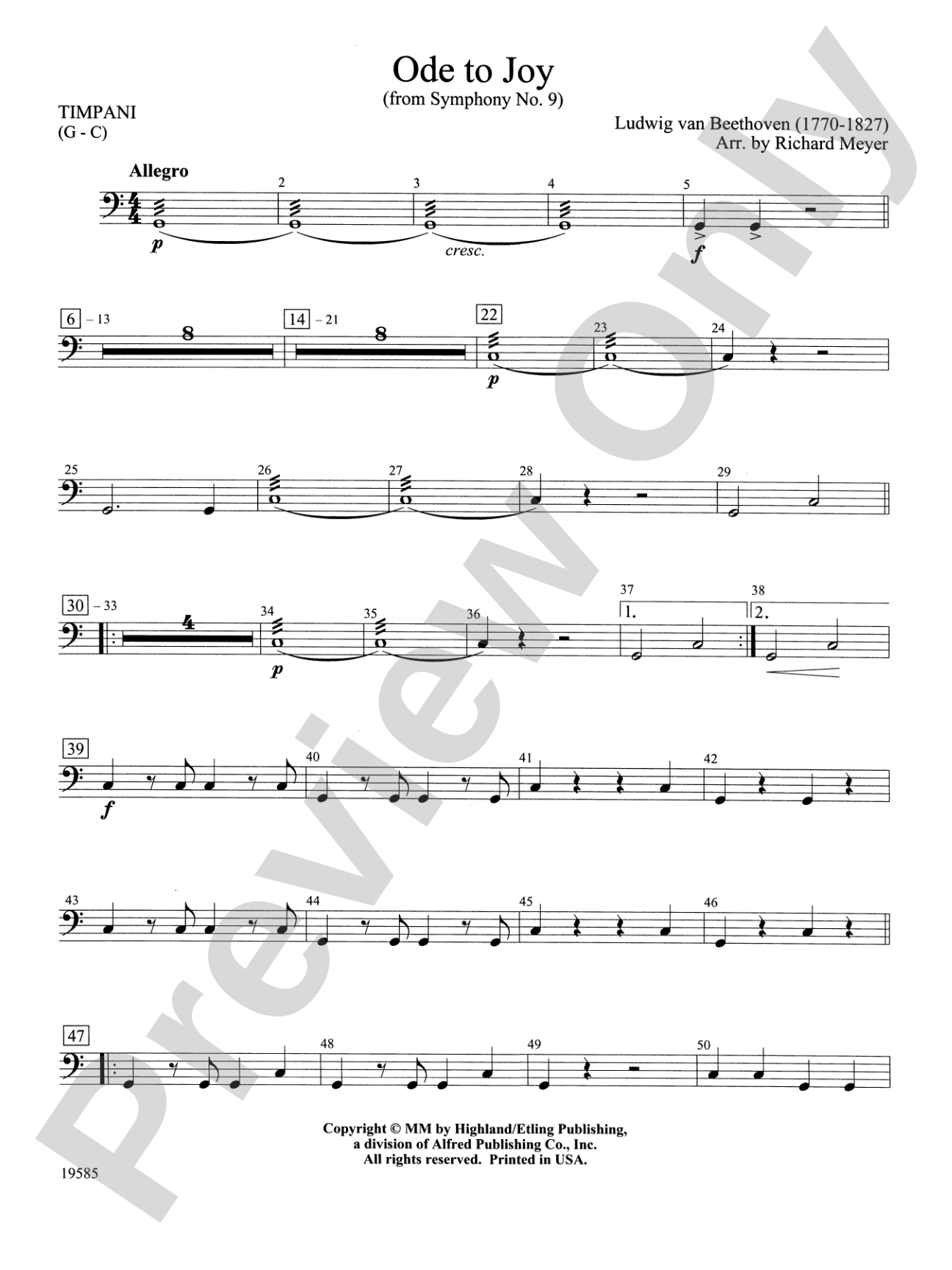

Ode to Joy from Symphony No. 9: Timpani
(from Symphony No. 9)
By Ludwig van Beethoven / arr. Richard Meyer
Grade: 1
Item: 00-PC-0000347_TMP
$3.00
Pickup currently not available
Description
At last-Beethoven's most famous melody in a full-orchestra arrangement for young, less experienced winds, strings and percussionists. Faithful to the original in orchestration and texture, this full-sounding version has been transposed and altered to give all of your students a rewarding experience. A great concert opener or closer! A Federation Festivals 2020-2024 selection. (3:30)


Don't just read it, hear it, play along with it, and watch your students grow with it. In MakeMusic Cloud, Ode to Joy from Symphony No. 9: Timpani comes alive with professional accompaniment, adjustable tempo, and built-in practice tools that turn solo practice into real progress.
Open in the Player
Jump straight in and assign it today.
Start Your Free Trial
Open this title and explore the full library in minutes.
Sample Audio
1
Audio File
--:--
0:00
0:00
Sample Video
Additional Details
Series:
Highland/Etling First Philharmonic
Publisher:
Alfred Music
Page Count:
200
SKU:
00-PC-0000347_TMP
More about this title
About the Composer: Ludwig van Beethoven
Ludwig van Beethoven (1770-1827) revolutionized orchestral music by expanding the symphony into a vehicle for philosophical and emotional depth. His nine symphonies remain cornerstones of the concert repertoire, studied and performed by orchestras of every level because they balance structural sophistication with immediate emotional power.
The final movement of Symphony No. 9, set to Friedrich Schiller's "Ode to Joy," stands as one of the most recognizable melodies in Western music. Beethoven's decision to add voices to a purely instrumental form was radical for his time, and the work's message of universal brotherhood continues to resonate in concert halls, classrooms, and cultural ceremonies worldwide.
Why we love this
Richard Meyer's arrangement captures the majesty and forward momentum of Beethoven's original without overwhelming young musicians. The transposition and scoring choices ensure every section has meaningful material, which means your students feel like they're part of something grand rather than relegated to filler parts. As a festival-selected work, it carries the weight of a true masterpiece while remaining accessible to orchestras still building their technical foundation.
What to expect
Radiant and affirmative. The melody unfolds with the inevitability of something universally true, supported by harmonies that feel both sturdy and warm. There is triumph here, but it arrives without aggression—instead, a quiet confidence that everyone listening understands the same fundamental human emotion.
Who it's for
Grade 1 orchestras that want to program a recognized, meaningful work without struggling against overly complex orchestration or exposed technical passages. Conductors seeking repertoire that works equally well as a concert opener (to command attention immediately) or closer (to send the audience home uplifted).
How to get the most out of it
- Conduct the opening string statement with clarity and warmth to establish the melody's singing quality. This invites your winds and lower voices to listen and match the phrasing when they enter.
- Balance the familiar melody against the accompaniment by reminding players that this tune has carried joy across centuries. Encourage slightly fuller tone from whoever has it, without drowning out harmonic support.
- Build momentum through the middle section by maintaining a steady, confident pulse. Young orchestras often rush when excitement builds, so anchor the tempo with your bass instruments.
- Shape the final statement generously. This is the payoff moment for your ensemble and audience alike; give it room to breathe and land with conviction.
How to use it
Open your concert with this piece to establish an ambitious, joyful tone that signals your ensemble's capability to handle great music. Alternatively, close with it to leave your audience with Beethoven's message of universal joy ringing in their ears. Either placement works well alongside contemporary works, as the arrangement's clarity and accessibility create natural contrast with modern compositional language.
Skills your students will build
- Ensemble balance and listening (melody against accompaniment)
- Sustained legato phrasing across phrase boundaries
- Dynamic control in supporting voice parts
- Familiarity with orchestral texture and tutti sections
- Conducting interpretation and ensemble unity at Grade 1 level