Ode to Joy: Cello Sheet Music Preview

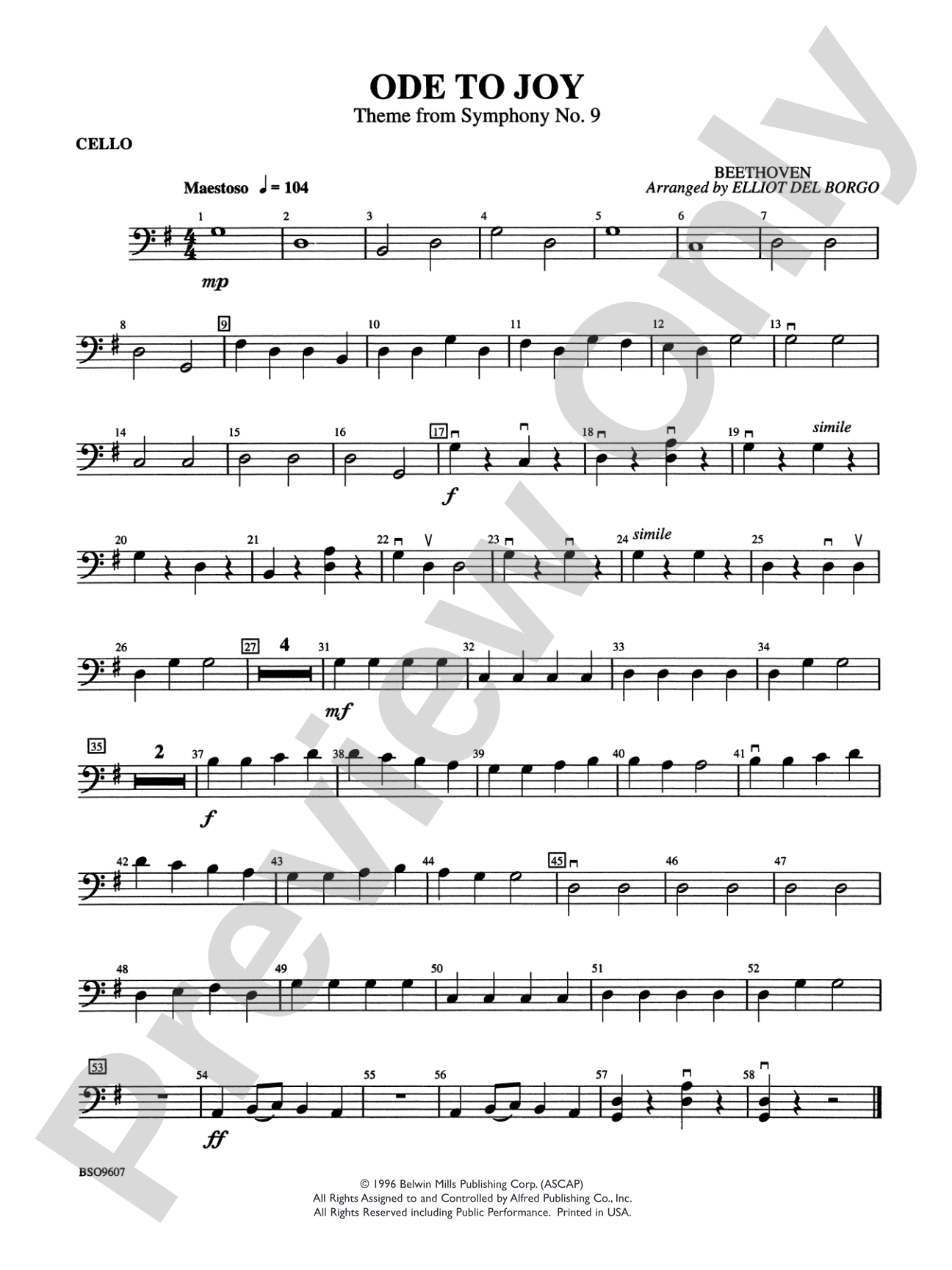
Ode to Joy: Cello

By Ludwig van Beethoven / arr. Elliot Del Borgo

Grade: 3.5

Item: 00-PC-0002251_VC1

Digital Download
$5.99
Description
This theme from the last movement of Beethoven's Symphony No. 9 has been heard in all musical mediums. Now Elliot DelBorgo has scored this famous melody for strings. Its well-known nature guarantees a positive and successful performance.

Don't just read it, hear it, play along with it, and watch your students grow with it. In MakeMusic Cloud, Ode to Joy: Cello comes alive with professional accompaniment, adjustable tempo, and built-in practice tools that turn solo practice into real progress.

Sample Audio
0:00
0:00
Sample Video
Additional Details
Series: Belwin Intermediate String Orchestra
Publisher: Alfred Music
Page Count: 38
SKU: 00-PC-0002251_VC1

More about this title

About the Composer: Ludwig van Beethoven

Beethoven composed his Ninth Symphony in 1824 while almost completely deaf, making the final movement's choral setting of Friedrich Schiller's "Ode to Joy" one of music's most remarkable achievements. The symphony stands as a watershed moment in Western music, bridging Classical and Romantic periods while establishing the orchestra as a vehicle for profound philosophical expression.

For music educators, Beethoven's output offers an inexhaustible resource for teaching harmonic innovation, structural clarity, and the expressive possibilities of instrumental writing. His willingness to expand traditional forms and push ensemble capabilities has shaped how we think about composition and orchestration for nearly two centuries.

Why we love this

DelBorgo's orchestration preserves the directness and emotional impact of Beethoven's original while making it immediately accessible to developing string players. A melody this universally recognized carries built-in momentum in rehearsal and performance, freeing you to focus on ensemble balance, intonation, and the subtle dynamic shaping that makes this theme sing rather than merely sound familiar.

What to expect

This music carries the weight of human aspiration and unity despite its straightforward presentation. Even when played with modest string forces, the melody conveys the grandeur and optimism Beethoven intended, creating a moment of genuine connection between performers and audience.

Who it's for

String orchestras at the intermediate level seeking repertoire that builds solid musicianship without requiring advanced technical demands. Directors preparing festival or contest programs will find this arrangement offers the dual advantage of a piece students genuinely recognize and one that sounds polished with reasonable rehearsal investment.

How to get the most out of it

  • Resist the urge to rush this melody; the broadness and dignity of the theme depend on each phrase breathing naturally without pushing ahead
  • Balance the first violin line carefully against the harmonic support underneath so the tune remains the focal point rather than getting buried
  • Shape the dynamic arc across entire phrases rather than hitting isolated peak moments; this approach lets the familiar melody feel fresh
  • Work the intonation of the inner voices with particular attention, as listeners' ears are attuned to this melody and any pitch wavering in the accompaniment becomes noticeable

How to use it

Position this as a centerpiece finale to a concert that moves from lighter material toward works of greater substance, or use it as the emotional anchor of a program built around Classical and early Romantic themes. Its immediate recognizability also makes it valuable for community concerts or performances where you want to open conversations about how composers reshape masterworks across different instrumental combinations.

Skills your students will build

  • Sustaining long melodic phrases with consistent tone and vibrato
  • Balancing parts to highlight the primary melody against harmonic accompaniment
  • Intonation control in four-part and five-part string writing
  • Ensemble listening and blend within a predominantly homophonic texture
  • Dynamic shaping across full phrases rather than beat-by-beat
  • Maintaining steady tempo and rhythmic security in supporting parts

You May Also Like