Ode to Joy: Easy Piano Digital Sheet Music

Ode to Joy: Easy Piano Digital Sheet Music

Ludwig van Beethoven

Item: 00-PS-0007015

Digital Download
$3.99
Description

Ode to Joy: Easy Piano Digital Sheet Music isn't in MakeMusic Cloud just yet...but it could be. Let us know you'd like to see it, and you'll help shape what comes next. In the meantime, start a free trial and dive into thousands of interactive titles your students can play along with today.

Sample Audio
No sample audio found.
Sample Video
Additional Details
SKU: 00-PS-0007015

More about this title

About the Creator: Ludwig van Beethoven

Ludwig van Beethoven (1770, 1827) fundamentally reshaped what symphonic music could express. His Ninth Symphony stands as one of the most consequential works in the Western canon, combining instrumental drama with the human voice in ways that felt revolutionary to his contemporaries and continue to move audiences today.

The final movement's "Ode to Joy" has transcended its original context to become a global symbol of human connection and celebration. For music educators, this melody offers something rare: a piece of genuine historical weight that remains accessible to beginners, making it a natural bridge between early keyboard study and the classical repertoire.

Why we love this

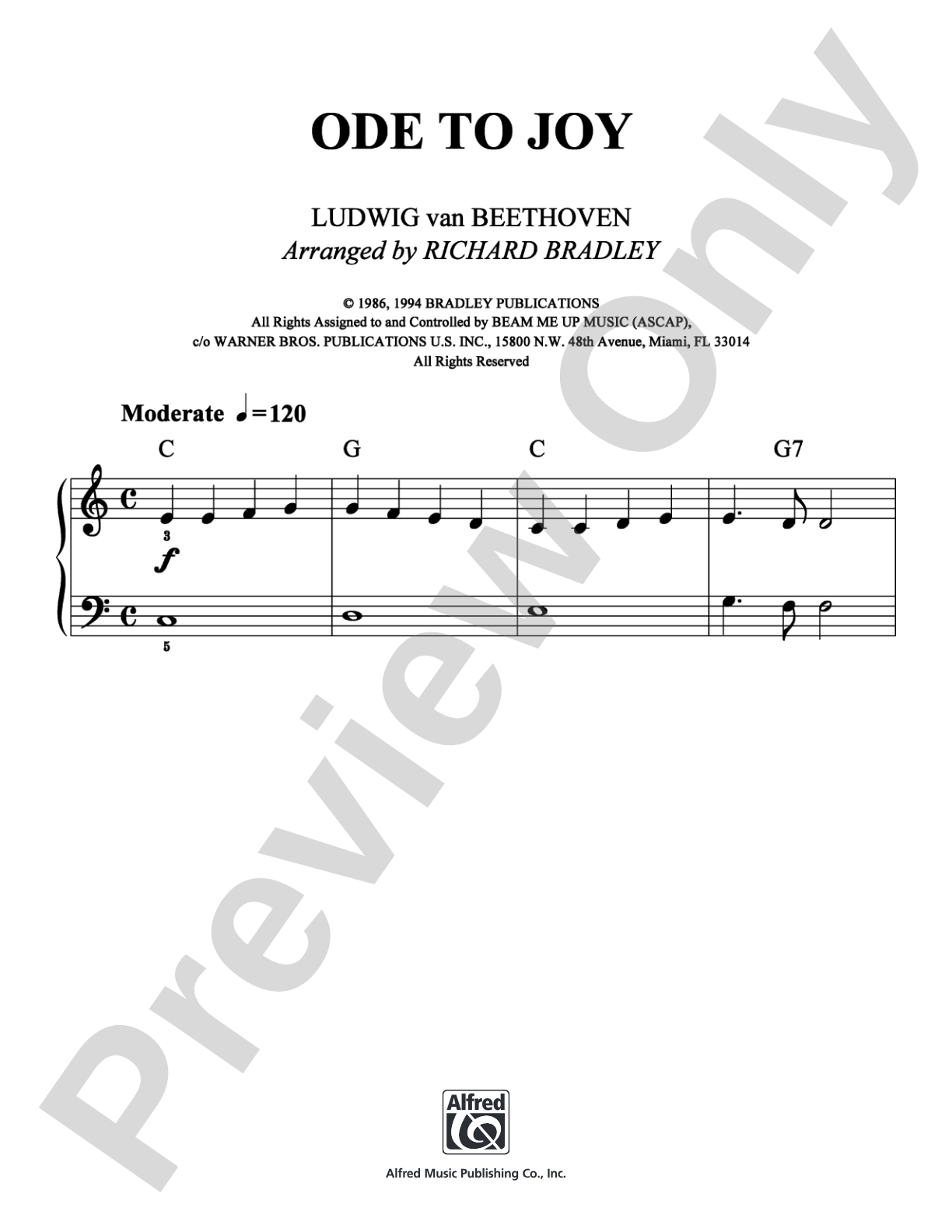
This arrangement captures the infectious optimism of Beethoven's most beloved melody in a form that young pianists can actually play without frustration. The easy voicing keeps both hands engaged and musical, avoiding the trap of reducing it to a skeletal right-hand line. Students get to experience one of classical music's most powerful moments of joy from day one.

What to expect

Bright, expansive, and deeply human. The melody moves with a natural grace that feels both celebratory and intimate, inviting the listener into a moment of universal connection.

Who it's for

Early-intermediate pianists ready to play a recognizable, emotionally satisfying piece without technical demands beyond their reach. This works for students in their first year or two of lessons who want to experience repertoire with real weight.

How to get the most out of it

  • Sustain the longer notes fully; resist the urge to rush through the phrase. The melody's power comes from giving it room to breathe.
  • Keep the accompaniment consistent and even in volume so the melody sings above it naturally.
  • Practice hands separately until the coordination feels automatic, then focus on shaping the overall arc of each four-bar phrase.

How to use it

Program this for a spring or end-of-year recital where you want a genuine emotional high point that audiences recognize and love. It pairs beautifully with shorter character pieces and gives students confidence in their progress.

Skills your students will build

  • Playing consistent accompaniment patterns in the left hand while maintaining melodic independence
  • Shaping longer musical phrases across multiple measures
  • Pedaling choices to support harmonic changes
  • Legato touch and voicing to bring out melody within a fuller texture

You May Also Like