Ode to Joy: Lead Sheet Digital Sheet Music

Ode to Joy: Lead Sheet Digital Sheet Music

Ludwig van Beethoven

Item: 00-PS-0000219

Digital Download
$1.99
Description

Ode to Joy: Lead Sheet Digital Sheet Music isn't in MakeMusic Cloud just yet...but it could be. Let us know you'd like to see it, and you'll help shape what comes next. In the meantime, start a free trial and dive into thousands of interactive titles your students can play along with today.

Sample Audio
No sample audio found.
Sample Video
Additional Details
SKU: 00-PS-0000219

More about this title

About the Composer: Ludwig van Beethoven

Ludwig van Beethoven (1770-1827) stands as one of history's most transformative composers, bridging the Classical and Romantic eras while fundamentally expanding what instrumental music could express. His nine symphonies, thirty-two piano sonatas, and chamber works established new standards for structural ambition and emotional depth. Though he became profoundly deaf in his later years, he continued composing at the highest level, creating some of the most spiritually resonant music ever written.

For music educators, Beethoven's work remains essential. His melodies are instantly recognizable and emotionally direct, making them powerful teaching tools. The "Ode to Joy" theme in particular has become a global symbol of human connection and optimism, appearing in concerts, celebrations, and educational settings worldwide. His compositional clarity and harmonic innovation continue to inspire students across all levels.

Why we love this

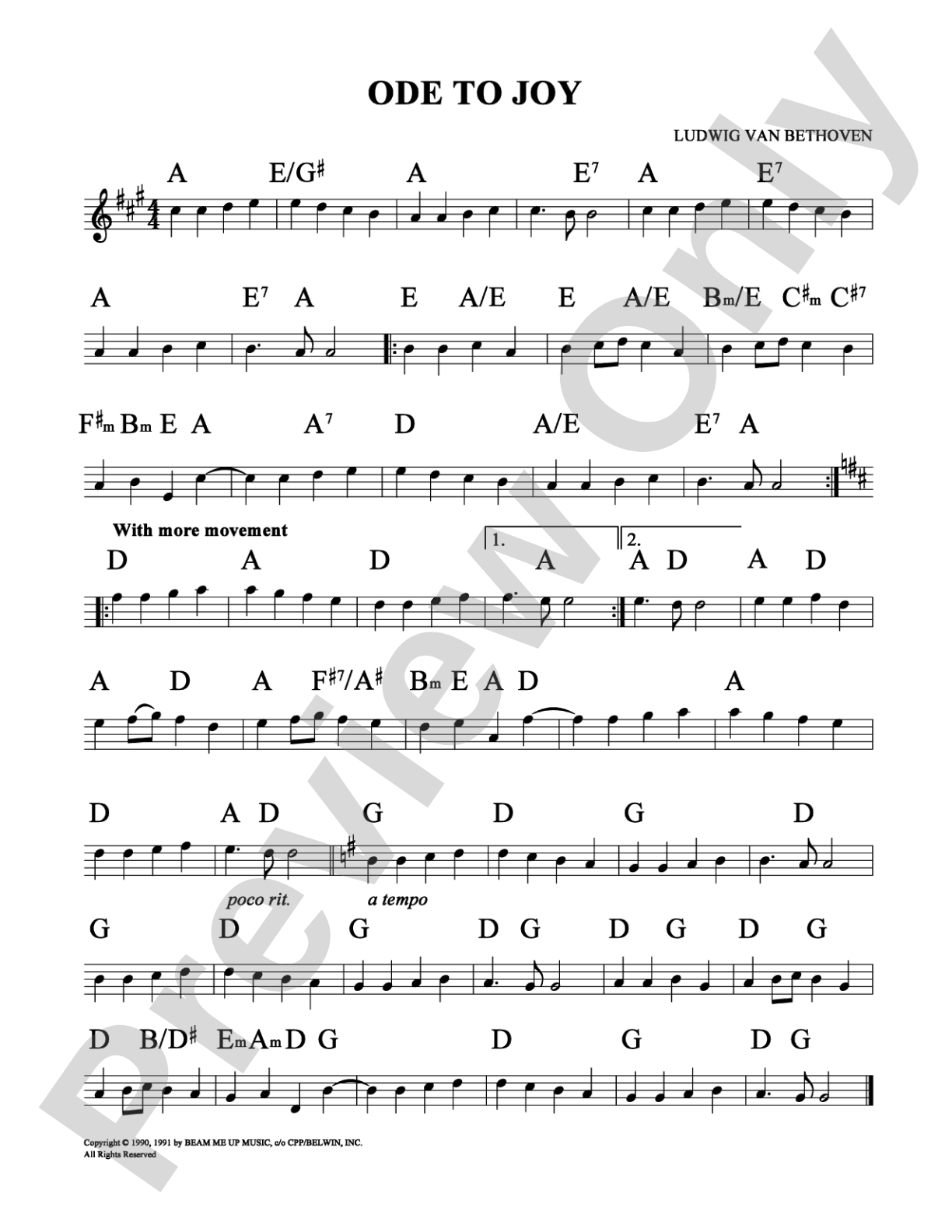
This is the melody that teaches itself. The soaring, optimistic character of "Ode to Joy" works as a jazz standard, a pop arrangement, or a classical straight reading because Beethoven's writing is so inherently musical. Lead sheet format makes it accessible to jazz ensembles, small combos, and improvising musicians while preserving the integrity of one of classical music's most beloved themes.

What to expect

Beethoven's "Ode to Joy" radiates hope and celebration. The melody climbs with purpose, settling into phrases that feel inevitable yet fresh. There's an earthy warmth in the harmony despite the grand conception, making the piece feel both monumental and deeply human.

Who it's for

Lead sheet arrangements of "Ode to Joy" serve jazz ensembles, improvisation classes, small jazz combos, and any musicians who want to explore this melody beyond its classical context. Pianists, guitarists, and horn players will appreciate the chord symbols and melodic line for comping and soloing.

How to get the most out of it

  • Shape the melody in two-bar phrases, letting each rise and fall breathe naturally rather than treating it as a constant forward push.
  • The leap from the opening ascending figure into the sustained note on "Joy" deserves weight; let that arrival land.
  • Experiment with the groove and feel appropriate to your ensemble context. This melody adapts beautifully to swing, Latin, ballad, and even funk interpretations while remaining recognizable.
  • Harmonically, Beethoven's progression is strong but straightforward. Use that clarity to feature the melody without over-embellishing on first readings.

How to use it

This lead sheet works beautifully as a jazz ensemble feature or as a bridge piece connecting classical and contemporary styles in a mixed concert. Pair it with other recognizable classical melodies in jazz arrangements to build audience engagement, or use it as a standalone statement piece that anchors a program thematically.

Skills your students will build

  • Reading and interpreting lead sheet notation with chord symbols
  • Understanding harmonic progression and functional harmony in a familiar melodic context
  • Developing improvisational approaches to a recognizable classical theme
  • Comping skills for pianists and guitarists in ensemble settings
  • Phrasing a lyrical melody with attention to breath and expression

You May Also Like