Ode to Joy: Piano/Vocal/Chords Digital Sheet Music

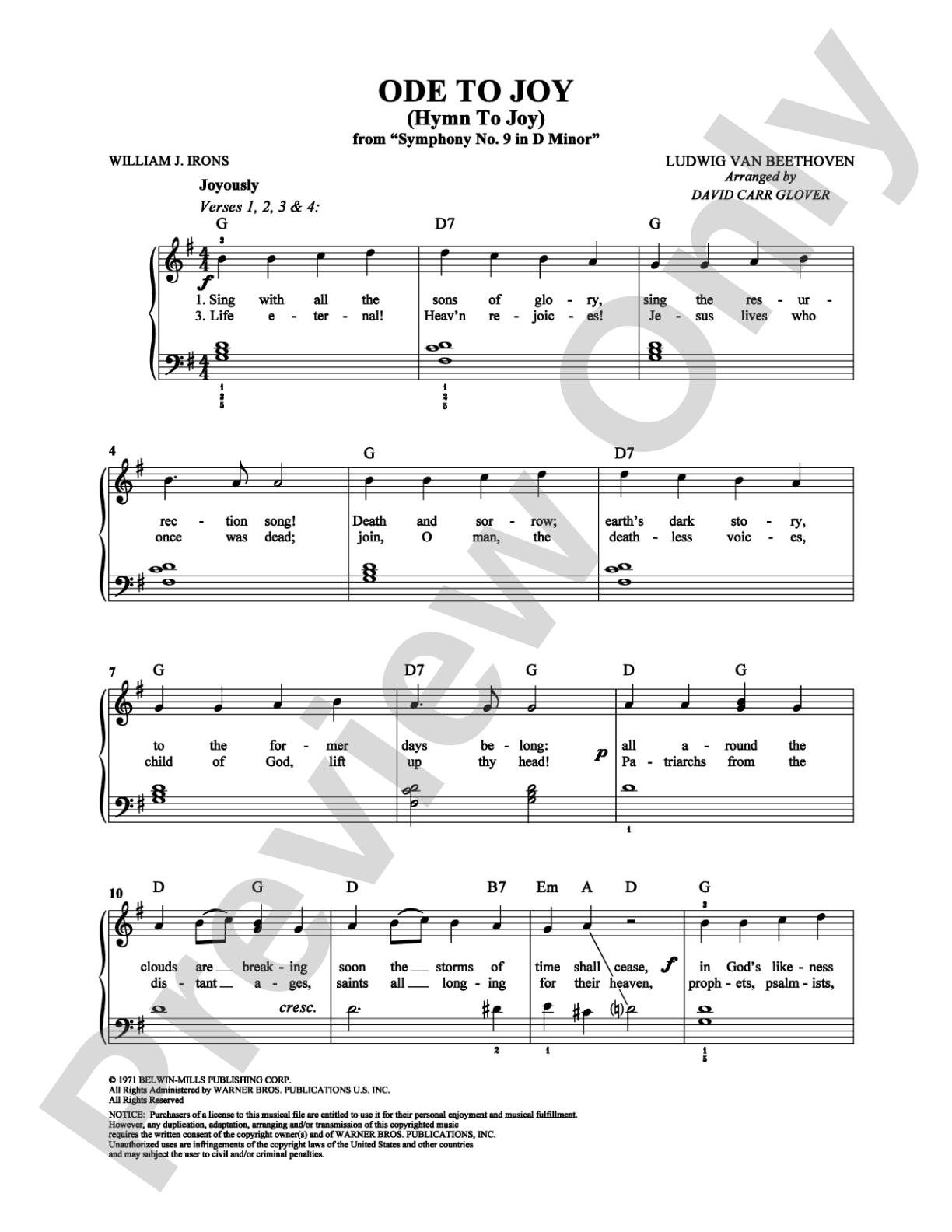
Ode to Joy: Piano/Vocal/Chords Digital Sheet Music

Ludwig van Beethoven

Item: 00-PS-0000218

Digital Download
$3.99
Description

Ode to Joy: Piano/Vocal/Chords Digital Sheet Music isn't in MakeMusic Cloud just yet...but it could be. Let us know you'd like to see it, and you'll help shape what comes next. In the meantime, start a free trial and dive into thousands of interactive titles your students can play along with today.

Sample Audio
No sample audio found.
Sample Video
Additional Details
SKU: 00-PS-0000218

More about this title

About the Composer: Ludwig van Beethoven

Ludwig van Beethoven (1770-1827) bridged the Classical and Romantic eras, expanding the emotional and structural possibilities of nearly every genre he touched. His late works, including the Ninth Symphony from which this melody originates, represent his most visionary writing; composed while deaf, they stand as monuments to artistic persistence and imagination. For music educators, Beethoven's catalog offers unmatched opportunities to explore harmonic innovation, formal architecture, and the relationship between text and music.

Why we love this

This arrangement gives students and performers access to one of the world's most recognizable melodies in a format that works for mixed ensembles. The piano/vocal/chord layout serves both singers who want harmonic context and accompanists seeking a clear roadmap, making it equally valuable in rehearsal and performance.

What to expect

The melody carries profound optimism and dignity; its opening ascent feels inevitable and affirming, with a character that is both intimate and grand. Whether sung softly or with full voice, it carries the weight of Beethoven's late-period vision: joyful not through lightness but through hard-won conviction.

Who it's for

This arrangement serves singers preparing for recitals or classroom performances, piano students developing accompaniment skills, and educators looking for a universally known melody to teach vocal line independence and harmonic awareness. It works for anyone from high school vocalists through adult singers seeking a culturally significant piece.

How to get the most out of it

  • Shape the melody with intention at the phrase level rather than note by note; this tune rewards long, singing lines that build toward structural peaks.
  • Balance the vocal line so it projects over the piano without forcing; the melody's inherent strength carries the music when supported rather than pushed.
  • Explore the harmonic colors in the chord symbols; they offer expressive opportunities for dynamic and registral choices in accompaniment.

How to use it

Program this as an encore or as part of a classical vocal recital where it can anchor a themed set on joy, celebration, or the Romantic era. Its familiarity makes it a powerful choice for community or benefit concerts where audience connection matters, while its musical sophistication keeps it fresh for informed listeners.

Skills your students will build

  • Sustaining long melodic phrases across multiple measures
  • Interpreting chord symbols and understanding harmonic progression
  • Balancing vocal independence with piano accompaniment
  • Projecting a vocal line with clarity and intention
  • Connecting text inflection to musical gesture

You May Also Like