

Ode to Joy: String Orchestra Conductor Score & Parts
By Ludwig van Beethoven / arr. Bob Cerulli
Grade: 1
Item: 00-PK-0006049

$46.00
Pickup currently not available
Buy Extra Parts (Digital PDF Download)
| Product | Price | Quantity |
|---|---|---|
| Ode to Joy: Score | $8.00 | |
| Ode to Joy: 1st Violin | $5.99 | |
| Ode to Joy: 2nd Violin | $5.99 | |
| Ode to Joy: 3rd Violin (Viola [TC]) | $5.99 | |
| Ode to Joy: Viola | $5.99 | |
| Ode to Joy: Cello | $5.99 | |
| Ode to Joy: String Bass | $5.99 |
Parts Added to Cart!
Description
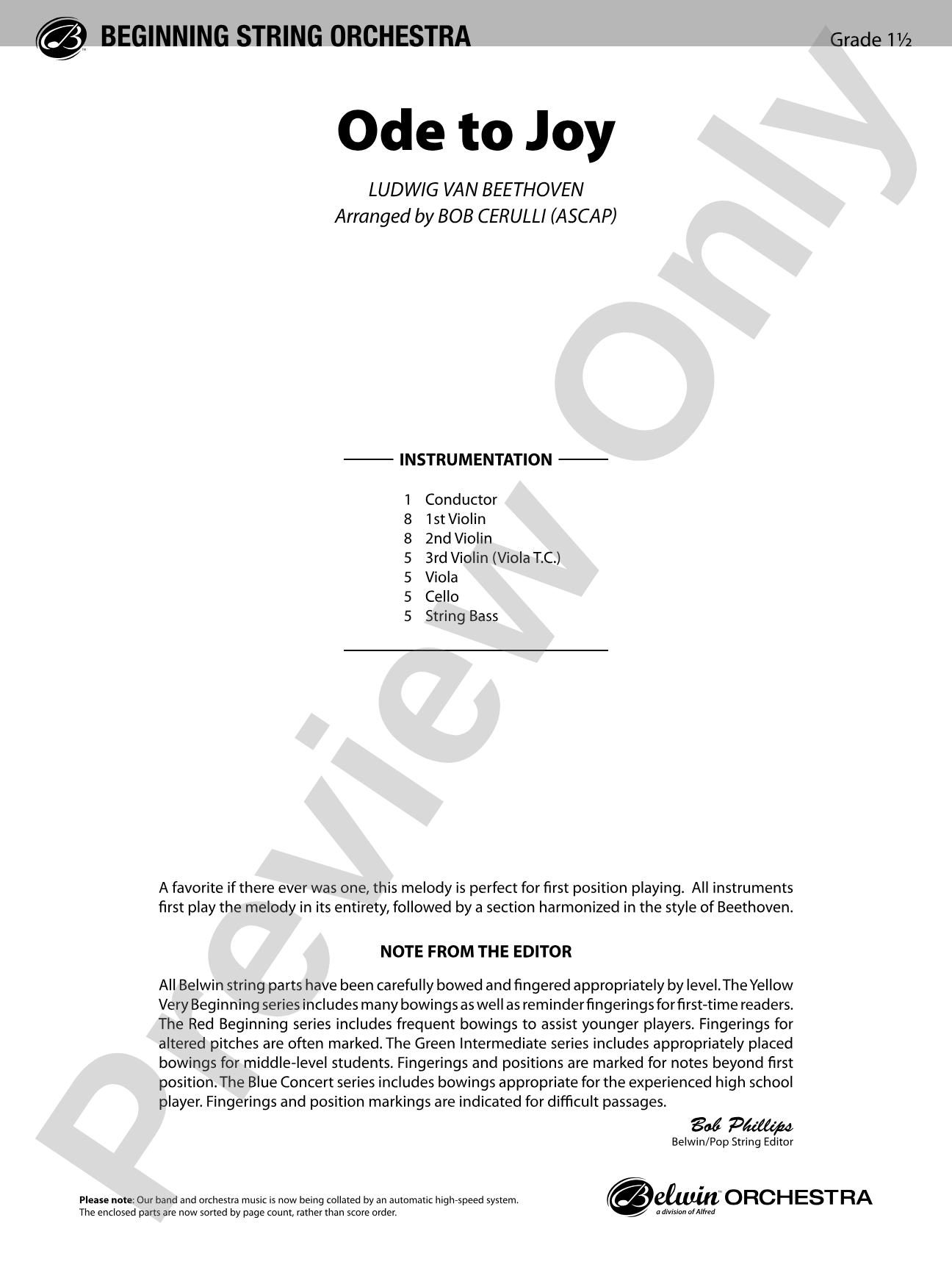
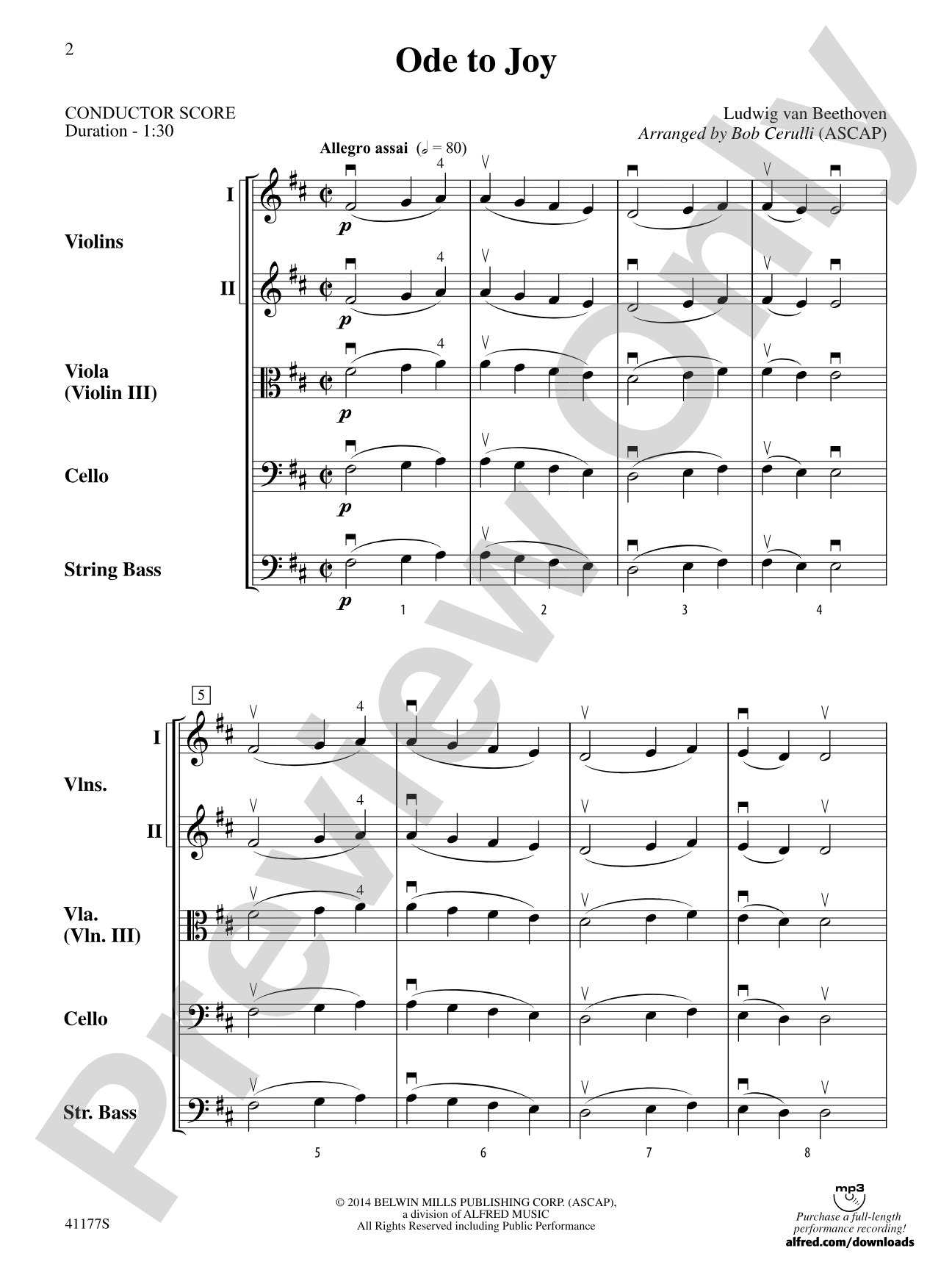
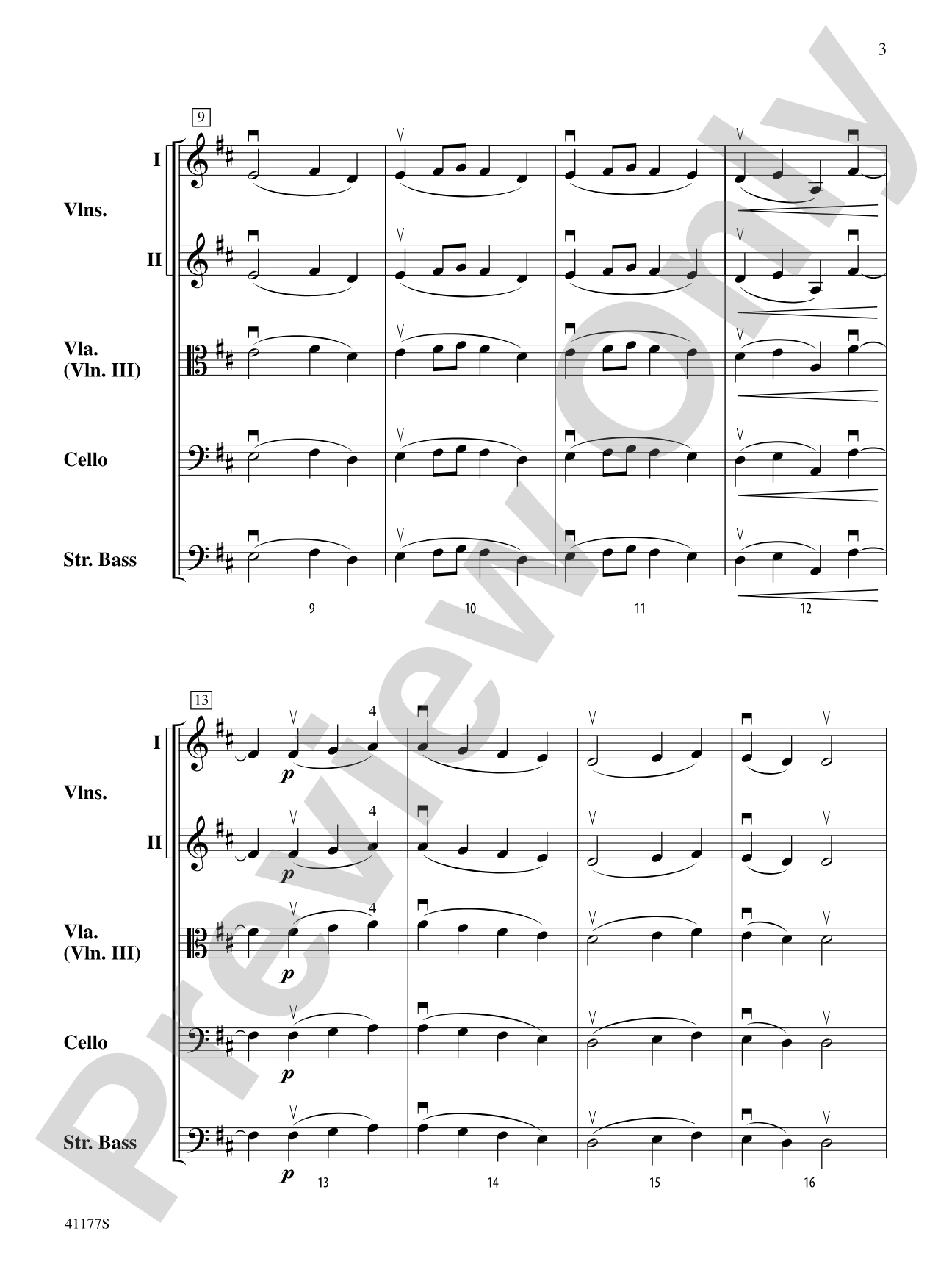
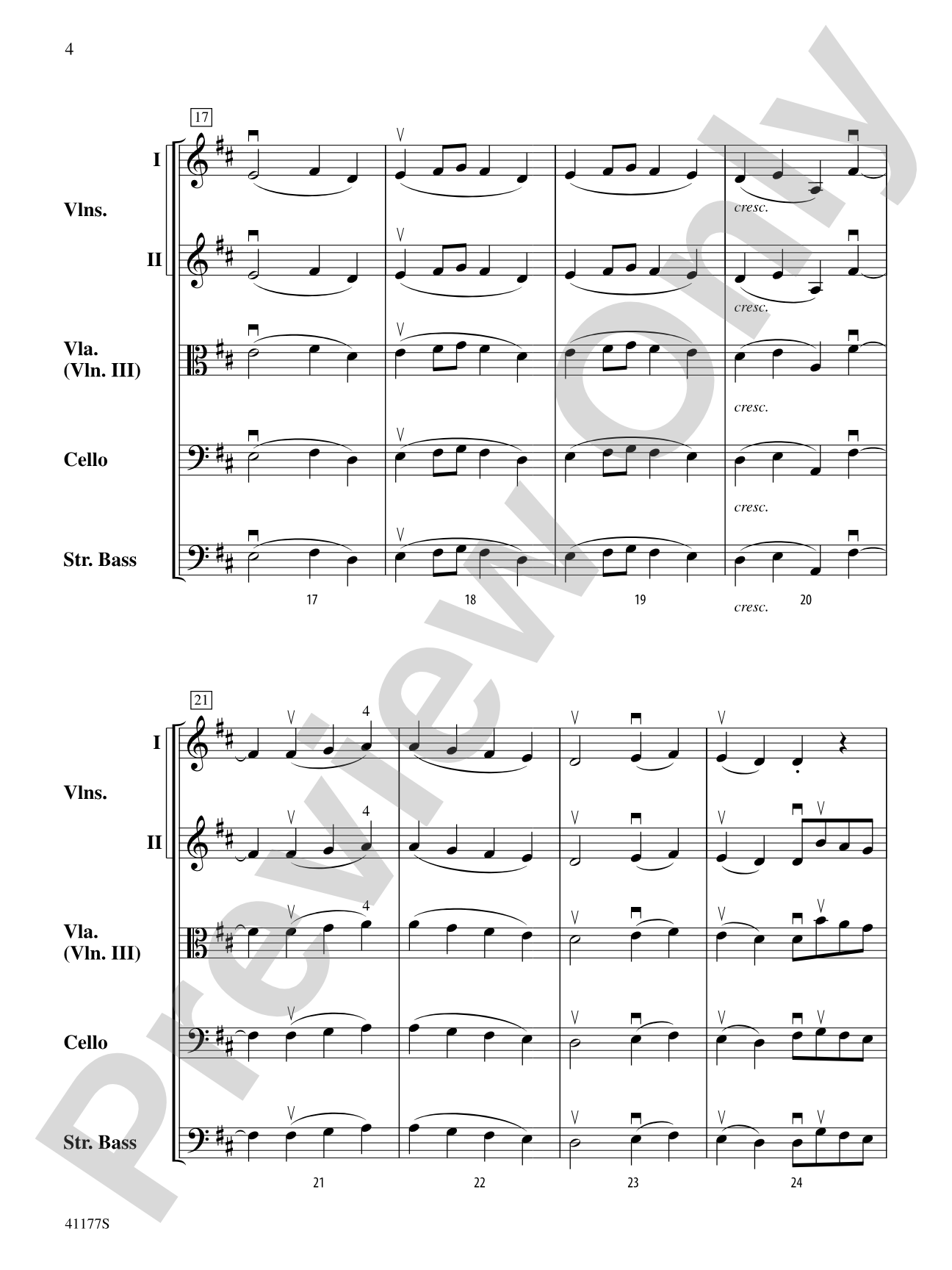
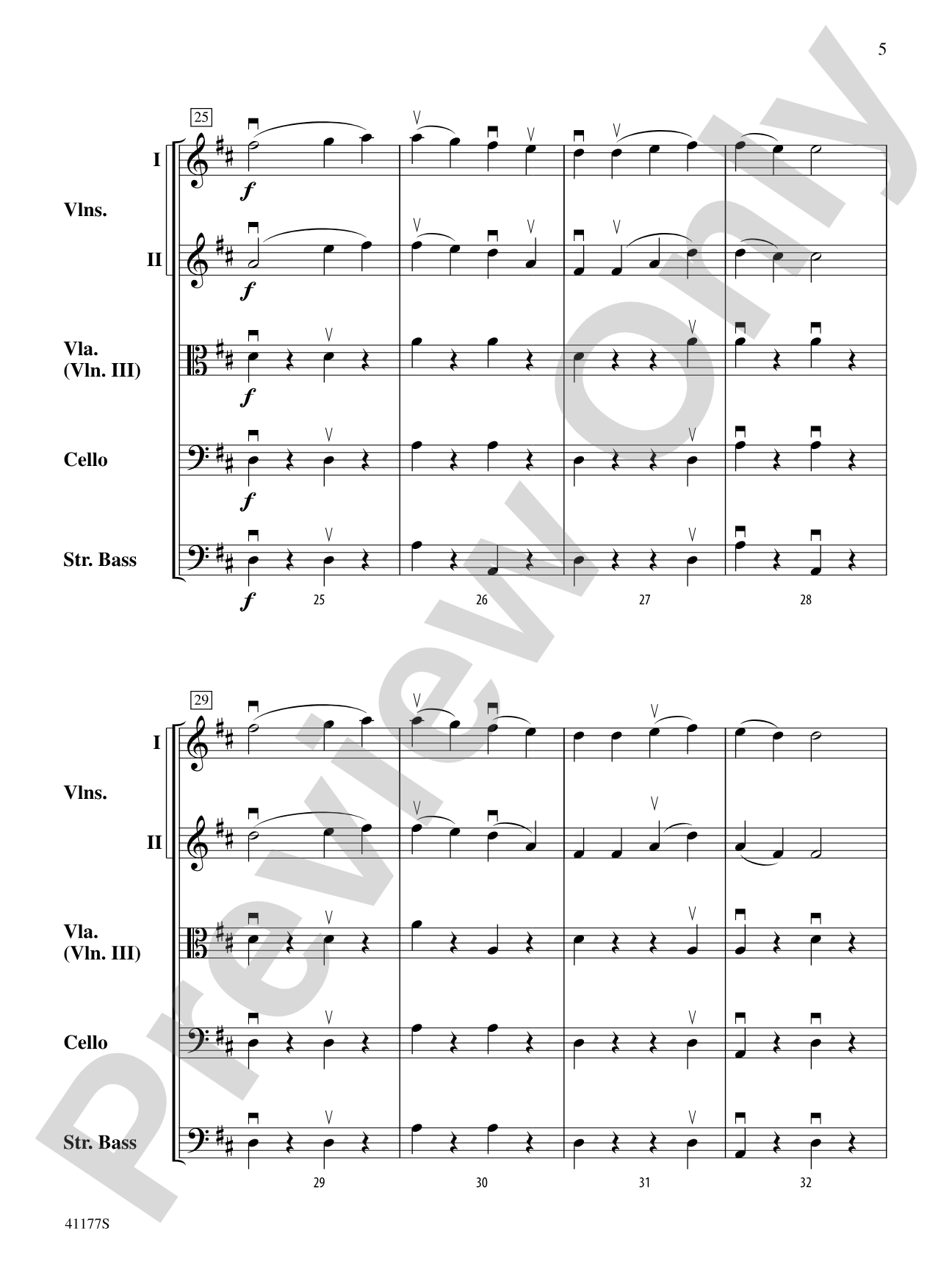
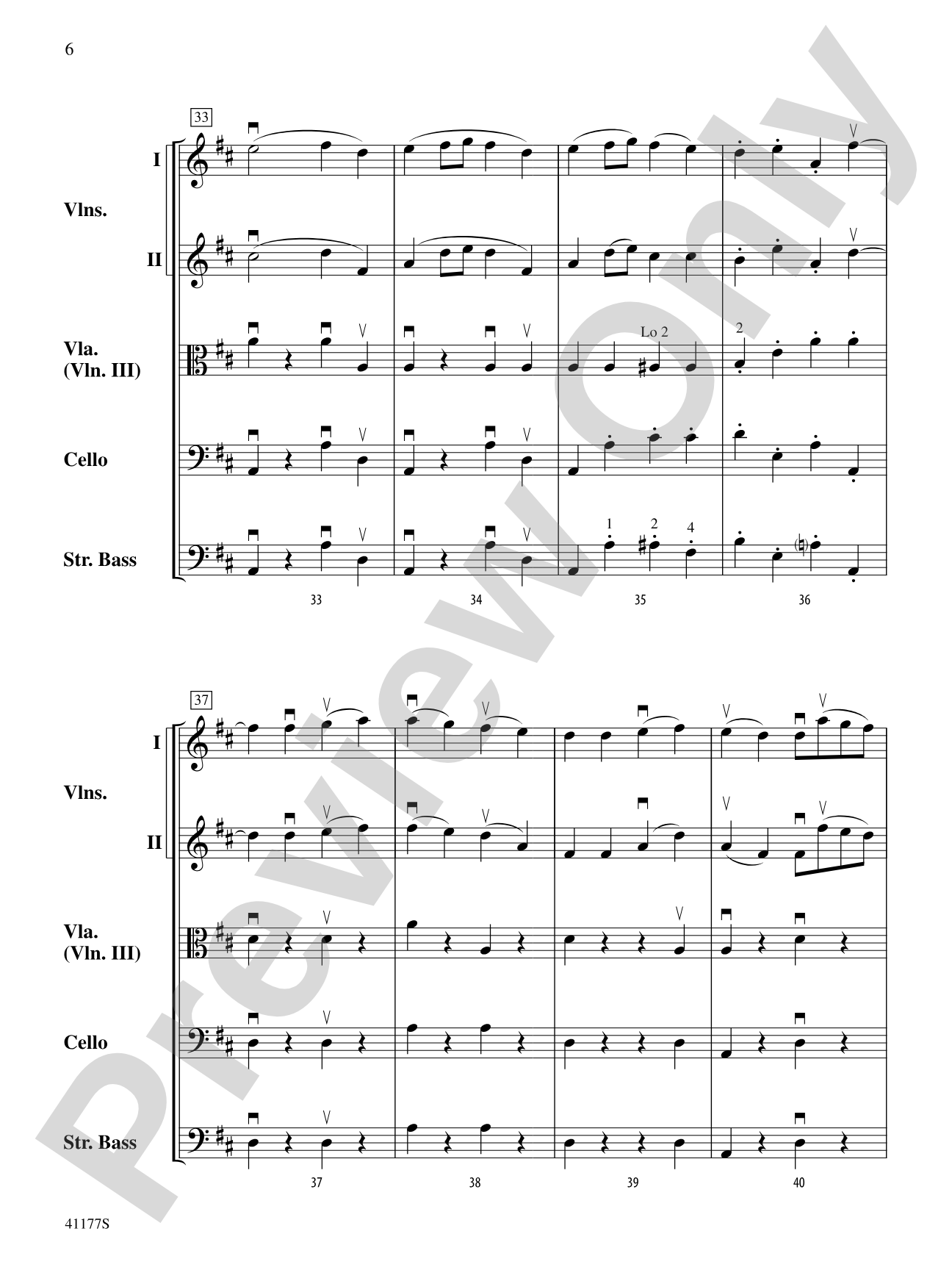
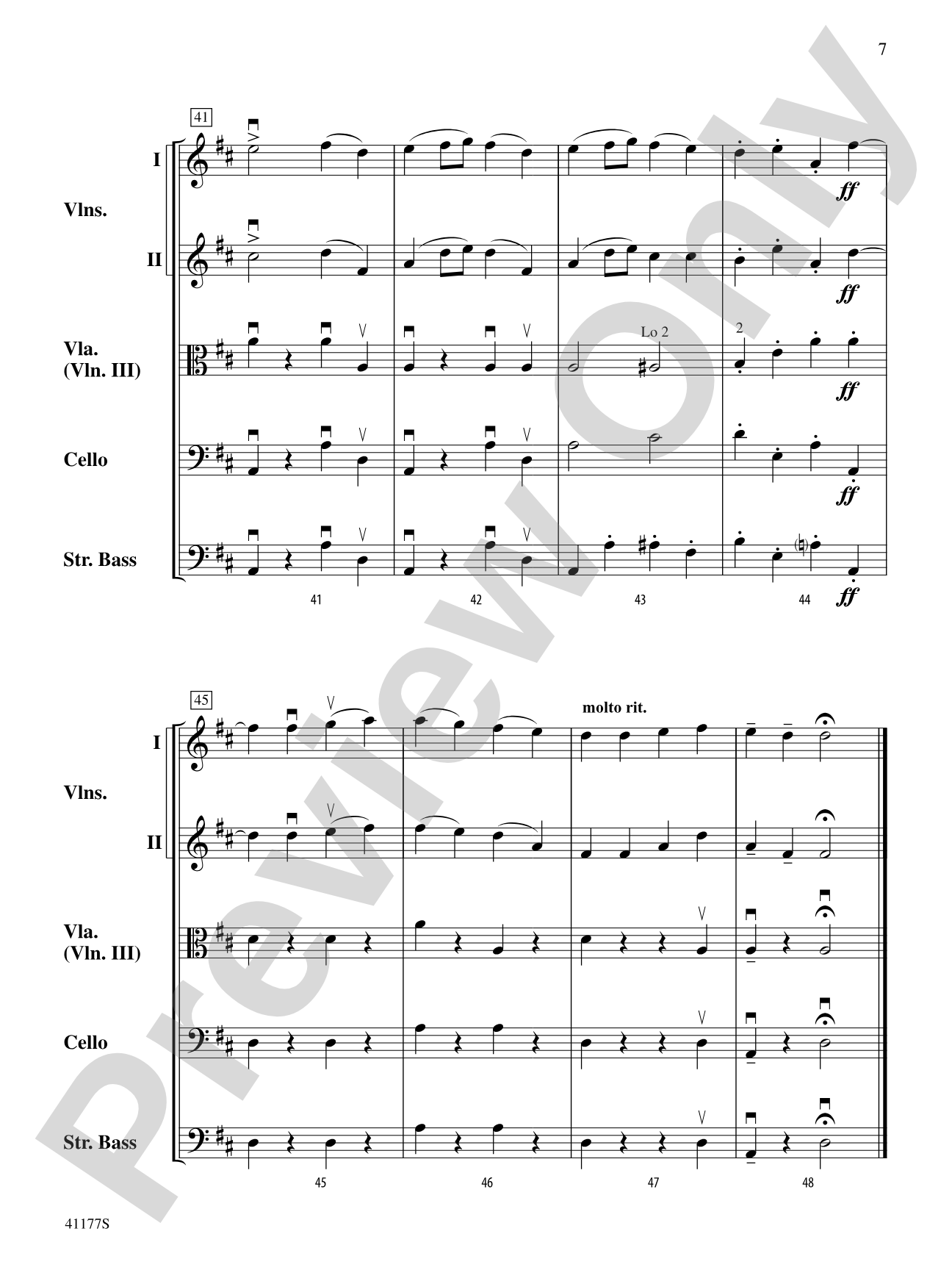
A favorite if there ever was one, this melody is perfect for first position playing. All instruments first play the melody in its entirety, followed by a section harmonized in the style of Beethoven. (1:30) This title is available in MakeMusic Cloud.


Don't just read it, hear it, play along with it, and watch your students grow with it. In MakeMusic Cloud, Ode to Joy: String Orchestra Conductor Score & Parts comes alive with professional accompaniment, adjustable tempo, and built-in practice tools that turn solo practice into real progress.
Open in the Player
Jump straight in and assign it today.
Start Your Free Trial
Open this title and explore the full library in minutes.
Sample Audio
1
Audio File
--:--
0:00
0:00
Sample Video
No sample videos found.
Additional Details
Series:
Belwin Beginning String Orchestra
Publisher:
Alfred Music
Page Count:
72
SKU:
00-PK-0006049
More about this title
About the Composer: Ludwig van Beethoven
Ludwig van Beethoven (1770-1827) bridged the Classical and Romantic eras, fundamentally transforming what symphonic music could express. His works radiate with harmonic innovation, emotional depth, and structural ambition that elevated instrumental music from entertainment to profound artistic statement. For music educators, Beethoven remains essential: his melodies are immediately recognizable, his orchestrations reward careful listening, and his architectural approach to form teaches students how great composers build meaning from simple musical ideas.
Why we love this
This arrangement captures one of the world's most universally recognized melodies while staying true to Beethoven's harmonic language. Grade 1 players get immediate success with the unison melody section, then encounter real four-part writing when the harmonization arrives, making it an ideal stepping stone from unison to ensemble voicing. The 1:30 duration keeps attention high and works beautifully in any concert context without overwhelming young musicians.
What to expect
The opening feels like stepping into a triumphant moment, with every player carrying the same soaring melody. When the harmonization blooms, the texture deepens into warmth and gentle strength, the kind of moment where young musicians first experience how their individual voice becomes part of something larger and more beautiful.
Who it's for
This arrangement suits Grade 1 string orchestras ready to move beyond simple unison playing into basic four-part harmony. It works equally well for first-year middle school players or advanced elementary ensembles. Concert and festival contexts both benefit from the immediate recognition and polish this title brings.
How to get the most out of it
- Approach the unison section with clarity and confidence; this melody is unmistakable, so focus on clean tone and steady rhythm rather than excessive expression.
- When the harmonization enters, remind players that their individual line supports the whole sound. Highlight how the viola and cello lines anchor the harmony beneath the violin melody.
- Balance the parts so the top voice carries the tune without drowning out the inner voices. Have a brief conversation in rehearsal about what each section 'hears' in the harmonized section.
- Use the recorded accompaniment (available separately) to help players lock into the tempo and feel, especially if this is early in the year when internal pulse may still be developing.
How to use it
Open a spring or end-of-year concert with this to set a celebratory tone and showcase student progress in harmonic awareness. It pairs naturally with other Belwin Beginning String Orchestra titles and gives ensembles a substantial repertoire piece without the rehearsal demands of more complex literature.
Skills your students will build
- Playing sustained melody in unison across four instrument families
- Reading and executing four-part harmonies from individual instrumental parts
- Maintaining part independence while blending tone and balance within a harmonic texture
- Following conductor cues through shifts from unison to harmonized sections