
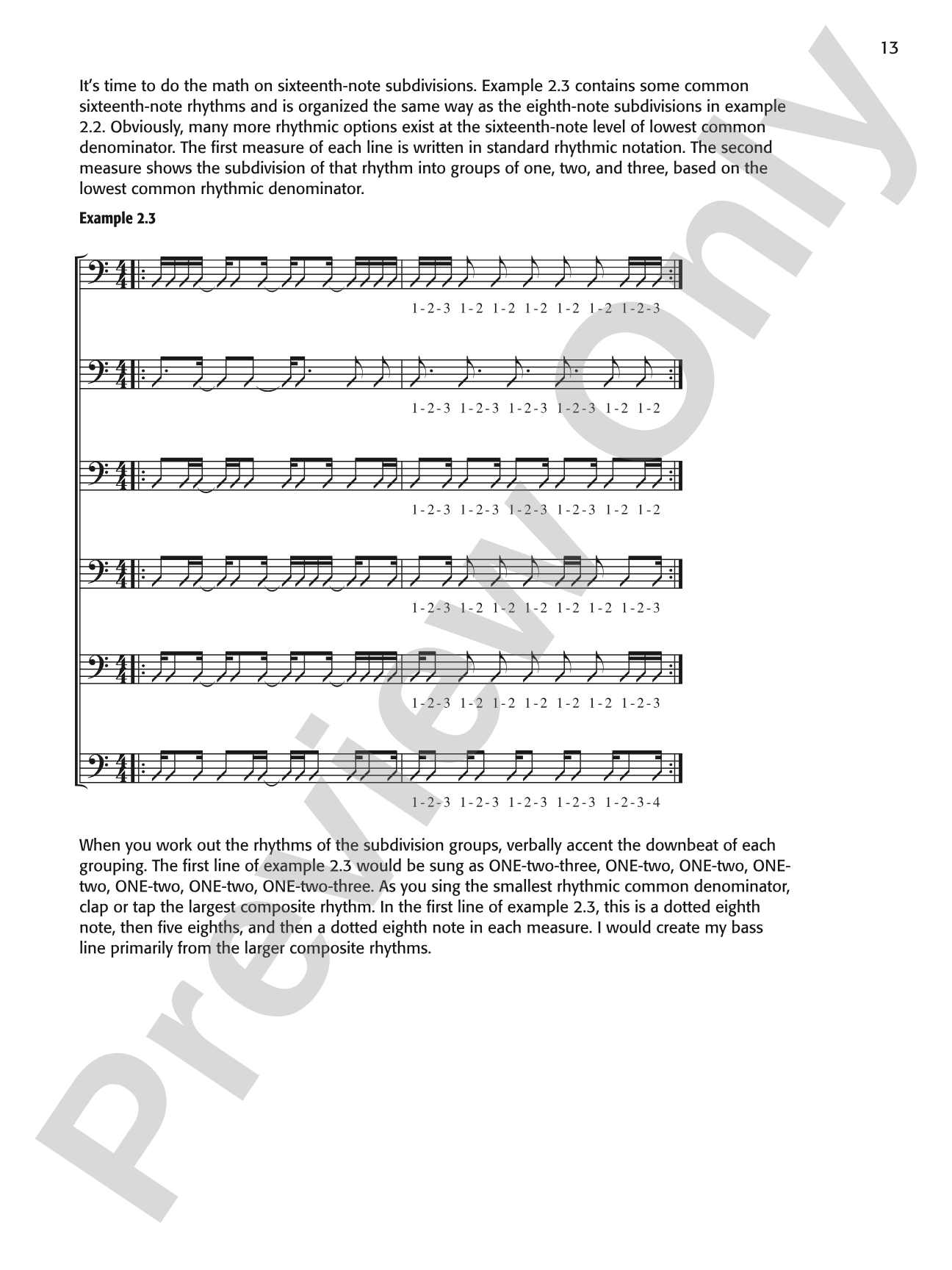
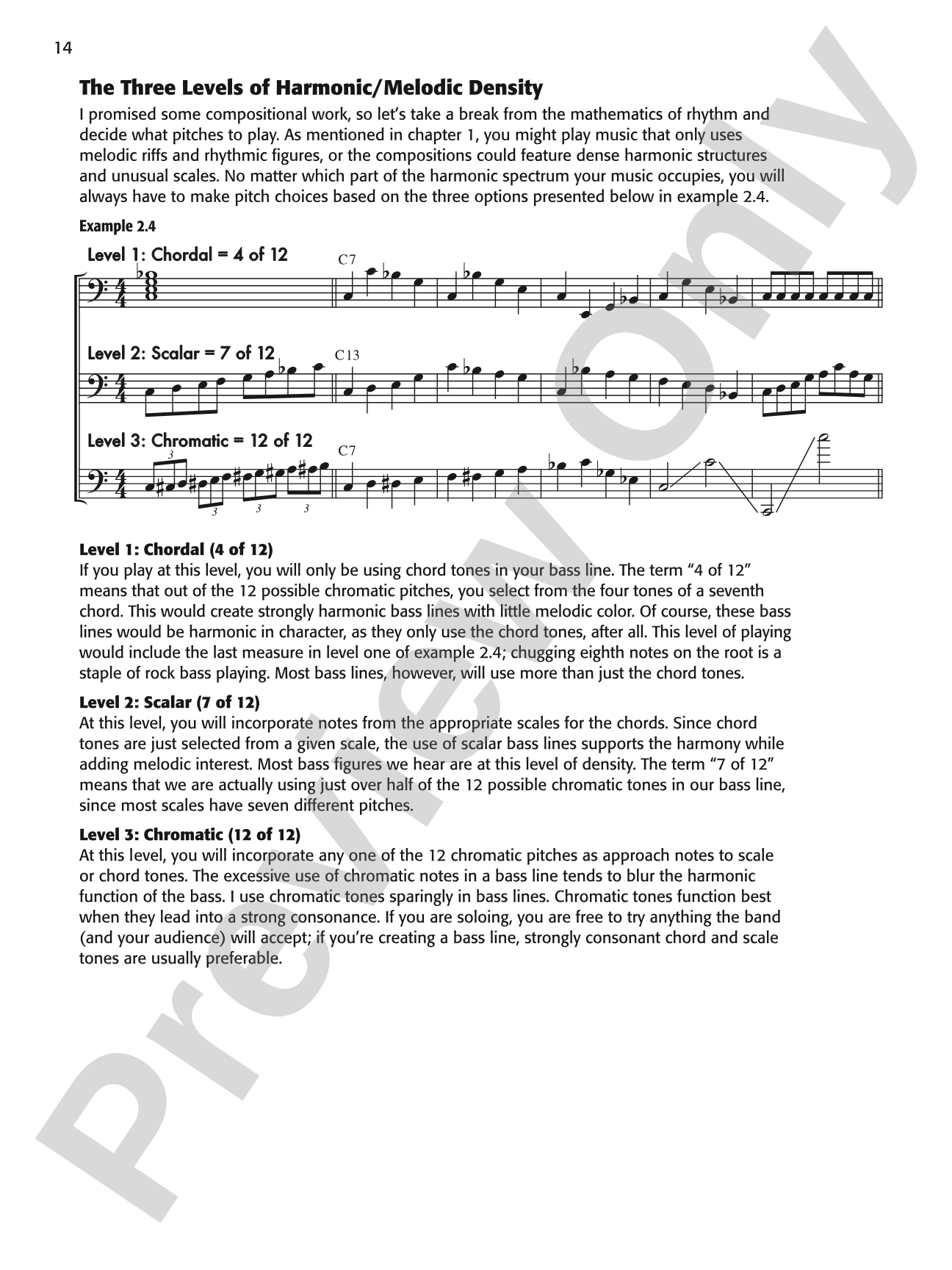
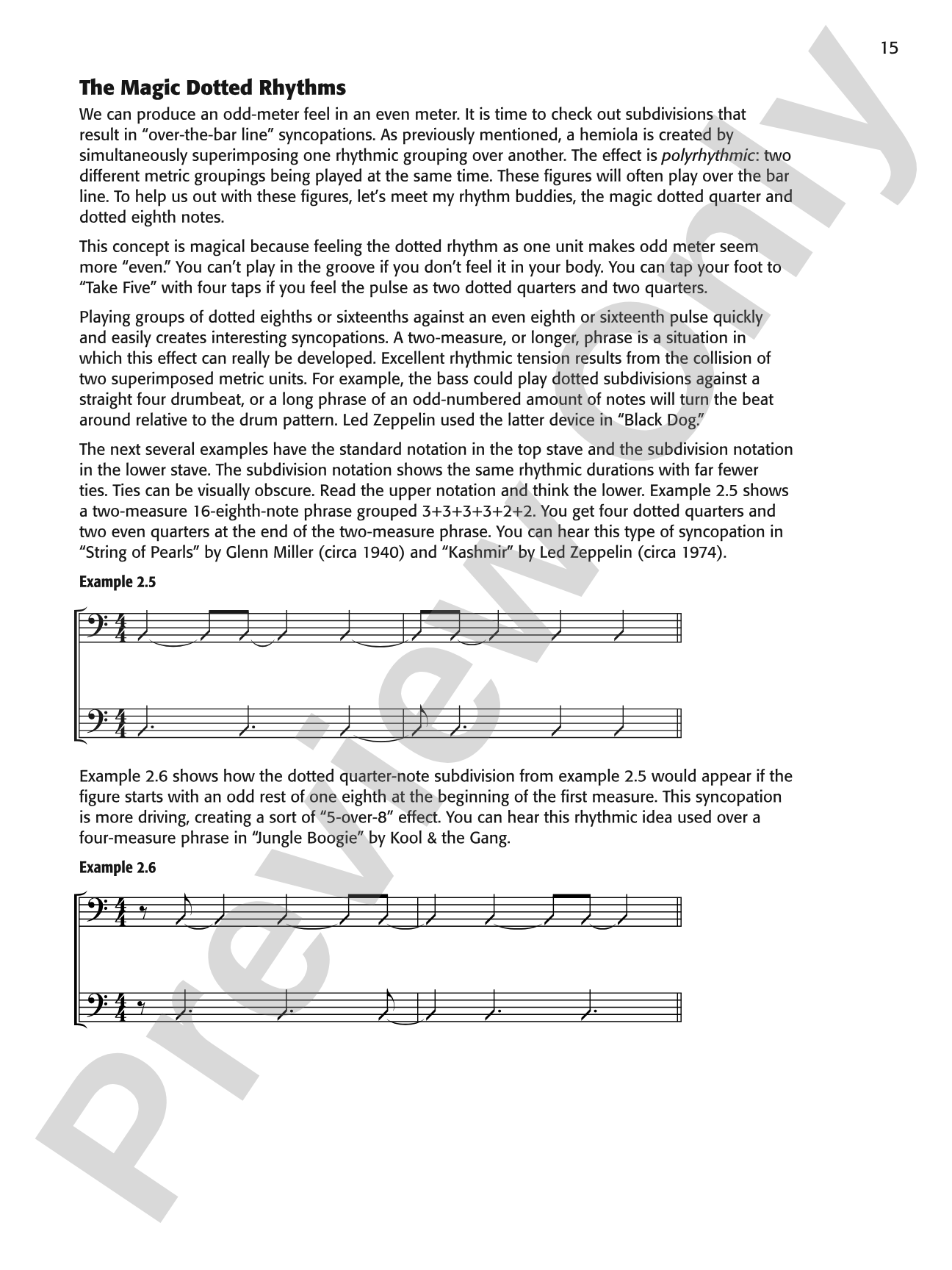
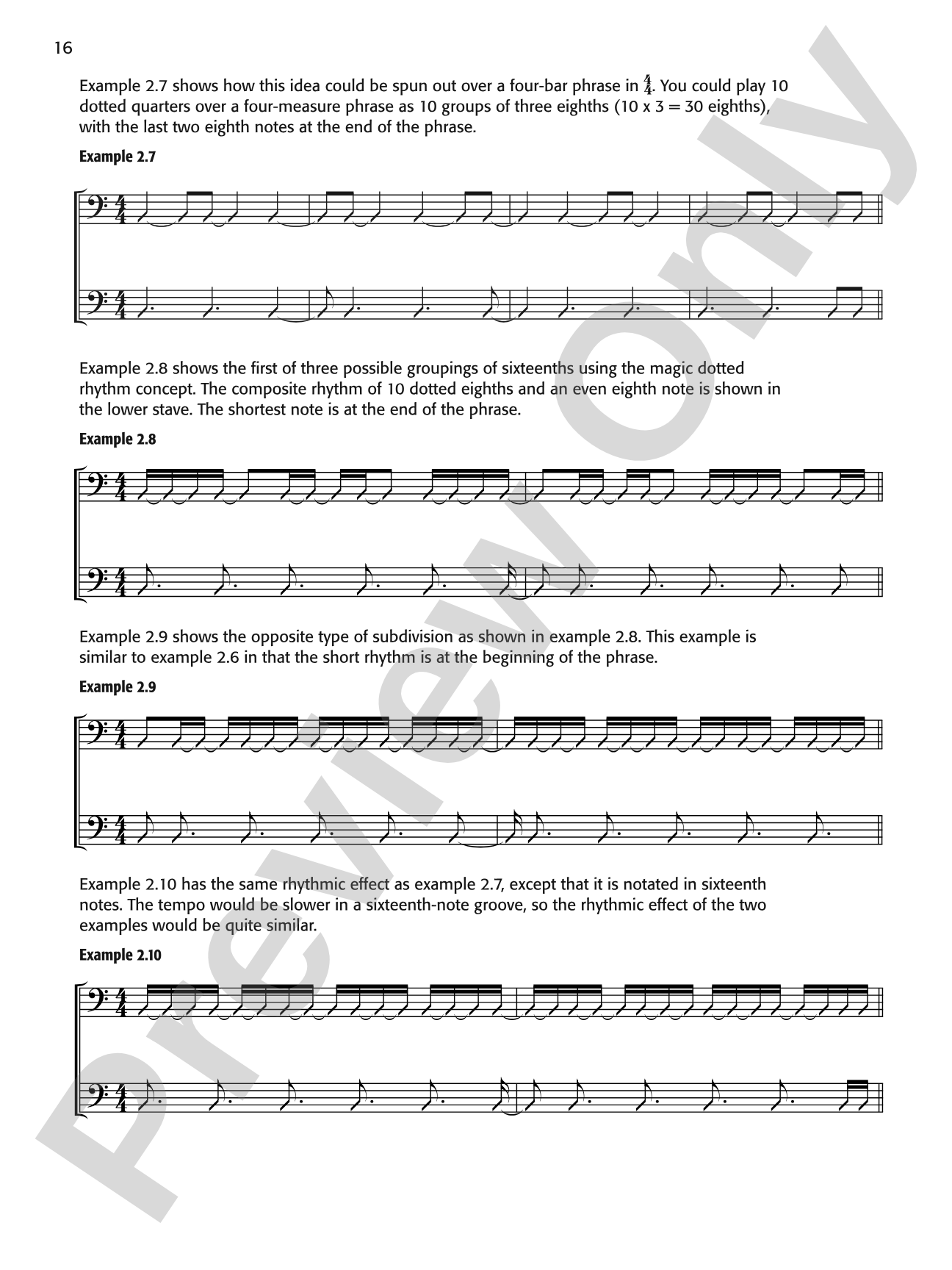

Odd Meter Bass: Complex Time Signatures Made Easy
Complex Time Signatures Made Easy
By Tim Emmons
Item: 00-PB-0002233
$20.99
Pickup currently not available
Related Items
Odd Meter Bass: Bass Guitar Book & Online Audio |
$20.99
|
View |
Description
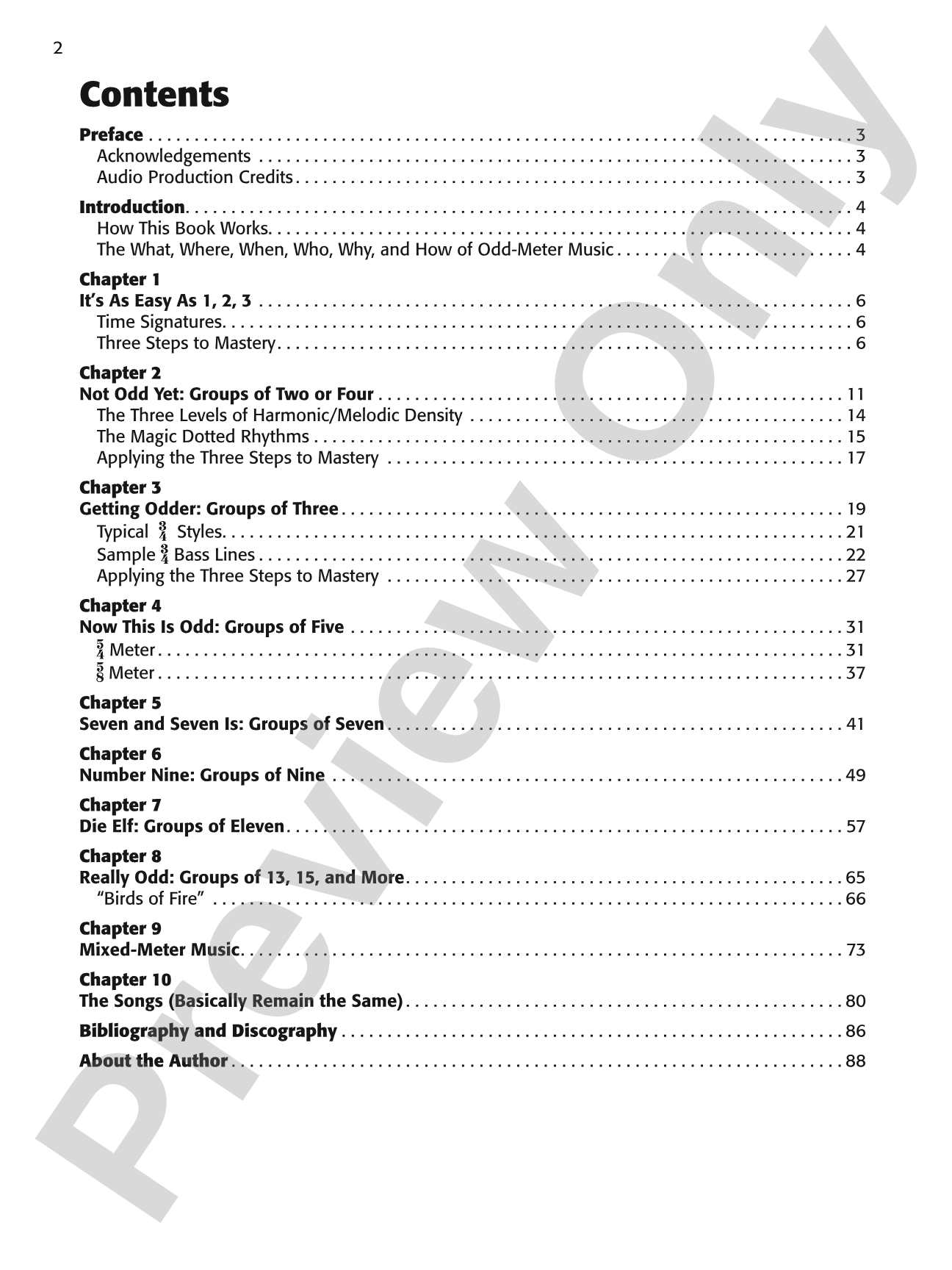
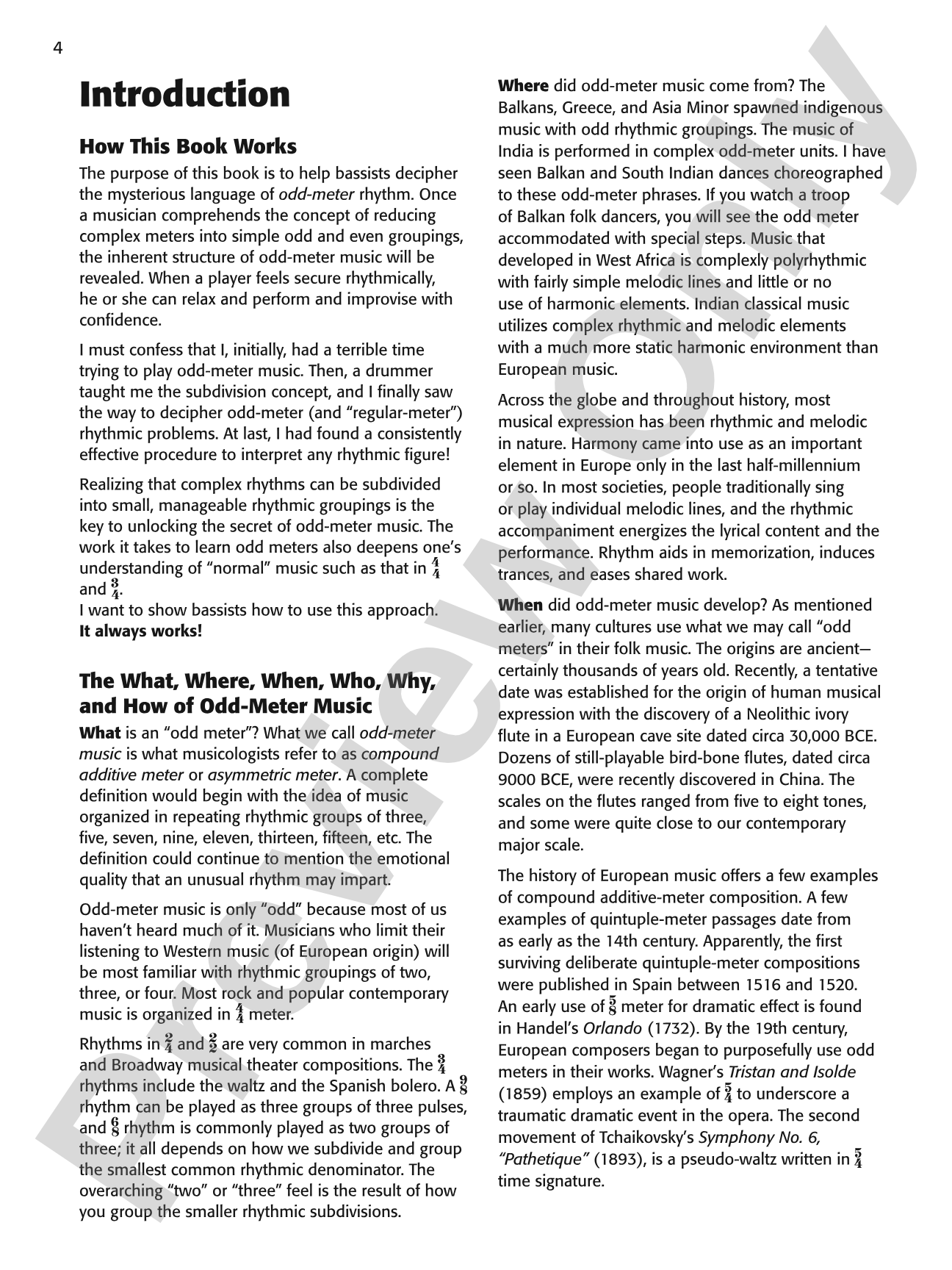
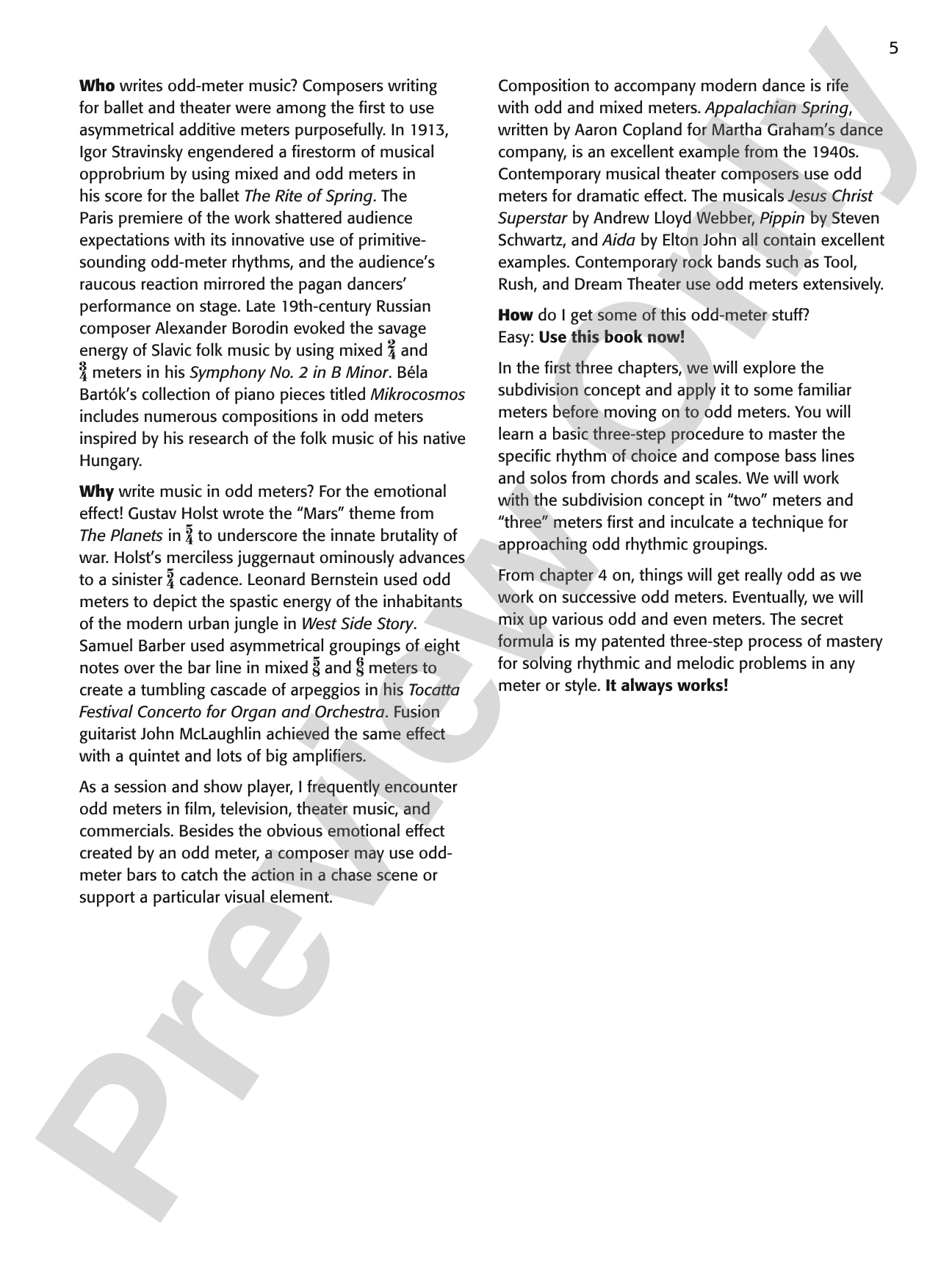
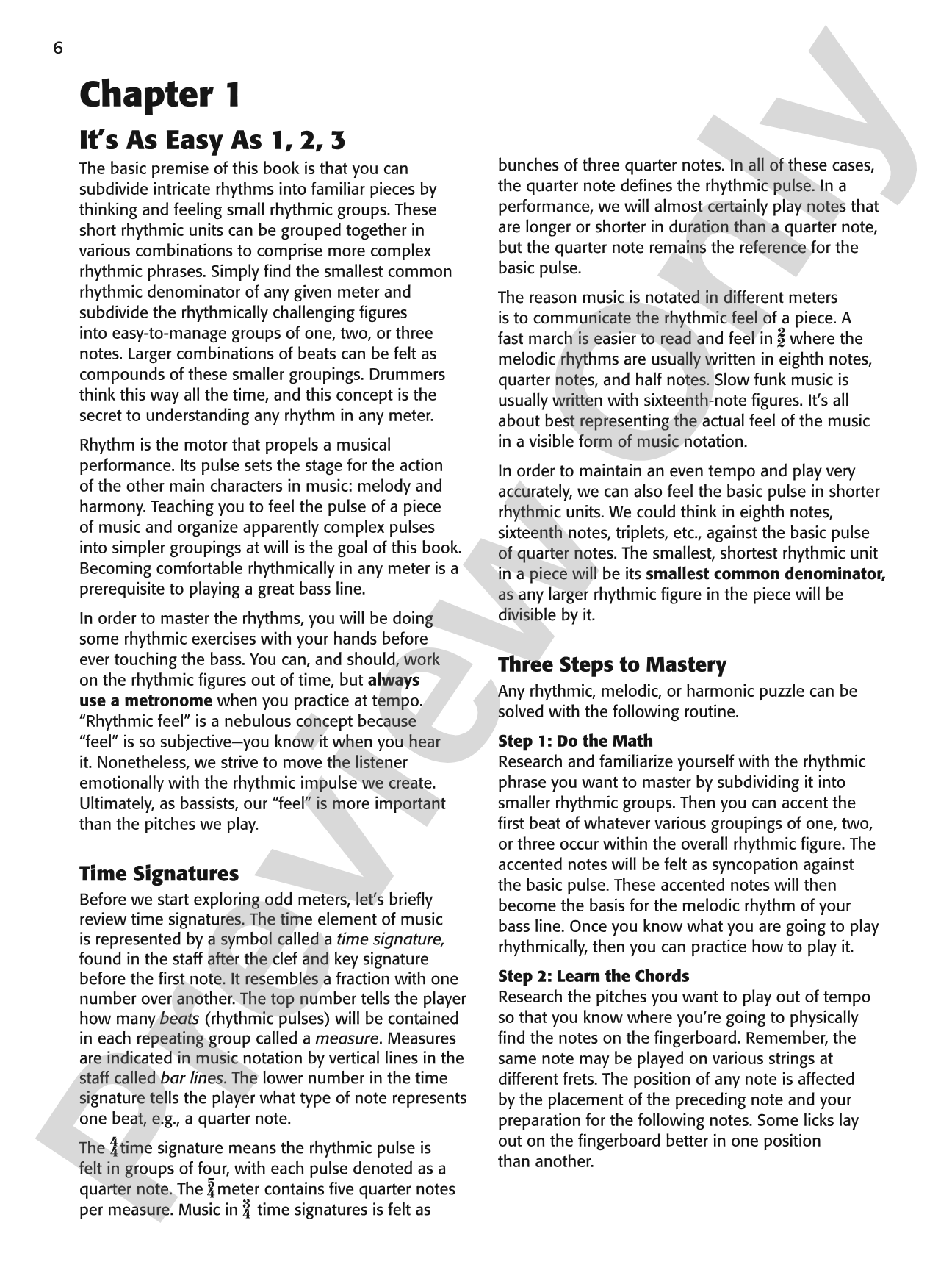
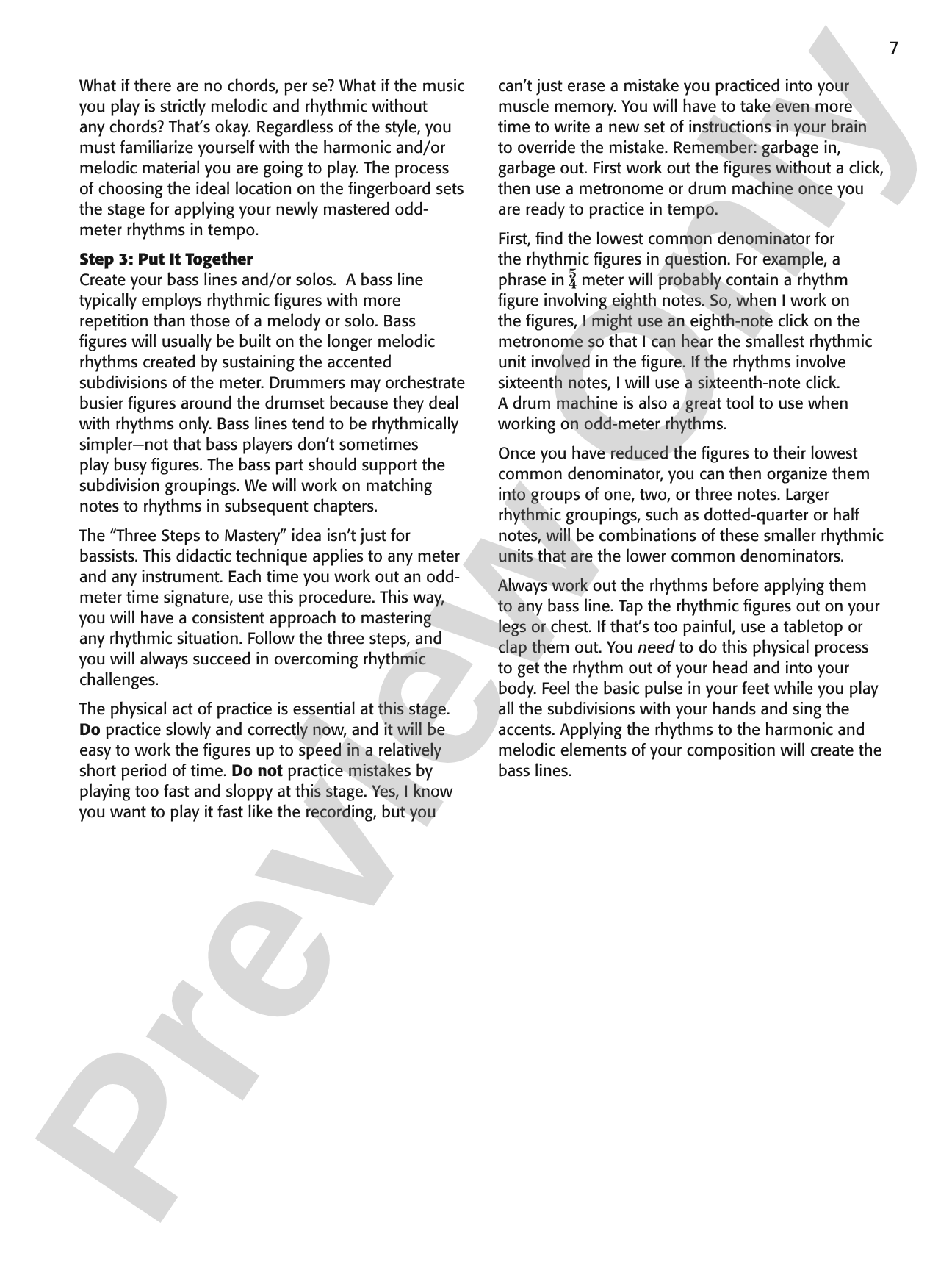
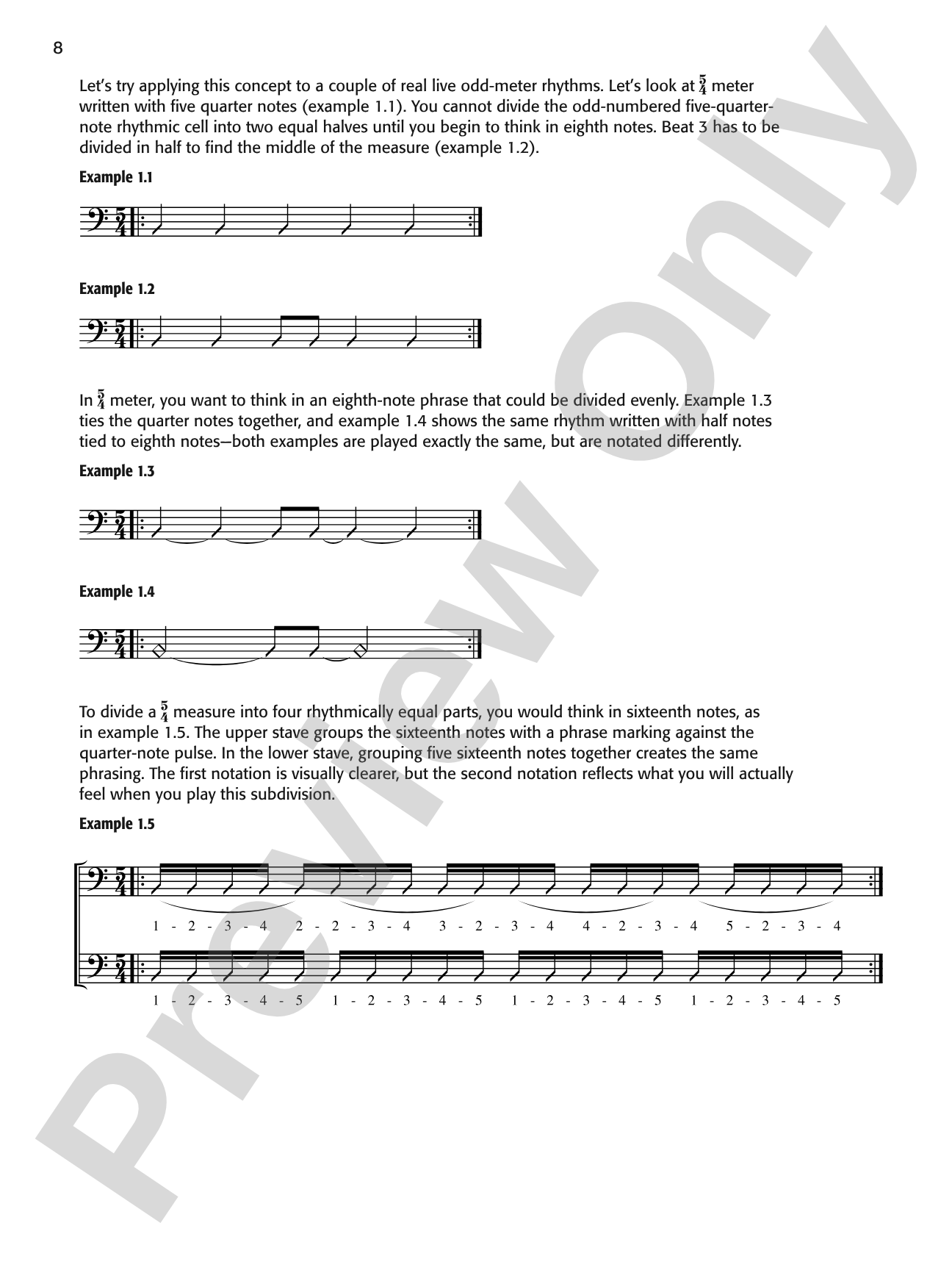
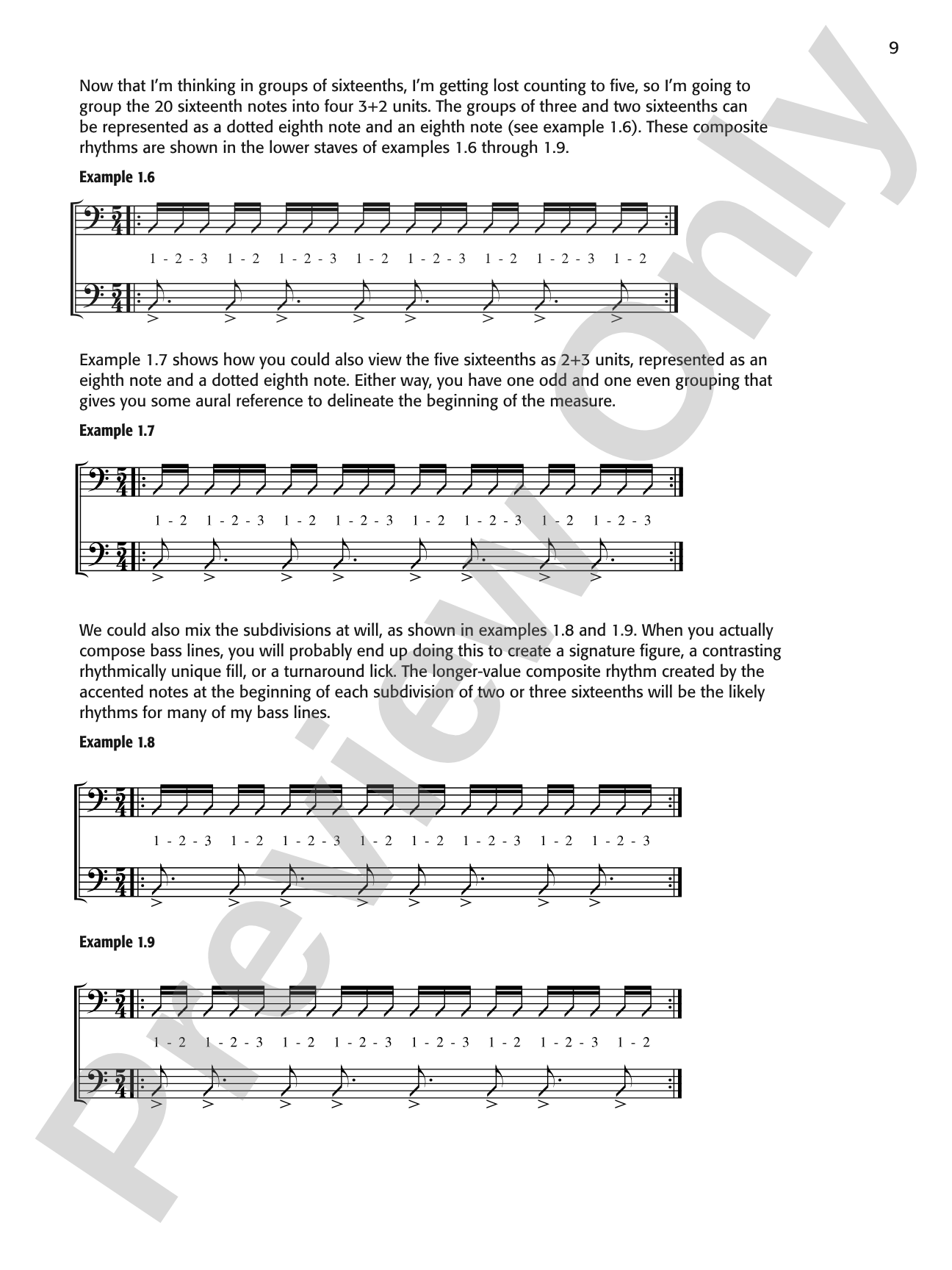
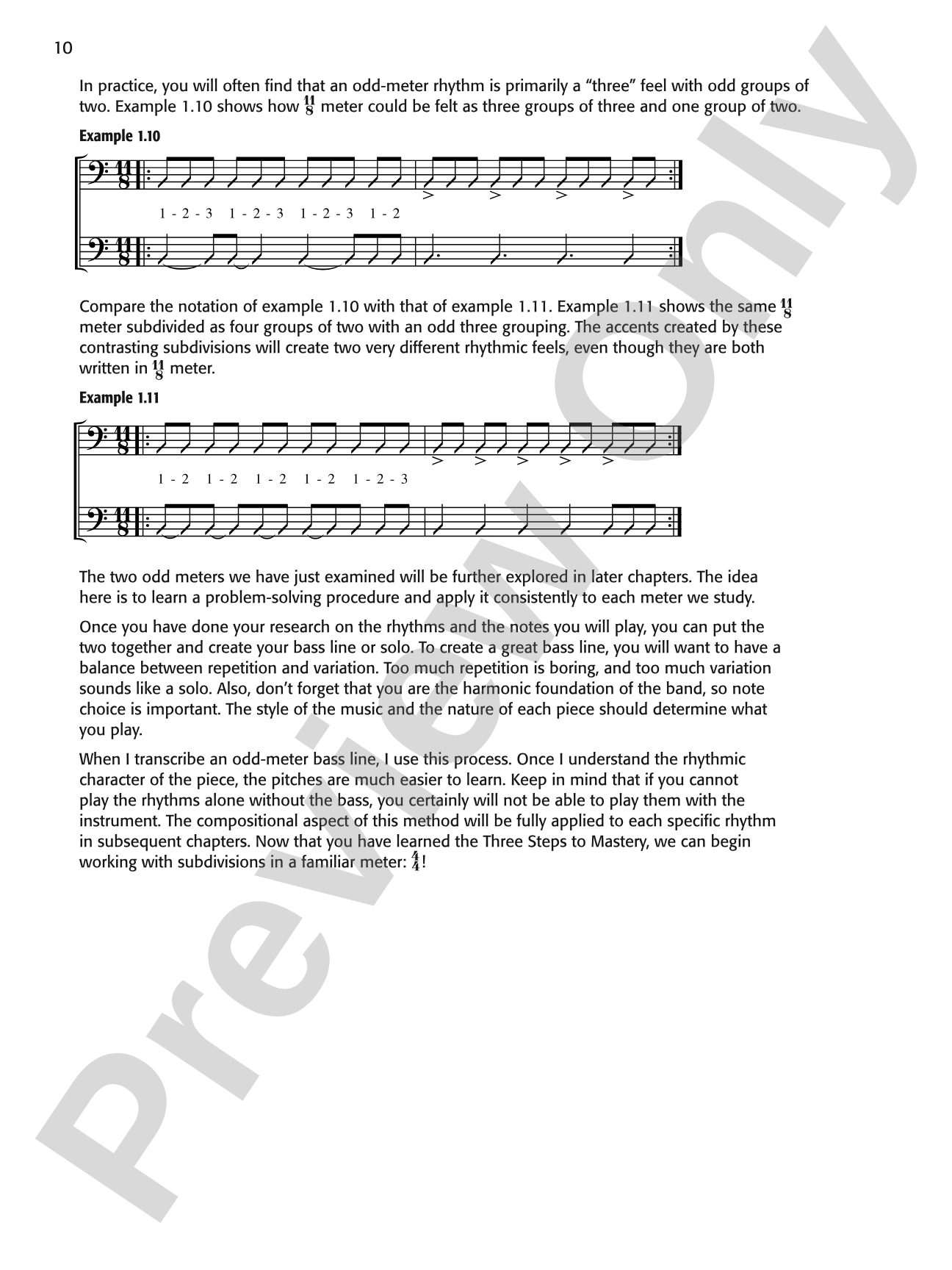
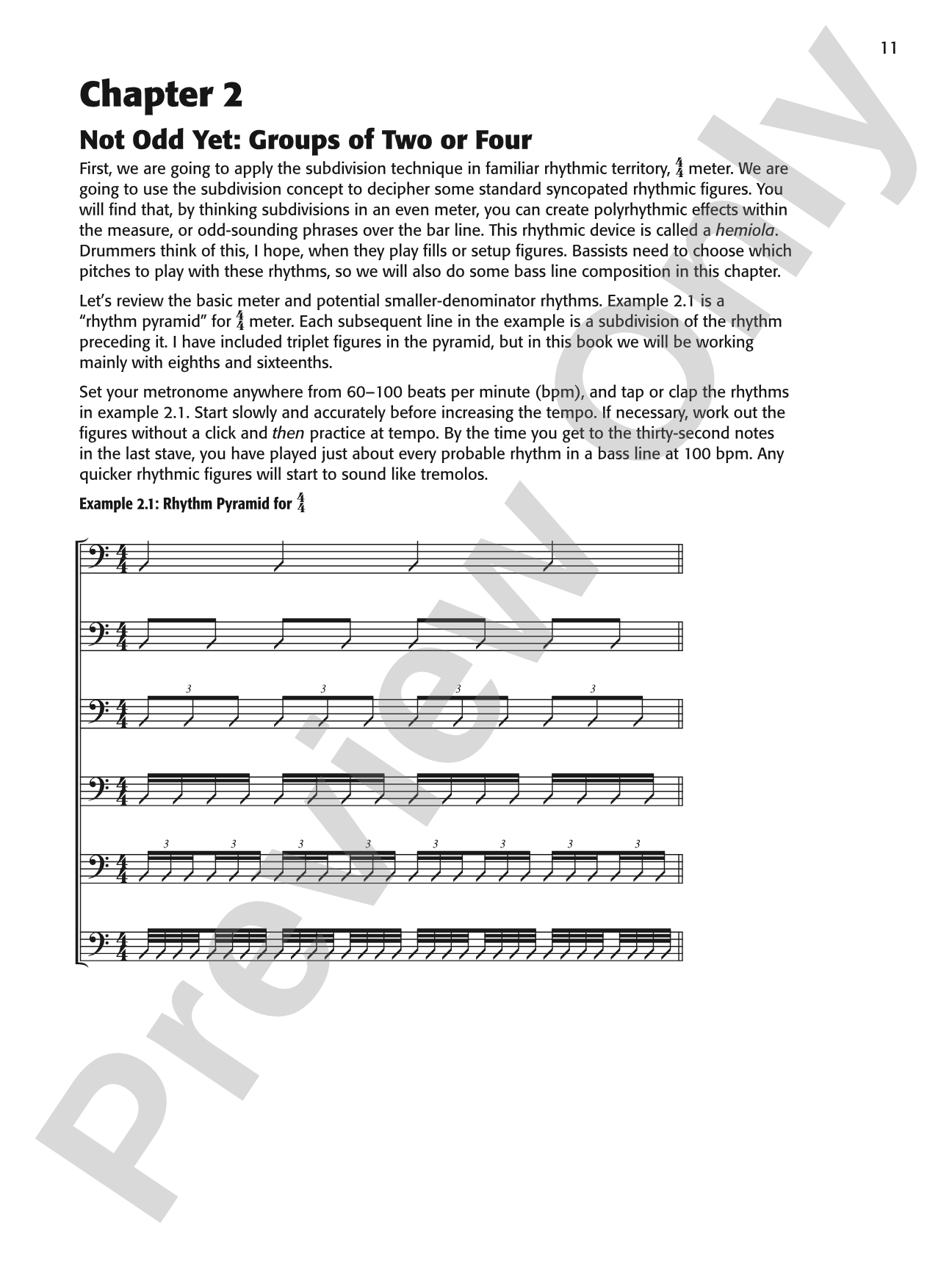
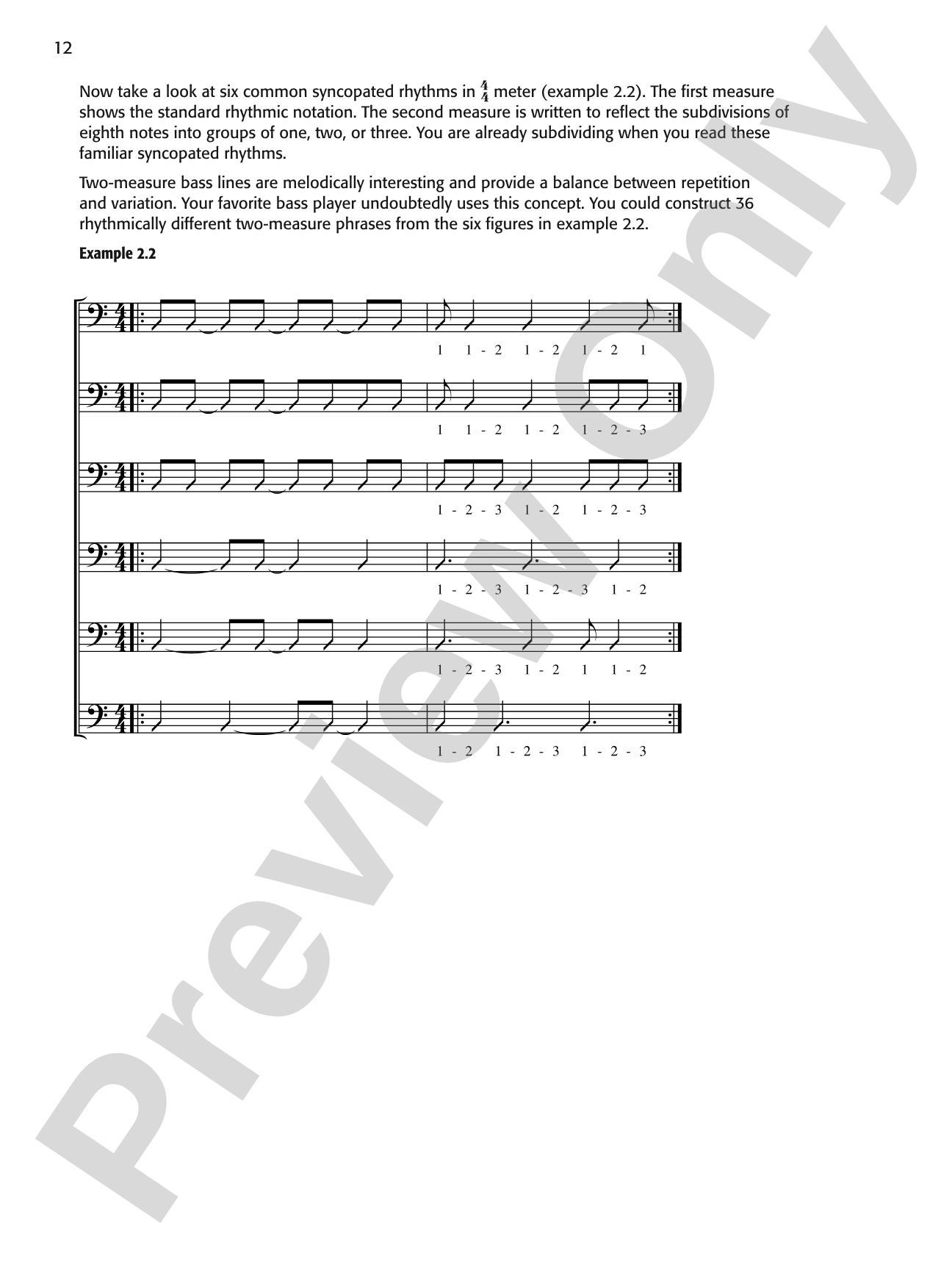
This amazing book and demonstration recording uses proven methods for comprehending and performing complex rhythms to make understanding, performing, and composing in odd meters easy and natural. Also included: Three Steps to Mastery * Rhythm pyramid for all meters * Magic dotted rhythms to make odd meters feel even * Compound meters and combinations of even and odd meters * Applying odd meters to common song forms * Bibliography and Discography of recommended reading and listening.
"I wish I had a copy of Odd Meter Bass when I was playing with Don Ellis' Band!"
Joel DiBartolo, bass for Doc Severson's Tonight Show Band


"I wish I had a copy of Odd Meter Bass when I was playing with Don Ellis' Band!"
Joel DiBartolo, bass for Doc Severson's Tonight Show Band
Odd Meter Bass: Complex Time Signatures Made Easy isn't in MakeMusic Cloud just yet...but it could be. Let us know you'd like to see it, and you'll help shape what comes next. In the meantime, start a free trial and dive into thousands of interactive titles your students can play along with today.
Request This Title
Tell us you want it.
Start Your Free Trial
Explore everything that's ready to play right now.
Sample Audio
1
12 Bar Minor Blues with Mixed Meter
--:--
2
Eighth Note Rock Signature
--:--
3
Straight Eighth Rock Signature
--:--
12 Bar Minor Blues with Mixed Meter
0:00
0:00
Sample Video
1 / 2
Additional Details
Publisher:
Alfred Music
Page Count:
88
SKU:
00-PB-0002233
More about this title
About the Composer: Tim Emmons
Tim Emmons has spent decades working at the intersection of jazz pedagogy and bass performance, with particular expertise in the rhythmic complexities that challenge developing musicians. His method books reflect a teacher's deep understanding of how students actually learn difficult concepts, breaking abstract time signatures into concrete, playable patterns.
Why we love this
Most odd meter materials ask students to "just feel it" or present pages of mathematical abstractions. Emmons takes a different approach: he gives bass players the practical tools and conceptual framework to own these rhythms from the inside out. The inclusion of a demonstration recording transforms what could be a theoretical slog into something immediately playable.
What to expect
Working through these exercises should feel like discovering a secret code rather than enduring a drill. The magic dotted rhythms create an "aha" moment where meters that seemed fractured suddenly resolve into organic pulse.
Who it's for
Bass players from intermediate to advanced levels who encounter odd meters in jazz, rock fusion, and contemporary settings and need a systematic way to internalize them. This book also serves ensemble directors seeking a resource to recommend when students struggle with unusual time signatures.
How to get the most out of it
- Start with the rhythm pyramid at the book's core; it's not decoration but the foundation for everything that follows.
- Work through the three-step mastery sequence methodically rather than jumping ahead to the compound meter sections.
- Apply the dotted rhythm exercises to pieces you're already learning; this grounds the concept in repertoire instead of leaving it abstract.
- Use the recorded examples frequently while reading, letting your ear and eyes work together before relying solely on counting.
How to use it
Use this for individual bass players tackling fusion repertoire or contemporary jazz charts in your ensemble. It also works beautifully as a prerequisite text before programming pieces by composers like Don Ellis or Frank Zappa.
Skills your students will build
- Reading and performing complex time signatures (5/4, 7/8, 9/8, and combinations)
- Subdividing compound meters and mixed meter passages
- Applying odd meter bass lines to standard song forms
- Composing original phrases within non-diatonic metric frameworks
- Internationalizing rhythmic patterns through listening and transcription