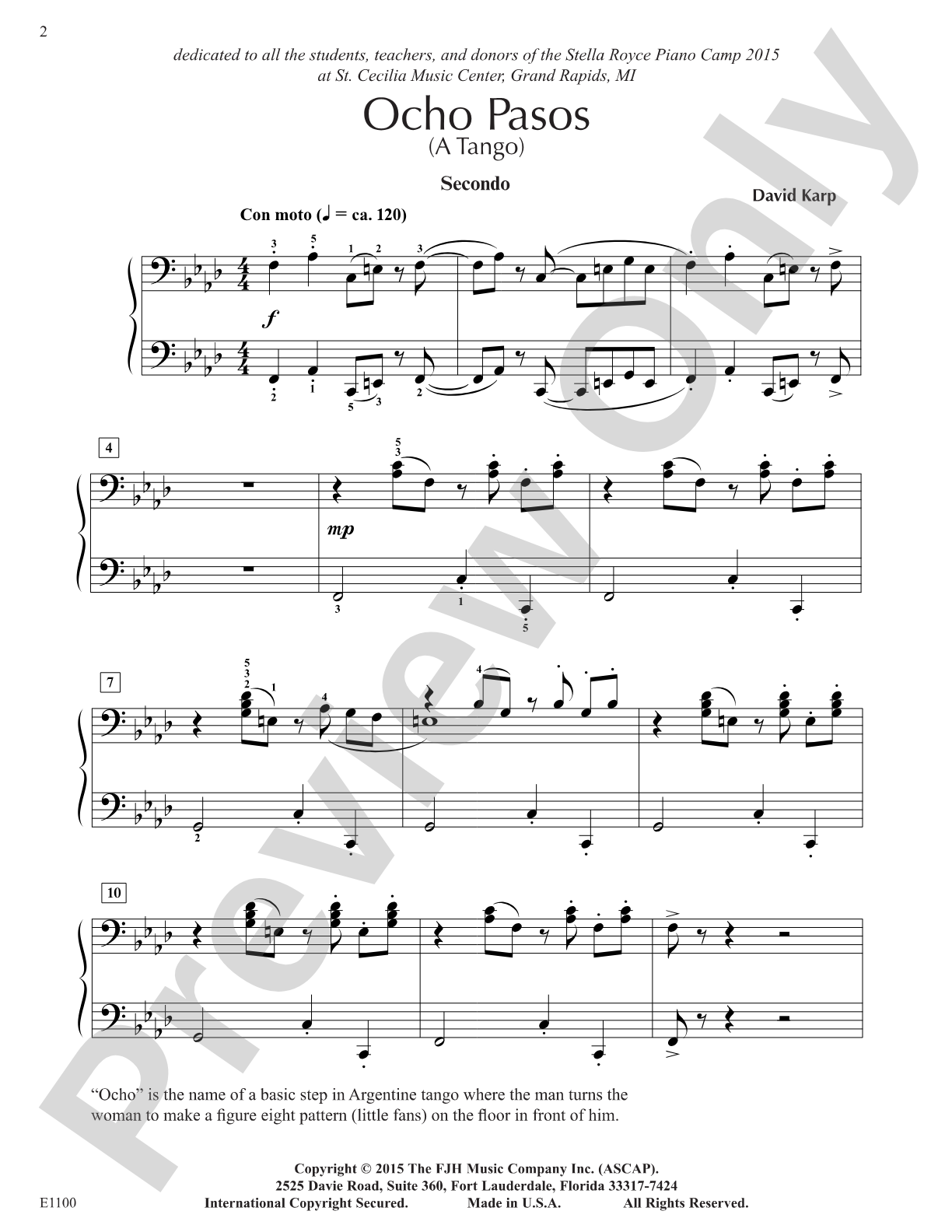
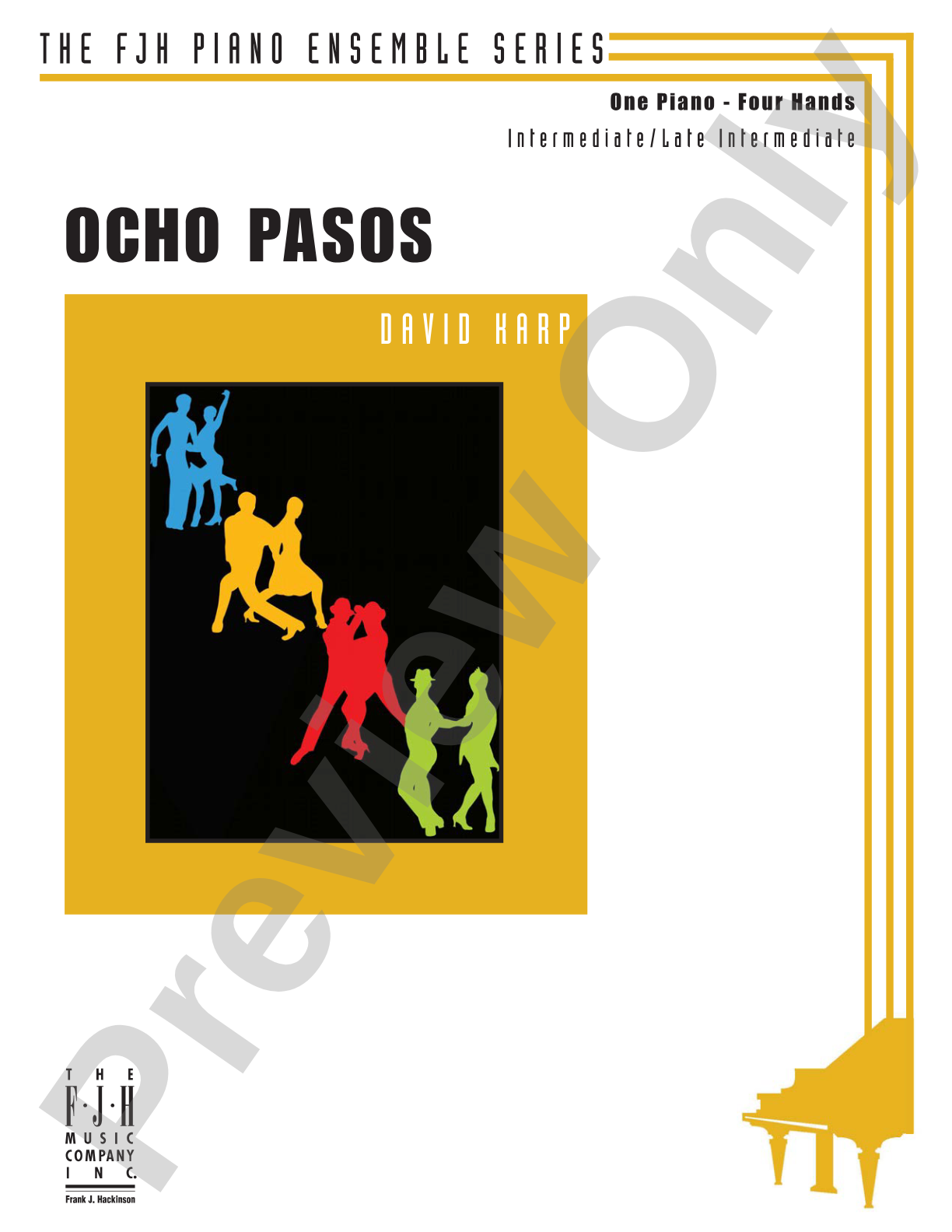
Ocho Pasos Sheet Music Preview

Ocho Pasos: Piano

By David Karp

Item: 98-DE1100

Digital Download
$3.95
Description
This dynamic duet in F minor is very entertaining and quite fun to play! Students must have good rhythmic skills due to the Latin syncopations and sharp listening skills for precise ensemble playing but the work is well worth it. Ocho Pasos is a stunning recital/performance choice.

Ocho Pasos: Piano isn't in MakeMusic Cloud just yet...but it could be. Let us know you'd like to see it, and you'll help shape what comes next. In the meantime, start a free trial and dive into thousands of interactive titles your students can play along with today.

Sample Audio
No sample audio found.
Sample Video
Additional Details
Series: The FJH Piano Ensemble Series
Publisher: The FJH Music Company, Inc.
SKU: 98-DE1100

More about this title

Why we love this

Karp captures everything that makes Latin music teach-able at the intermediate level: infectious rhythms that stay memorable, syncopation that demands real listening, and the kind of fun factor that keeps students engaged through rehearsals. Two equally matched parts mean both pianists stay invested in the performance.

What to expect

Ocho Pasos moves with swagger and drive. The F minor tonality gives it a sophisticated edge while the Latin syncopations keep the energy playful and propulsive, never heavy. Two pianos trading energy creates a genuine conversation rather than a question-and-answer exercise.

Who it's for

Intermediate to late intermediate pianists ready to tackle ensemble demands beyond solo technique. This duet works for students with solid rhythm reading and the maturity to balance individual expression with group precision.

How to get the most out of it

  • Lock in the syncopated rhythms during sectional rehearsals by clapping the patterns separately before playing. The Latin feel collapses instantly if the ensemble rushes or lags.
  • Record a rough run-through and listen back together. Hearing their own blend makes the precision work concrete and often catches timing issues neither player noticed in the moment.
  • Experiment with touch and articulation in the opening measures to establish the character early. Clarity here sets the tone for the entire duet.
  • Mark the score where listening cues occur, especially when one part takes the lead melodically. Knowing who has responsibility keeps both players accountable.

How to use it

Program this as a recital closer when you want to send the audience out with energy. It also pairs naturally on a concert where you're already featuring Latin or contemporary repertoire, or as a standalone feature for a duet showcase.

Skills your students will build

  • Reading and performing Latin syncopation patterns with accuracy
  • Maintaining ensemble balance and precision across two independent parts
  • Listening and responding to a duet partner in real time
  • Controlling articulation and touch to define the rhythmic character
  • Navigation of F minor harmonic and melodic writing

You May Also Like