Ocean Blue: 1st B-flat Clarinet Sheet Music Preview

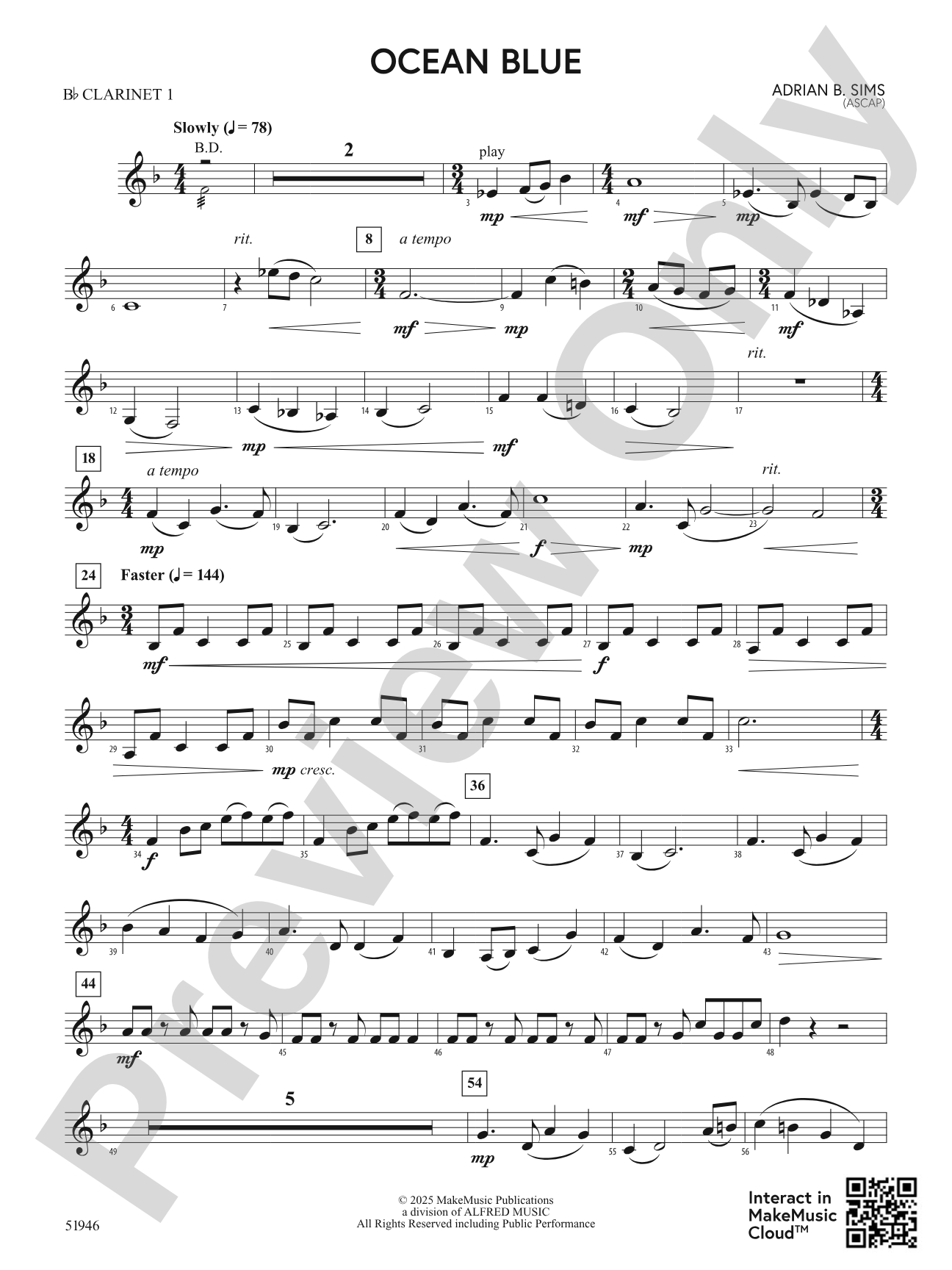
Ocean Blue: 1st B-flat Clarinet

By Adrian B. Sims

Grade: 2.5

Item: 00-PC-0019435_C1

Digital Download
$3.00
Description
Experience panoramic snapshots of marine life within the ocean through the cinematic lines of Ocean Blue, by Adrian B. Sims. Oceanic melodies weave throughout deep harmonic structures to create a complex musical work that happens to be extremely playable. A unique way to bring your students out of the band room and into the ocean! (3:20)

Don't just read it, hear it, play along with it, and watch your students grow with it. In MakeMusic Cloud, Ocean Blue: 1st B-flat Clarinet comes alive with professional accompaniment, adjustable tempo, and built-in practice tools that turn solo practice into real progress.

Sample Audio
0:00
0:00
Sample Video
Additional Details
Series: MakeMusic Young Band
Publisher: MakeMusic Publications
SKU: 00-PC-0019435_C1

More about this title

About the Composer: Adrian B. Sims

Adrian B. Sims

Adrian B. Sims (born 2000) is a composer, conductor, educator, and trombonist from Seattle who grew up in Catonsville, Maryland. His compositions have been performed at The Midwest Band and Orchestra Clinic and recognized on the Bandworld Top 100 List. He has won multiple composition competitions, including the Maryland Music Educators Association Young Composers Project and the Make Music Young Composers Contest, and has conducted his own works in performances across Maryland schools.

As a trombonist, Sims has performed in pit orchestras, symphony orchestras, jazz ensembles, and concert bands. He was selected multiple times for the Maryland All-State Band and performed alongside the Baltimore Symphony Orchestra. He is currently pursuing a dual degree in Music Education and Composition at the University of Maryland, where he studies composition with Dr. Robert Gibson and has been mentored by world-renowned composer Brian Balmages.

Why we love this

Ocean Blue delivers cinematic storytelling at a Grade 2.5 level without sacrificing musical substance. Sims crafts oceanic imagery through melodic phrases and harmonic depth that feel sophisticated while remaining genuinely playable for developing bands, making it an ideal choice for directors seeking to broaden their students' musical vocabulary beyond typical grade-level fare.

What to expect

Ocean Blue opens a window to the marine world through sweeping melodic lines and rich harmonic colors. The music feels cinematic and immersive, creating panoramic vistas of ocean life that transport listeners and performers alike into an underwater landscape.

Who it's for

This work is ideal for Grade 2.5 concert bands seeking repertoire that balances accessibility with musical substance. Directors will appreciate a piece that challenges developing musicians while remaining playable and engaging for their students.

How to get the most out of it

  • Shape the oceanic melodies with long, connected phrases that suggest the flowing movement of water. Avoid articulating too crisply in sections that need to feel fluid and expansive.
  • Balance the harmonic structures carefully so that supporting voices remain transparent rather than muddy. This lets the programmatic intent shine through.
  • Use dynamic gradations to highlight the cinematic snapshots within the piece. Small crescendos and diminuendos help transition between different marine scenes.
  • Encourage your students to visualize the ocean imagery as they play. Connecting to the program can deepen their interpretation and ensemble cohesion.

How to use it

Program Ocean Blue as a featured selection for spring or early fall concerts when programmatic works engage audiences most effectively. It pairs well with other descriptive concert band works and serves as a strong opener or centerpiece that showcases your band's growing musicianship.

Skills your students will build

  • Sustaining long phrases with consistent tone and breath support
  • Balancing harmonic texture to support rather than obscure melodic lines
  • Responding to programmatic content and translating imagery into musical expression
  • Reading and executing dynamic nuance across ensemble parts
  • Developing sensitivity to harmonic depth and color beyond basic block harmony

You May Also Like