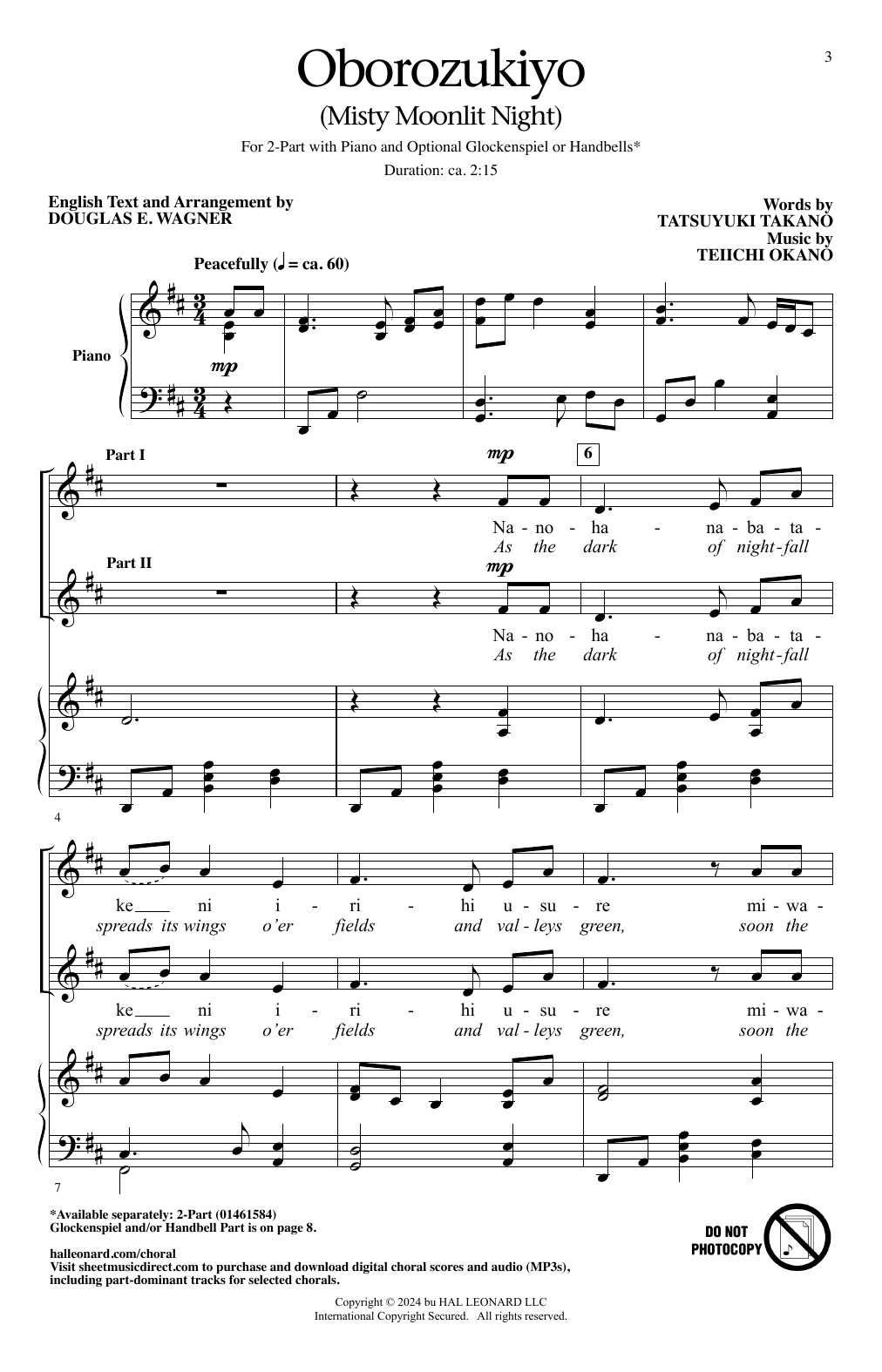
Oborozukiyo (Misty Moonlit Night) (arr. Douglas E. Wagner) Sheet Music Preview

Oborozukiyo (Misty Moonlit Night) (arr. Douglas E. Wagner): 2-Part Choral Octavo

By Teiichi Okano / By Tatsuyuki Takano / Arranged by Douglas E. Wagner

Item: 35-DS01553081

Digital Download
$2.50
Description

Oborozukiyo (Misty Moonlit Night) (arr. Douglas E. Wagner): 2-Part Choral Octavo isn't in MakeMusic Cloud just yet...but it could be. Let us know you'd like to see it, and you'll help shape what comes next. In the meantime, start a free trial and dive into thousands of interactive titles your students can play along with today.

Sample Audio
No sample audio found.
Sample Video
Additional Details
Publisher: Hal Leonard
Page Count: 7
SKU: 35-DS01553081

More about this title

About the Composer: Teiichi Okano

Teiichi Okano stands as a significant figure in Japanese choral music, known for composing works that draw from his country's rich musical traditions while remaining accessible to singers worldwide. His compositions often blend folk melodies and cultural storytelling with contemporary harmonic language, making them valuable additions to choral repertoires seeking authentic multicultural material.

Why we love this

Wagner's arrangement opens this Japanese folk song to singers of all levels without simplifying its lyrical beauty or cultural authenticity. The 2-part voicing maintains the melody's elegance while remaining manageable for developing choirs, and the text painting around the imagery of moonlight creates natural interpretive moments that singers can feel immediately.

What to expect

The piece evokes quiet reflection and subtle beauty, much like the moonlit night its title describes. There is an intimate quality to the modal harmony and folk melody that invites focused listening and sensitive interpretation.

Who it's for

Two-part choirs at the intermediate level will find this piece gratifying because it offers genuine musical substance without excessive technical demands. Directors building programs around world music, cultural diversity, or simply seeking fresh material beyond the standard octavo catalog will appreciate its authenticity and artistry.

How to get the most out of it

  • Shape the phrase around the moonlit imagery; let the melody breathe as if describing a scene unfolding rather than moving from note to note mechanically.
  • Treat the two parts as independent melodic lines that weave together rather than as melody plus accompaniment, bringing out the interdependence of the voices.
  • Honor the syllable stress of the Japanese text even when singing in translation; this guides natural phrasing and prevents the piece from sounding rhythmically generic.

How to use it

This arrangement fits naturally into concerts celebrating global voices or exploring how different cultures express universal themes like nature and time. It also serves as an excellent gateway piece when introducing your singers to non-Western music traditions without requiring specialized vocal techniques.

Skills your students will build

  • Singing with clear diction in a non-English language
  • Phrasing and expression around poetic imagery
  • Balancing two independent melodic lines
  • Understanding modal melody in folk music contexts
  • Developing sensitivity to cultural authenticity in performance

You May Also Like