
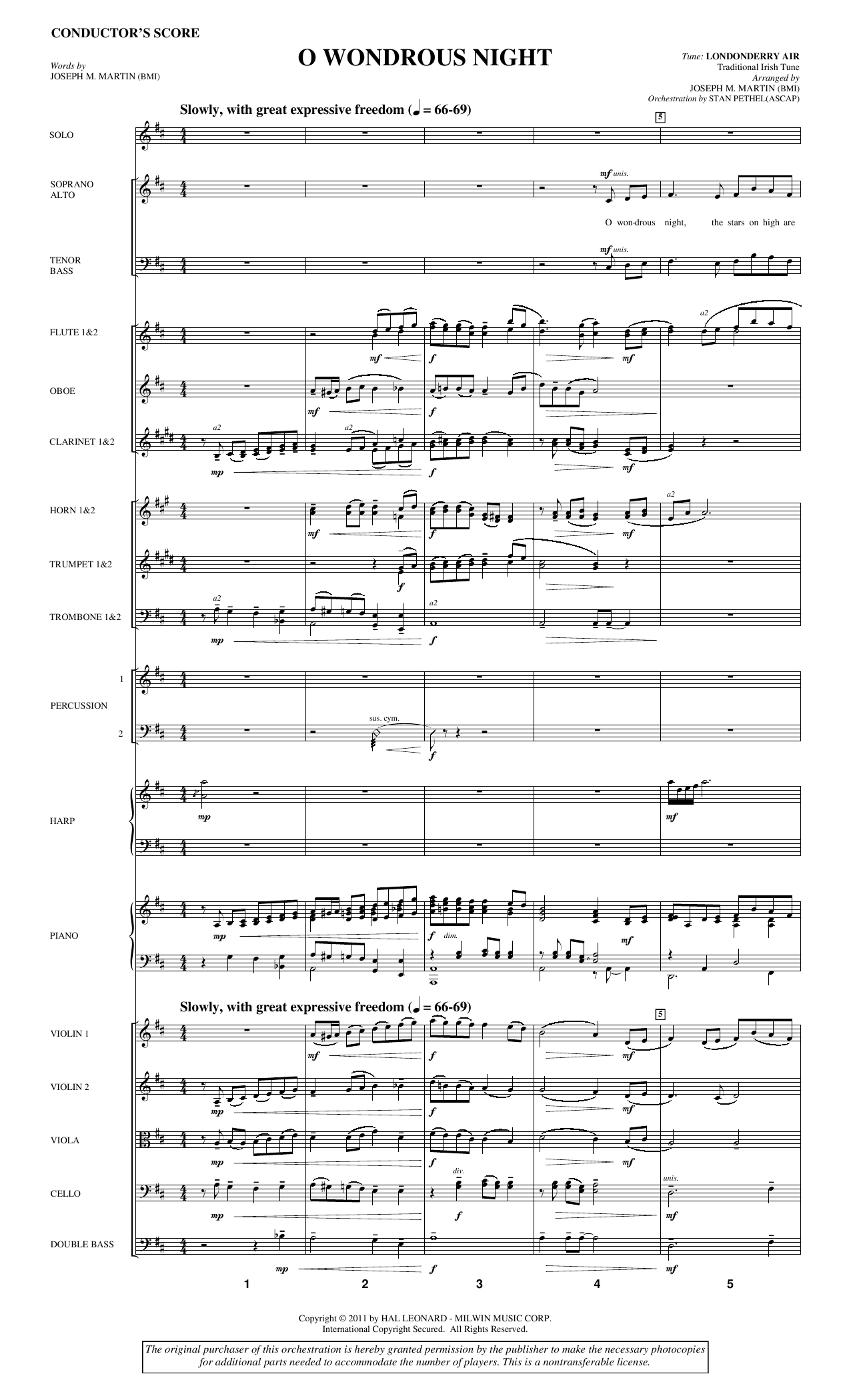

O Wondrous Night (Orchestra): Choral Instrumental Pak
Arranged by Joseph M. Martin
Item: 35-PK00338305
$75.00
Pickup currently not available
Buy Extra Parts (Digital PDF Download)
Parts Added to Cart!
Description
Uses: Christmas, Christmas Eve, Concert
Scripture: Luke 2:7, Luke 2:20
A celebrated folk tune is now grafted to an evocative new Christmas text, and the results are natural and seamless. The miracle of Christmas is held secure in this timeless tune, and the part-writing is filled with a distinctive richness. Here's something familiar presented in a fresh way, and with the variety of voicing and accompaniment options, this is a must-do!


O Wondrous Night (Orchestra): Choral Instrumental Pak isn't in MakeMusic Cloud just yet...but it could be. Let us know you'd like to see it, and you'll help shape what comes next. In the meantime, start a free trial and dive into thousands of interactive titles your students can play along with today.
Request This Title
Tell us you want it.
Start Your Free Trial
Explore everything that's ready to play right now.
Sample Audio
No sample audio found.
Sample Video
No sample videos found.
Additional Details
Publisher:
Hal Leonard
SKU:
35-PK00338305
More about this title
About the Arranger: Joseph M. Martin

Joseph M. Martin trained as a pianist at Furman University and earned his master's degree in piano performance from the University of Texas at Austin, where he later taught in the Piano Pedagogy Department. His performance career has taken him across North America and Mexico, including a featured appearance with the Guadalajara Symphony Orchestra as winner of the Nina Plant Wideman Competition, and a nationally broadcast solo recital from a historic Mexican venue.
Though Martin continues to perform in concert settings, his energy now centers on church music and compositions and arrangements for worship contexts. His works have been heard at Carnegie Hall, regional performance theaters, and in countless worship services throughout the United States and Canada. Based in Austin, Texas, he is known for the stylistic range and musicality that characterize his output across genres and voicings.
Why we love this
Martin's gift for grafting new texts onto existing melodies without sacrificing either musical integrity or textual clarity shines here. The orchestral arrangement offers genuine variety in voicing and accompaniment colors, giving directors real options for customization based on their ensemble's strengths. This is the kind of piece that feels both instantly accessible and musically substantial.
What to expect
Warm and contemplative, with the comfort of a melody you almost recognize paired with wonder at its new context. The orchestration wraps the choir in rich harmonic color without overwhelming the simple beauty of the tune itself. It has the feeling of a carol that's been treasured for generations, even though you're encountering it for the first time.
Who it's for
Church choirs and choral ensembles of intermediate ability who want repertoire that honors both tradition and freshness. Directors programming a Christmas concert will find this especially valuable because the folk tune base makes it accessible while the orchestral setting and new text give it artistic weight.
How to get the most out of it
- Balance the orchestra carefully during rehearsals so the choir can hear the harmonic underpinnings that support the folk melody. This part-writing is rich enough to anchor singers who might otherwise drift.
- Experiment with different voicing options across rehearsals rather than settling on one arrangement early. Having singers experience the fuller textures alongside leaner ones builds understanding of how orchestration shapes the emotional arc.
- Consider the pacing of your text delivery during the scriptural passages (Luke 2:7 and 2:20). The familiar tune can carry the text, but clarity matters when the words themselves are doing theological work.
- Let the Celtic character of the melody inform your approach to phrasing and articulation. Avoid over-legit singing; these lines benefit from a touch of lilt and air.
How to use it
Position this as an anchor piece in a Christmas service or concert. Its connection to the nativity narrative (Luke 2) makes it work well as a meditation piece between more festive selections, or as the emotional center of a longer Christmas program. The orchestral accompaniment also makes it suitable for inclusion in a concert that features instrumental and vocal music side by side.
Skills your students will build
- Blending Celtic melodic phrasing with choral ensemble sound
- Reading multiple voicing and accompaniment arrangements from a single score
- Maintaining textual clarity while singing over rich harmonic accompaniment
- Understanding how orchestration supports vocal lines without doubling them