
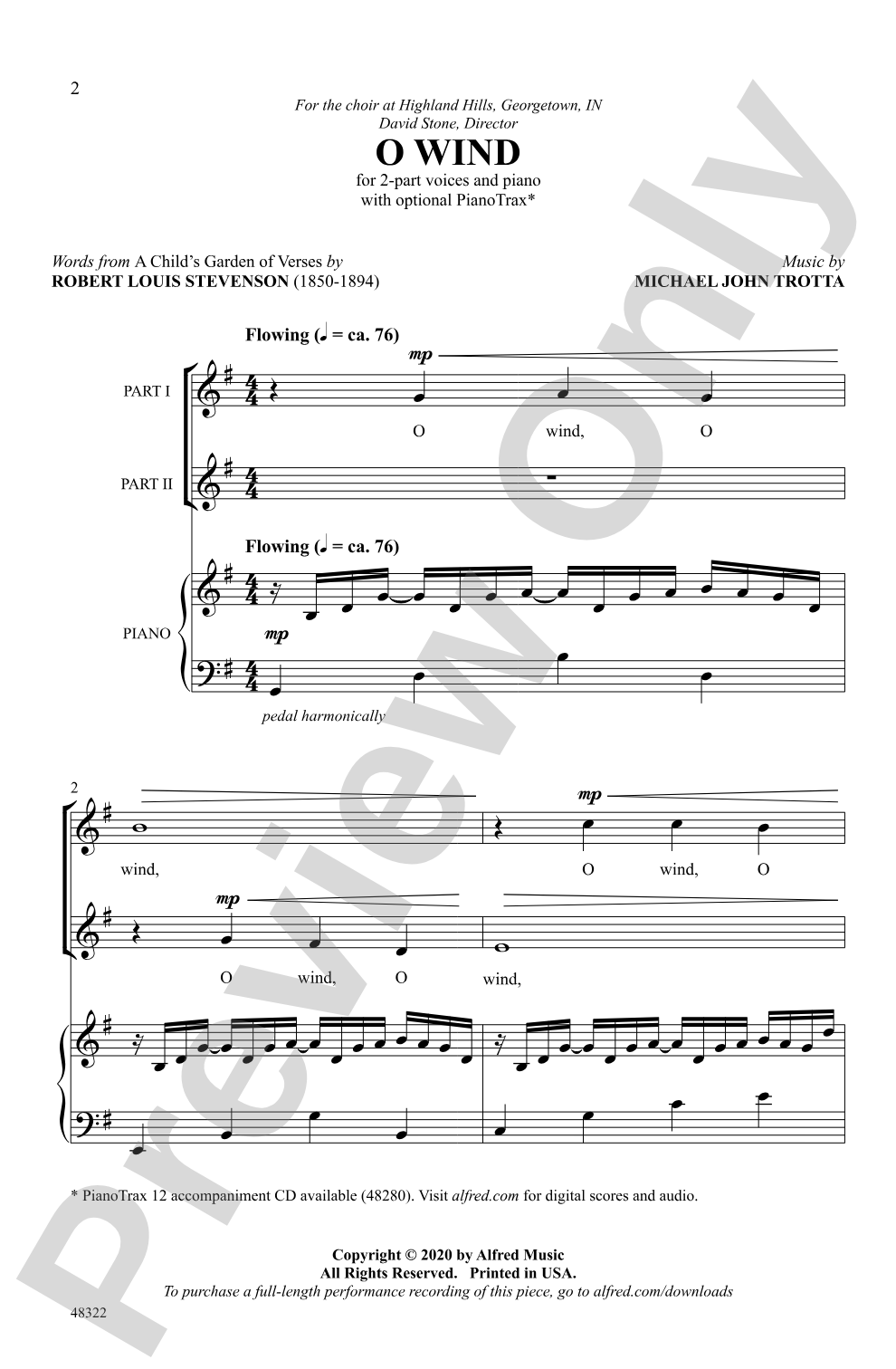
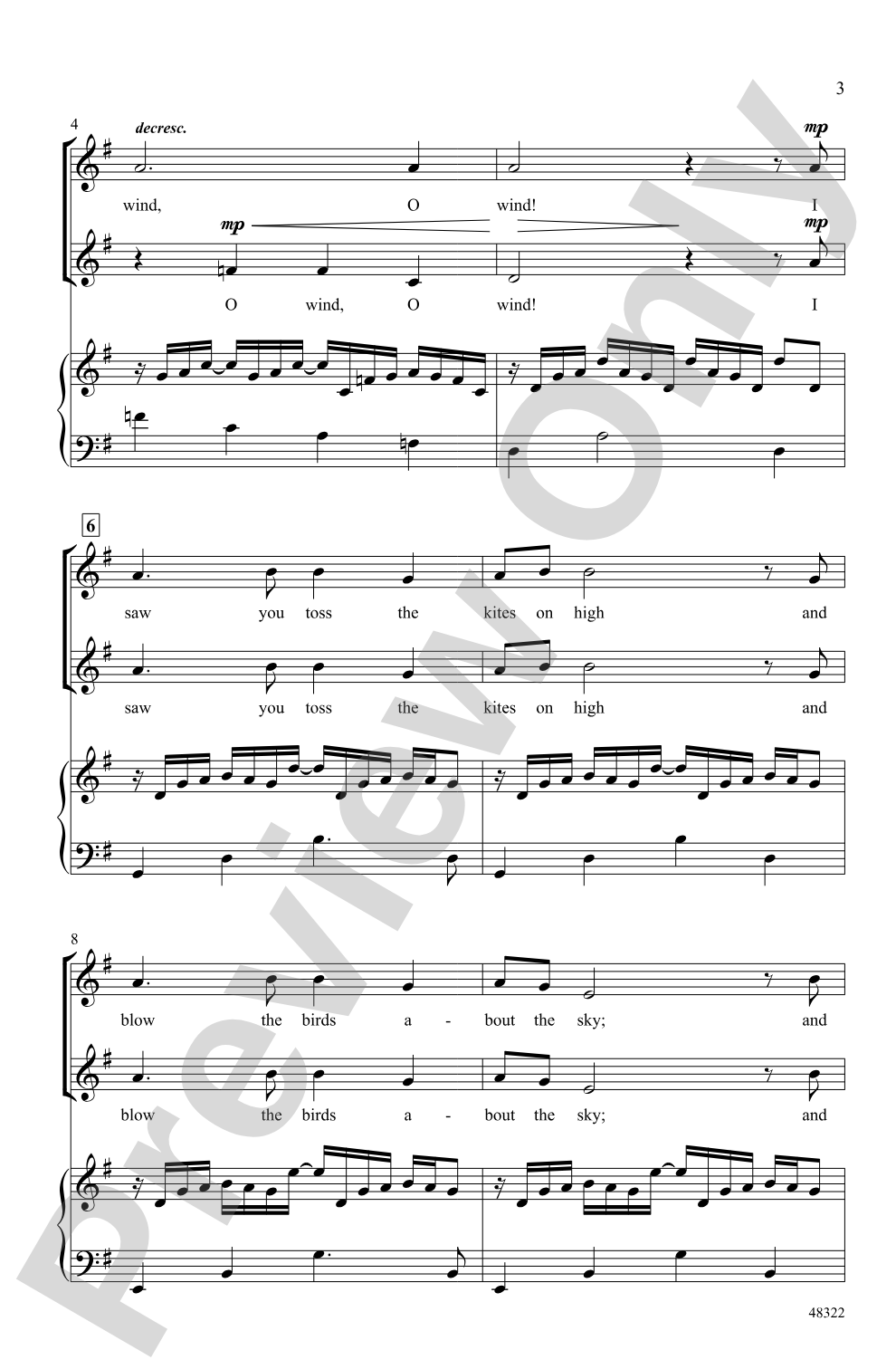

O Wind: 2-Part Choral Octavo
Words by Robert Louis Stevenson, music by Michael John Trotta
Item: 00-PO-0006315
$2.05
Minimum order quantity: 20 copies
Pickup currently not available
Description
You can hear the gentle breezes passing by in this charming setting of the playful Robert Louis Stevenson poem, in which a child talks with the wind. Independent melodic writing in both voice parts sets your singers up for success. An expressive treble feature for choirs of any age.


O Wind: 2-Part Choral Octavo isn't in MakeMusic Cloud just yet...but it could be. Let us know you'd like to see it, and you'll help shape what comes next. In the meantime, start a free trial and dive into thousands of interactive titles your students can play along with today.
Request This Title
Tell us you want it.
Start Your Free Trial
Explore everything that's ready to play right now.
Sample Audio
1
Audio File
--:--
0:00
0:00
Sample Video
1 / 2
Additional Details
Series:
Alfred Choral Designs
Publisher:
Alfred Music
Page Count:
8
SKU:
00-PO-0006315
More about this title
About the Composer: Michael John Trotta

Michael John Trotta (b. 1978) channels his experience as both conductor and clinician into creating music that speaks to ensembles at every level. His work has reached audiences everywhere from Carnegie Hall to school auditoriums, built on the conviction that new music should be accessible without sacrificing artistic integrity.
Trotta's compositional voice bridges tradition and contemporary sensibility, crafting pieces that let singers discover their own artistry. His engagement with choral musicians across the globe has shaped a distinctive approach: music that excites conductors, challenges singers meaningfully, and leaves audiences moved.
Why we love this
Trotta writes independent lines that actually give each voice part something to do, which means your singers stay engaged rather than doubling melody. The gentle storytelling through Stevenson's text paired with writing that's genuinely singable makes this piece feel like a gift for developing choirs.
What to expect
The piece captures something intimate and playful; you can almost feel the gentle movement of air and hear the whimsical conversation happening in the text. There's a lightness throughout that invites singers to connect emotionally with Stevenson's childhood perspective while remaining musically substantive.
Who it's for
This works beautifully for developing 2-part choirs and mixed young singers who need music with real part writing rather than simplified unison arrangements. It's equally at home in middle school choirs, upper elementary ensembles, or community groups looking for accessible concert repertoire with personality.
How to get the most out of it
- Shape the phrasing around the poetry's natural speech patterns rather than forcing it onto the bar lines; let the conversation between child and wind breathe.
- Balance the treble feature so it emerges from the ensemble without pulling focus; think of it as a spotlight that illuminates rather than dominates.
- Explore dynamic contrast between the two voice parts to highlight their independence; this is not a piece where both parts move together, so let that distinction be heard.
How to use it
Program this as a charming opener or closer on a concert that mixes seasons and moods; its literary text and gentle character work well alongside more substantial works. It's also an excellent choice for festivals and contests where judges appreciate thoughtful text setting and clear compositional craft.
Skills your students will build
- Independent melodic line reading in a 2-part texture
- Expressive singing in a featured soprano/treble line
- Phrasing and text expression through poetry
- Part balance and voice independence in divided ensembles