O Waly, Waly (The Water Is Wide): E-flat Baritone Saxophone Sheet Music Preview

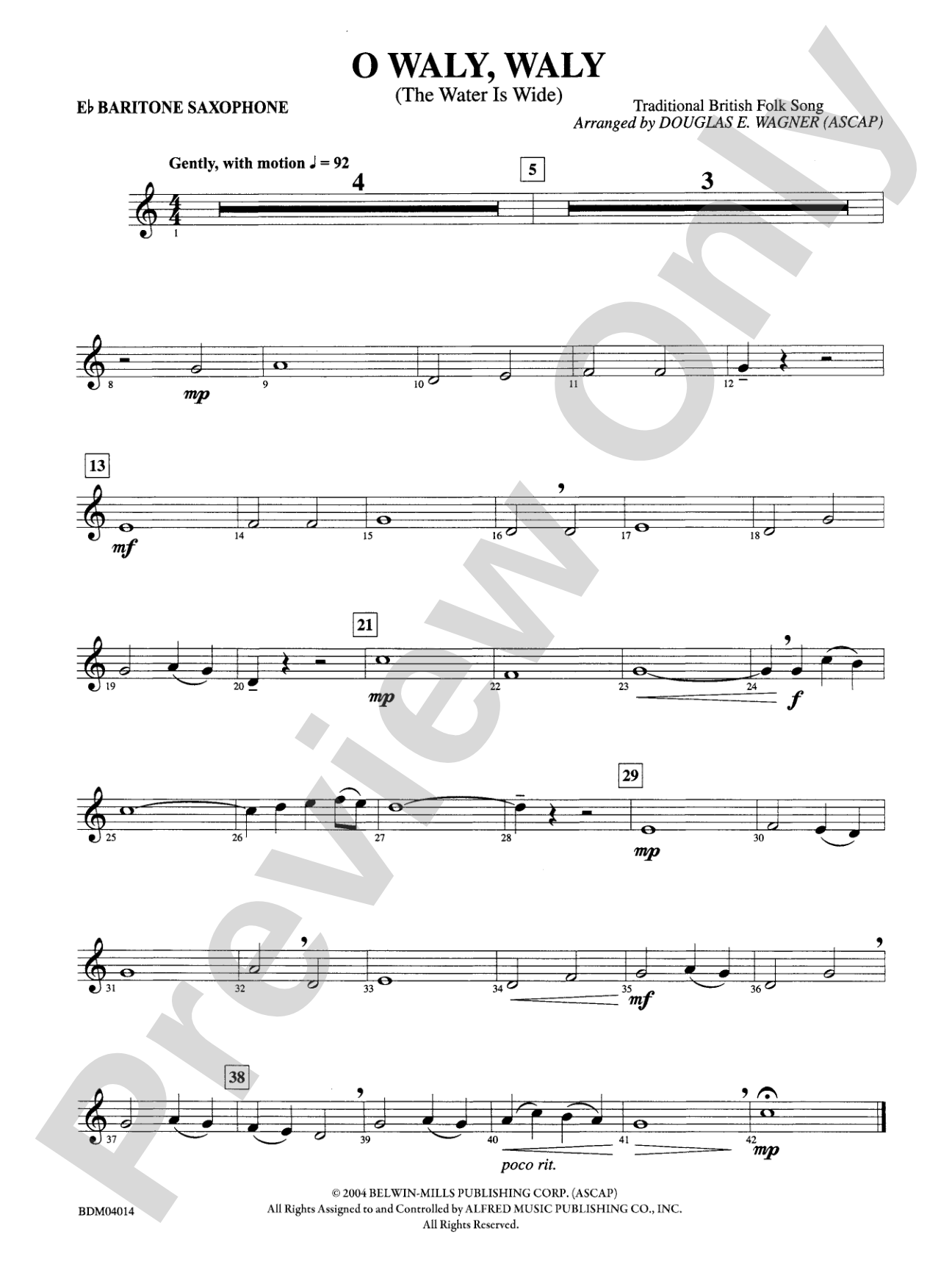
O Waly, Waly (The Water Is Wide): E-flat Baritone Saxophone

Traditional British Folk Song / arr. Douglas E. Wagner

Grade: 1 (Very Easy)

Item: 00-PC-0016050_BTX

Digital Download
$3.00
Description
With sustained beauty, this traditional British folk song will fulfill the musical needs of your ensemble. It's a wonderful addition to the beginning literature that will reinforce both good breathing and support techniques while also providing a moving work for your programming needs. (2:12)

Don't just read it, hear it, play along with it, and watch your students grow with it. In MakeMusic Cloud, O Waly, Waly (The Water Is Wide): E-flat Baritone Saxophone comes alive with professional accompaniment, adjustable tempo, and built-in practice tools that turn solo practice into real progress.

Sample Audio
0:00
0:00
Sample Video
Additional Details
Series: Belwin Beginning Band
Publisher: Alfred Music
Page Count: 130
SKU: 00-PC-0016050_BTX

More about this title

About the Arranger: Douglas E. Wagner

Douglas E. Wagner

Douglas E. Wagner grew up in Chicago and studied music at Butler University, earning both undergraduate and graduate degrees. He spent three decades as a high school music director and administrator before transitioning to full-time composition and arranging work.

Since 1973, Wagner has published more than 3,500 compositions across multiple genres: concert band, choir, orchestra, handbell ensemble, organ, piano, and vocal music. His works have reached audiences globally through concert performances, broadcasts, and educational ensembles. Over seventeen million copies of his music are now in circulation worldwide. Wagner currently resides in Indianapolis, Indiana.

Why we love this

Wagner's arrangement preserves the folk melody's natural phrasing while creating an accessible scoring that serves genuine musical purposes. Beginning bands need repertoire that teaches sustained tone and supported breathing without sacrificing emotional weight, and this piece delivers both. The simplicity of Grade 1 writing never feels thin or condescending; instead, it allows young musicians to focus on the legit musicianship required to make a sustained line sing.

What to expect

The British folk melody unfolds with gentle melancholy and quiet dignity. Warm harmonies support the tune without obscuring it, creating an intimate sound that invites focus and reflection from both performers and listeners.

Who it's for

Beginning concert bands ready to tackle sustained melodic writing with musical intention. This arrangement serves directors seeking Grade 1 repertoire that accomplishes real pedagogical work while remaining performable for young musicians and genuinely moving for audiences.

How to get the most out of it

  • Shape each phrase with a gentle arch in dynamics rather than playing it straight. Even at beginning level, breathing points become opportunities to refresh and return to the melody with intention.
  • Balance the harmonic support so the folk melody emerges clearly. Voices beneath the tune should know their function and adjust their volume accordingly.
  • Resist rushing the tempo during longer note values. Sustained passages expose uneven breath support immediately, making them valuable rehearsal tools for developing consistent air flow.
  • Work the ensemble's vowel matching on long tones. Uniform vowels across the band during these meditative sections will significantly improve the overall blend and resonance.

How to use it

Program this as a contrasting ballad in a concert featuring both energetic and lyrical first-year band pieces. Its slow tempo and emotional restraint make it an effective opening selection or a centering moment between more extroverted works.

Skills your students will build

  • Sustaining tone with consistent breath support across long note values
  • Phrasing and shaping melodic lines with minimal harmonic movement
  • Balancing individual voice lines within a harmonic texture
  • Listening for uniformity of vowel production across the ensemble
  • Playing musically at softer dynamic levels

You May Also Like