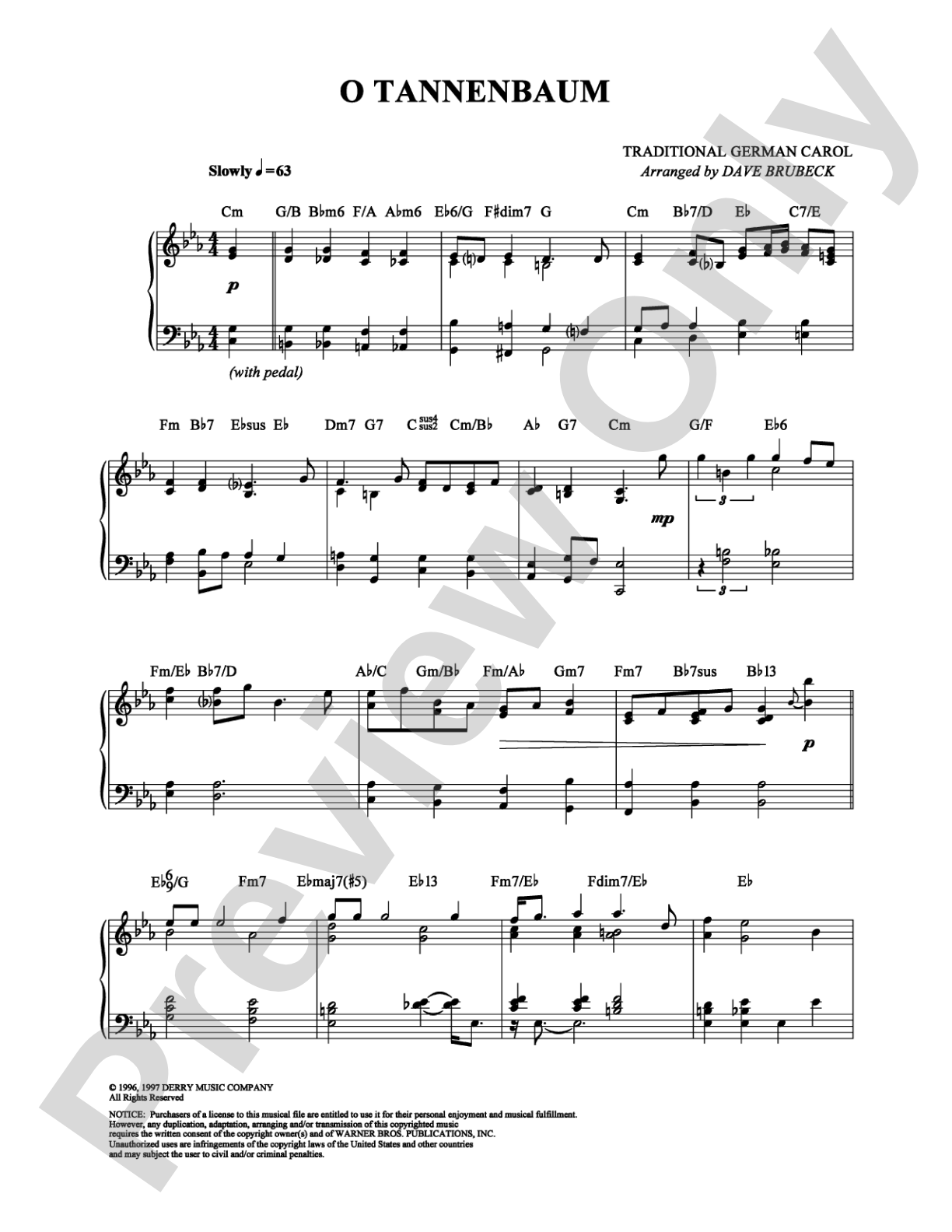
O Tannenbaum: Piano Digital Sheet Music

O Tannenbaum: Piano Digital Sheet Music

Dave Brubeck, Traditional

Item: 00-PS-0008010

Digital Download
$3.99
Description

O Tannenbaum: Piano Digital Sheet Music isn't in MakeMusic Cloud just yet...but it could be. Let us know you'd like to see it, and you'll help shape what comes next. In the meantime, start a free trial and dive into thousands of interactive titles your students can play along with today.

Sample Audio
No sample audio found.
Sample Video
Additional Details
SKU: 00-PS-0008010

More about this title

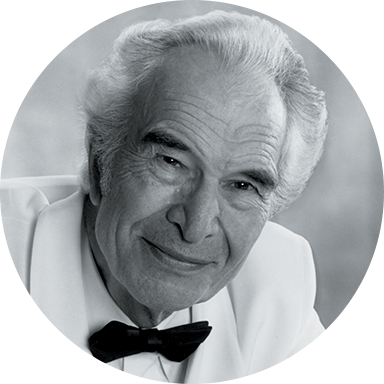
About the Artist: Dave Brubeck

Dave Brubeck

Dave Brubeck built his reputation as a jazz innovator through both his improvisational mastery and his meticulous approach to composition. Beyond "Take Five" and the watershed album "Time Out," he expanded jazz vocabulary into symphonic works, oratorios, and choral pieces, many of which have been performed by major ensembles including the London Symphony Orchestra. His studies with Darius Milhaud at Mills College shaped his philosophy of blending jazz vernacular with classical forms, a distinction that set him apart from his peers.

Brubeck's cultural impact extended far beyond the recording studio. He actively challenged racial segregation during the 1950s and 60s, and his compositional output, from the mass "To Hope!" to large-scale choral works, demonstrates an artist unwilling to be confined by genre. He received the Grammy Lifetime Achievement Award for his jazz contributions and was inducted into the American Classical Music Hall of Fame in 2003, cementing his status as one of the century's most versatile musicians.

Why we love this

Brubeck's arrangement of this holiday standard brings sophistication without pretension. The jazz sensibility honors the melody while introducing harmonic surprises and rhythmic flexibility that keep the piece engaging across multiple hearings, something that matters when you're performing the same carol in multiple contexts during the season.

What to expect

Crisp and intelligent, with the warmth of a familiar melody refracted through jazz harmony. Brubeck respects the tune while making it speak in his own language, conversational rather than reverent, modern but never cynical about the material.

Who it's for

This arrangement suits pianists with intermediate-to-advanced jazz literacy who want to play a recognizable holiday melody with harmonic sophistication. It works equally well as a recital solo, a holiday concert addition, or a tool for building jazz vocabulary in a classical piano practice. Pianists familiar with Brubeck's style will recognize his harmonic language immediately.

How to get the most out of it

  • Approach the harmonic movement with attention to voice leading; Brubeck's jazz voicings often contain chromatically shifting inner voices that require clarity and separation from the melody.
  • Experiment with swing eighth notes and syncopated rhythms once you've secured the basic form; Brubeck's jazz style thrives on the tension between written notation and interpretive flexibility.
  • Balance rubato with pocket; the piece benefits from subtle tempo flexibility that never loses the underlying pulse.
  • Let the accompaniment groove rather than simply tick; a relaxed, almost behind-the-beat approach to comping figures will honor the jazz character.

How to use it

Feature this as part of a jazz or contemporary holiday program, or pair it with traditional piano repertoire to demonstrate how classical melody adapts to different harmonic languages. It works particularly well in settings that blend classical and jazz traditions, offering audiences a fresh take on material they already know.

Skills your students will build

  • Jazz voicing and harmonic substitution
  • Swing interpretation and rhythmic flexibility
  • Voice leading through chromatic inner-voice movement
  • Balance between melody projection and sophisticated accompaniment textures
  • Interpretation of jazz notation and implied rhythmic feel

You May Also Like