

O Nata Lux: SSA Choral Octavo
Words from Traditional Latin, music by Victor C. Johnson
Item: 00-PO-0007538
$2.30
Minimum order quantity: 20 copies
Pickup currently not available
Description
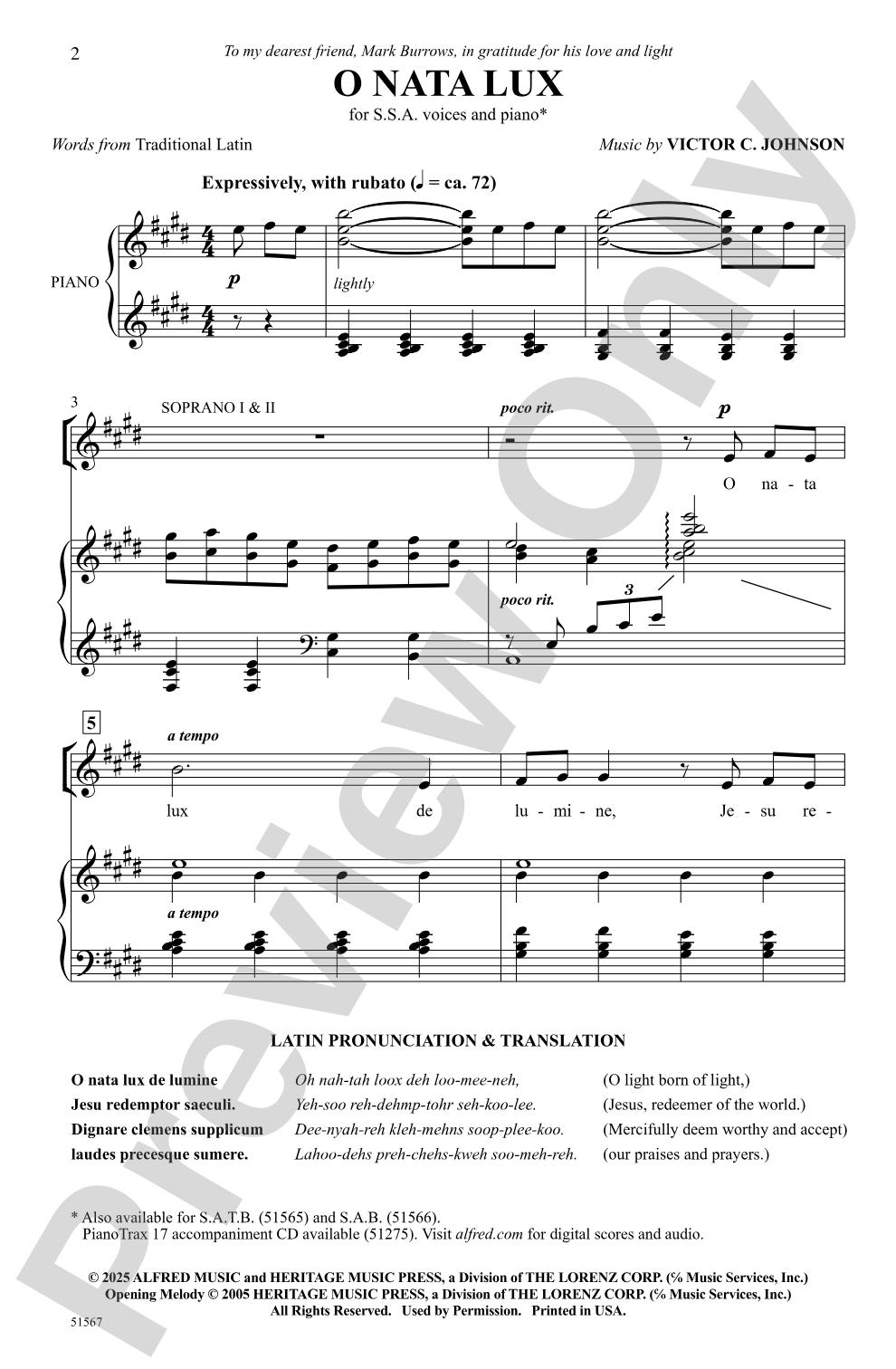
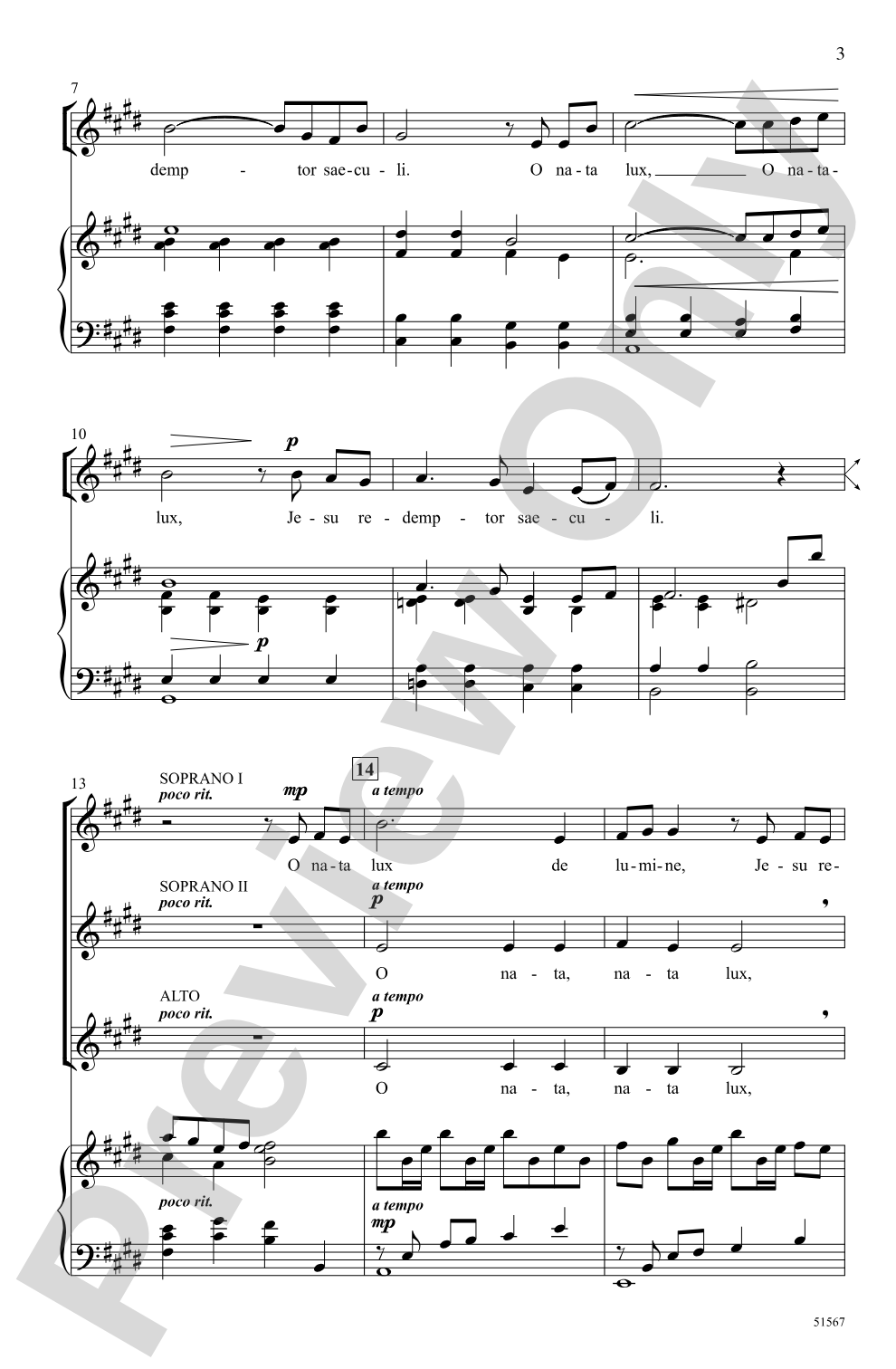
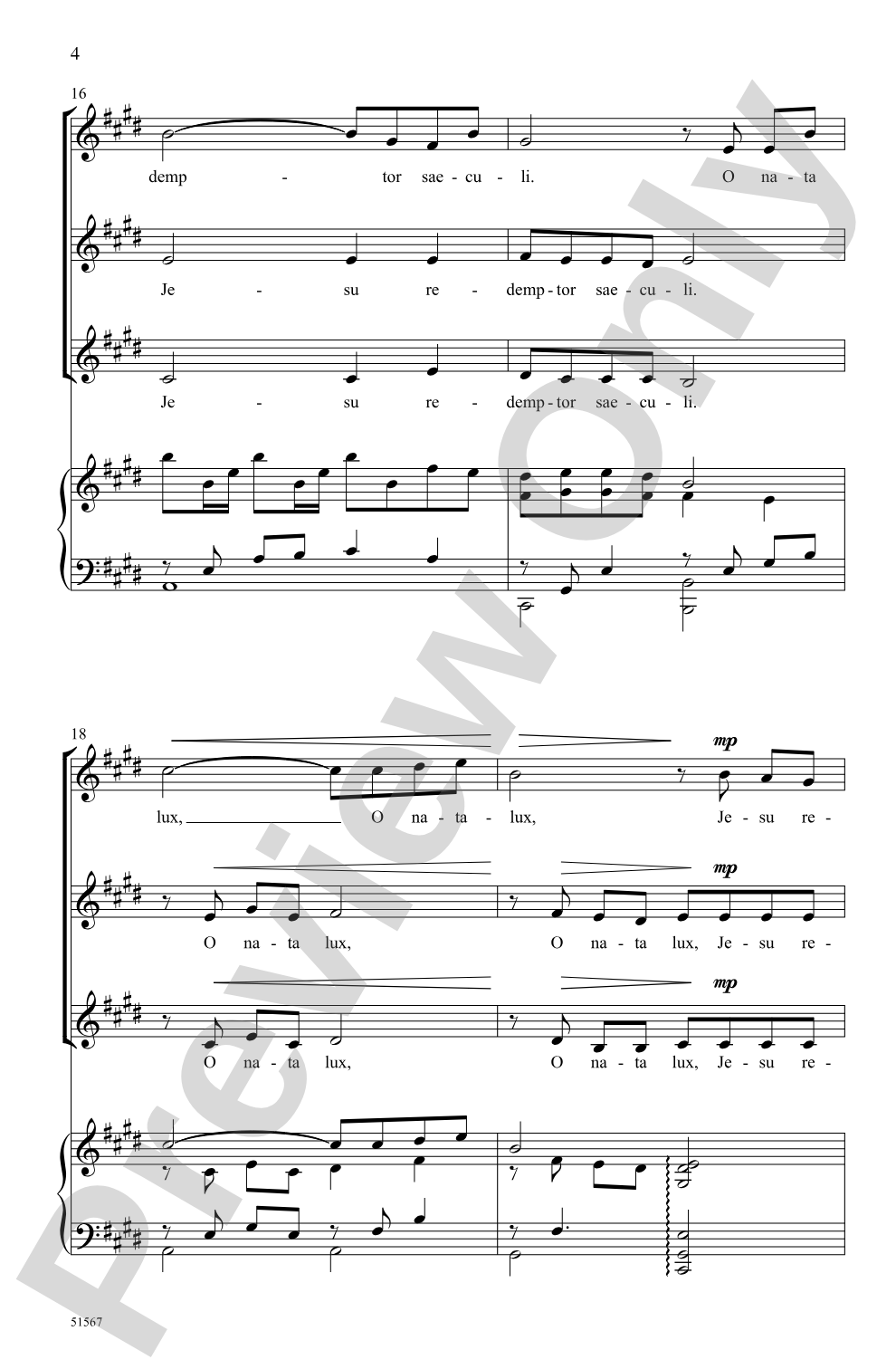
Victor C. Johnson's radiant realization of the traditional Latin "light born of light" text is equally fitting for the concert hall, stage, or sanctuary. With plenty of room for expressive singing, this luminous setting gives every voice part a time to shine as it develops the glimmering opening motive into a stunning soundscape.


Discover MakeMusic Cloud: thousands of interactive titles your students can play along with today.
Sample Audio
1
Audio File
--:--
0:00
0:00
Sample Video
Additional Details
Series:
Alfred Choral Designs
Publisher:
Alfred Music
Page Count:
12
SKU:
00-PO-0007538
More about this title
About the Composer: Victor C. Johnson

Victor C. Johnson brings three decades of choral leadership to his work as a composer and arranger. Based in Dallas, he has directed award-winning choirs at the Fort Worth Academy of Fine Arts and currently serves as School Choral Editor for Sing!, the educational publishing arm of Choristers Guild. His catalog exceeds 500 published works across choral, vocal, and keyboard genres, reflecting his deep understanding of what singers at all levels can achieve.
Johnson's professional reach extends across multiple music education organizations, including the American Choral Directors Association, Texas Music Educators Association, and the National Association for Music Education. Since 2022, he has conducted the Dallas Symphony Children's Chorus Mixed Ensemble, working with advanced high school singers. This combination of classroom experience, publishing expertise, and continued engagement with performing ensembles informs every piece he writes.
Why we love this
Johnson's treatment of this centuries-old Latin text radiates freshness without losing its spiritual weight. The opening motive unfolds with such grace that it feels inevitable, yet the harmonic journey keeps singers and listeners engaged throughout. For directors seeking a piece that works equally well in concert, contest, or worship settings without sacrificing musical substance, this is the answer.
What to expect
The music opens like a window into quiet radiance. Each voice part emerges from the shimmering opening motive and gradually builds into something larger, creating layers of warmth without ever losing clarity. The overall effect is contemplative yet luminous, inviting singers to explore both restraint and full expression.
Who it's for
SSA choirs at the intermediate to advanced level will find both challenge and reward here. This piece suits groups preparing for festival competition, concert programming, or liturgical performance, and it works beautifully for singer-friendly ensembles that value expressive depth.
How to get the most out of it
- Shape the opening motive carefully so that it reads as a single, luminous gesture rather than isolated notes. This establishes the piece's character immediately.
- Balance the three voices so that when one line takes the lead, the others provide harmonic warmth without overwhelming. Think of layered light rather than equal brightness.
- Allow singers time to breathe between phrases; the text and music benefit from moments of silence that let the harmony settle.
- If using the recorded accompaniment, rehearse a cappella first to ensure voices lock together independently before adding the recording.
How to use it
Pair this with other sacred or secular works that share its introspective quality; it works beautifully as a concert closer or as part of a thematic program exploring light and spirituality. The 12-page length and moderate difficulty make it accessible for festival submissions while remaining musically substantive enough to anchor a choral concert.
Skills your students will build
- Singing sustained, layered harmonies with independent voice independence
- Shaping legit phrases across longer musical lines
- Balancing personal voice part with ensemble blend
- Interpreting expressive direction within a contemplative musical context
- Reading and performing SSA voicing with equal confidence across all three parts